
Reviewed · BUKHARA TOURS
Bukhara day tour. Departure from Tashkent or Samarkand.
Bukhara is the kind of city that rewards a guide who knows when to leave the main street. This long day trip takes you from Samarkand or Tashkent to the old city by train, then leads you through Lyabi-Hauz, Poi Kalyan, the Ark Fortress, quiet courtyards, craft shops, and old caravanserais.
I like the private format, since your guide can adjust the pace, arrange a local meal, or switch some walking for an electric rickshaw if your legs give out. I also like the smooth handoff between hotel, train station, drivers, and guide, an important detail on a day that can last 11 to 16 hours. The drawback is clear: you spend more time in transit than you would on a multiday Bukhara stay, and museum tickets and meals are extra.
Key points to know before booking
- A 100-minute train ride each way makes Bukhara possible as a day trip from Samarkand, though the full day is long.
- Private English guiding lets you set the pace and ask for more time with architecture, crafts, food, or shopping.
- Lyabi-Hauz, Poi Kalyan, and the Ark Fortress provide a strong first look at Bukhara’s central sights.
- Local details matter: guides can point out old mulberry trees, lesser-known madrasahs, artisan workshops, and traditional food.
- Electric rickshaw help may be arranged if walking becomes tiring, as happened during one private tour.
- Train tickets need your passenger details right away, and high-speed trains can be replaced by the most comfortable regular train if needed.
Why this Bukhara day tour works
Bukhara is one of Uzbekistan’s great historic cities, with more than 140 monuments and a protected old center recognized by UNESCO. A single day cannot cover it all, but this tour gives you a sensible first encounter without asking you to arrange several separate transfers, train tickets, drivers, and a guide.
The value is less about the number of sights than the coordination. Your hotel pickup, station transfer, train tickets, arrival pickup, walking tour, and return transfer are arranged together. That removes the small points of friction that can eat up a day in an unfamiliar city.
At $180 per person, this is not the cheapest way to see Bukhara. You are paying for private transport connections, an English-speaking guide, train tickets, hotel pickup and drop-off, and online support. Meals and museum admission are not included, so budget extra for lunch and any interiors you want to visit.
For two or more people, the price may feel reasonable when compared with arranging the same pieces independently. For a solo visitor, it is a larger outlay, but the private service gives you more control than a fixed group excursion.
The schedule is also the main compromise. The stated duration ranges from 11 to 16 hours, depending on your departure city and the available train schedule. From Samarkand, the train ride is listed at about 100 minutes each way. From Tashkent, the day involves more positioning and can be especially tiring. If Bukhara is a major reason for visiting Uzbekistan, I would prefer to sleep there. If your schedule is tight, this is a practical way to see the city at all.
A few more Bukhara days to weigh up
- Bukhara: Walking Tour with a Small Group
★ 4.9 · 260 reviews - Best of Bukhara: All Day Private Old Town Tour
★ 5.0 · 66 reviews - Best of Bukhara: All Day Private Old Town Tour
★ 4.9 · 62 reviews
From your hotel to Bukhara by train
The day begins with pickup at your hotel in Samarkand or Tashkent. You are taken to the railway station, where your reserved train gets you moving without the worry of finding a taxi at dawn or dealing with local ticket arrangements yourself.
High-speed train tickets are normally arranged. In the rare case that a high-speed service is unavailable, the operator says it will use the most comfortable class of regular train and tell you in advance. That is worth understanding before you book, since the exact train can affect the length and comfort of an already demanding day.
Your passenger details must be sent immediately after booking. Missing information can lead to automatic cancellation, so do not treat this as a detail to handle later.
At Bukhara station, a driver or guide meets you and takes you to the starting point in the old city. The handoff is one of the tour’s strongest practical features. A day trip can go wrong quickly when a train arrives late, a driver is hard to find, or the guide is waiting at the wrong place. Here, the connections are planned as one service.
The train segment also gives you a useful pause between sightseeing blocks. You can rest, watch Uzbekistan pass by, and save some energy for the walking tour. Still, carry water and wear comfortable shoes. Even with assistance available, the old city is best experienced on foot.
Lyabi-Hauz and Bukhara’s shaded center
The walking tour begins at the Lyabi-Hauz Ensemble, one of Bukhara’s most agreeable public spaces. A pool sits beneath old mulberry trees, with historic buildings around it, including the Kukeldash Madrasah and Nadir Divan-Begi Khanaka.
This is a good opening stop because it gives you a quiet sense of the city before the larger monuments begin. The mulberry trees are not just decoration. One guide pointed out a tree believed to date back to about 1400, a small detail that helps turn a courtyard into a place with a human scale.
Your guide can explain how the buildings around the pool served religious, educational, and social purposes. Rather than rushing from facade to facade, ask questions here about daily life, trade, food, and the role of madrasahs. The private format makes that sort of conversation easier.
Lyabi-Hauz can also be a useful place to settle into the day. A morning coffee stop has been arranged on some tours, with the guide using that time to explain the plan and ask what the visitor most wanted to see. You should take advantage of that flexibility. Tell your guide early if you care most about architecture, shopping, local food, photography, or a slower pace.
Poi Kalyan, Bukhara’s grand landmark
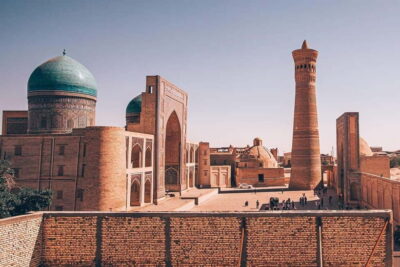
The Poi Kalyan Complex is the visual centerpiece of many first visits to Bukhara. Its famous minaret and mosque create the sort of view that makes the long train ride feel worthwhile.
Your guide provides the setting and meaning behind the complex rather than leaving you to take a quick photograph and move on. The scale of the buildings, the patterned brickwork, and the relationship between minaret, mosque, and surrounding religious buildings are easier to appreciate when someone points out what you are seeing.
This is also one of the places where timing matters. A private guide can spend longer on the details that interest you, but a full day still has limits. The tour includes sightseeing and walking in Bukhara for about six hours, and that time includes several major stops, local streets, shopping opportunities, and breaks.
Museum or monument admission fees are not included. The tour description promises help with skipping ticket lines, but you should still ask your guide which interiors are part of your plan and which require separate payment. If your priority is seeing inside every monument, six hours may feel compressed. If you want a broad introduction to the city with time for streets and crafts, the mix is more suitable.
Same city, a completely different day out:
- From Bukhara: 2-Day Desert Yurt Camp Tour
★ 4.5 · 57 reviews - City Tour Around Bukhara
★ 5.0 · 55 reviews - Bukhara Full Day Old City Private Tour
★ 5.0 · 46 reviews - Bukhara: Historic Center Guided Sightseeing Tour
★ 4.8 · 44 reviews
The Ark Fortress and the city’s royal past
The Ark Fortress gives the tour a different mood. This enormous citadel served as a royal residence and defensive stronghold, so it helps explain Bukhara as a seat of power, not only as a collection of handsome religious buildings.
A guide makes the fortress more useful because the walls alone do not tell the whole story. You can ask about the rulers who lived there, the purpose of the citadel, and how authority was organized inside and around it. The visit works well after Poi Kalyan, moving your attention from sacred architecture to government and defense.
Again, admission tickets are extra. If you are trying to keep the cost down, you can ask how much of the fortress can be appreciated from the outside and how much time an interior visit would take. If you care strongly about Bukhara’s political past, paying for the relevant museum areas may be worthwhile.
The Ark is also a place to watch your energy. The day may already include several hours of walking, and the return train is still ahead. A good guide should help you keep the pace comfortable rather than treating every stop as a race.
Beyond the famous monuments
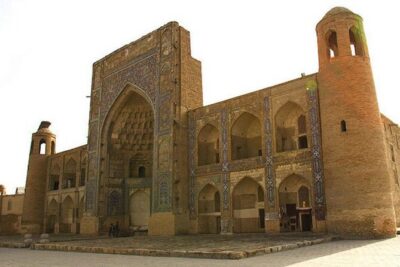
The best part of this experience may be what happens between the headline sights. The route can lead you through old caravanserais, quiet courtyards, and lesser-known madrasahs that you might miss if you simply followed a map from Lyabi-Hauz to Poi Kalyan.
These places help you picture Bukhara as a working city shaped by trade, education, faith, and craft. A caravanserai was not just a pretty building. It was part of the system that supported merchants and goods moving across Central Asia. An old courtyard can show you how buildings were arranged for shade, privacy, and shared life.
The tour also includes contact with local artisans. You may learn about silk weaving and miniature painting, and you have time for shopping if you wish. This is more useful than a rushed stop at a generic souvenir stand because you can ask how an item is made and decide if you actually want to buy it.
One guide, Sunny, was especially noted for steering a visitor away from the most tourist-focused shops and toward local businesses with good-quality products. You should be clear about your shopping interests, and also clear if you do not want to shop. A private tour gives you that choice.
Food, coffee, and a flexible walking pace
Meals are not included, but food can still become an important part of the day. A guide helped arrange a restaurant where a visitor could try local cooking, and lunch was described as being in a convenient location.
That arrangement has practical value. You lose less time searching for a restaurant, and your guide can help you choose dishes when the menu is unfamiliar. Do not assume lunch is covered in the $180 price. Plan to pay for it yourself.
The day is designed around walking, but it does not have to be a test of endurance. One guide, Nur, arranged an electric rickshaw when the visitor began to tire. That is a useful example of what private guiding can mean in practice: the itinerary remains focused on Bukhara, but the way you move through it can change.
You should mention mobility concerns when booking and again at the start of the tour. The available information confirms that an electric rickshaw was arranged in one case, but it does not promise that this option is always available or included. Think of it as a possible adjustment, not a guaranteed service.
The guides and the value of private service
Several guide names are associated with the Bukhara portion of this experience, including Sunny and Lola, while Nur handled one complete arrangement from Samarkand. The feedback about these guides consistently points to clear explanations, careful timing, local recommendations, and a helpful but not overbearing manner.
That last point matters. A guide should add context without turning every doorway into a lecture. Sunny was praised for clear explanations and for helping with local shopping. Lola was described as professional and well prepared. Nur began with coffee, explained the plan in detail, asked what to emphasize, arranged lunch, adapted the transport, and escorted the visitor back to the station.
You cannot choose a particular guide from the information provided, so book this for the service structure rather than a guaranteed personality. The tour is offered as a private group with an English-speaking live guide. That is a good fit if you want to ask plenty of questions or adjust the balance between monuments, food, and crafts.
The consistently strong ratings, seven five-star evaluations, support the picture of an operation that takes coordination seriously. I would still judge the experience by your own priorities. A person seeking a slow architectural study may need more than one day. A person trying to connect Uzbekistan’s major cities efficiently may find the format very useful.
Who should book this Bukhara day tour?
I would recommend it most to:
- You are based in Samarkand or Tashkent and cannot spare an overnight stay.
- You want Bukhara’s major sights with an English-speaking private guide.
- You prefer having train tickets, station transfers, and hotel pickup arranged together.
- You enjoy local crafts, food suggestions, and side streets as much as famous monuments.
- You are comfortable with a long day and several hours of train travel.
I would think twice if you dislike early starts, long transit days, or brisk sightseeing. Bukhara deserves more time, and an overnight stay would let you see the old center with less pressure.
Before booking, send every passenger’s details at once, confirm your departure city, ask about the train schedule, and set aside money for food and museum tickets. Wear practical shoes, bring water, and tell the guide what matters most to you.
Should you book it?
Book this tour if your Uzbekistan trip is tightly planned and Bukhara is too important to skip. The major advantage is not simply the list of sights. It is the careful chain of hotel pickup, train travel, station meeting, private guiding, local recommendations, and return transfer.
Skip it in favor of an overnight visit if you can spare the time. You will gain a calmer pace and more room for Bukhara’s lesser-known streets. At $180 per person, this day trip is best viewed as a convenience-focused solution for a limited schedule, not a low-cost substitute for staying in the city.
FAQ
Where does the Bukhara day tour depart from?
You can depart from a hotel in Samarkand or Tashkent. Hotel pickup and transfer to the train station are included.
How long is the tour?
The total duration is listed as 11 to 16 hours, depending on the starting point and schedule.
How long is the train ride?
The train journey is listed as about 100 minutes each way.
Are high-speed train tickets included?
Yes. High-speed train tickets are normally arranged. If a high-speed train is unavailable, it can be replaced with the most comfortable class of regular train, with advance notice.
What sights do you visit in Bukhara?
The tour includes Lyabi-Hauz Ensemble, the Poi Kalyan Complex, and the Ark Fortress, along with old courtyards, caravanserais, lesser-known madrasahs, artisan workshops, and shopping areas.
Is the tour private?
Yes. The experience is offered for a private group with a live English-speaking guide.
Are meals included?
No. Meals are not included. A guide can recommend or help arrange a restaurant, but you pay for food separately.
Are museum tickets included?
No. Museum and monument entrance tickets are not included in the price.
What information is needed after booking?
You must provide passenger details immediately after making the reservation so train tickets can be secured. Missing information may result in automatic cancellation.
Just added around Bukhara
- Bukhara: City Highlights Guided Tour with Pickup★ 5.0 · 3 reviews
- Full-Day Private Guided Tour to Islamic 7 Saints of Bukhara★ 4.5 · 3 reviews
- Uzbekistan 8 Days Private Guided Tour★ 4.6 · 3 reviews
- 9 Days Private Guided Tour to Uzbekistan★ 5.0 · 3 reviews
- Legends of Bukhara: Exclusive Full-Day Tour★ 5.0 · 4 reviews
- Bukhara Walking Tour★ 5.0 · 4 reviews
- 2 Day Ukhum Hiking Tour from Bukhara★ 5.0 · 4 reviews
- Bukhara day tour★ 4.0 · 4 reviews
Bukhara Tours, compared.
Bukhara: Historic Center Guided Sightseeing Tour
Read our review →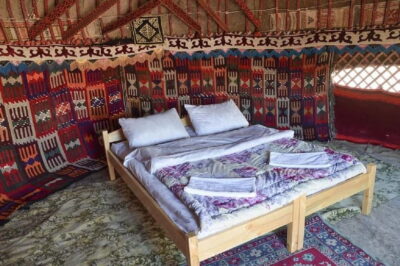
All You Need To Know About Bukhara. A Walk In The Town
Read our review →Browse the lists this tour appears in