
Reviewed · GUIDED TOURS IN BUKHARA
Bukhara: City Highlights Guided Tour with Pickup
Bukhara’s old town is best understood on foot, one courtyard, mosque, and trading lane at a time. This four-hour tour links the city’s major monuments, from the Samanid Mausoleum to the Po-i-Kalyan Complex, while your guide explains the customs, faith, and stories behind the brickwork.
I like the hotel pickup, which saves you from finding a meeting point, and the small-group format, limited to seven people. I also like the chance to hear clear, personal explanations from guides such as Shahram and Bekruza, who are praised for their patience and strong command of Bukhara’s past.
The main caution is pace. Ten major stops in four hours leaves little room for long visits at every site, and entry fees are extra. If you want a slow look at each monument, you may need to return on your own later.
Key points at a glance
- Samanid Mausoleum and Chashma-Ayub: See two of Bukhara’s most distinctive memorial buildings and compare their very different designs.
- Ark Fortress and Po-i-Kalyan: Cover the city’s political center and its grand religious heart in one morning or afternoon.
- English or Russian guidance: Guides including Shahram and Bekruza are noted for clear explanations, patience, and a warm manner.
- Bazaars and local customs: Learn about Uzbek religious practice, daily life, traditional society, and local food.
- Four hours with pickup: Begin from your hotel and finish in a central location, ready to keep exploring.
- $168 for up to two people: For two, the guide costs $84 per person before about $7 per person in attraction tickets.
Why Bukhara makes a strong guided walking tour
Bukhara rewards a guide because its monuments are not just isolated photo stops. They belong to a connected old town shaped by trade, Islamic learning, royal power, and neighborhood life.
A quick look at a madrasah may show a decorated entrance, but a good explanation helps you understand what the building was for, how religious schools shaped society, and why several major sites sit close together. The tour also brings in legends, humorous stories, and modern life, giving you more than dates and architectural labels.
You will spend four hours moving between well-known sights and smaller points of interest. The route is designed to give you a broad introduction rather than a scholarly study of one building. That makes it useful early in a Bukhara visit, when you want to get your bearings and decide where to return.
The format also suits travelers who prefer conversation over a large coach group. With a maximum of seven participants, you should have a better chance to ask questions or ask the guide to repeat a point. One especially useful detail from the feedback is that Bekruza regularly checked that explanations were clear and invited questions when something had been missed. That matters if English is not your first language.
More Guided Tours in Bukhara
- Bukhara: Historic Center Guided Sightseeing Tour
★ 4.8 · 44 reviews - Bukhara Historical City Highlights Guided Walking Tour
★ 4.5 · 16 reviews - Bukhara: Private Guided Walking Tour with Hotel Pickup
★ 5.0 · 11 reviews
Samanid Mausoleum and Chashma-Ayub
The Samanid Mausoleum is one of the tour’s most important early stops. Its carefully patterned brick construction gives it a look unlike the bright tilework found elsewhere in Bukhara. Rather than relying on heavy color, the building gains character from the way light and shadow play across the brick shapes.
Your guide can help you notice the structure instead of simply photographing it. The mausoleum also provides a useful starting point for understanding Bukhara as an old center of government, learning, and faith.
Chashma-Ayub Mausoleum offers a different architectural mood. Its name is linked with the spring of Job, and the building’s form reflects several periods of construction. You will see why Bukhara cannot be reduced to one neat architectural style. Different rulers and building campaigns left their mark over time.
These stops are valuable for comparison. At the Samanid Mausoleum, the brick pattern is the main visual lesson. At Chashma-Ayub, the shape and layered construction tell a different story. The drawback is that four hours cannot allow for a long, detailed study of every interior or inscription, especially if the group includes several people with questions.
Bolo-Hauz Mosque beside the old pond
Bolo-Hauz Mosque is associated with a pond and a graceful line of wooden columns. It offers a more open, human-scale view of religious architecture than the massive complexes later in the route.
Look up at the carved and painted ceiling details, then consider how the mosque relates to public life around the water. Your guide will also place the building within Bukhara’s religious and civic traditions, including the customs that shaped daily behavior.
This is one of the stops where a guide’s explanation can add real value. Without context, you may see columns and decoration. With context, you can better understand how a mosque functioned within the city and why its setting mattered.
Bring comfortable shoes. The tour covers many sites, and the old town is best experienced at walking pace. Large bags and luggage are not allowed, so leave suitcases at your hotel.
Ark Fortress, Bukhara’s seat of power
The Ark Fortress gives the tour a strong political counterpoint to its mosques and mausoleums. This massive fortified compound served as a center of authority, and its walls suggest how separate the ruling world could be from the streets outside.
You should expect a broad historical explanation rather than a complete visit to every corner. The guide will connect the fortress with Bukhara’s rulers, traditions, and changing society. Legends and humorous stories are also part of the commentary, which can make a site with a long and sometimes difficult past easier to follow.
The Ark is especially useful if you want to see how Bukhara was organized. The city was not only a place of worship and study. It was also a seat of power, with officials, rulers, and institutions that shaped life beyond the fortress walls.
Because the attraction ticket is not included, budget for the stated estimate of about $7 per person for entrance fees to some sites. The exact amount you pay may depend on which areas are open and which tickets are required during your visit.
More city highlights walks in Bukhara:
- Khiva: Historical City Highlights Guided Walking Tour
★ 4.8 · 156 reviews - Samarkand: Historical City Highlights Guided Walking Tour
★ 4.8 · 153 reviews - Bukhara: Historical City Highlights Guided Walking Tour
★ 4.6 · 102 reviews - Tashkent: Historical City Highlights Guided Walking Tour
★ 4.8 · 71 reviews
Po-i-Kalyan and the grand religious center
Po-i-Kalyan is likely to be the visual high point of the tour. Its minaret, mosque, and madrasah form one of Bukhara’s most memorable architectural groups. The scale changes here. After smaller memorial buildings and neighborhood settings, you encounter a space designed to impress.
Take time to look at the relationship between the buildings, not only at the tallest structure. The complex shows how religion, education, and public identity came together in Bukhara. Your guide can explain the role of Islamic learning and the place of religious institutions in Uzbek society.
The setting is also a reminder that Bukhara’s beauty is not only decorative. These buildings were built for use, teaching, worship, and public gatherings. Their size and placement communicated importance.
You may find that the tour moves quickly through this area because it contains so much to see. If Po-i-Kalyan becomes your favorite stop, note its location and return later for a quieter look. The tour ends centrally, so you can continue exploring instead of being taken straight back to your hotel.
Ulugbek and Abdulaziz-Khan Madrasahs
The Ulugbek and Abdulaziz-Khan Madrasahs give you a chance to compare two educational buildings. Their entrances and tilework show different decorative approaches, and the contrast helps you see that Bukhara’s madrasahs were not all made to the same design.
Ulugbek is associated with the Timurid period and the wider tradition of scholarship linked with that era. Abdulaziz-Khan presents a later and more elaborate decorative style. Your guide can turn the comparison into a lesson about changing tastes, rulers, and the role of education.
For me, this pairing is more useful than seeing one madrasah alone. You can look from one facade to the other and ask what changed. Was the decoration more complex? Did the building feel more formal? Which details were meant to catch the eye?
You should not expect a long classroom-style lecture. The guide’s job here is to make the buildings readable in a short time. The named guides, including Bekruza and Shahram, are described as clear and attentive, which is helpful when architectural terms or historical names begin to pile up.
Magoki-Attari Mosque and layers of belief
Magoki-Attari Mosque is one of the stops that helps explain Bukhara’s layered religious past. Its lower position and older fabric make it feel different from the more open, grand complexes. It is a useful place to ask how buildings changed as the city changed.
The tour also covers Uzbek religious traditions and social practices. This is important because a respectful visit requires more than knowing where to point your camera. You will gain a better sense of how faith has shaped architecture, routine, and community life.
Specific rules about clothing or photography are not provided for this activity, so ask your guide on the day if you are unsure. A local guide can explain the proper conduct for each site without making the experience feel stiff.
Magoki-Attari also rewards close attention. The appeal is not only a grand view. Look for the evidence of age, repair, and adaptation. A short guided explanation can help you notice details you might otherwise walk past.
Lyab-i Hauz and Chor-Minor
Lyab-i Hauz is one of Bukhara’s best-known gathering spaces, built around a pool and surrounded by important buildings. It gives the tour a social setting after the more formal religious and royal sites.
This is a good place to think about how public spaces work. Water, shade, trade, conversation, and religious life all met around such centers. Today, the area also helps you feel the city as a lived place rather than a collection of monuments.
Chor-Minor offers a very different finish. Its four small towers create an unusual silhouette, and the building feels more intimate than Po-i-Kalyan or the Ark. The name refers to the four minarets, but the structure’s real interest lies in its odd proportions and memorable outline.
The stop is a reminder that Bukhara’s architecture includes playful and unexpected forms. You do not need to be an architecture specialist to appreciate it. A guide can explain what you are seeing, then let you enjoy the building’s character.
Bazaars, food, and everyday Bukhara
The tour includes time in Bukhara’s lively bazaars, where the focus shifts from monuments to commerce and daily activity. This part keeps the experience from becoming a string of silent facades.
You may see local goods, traditional crafts, and food connected with Uzbek life. The precise tasting arrangements are not specified, so treat the food element as an introduction to local cuisine rather than a full meal or dedicated food tour.
Food and drinks are not included in the price. If you want to eat during the outing, carry money for your own purchase and ask the guide for advice. The guide can also explain how food, hospitality, and family traditions fit into local society.
The bazaar portion is particularly useful for understanding why Bukhara became important. Trade was not an abstract force here. It shaped streets, public spaces, professions, and contact between different communities.
What the guides add to the experience
The strongest part of this tour is the human element. Shahram is praised for being highly helpful and deeply committed to explaining Bukhara’s past and culture. Bekruza, also referred to as Bexruza, is described as prepared, thoughtful, open-minded, and especially clear in English.
That last point is worth noting. If you do not speak English fluently, clear delivery makes a major difference. Bekruza is reported to pause and check if anything needs repeating, rather than racing through a prepared speech.
The guides speak English and Russian. Italian is not listed as an available language, so Italian speakers should expect to choose English or Russian. One booking was adjusted to English at a lower price when Italian was unavailable, but you should confirm language and price details before booking rather than count on the same arrangement.
The commentary includes legends and humor as well as formal history. I prefer that mix on a city tour because it gives you something memorable to carry into the rest of your visit. Just keep in mind that the exact guide is not guaranteed in the information provided.
Price, group size, and what you actually pay
The price is $168 per group of up to two people. For two people, that works out to $84 each before attraction tickets. Add the stated estimate of about $7 per person for entry fees, and the expected total becomes roughly $182 for two, not counting food or drinks.
That is a fairer value for a private-feeling outing with two people than for a full group of seven. If you are traveling alone, the price feels less attractive unless the booking structure or group arrangement changes at checkout. The advertised small group can include up to seven participants, so confirm whether your booking is private or shared.
Hotel pickup adds practical value, especially if you are arriving tired or staying away from the main old-town streets. Wait in the lobby five minutes before pickup, with the guide holding a sign with your name. The tour ends in a central location, which is convenient if you want to continue sightseeing, shop, or find a meal.
Free cancellation up to 24 hours before the start gives you some room if your Uzbekistan plans shift. You can also reserve now and pay later, which helps if you are arranging several transport connections.
Who should book this Bukhara tour?
I would choose this tour for a first day in Bukhara, especially if you want the major sights explained in one compact outing. It suits couples, solo visitors who want local guidance, and small groups who prefer questions and conversation over a large organized crowd.
It also fits you if you care about culture as much as photographs. The route covers architecture, religion, public life, markets, food, and modern Uzbek society. The guide’s personal stories and explanations are central to the experience.
You may want something else if you have already spent several days in Bukhara and prefer to explore at a very slow pace. Ten listed sites in four hours is ambitious. You will see a lot, but you may not have time to linger at every courtyard, read every panel, or wait for ideal light.
Wear comfortable shoes, carry only a small bag, and keep about $7 per person aside for attraction tickets. If you are sensitive to fast sightseeing, ask the guide which stops deserve extra time and plan to revisit your favorites after the tour.
Should you book it?
Book this tour if you want a well-organized introduction to Bukhara with hotel pickup, a central finish, and a guide who can explain both monuments and local customs. The strongest reasons are the broad route and the warm, careful guiding associated with Shahram and Bekruza.
Skip it if your priority is maximum time inside each site or a dedicated food tour. The four-hour schedule is packed, entry fees and meals cost extra, and the price is easiest to justify when shared by two people.
For most first-time visitors, I would treat it as a useful orientation. Let the guide show you how the city fits together, then use the central finish to return to the places that deserve a second look.
FAQ
How long does the Bukhara city tour last?
The tour lasts four hours.
What languages are available?
The live guide speaks English or Russian.
Is hotel pickup included?
Yes. Hotel pickup is included. Wait in the hotel lobby five minutes before the scheduled pickup time, and look for a guide holding a sign with your name.
How many people can join the tour?
The small-group tour is limited to seven participants. The listed price is $168 for a group of up to two people.
Are attraction entrance fees included?
No. Entrance tickets to some attractions cost about $7 per person and are paid separately.
Are food and drinks included?
No. Food and drinks are not included in the tour price.
Where does the tour finish?
The tour ends at a central location in Bukhara, allowing you to continue exploring or return to your hotel independently.
Just added around Bukhara
- Full-Day Private Guided Tour to Islamic 7 Saints of Bukhara★ 4.5 · 3 reviews
- Uzbekistan 8 Days Private Guided Tour★ 4.6 · 3 reviews
- 9 Days Private Guided Tour to Uzbekistan★ 5.0 · 3 reviews
- Legends of Bukhara: Exclusive Full-Day Tour★ 5.0 · 4 reviews
- Bukhara Walking Tour★ 5.0 · 4 reviews
- 2 Day Ukhum Hiking Tour from Bukhara★ 5.0 · 4 reviews
- Bukhara day tour★ 4.0 · 4 reviews
- Bukhara in a Day History, Culture, and Local Insight Private Tour★ 5.0 · 4 reviews
Guided Tours in Bukhara, compared.
Bukhara: Historic Center Guided Sightseeing Tour
Read our review →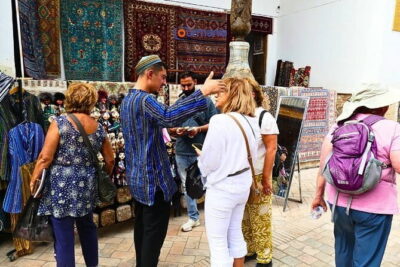
Bukhara Historical City Highlights Guided Walking Tour
Read our review →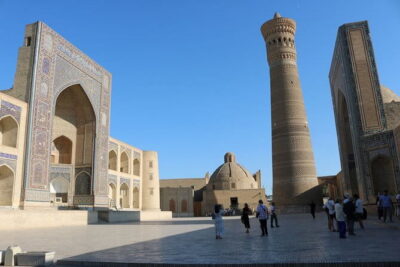
Bukhara: Private Guided Walking Tour with Hotel Pickup
Read our review →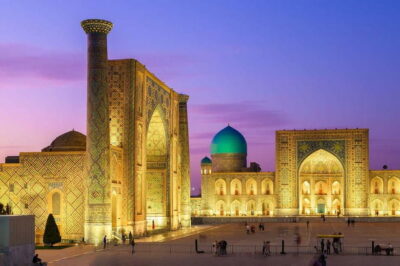
2 – Days Guided Tour of Samarkand and Bukhara from Tashkent
Read our review →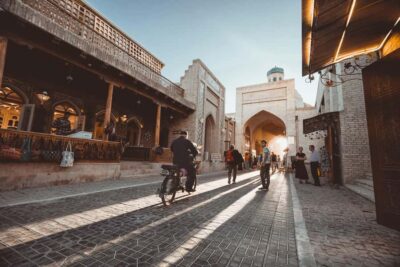
Bukhara: Full-Day Guided Tour with English-Speaking Guide
Read our review →
Full-Day Private Guided Tour to Islamic 7 Saints of Bukhara
Read our review →Browse the lists this tour appears in