
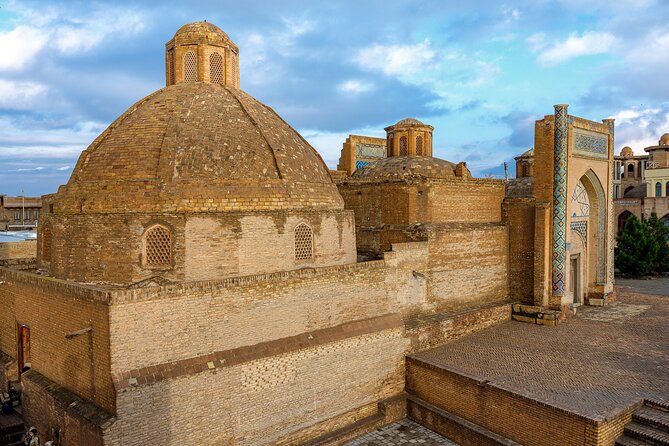
Reviewed · GUIDED TOURS IN BUKHARA
Full-Day Private Guided Tour to Islamic 7 Saints of Bukhara
Bukhara’s Seven Saints tour takes you beyond the famous old city to the shrines of the Sufi teachers who shaped Central Asian Islam. You visit seven mausoleums in a single day, including the birthplace of Abdalhalik Gijduvani and the grand complex of Bahauddin Naqshband.
I like the private vehicle, which makes a long route through several towns far easier than piecing together local transport. I also like the chance to hear the story of the Hadzhagan school in sequence, from teacher to teacher, instead of seeing isolated monuments without context.
The main consideration is time. With seven stops and roughly 7 to 8 hours on the road, this is a full day with a strong religious and historical focus. It suits you best if you want sacred sites and Sufi history, not a relaxed day of cafés and old-city sightseeing.
Key points about Bukhara’s Seven Saints tour
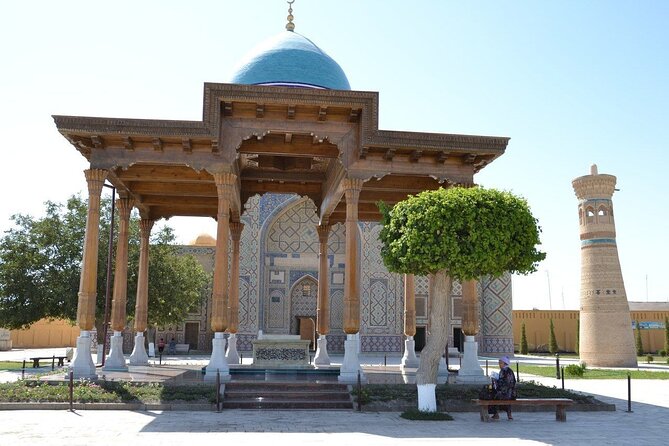
- Seven sacred stops in one day: Visit shrines linked to the Sufi chain from Abdalhalik Gijduvani to Bahauddin Naqshband.
- Private transportation: Your group travels with its own vehicle and licensed guide rather than joining a large coach.
- A clear spiritual thread: The route explains the Hadzhagan school and the later Naqshbandi tradition through its leading teachers.
- Forty minutes at each site: The schedule gives you time to visit every shrine, though transit between towns makes the day busy.
- Guide Hamza may lead the experience: Hamza is described as passionate about Uzbekistan, Sufism, Islamic culture, and local history.
- Lunch is optional: Lunch costs an extra $10 per person, while entrance tickets and taxes are included.
Why the Seven Saints route matters in Bukhara
Bukhara has long been known as one of Central Asia’s major Islamic centers. The city is traditionally described as having once contained hundreds of mosques and dozens of madrassas, earning it titles such as the Holy City of Central Asia and the Star of the Islamic World.
This tour gives you a different way to understand that reputation. Instead of staying among Bukhara’s central monuments, you travel into the surrounding towns to visit the burial places of Sufi teachers. Their teachings helped shape the spiritual life of the region and later influenced the Naqshbandi brotherhood, one of the most important Sufi orders in Uzbekistan.
The route follows a chain of teachers. Each stop introduces one figure, his place in the tradition, and the relationship between masters and students. That order matters. You are not simply collecting seven mausoleums for photographs. You are following the development of a school of Islamic mysticism across several generations.
A private guide is especially useful here. The names, dates, religious titles, and links between the saints can become hard to sort out without explanation. Hamza, one guide associated with this experience, is described as sharing background on Sufism, Islamic culture, and Uzbekistan with energy and care. The driver is also described as friendly and well mannered, which matters on a day with substantial time in the vehicle.
More Guided Tours in Bukhara
- Bukhara: Historic Center Guided Sightseeing Tour
★ 4.8 · 44 reviews - Bukhara Historical City Highlights Guided Walking Tour
★ 4.5 · 16 reviews - Bukhara: Private Guided Walking Tour with Hotel Pickup
★ 5.0 · 11 reviews
Gijduvon and the beginning with Abdalhalik Gijduvani
The first stop is Gijduvon, also spelled Gizhduvan in some descriptions. This town is associated with Abdalhalik Gijduvani, who lived from 1103 to 1179 and is regarded as the first of Bukhara’s Seven Saints.
Gijduvani founded an independent school of mysticism in Maverannahr, the historic name for much of Central Asia. This school became known as Hadzhagan, or the Path of Teachers. Beginning here gives the entire day a useful structure because you are introduced to the first major link in the spiritual succession.
You have about 40 minutes at the site, with no separate admission charge listed. That is enough time for a guided visit and quiet reflection, but not for a slow, unplanned exploration. Pay close attention to the explanation of Gijduvani’s role, since later stops make more sense once you understand this starting point.
Safirkon and Khoja Arif Rivgariya
The second stop is Safirkon, where you visit the burial place of Khoja Arif Rivgariya, also known as Saint Khoja Arif Mohi Tobon. He is described as one of the major Sufi figures of Central Asia and a follower of the Hadzhagan tradition.
This stop continues the teacher-to-student pattern. You can expect the guide to explain how Rivgariya carried forward the ideas associated with Gijduvani and how the school developed through successive spiritual authorities.
Again, the planned visit lasts about 40 minutes and admission is listed as free. The schedule is practical, but it does not leave much room for lingering. If you want photographs, take them early, then give your attention to the guide before moving on.
Vobkent and Khoja Mahmud Angirey Fagnaviya
At Vobkent, the route reaches the burial place of Khoja Mahmud Angirey Fagnaviya. He was regarded as a spiritual authority in Maverannahr and is noted for introducing an important practice into the Hadzhagan tradition.
The supplied details do not spell out that practice, so this is one point where your guide’s explanation will add real value. Ask Hamza, or whichever licensed guide leads your group, to explain what Fagnaviya changed and why his contribution mattered.
The stop lasts about 40 minutes, with admission listed as free. This is a good example of why the tour works better with a guide than as a self-guided shrine run. The monument alone may tell you little about its place in the chain. The story gives it meaning.
A few more Bukhara days to weigh up
- Best of Bukhara: All Day Private Old Town Tour
★ 5.0 · 66 reviews - Best of Bukhara: All Day Private Old Town Tour
★ 4.9 · 62 reviews - Bukhara Full Day Old City Private Tour
★ 5.0 · 46 reviews - Legends of Bukhara: Exclusive Full-Day Tour
★ 5.0 · 4 reviews
Ramitan and Ali Khoja Romitaniya
The first Ramitan stop is connected with Ali Khoja Romitaniya, one of the leading spiritual authorities of the Hadzhagan school. He is described as a master of wisdom with a strong spiritual presence and personal charisma.
By this stage, the route begins to feel less like a list of distant religious sites and more like a family tree of teachers. The connection between one saint and the next is the core of the day. If you enjoy understanding how religious traditions grow through people, instruction, and succession, this is one of the strongest parts of the tour.
You receive about 40 minutes here. Since the tour includes two separate Ramitan stops, listen carefully to the names and roles. It can be easy to blend them together after several hours, especially if the weather is hot or you are tired from the road.
The second Ramitan stop and Babai Sammasi
The next visit in Ramitan is the burial place of Khoja Muhammad Babai Sammasi, the fifth of the Seven Saints. He followed the Hadzhagan tradition and studied under Ali Khoja Romitaniya.
This direct teacher-student link makes the stop particularly useful. You can connect the earlier visit with the person introduced here, seeing how the spiritual succession passed from one generation to another.
The allotted time is another 40 minutes, and admission is listed as free. The repeated timing keeps the day organized, though it also means you should not expect long periods at any single complex. This is a focused religious route, not an open-ended village tour.
Kogon and Saint Mir Kulal
The sixth saint is Mir Kulal, visited near Kogon. His name is connected with the word kulal, meaning potter, and he is identified as a spiritual authority and sheikh of the Hadzhagan school.
Mir Kulal is sixth in the chain of spiritual succession, or silsila, presented by the tour. That position brings you close to the final and most famous stop, Bahauddin Naqshband. The guide’s job here is to show how the earlier teachings led toward the Naqshbandi tradition.
You have about 40 minutes at the site. The tour information also refers to Mir Kulal as Sheikh Sayyid Amir, so expect more than one title or name during the explanation. A small notebook can help if you want to remember the sequence, since the names are not easy to retain after one long day.
Bahauddin Naqshband Mausoleum, the final major stop
The final stop is the mausoleum of Bahauddin Naqshband, the best-known figure on the route and the seventh saint. He was a major Central Asian Sufi of the 14th century, and the Naqshbandi name comes from his craft, with Naqshband often explained as chaser or engraver.
This is the only stop with an entrance ticket specifically listed as included. It also carries special weight because Bahauddin Naqshband gave his name to the Naqshbandi Sufi order, one of the most influential brotherhoods in Uzbekistan and the wider Islamic world.
After six earlier shrines, this final visit gives the chain a clear destination. You can now place Naqshband within the succession rather than meeting him as a famous name without context. The planned visit lasts about 40 minutes, so use the guide’s explanation to tie together the people and teachings encountered throughout the day.
Photo and video fees may be charged separately at museum entrances, usually $1 to $2 per site. Those charges are not included, so carry some small cash if you want to photograph interiors or displays.
What the seven-hour schedule feels like
The tour lasts approximately 7 to 8 hours. Each of the seven stops allows about 40 minutes, which adds up to nearly five hours of visits before you count the driving between Gijduvon, Safirkon, Vobkent, Ramitan, Kogon, and the final mausoleum.
That makes the private vehicle more than a comfort feature. It is the practical reason this route can be completed in one day without relying on complicated connections. You leave from the meeting point at Hotel Malika-Bukhara on Gavkushon Road and return there at the end.
You should expect a structured day. The guide will keep the route moving, and the time at each shrine is fixed enough to cover all seven saints. Wear comfortable clothing and shoes suitable for a full day of visits, but do not expect the tour to function as a free-form outing.
The experience requires good weather. If poor weather cancels the tour, you are offered another date or a full refund. The operator also requires a minimum number of travelers, although the activity itself is private for your group.
The $160 price and what it covers
At $160 per person, this is not the cheapest way to see sites outside Bukhara. The value comes from combining a private vehicle, a licensed guide, entrance tickets to all monuments, and a carefully arranged route across several towns.
For one person, the price may feel high. For a small group, it becomes easier to justify, especially since group discounts are available. You are paying for transport and interpretation as much as for admission. Without a private arrangement, reaching seven separate religious sites in one day could be difficult to organize.
Lunch is not included but can be arranged for an extra $10 per person. That is a modest addition for a full-day outing, particularly since stopping to find food on your own could cut into the schedule. Tips are also separate.
The strongest value is for people who already have time for Bukhara’s central sights and want to understand the religious world around the city. If you have only one day in Bukhara and prefer architecture, markets, and old-town lanes, this tour will use that day in a very different way.
Who should book this private experience
I would choose this tour if you have a serious interest in Sufism, Islamic culture, religious history, or the people behind Bukhara’s reputation as a sacred city. The sequence of seven teachers gives you a subject to follow, and the private format lets you ask questions as they come up.
It also suits you if you want to get outside Bukhara without arranging several separate transfers. A friendly driver and a licensed guide make the long route simpler, while a private group gives you more control than a large shared tour.
I would think twice if you dislike long vehicle days or prefer to spend time at one monument rather than visit seven in succession. The route is also less suitable if your main aim is Bukhara’s best-known urban architecture. This is a spiritual and regional history tour first.
Hamza is a useful name to know when booking or confirming the guide. His role in the experience includes explaining the history of Uzbekistan, Sufism, Islamic culture, and the individual khojas. The guide’s ability to connect the seven names will make a major difference to how much you take away.
Practical details before you reserve
Pickup is offered from Hotel Malika-Bukhara, Gavkushon Road 25, in Bukhara. The tour ends back at the same meeting point. Confirmation is provided when you book, and the activity is near public transportation.
Most people can participate, and only your group joins the private activity. Entrance tickets and taxes are included, but photography and video fees at museum entrances can cost $1 to $2 per site.
Free cancellation is available if you cancel at least 24 hours before the local start time. A cancellation made later, or a change requested within 24 hours, is not refunded. Keep the weather requirement in mind when planning your day.
Should you book the Seven Saints tour?
Book it if you want the religious story behind Bukhara, not just its famous city-center monuments. The route is long, but it gives you a clear look at seven Sufi figures and the chain that leads to Bahauddin Naqshband. Private transport, a licensed guide, and included entrance tickets make the $160 price easier to defend for a small group.
Skip it if you want a slow day or have little interest in Islamic mysticism. For the right reader, though, this is a thoughtful way to see the towns around Bukhara and understand why the city has such an important place in Central Asian Islam.
FAQ
How long does the Seven Saints of Bukhara tour last?
The tour lasts approximately 7 to 8 hours.
How many sites are included?
Seven religious sites are included, each connected with one of the Seven Saints of Bukhara.
Where does the tour begin?
The meeting point is Hotel Malika-Bukhara at Gavkushon Road 25, Bukhara.
Where does the tour end?
The activity ends back at the meeting point.
Is transportation included?
Yes. Private transportation is included, along with a licensed guide.
Are entrance tickets included?
Entrance tickets to all monuments are included. Photography and video fees may cost an additional $1 to $2 per site at museum entrances.
Is lunch included?
No. Lunch is available for an additional $10 per person.
Is this a private tour?
Yes. Only your group participates in the activity.
Is the tour suitable for most people?
The provided information says most people can participate. It also notes that the experience is near public transportation.
What is the cancellation policy?
You can cancel up to 24 hours before the start time for a full refund. Later cancellations and changes are not accepted for a refund. If poor weather or the minimum group requirement cancels the activity, you are offered another date or a full refund.
Just added around Bukhara
- Bukhara: City Highlights Guided Tour with Pickup★ 5.0 · 3 reviews
- Uzbekistan 8 Days Private Guided Tour★ 4.6 · 3 reviews
- 9 Days Private Guided Tour to Uzbekistan★ 5.0 · 3 reviews
- Legends of Bukhara: Exclusive Full-Day Tour★ 5.0 · 4 reviews
- Bukhara Walking Tour★ 5.0 · 4 reviews
- 2 Day Ukhum Hiking Tour from Bukhara★ 5.0 · 4 reviews
- Bukhara day tour★ 4.0 · 4 reviews
- Bukhara in a Day History, Culture, and Local Insight Private Tour★ 5.0 · 4 reviews
Guided Tours in Bukhara, compared.
Bukhara: Historic Center Guided Sightseeing Tour
Read our review →
Bukhara Historical City Highlights Guided Walking Tour
Read our review →
Bukhara: Private Guided Walking Tour with Hotel Pickup
Read our review →
2 – Days Guided Tour of Samarkand and Bukhara from Tashkent
Read our review →
Bukhara: Full-Day Guided Tour with English-Speaking Guide
Read our review →
Browse the lists this tour appears in