
Reviewed · BUKHARA TOURS
Best of Bukhara: All Day Private Old Town Tour
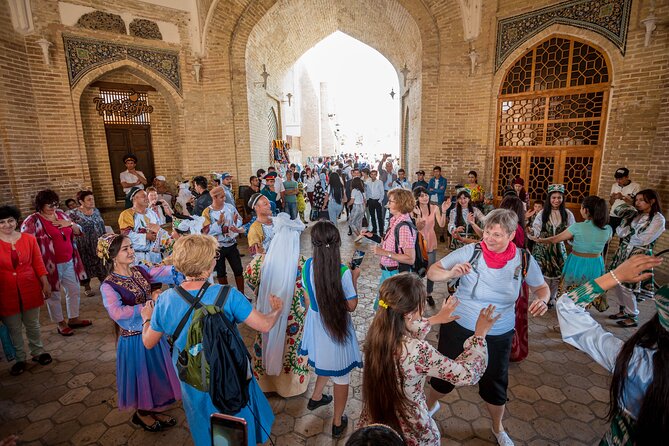
Bukhara is the kind of city that rewards a guide. Behind every blue-tiled portal and shaded trading dome sits a story about faith, trade, rulers, or daily life along the Silk Road. This private tour takes you through the Old Town’s major sights, from the ancient Ark fortress to the soaring Kalon Minaret, with time for bazaars and local streets.
I like the personal format, since your guide can slow down for photographs, explain details that are easy to miss, and shape the day around your interests. I also like the wide reach: thirteen listed stops cover mosques, madrasas, markets, a fortress, a pond-side square, and Bukhara’s old Jewish quarter.
The main point to watch is cost clarity. The $65 price covers the private guide and hotel meeting service, but museum and historic-site admission costs an additional $6 per person. The tour is also a long walking day, even though guides have adjusted the pace well for visitors with mobility concerns.
Key points to know before booking
- Thirteen Old Town stops: You see Bukhara’s main religious, royal, commercial, and Jewish landmarks in one outing.
- A private guide: Only your group participates, so you can ask questions and request a slower or more focused pace.
- Mostly a walking tour: Pickup is offered at central hotels, but the sightseeing itself takes place on foot in the Old Town.
- Strong guide reports: Shakhnoza, Shaxnoza, Bekhruza, Malika, Nargiz, Gulnaz, and others are praised for clear English and local knowledge.
- Extra entrance cost: Museum and historic-site tickets are not included and are listed at $6 per person.
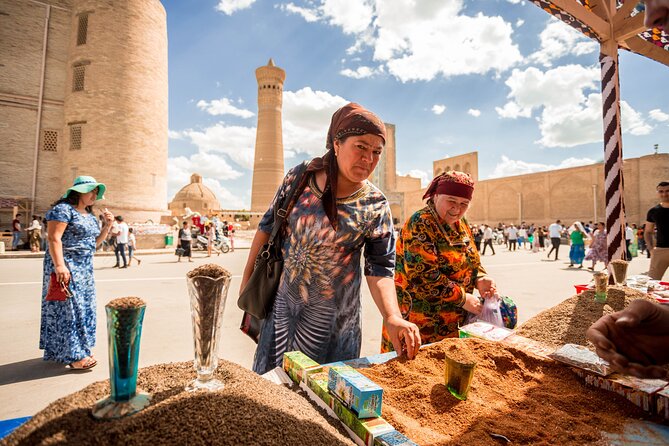
- Good shopping context: The route includes the trading domes, bazaars, and opportunities to learn about carpets, textiles, spices, and crafts.
Why a guide helps in Bukhara’s Old Town
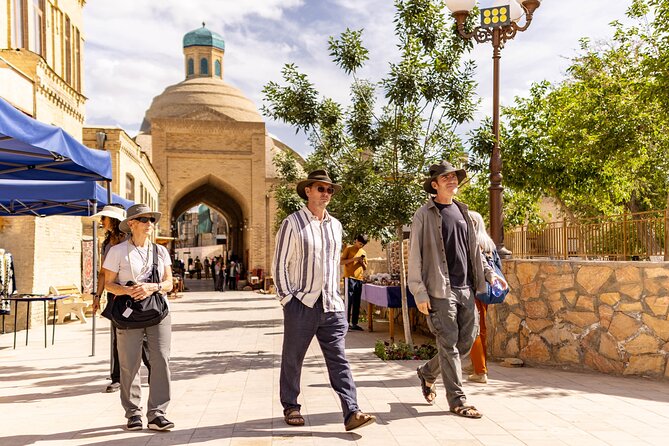
Bukhara looks easy to explore at first. The central monuments sit fairly close together, and the Old Town is pleasant to walk. But the city’s story is spread across many buildings, and the details can blur if you simply move from one photo stop to the next.
A private guide gives the streets some order. You learn why a madrasa was built, how a mosque fits into a larger religious complex, and why the trading domes mattered to merchants. You also have someone to explain the layers of modern Uzbek life around the monuments.
The guides have different names and personalities, but the strongest pattern is clear. Shakhnoza and Shaxnoza receive repeated praise for their English, friendly manner, historical detail, and ability to adjust the pace. Bekhruza is especially good for visitors interested in crafts and regional history. Malika and Nargiz are also noted for clear explanations and an easy command of the city’s story.
This is not a fixed coach tour. You meet a local guide at a central hotel, then generally make your way toward the Old Town. One detailed account describes the initial ride as a local taxi followed by a full walking route. Confirm the exact pickup arrangement when you book.
A few more Bukhara days to weigh up
- Best of Bukhara: All Day Private Old Town Tour
★ 4.9 · 62 reviews - Bukhara Full Day Old City Private Tour
★ 5.0 · 46 reviews - Legends of Bukhara: Exclusive Full-Day Tour
★ 5.0 · 4 reviews
Lyab-i-Hauz sets the tone
Your route begins at Lyab-i-Hauz, a central square named for its pond. The architectural ensemble was formed in the sixteenth and seventeenth centuries, and the water gives this part of town a calmer feel than the main streets.
I like starting here because the square introduces a key feature of Bukhara: monumental buildings and ordinary city life share the same space. You can look at old brickwork and carved details, then watch people gather around the pond-side setting.
The stop is scheduled for about 30 minutes and has no admission charge. That makes it a useful orientation point before the tour moves into paid monuments and more crowded commercial lanes.
The monument to Hodja Nasreddin is nearby. This bronze figure, installed in 1979, adds a lighter note to the old city. Nasreddin is associated with humor and clever stories, so the statue helps show that Bukhara is more than a collection of solemn religious buildings.
The Kalon Minaret and Poi Kalyan complex
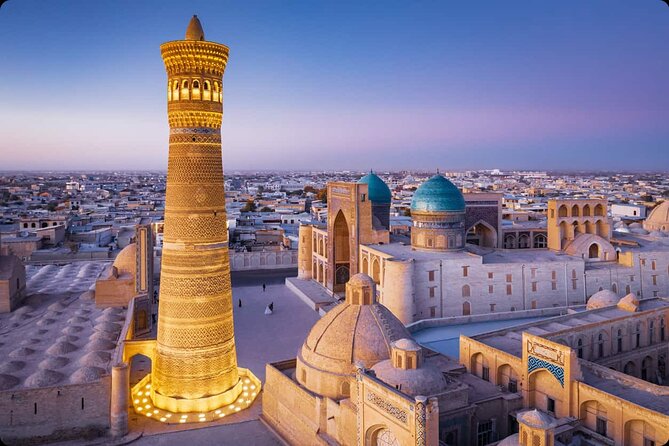
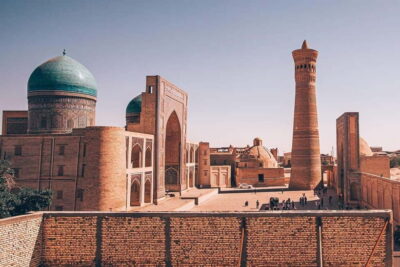
The Great Minaret of the Kalon is one of Bukhara’s defining sights. Its scale is impressive from a distance, but your guide can help you read the complex around it rather than treating the tower as an isolated photo stop.
The Kalon Minaret belongs to the Poi Kalyan religious complex, which also includes the Kalon Mosque and Mir-i-Arab Madrasa. You visit these as separate itinerary stops, with roughly 30 minutes assigned to the minaret and another 30 minutes to the mosque.
Admission to the minaret, madrasa, and mosque is not included. The stated extra cost for museums and historic sites is $6 per person, though you should confirm the current ticket details with the operator.
Mir-i-Arab Madrasa is particularly important for understanding the modern religious story of Uzbekistan. It was the only spiritual educational establishment in the Soviet Union that began functioning again after the Second World War, and leading imams of that period studied there.
You may not have full access to every interior on the route. The value here is often the guide’s explanation of how the buildings worked together, how religious education continued, and how the complex remains central to Bukhara’s identity.
The Ark and Bolo Hauz Mosque
The Ark of Bukhara is the day’s largest royal stop. This massive fortress was first built and occupied around the fifth century AD, and its walls give you a strong sense of the city’s long political life.
Allow about an hour here. That is the longest scheduled visit, and rightly so. The Ark is not just a single monument. It represents the seat of power that once directed the city, while the surrounding Registan area connected royal authority with religious and civic life.
The entrance ticket is extra. You should also expect stairs or uneven surfaces at historic sites, so wear shoes with a firm sole and tell your guide if you need a slower pace. One guide adjusted the route for a visitor recovering from spinal surgery, and another helped a guest with walking difficulties. That personal attention is one of the real advantages of booking privately.
Across from the Ark, Bolo Hauz Mosque offers a different scale. Built in 1712, it is known for its historic setting and its place within the UNESCO-listed old city. The scheduled visit is only about ten minutes, so this is more of a focused stop than an extended exploration.
Look up at the wooden columns and roof details, then let your guide explain how the mosque relates to the fortress and the surrounding district. The short visit keeps the day moving, but anyone especially interested in mosque architecture may want to ask for extra time.
Same city, a completely different day out:
- Bukhara: Walking Tour with a Small Group
★ 4.9 · 260 reviews - From Bukhara: 2-Day Desert Yurt Camp Tour
★ 4.5 · 57 reviews - City Tour Around Bukhara
★ 5.0 · 55 reviews - Bukhara: Historic Center Guided Sightseeing Tour
★ 4.8 · 44 reviews
Trading domes and the life of the Silk Road
Bukhara’s trading domes are among the most enjoyable parts of the route. Four domes remain in the old city, arranged along a north to south route. These covered market spaces once helped merchants work in shade and shelter, and they still give the commercial quarter its distinctive shape.
The tour allows about 30 minutes here, but this is one place where your private format matters. You can pause to look at hand-woven textiles, carpets, metalwork, miniature paintings, and Uzbek spices. Several guides have also taken guests to artisan workshops, including carpet weaving and metal carving, when requested.
Do not assume every workshop is guaranteed. Ask at the start if crafts are a priority, especially if you want more than a quick look at souvenirs. Your guide can also help you understand what you are buying and point out the difference between browsing and making a considered purchase.
The bazaars are a good place to shop, but the tour is not a dedicated shopping excursion. You will get context and time to browse, yet the schedule also includes many monuments. If you want to bargain slowly for a carpet or textile, you may need to sacrifice time elsewhere.
Madrasas that reveal Bukhara’s changing eras
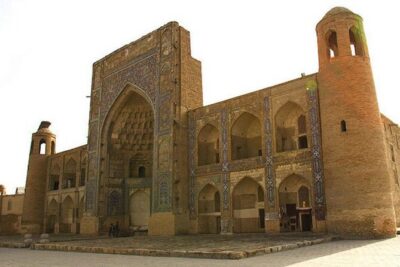
Nodir Devon Begi Madrasa dates from 1622 to 1623. It was first built as a caravanserai and later changed into a madrasa. That change tells you something useful about Bukhara: buildings were adapted as trade, education, and political needs shifted.
The madrasa sits near Lyab-i-Hauz and is scheduled for about 20 minutes. Admission is not included. I find this kind of stop valuable because it connects the grand religious architecture to the practical business of lodging and trade.
Ulugbek Madrasa was completed in 1420. Its exterior tiles, fluted dome, stained windows, and old tombs give you several architectural details to look for. The stop lasts about 30 minutes, making it one of the better places to ask your guide about design rather than simply taking a photograph.
Abdulaziz-Khan Madrasa provides another comparison. The itinerary notes Ulugbek’s role as a ruler, scholar, and patron of science, as well as the construction of his first Bukhara madrasa in 1417. Seeing these madrasas together helps you compare different periods of Uzbek architecture.
The attraction is not just decoration. Your guide can connect tilework, religious study, scholarship, and royal patronage. Without that explanation, the buildings can begin to look alike after several hours.
Maghak-i Attari Mosque and the old Jewish quarter
Maghak-i Attari Mosque forms part of the Lyab-i-Hauz religious complex. The visit is scheduled for about 30 minutes, with admission extra. Its place within the wider historic center makes it a useful reminder that Bukhara developed as a network of connected religious and commercial spaces.
The synagogue is one of the more distinctive stops. You visit Bukhara’s old Jewish quarter and a synagogue described in the tour information as dating to the sixteenth century. The route also presents the unusual local tradition that Jewish residents once prayed together with Muslims in the same mosque before the synagogue was built.
This stop adds social history to a day otherwise dominated by rulers, mosques, and madrasas. You get a fuller picture of Bukhara as a meeting point for communities and trade. The synagogue visit is scheduled for about 20 minutes, and admission details are not listed separately, so ask your guide what is open on the day.
How long the day feels on foot
The advertised duration is about five to seven hours. In practice, the route can occupy much of a day, especially when you stop for photographs, questions, shopping, or craft workshops. One itinerary account describes a half-day ending around 1:30, while other accounts describe roughly six hours and nearly a full day.
That range is worth taking seriously. The number of stops is high, and several sites allow 20 to 30 minutes each. Add walking between them and the time needed for tickets, and you have a packed schedule.
I would wear comfortable shoes, carry water, and avoid booking this on a day when you need to catch a train immediately afterward. The private format helps. Guides have slowed down for older family members and visitors with mobility limits, and one guide arranged a tuk-tuk back toward the starting point at the end. Still, the tour is not presented as a vehicle-based sightseeing trip.
Pickup is available from central hotels. Because the main experience is on foot, ask about your exact meeting point and how you will reach the Old Town.
Is $65 per person good value?
At $65 per person, the tour is not the cheapest way to see Bukhara. You also need to budget the stated $6 per person for museum and historic-site admission. Gratitude for the guide is suggested, but not included.
The value improves if you are traveling as a small private group and want a full orientation in one day. You receive a dedicated professional local guide, hotel meeting service, a route through the main monuments, and the freedom to ask for explanations or adjust the pace.
The price is less appealing if you prefer to wander slowly, avoid paid interiors, or spend most of the day shopping. One piece of feedback called the tour overpriced, mainly because entrance fees were separate and the actual day felt closer to half a day. That is a fair concern, especially if your schedule covers only the morning.
I would judge the cost by what you want from Bukhara. If you care about context, local stories, and efficient coverage, the private guide can save you time and prevent the monuments from becoming a blur. If you only want exterior photographs, you can see much of the Old Town on your own for less.
Who will get the most from this tour?
This works best for first-time visitors who want to understand Bukhara quickly. It also suits history fans, families, couples, and solo visitors who prefer conversation over a large group.
The tour is especially useful if you want help with food, shopping, and the rest of your stay. Guides have offered suggestions about places to eat, markets, extra sights, and local crafts. Some have added the Ismail Samani Mausoleum when time and interest allowed, but that is not part of the listed route, so treat it as a possible extra rather than a promise.
Families with older parents can benefit from the flexible pace, provided everyone understands that this remains a walking tour. Craft-focused visitors should tell the guide in advance. The same goes for anyone with limited mobility, since the guide can adjust the order or timing more easily in a private group.
The tour is less suitable for someone who wants a quiet, unstructured day. Thirteen stops create a full program, and admission charges may make the total cost higher than the headline price.
Booking details and cancellation
Confirmation is provided at booking, and the tour is offered as a private activity for your group alone. It is near public transportation, and most people can participate, though you should discuss walking concerns before the start.
You can cancel for a full refund up to 24 hours before the local start time. Cancellations or changes made within 24 hours are not refunded or accepted. Check any change in start time carefully, since one reported scheduling mix-up left a guide waiting at the hotel.
Should you book the Bukhara Old Town day tour?
I would book it if you have one main day in Bukhara and want the city’s major sights explained in a sensible order. The best parts are the private guide, the strong local perspective, the wide range of stops, and the chance to add craft workshops or extra advice when time allows.
I would hesitate if your priority is a slow market day or if you dislike paying separate entrance fees. In that case, ask for a shorter custom route focused on the Ark, Kalon complex, and trading domes.
For most first visits, the tour offers a useful foundation. You will leave knowing not only what Bukhara’s buildings look like, but also how faith, scholarship, royal power, Jewish life, and trade shaped the city.
FAQ
How long does the tour last?
The advertised duration is approximately five to seven hours. The exact length can vary depending on walking pace, questions, photographs, shopping, and any added craft workshops or sights.
What is included in the $65 price?
The price includes a private tour, a professional local guide, meeting service at central hotels, and photo opportunities. Museum and historic-site admission is not included.
How much are the entrance fees?
The additional entrance cost is listed as $6 per person for museums and historical sites. Individual stop information also marks several attractions as admission not included.
Is hotel pickup available?
Yes. The guide meets you at central hotels. The sightseeing portion is mainly on foot, and some arrangements may use a local taxi to reach the Old Town starting point.
Is this a group tour?
No. This is a private activity, so only your group participates. That allows you to ask questions and request a different pace.
Can I cancel for a refund?
You can cancel at least 24 hours before the experience start time for a full refund. Cancellations or changes made less than 24 hours before the start are not refunded or accepted.
Just added around Bukhara
- Bukhara: City Highlights Guided Tour with Pickup★ 5.0 · 3 reviews
- Full-Day Private Guided Tour to Islamic 7 Saints of Bukhara★ 4.5 · 3 reviews
- Uzbekistan 8 Days Private Guided Tour★ 4.6 · 3 reviews
- 9 Days Private Guided Tour to Uzbekistan★ 5.0 · 3 reviews
- Bukhara Walking Tour★ 5.0 · 4 reviews
- Legends of Bukhara: Exclusive Full-Day Tour★ 5.0 · 4 reviews
- 2 Day Ukhum Hiking Tour from Bukhara★ 5.0 · 4 reviews
- Bukhara day tour★ 4.0 · 4 reviews
Bukhara Tours, compared.
Bukhara: Historic Center Guided Sightseeing Tour
Read our review →
All You Need To Know About Bukhara. A Walk In The Town
Read our review →Browse the lists this tour appears in