
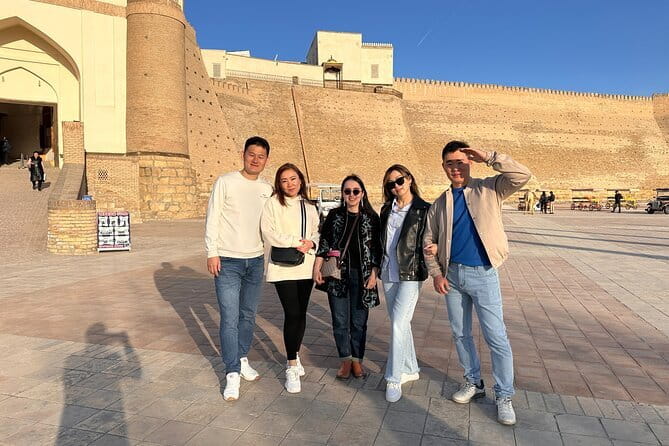
Reviewed · BUKHARA TOURS
City Tour Around Bukhara
Bukhara comes alive here through more than monuments. Kamilla Yu links the city’s brick mausoleums, working craft shops, old trading domes, local food, music, and modern Uzbek life into one private half-day outing. The handmade Messages from the Past add a playful personal touch.
I like the way the tour keeps history short and clear instead of burying you under dates. I also like the flexibility: you can ask for a plov stop, time with artisans, a bread or traditional-meal class, or extra conversation about daily life in Uzbekistan.
The main consideration is pace. Eleven stops in 4 to 6 hours is a lot, and several sights have admission fees that are not included. You will see the city’s major landmarks, but you should tell Kamilla early if you want longer visits, shopping time, or a slower walk.
Key points at a glance
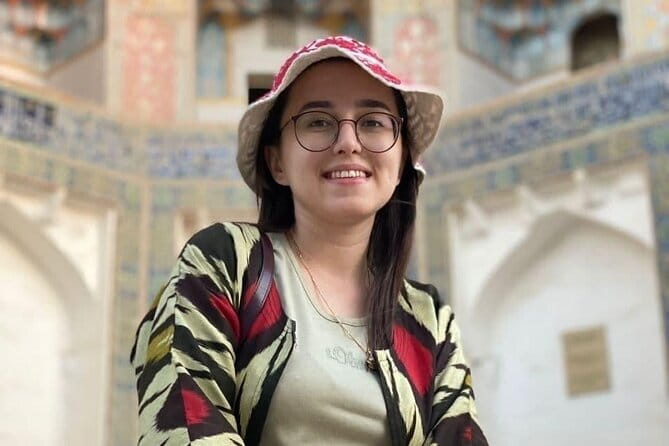
- A private tour for up to six people: Your group has Kamilla’s attention, with room to adjust timing and interests.
- Eleven major Bukhara stops: The route covers the old city, the Ark, the Kalon complex, trading domes, mausoleums, and Lyab-i-Hauz.
- Crafts and daily life: You can see puppet making, blacksmithing, gold embroidery, fabric work, and wood carving where available.
- History without a lecture marathon: Kamilla explains the background in plain language and connects old Bukhara with modern Uzbekistan.
- Personal extras: Handmade Messages from the Past, tea or coffee breaks, food stops, folk shows, and cooking classes may be arranged.
- Good value for a small group: At $66 per group of up to six, the price works out well for families or friends traveling together.
Why this Bukhara tour feels different
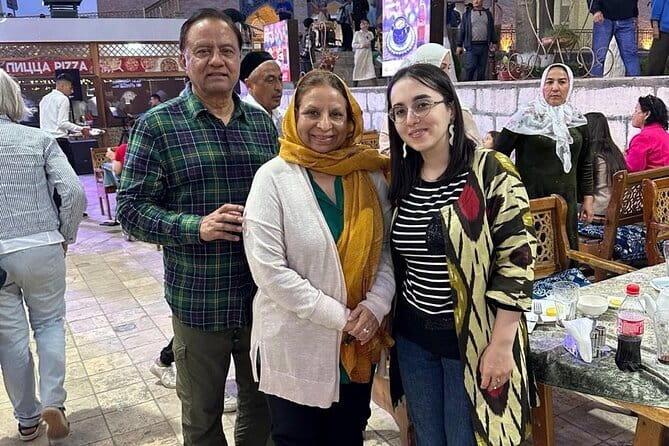
Many city tours give you a string of buildings and a list of rulers. This one aims for something more personal. Kamilla presents Bukhara through stories, small details, crafts, food, and the way people still use old spaces.
That approach matters in Bukhara. The city’s monuments are impressive, but their scale and repeated blue tilework can begin to blur together if you only collect photographs. A guide who explains how a trading dome worked, why a mosque has 40 pillars when only 20 are visible, or how a madrasa functioned gives each place its own identity.
Kamilla’s style is conversational and adaptable. Her English is described as strong and easy to follow, and she can answer broader questions about Uzbek society rather than sticking only to prepared dates. She also leaves room for photographs, souvenirs, lunch, and questions.
The tour is private, so it suits you if you dislike being hurried along with a large group. It also works well for families, since a private guide can adjust the rhythm. The 4 to 6-hour estimate is wide for a reason: your choices affect the day.
A few more Bukhara days to weigh up
- Bukhara: Walking Tour with a Small Group
★ 4.9 · 260 reviews - Best of Bukhara: All Day Private Old Town Tour
★ 5.0 · 66 reviews - Best of Bukhara: All Day Private Old Town Tour
★ 4.9 · 62 reviews
Starting with Bukhara’s oldest brickwork
The meeting point is the Ismail Samani Mausoleum, a short distance from the main concentration of old-city monuments. This is a smart opening stop because it shows a different side of Bukhara before you reach the grand tiled facades.
The mausoleum dates from the 9th or 10th century and is built entirely from brick. Its builders used more than 20 brick-laying patterns, creating light, shadow, and geometric detail without colorful tiles.
Give this building time. From a distance it may look modest beside Bukhara’s larger religious complexes, but close inspection reveals how much skill went into the masonry. Admission is not included, and the planned visit is about 30 minutes.
The tour then moves to Chashmai Ayub Mausoleum, a 20-minute stop. This is presented as a sacred place connected with three religions and the grave of the Prophet Job. A natural well with healing associations is part of the site, and the complex dates to the 12th century.
This stop suits anyone interested in the way religious traditions overlap in Central Asia. It is less about grand scale than belief, water, and the layers of meaning attached to an old place. Admission is not included.
The Bolo Hauz Mosque and the Ark of Bukhara
At Bolo Hauz Mosque, you will see a wooden hall supported by 20 carved pillars. Yet the mosque is commonly called the mosque of 40 pillars. Kamilla explains the reason for that name, along with the building’s role in announcing news about a new ruler.
The planned visit lasts 30 minutes, and entry is free. This is one of the stops where a guide adds real value because the key story is not obvious from the architecture alone. Look up at the painted wood and carved columns, but also listen for the explanation of how the mosque connected religion and public life.
Next comes the Ark of Bukhara, the old citadel and one of the city’s most commanding sights. The fortress served as the home of Bukhara’s rulers from the 4th century BC until 1920. Much of what you see is ruined or reconstructed, but the site still gives you a sense of the authority concentrated inside its walls.
The visit lasts about 40 minutes. You can expect views over the city from the upper part of the citadel, along with stories about the rulers and the less polished side of palace life. Admission is not included.
The Ark is a stop where expectations matter. You are not entering a perfectly preserved medieval palace. You are exploring a layered fortress with ruins, open areas, and viewpoints. Wear comfortable shoes and keep your camera ready, but do not expect every section to be intact.
The Kalon complex, Bukhara’s great visual pause
The Great Minaret of the Kalon is one of Bukhara’s unmistakable landmarks. Built in the 12th century, it has survived for centuries and remains a useful lesson in structural design. The tour explains how the minaret was built to remain stable and what purposes it served beyond calling people to prayer.
The planned stop is 25 minutes, with free admission. If you take an evening tour during the summer period, the illuminated minaret offers a different mood and better conditions for some photographs. The tour description specifically notes that evening outings are available in summer, so ask about timing when you book.
The nearby Poi Kalyan Mosque is planned for another 25 minutes. It is still active and dates from the 16th century. Its 288 domes and large courtyard make it one of the city’s most striking spaces.
Admission is not included. If you enjoy architectural details, this is a place to slow down and look at the repeated domes, corners, arches, and changing views across the courtyard. If you have already spent a long morning visiting religious buildings, you may find the number of details overwhelming. Kamilla’s short, focused explanations help keep the visit manageable.
The Mir-i-Arab Madrasa follows. This religious college has continued functioning since the 16th century. You will learn how religious education was organized and how a typical madrasa was constructed.
Entry is listed as free. The stop lasts about 25 minutes, and the value here comes from understanding the building as an educational institution, not just a photogenic facade. The focus on the steps and system of religious study gives the site a human purpose.
More city tours in Bukhara:
- Bukhara Full Day Old City Private Tour
★ 5.0 · 46 reviews - Bukhara Historical City Highlights Guided Walking Tour
★ 4.5 · 16 reviews - Bukhara: City Highlights Guided Tour with Pickup
★ 5.0 · 3 reviews - Khiva: Historical City Highlights Guided Walking Tour
★ 4.8 · 156 reviews
Trading domes and the business of the Silk Road
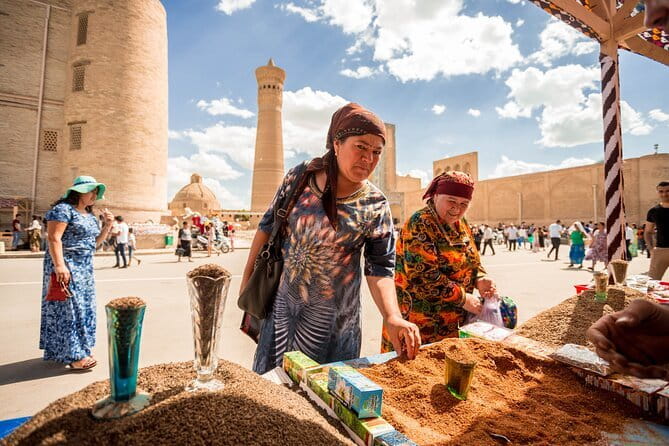
Bukhara’s trading domes are among the most enjoyable parts of the walk. You will pass through three separate domed markets, each designed for a particular kind of trade.
The planned visit is about 40 minutes, and admission is free. These covered passages help you picture how merchants once organized business, displayed goods, and made money from passing commerce. The structures are not simply old shopping streets. Their shape reflects the practical needs of trade, shade, storage, and movement.
This is also a good section for shopping. You can browse without the pressure of a fixed group schedule, though remember that stopping at every stall will lengthen the tour. If you want time for souvenirs, tell Kamilla at the start so she can plan around it.
The route continues to Kosh Madrasah, where two religious schools face one another in the same square. They use different architectural styles, and the site includes a 17th-century classroom and a mosque described as cave-like in style.
The planned visit is 40 minutes, and admission is not included. This stop is useful for comparing buildings side by side rather than viewing each one in isolation. Kamilla can also explain two major religious streams associated with the schools, giving the site a wider social and religious context.
Magoki Attori and the old city’s central pond
At Magoki Attori Mosque, the story turns to buried layers. The 12th-century mosque sits low and partly hidden, and the site was once used for worship by two different faiths, Judaism and Islam.
The visit lasts about 20 minutes, with admission not included. This is a compact stop, but it may be one of the most thought-provoking because it shows how Bukhara changed over time. Buildings were altered, buried, reused, and given new meaning. Look closely at the lower position of the mosque and the surviving details rather than expecting a grand open courtyard.
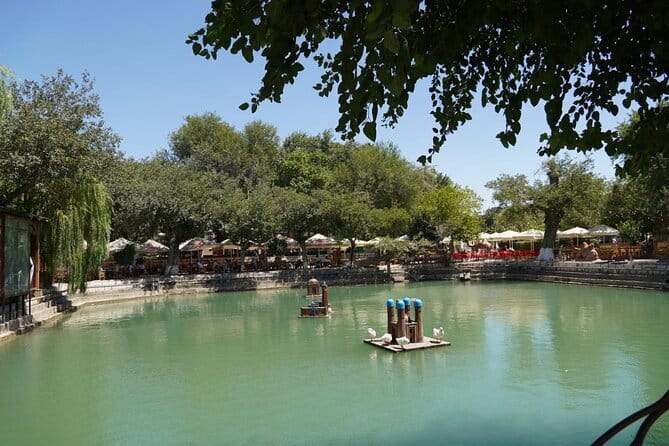
The final stop is Lyab-i-Hauz, the heart of the old city and the endpoint of the tour. The complex includes a mosque, two madrassas, and a caravanserai, an old-style lodging place for merchants and other visitors.
You end beside the pond at Lyab-i-Hauz Square. This is convenient because you are left in the center of the old part of Bukhara, close to restaurants, cafes, and further walking routes. It is a good place to continue your evening rather than being dropped at an isolated starting point.
The final 30 minutes can feel like a natural release after the more formal monuments. Sit by the water, look over the surrounding buildings, or use the location as a base for dinner.
Crafts, food, and local culture
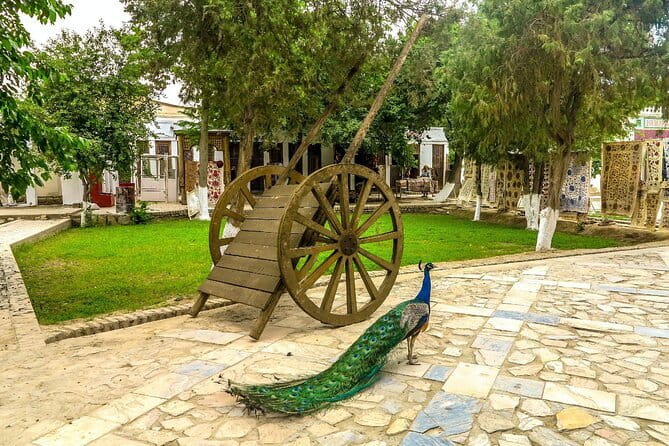
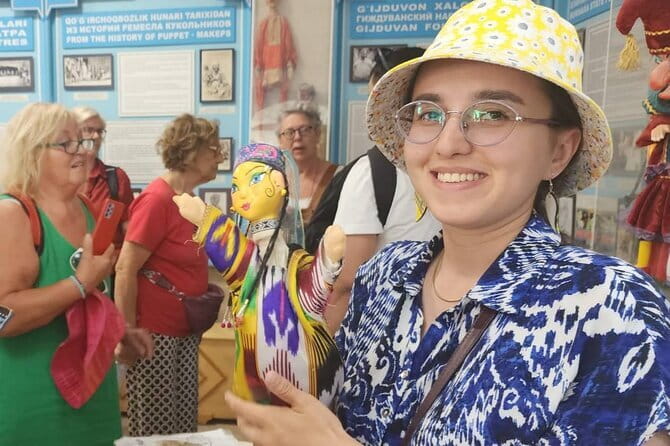
The monuments are only half the appeal. Kamilla can include visits connected with puppet making, blacksmithing, gold embroidery, fabric production, and wood carving. Seeing a craft in progress gives you a better sense of local work than simply buying a finished souvenir.
Availability and timing can vary, so treat these as flexible elements rather than guaranteed separate stops. Tell Kamilla what interests you. If you care most about textiles, for example, you may want to spend less time on shopping or extend the tour toward artisan work.
Food is another flexible feature. A local lunch stop can be added, including plov, and traditional cooking classes may be arranged. You can also request a bread-making class. Coffee and tea breaks are part of the suggested rhythm, but the cost of coffee or tea is not included.
Local music, traditions, and folk shows may also be included or arranged. The important point is to discuss your interests in advance. The more specific you are, the easier it will be to shape the 4 to 6-hour schedule around what you actually want.
Price, timing, and practical value
The price is $66 per group of up to six people, not $66 per person. For six people, that is $11 each before any entry fees, food, drinks, or optional activities. For a couple, the per-person cost is higher, but the private format still gives you something a large group tour cannot: flexibility.
Several admissions are not included. The Ismail Samani Mausoleum, Chashmai Ayub Mausoleum, Ark of Bukhara, Poi Kalyan Mosque, Kosh Madrasah, and Magoki Attori Mosque list separate entry costs. Bolo Hauz Mosque, the Great Minaret, Mir-i-Arab Madrasa, the trading domes, and Lyab-i-Hauz list free admission.
The tour runs Monday through Friday from 9:00 a.m. to 6:00 p.m. for the stated operating period. Pickup is offered, and the official meeting point is the Ismail Samani Mausoleum. The endpoint is Lyab-i-Hauz Square, near the pond in the old city.
You receive confirmation at booking, and the tour is private. Most people can take part, and the meeting area is near public transportation. Good weather is required. You can cancel up to 24 hours before the start for a full refund, while late cancellations and late changes are not accepted.
Who should book this private Bukhara walk?
I would choose this tour if you want the main sights but also care about how Bukhara works as a living city. It is especially suited to first-time visitors who want an organized route and to repeat visitors who want craft, food, and local context.
Families and small groups get particularly good value from the flat group price. The private format also helps if one person needs more time for photographs or if your group wants to stop for plov.
This may not be ideal if you want a silent, self-guided wander or a narrow tour devoted only to architecture. Eleven stops can feel full, and some sites require extra payment. You should also clarify your priorities before setting out, since a long lunch, shopping, or a cooking class will affect how much time remains for the monuments.
Final recommendation
I recommend booking this tour if you want Bukhara explained by a local guide who can move between architecture, craft, food, religion, and present-day life. Kamilla’s strongest asset is her personal, conversational approach. She makes room for questions and can adapt the route rather than treating the schedule as fixed.
Book it early in your stay if possible. You will finish at Lyab-i-Hauz, in a useful part of the old city, with a better sense of where to eat and what deserves a second look. If you prefer a slower visit, ask for fewer stops. If you want the broad overview in one day, keep the full itinerary and enjoy the variety.
FAQ
How long does the City Tour Around Bukhara last?
The tour lasts approximately 4 to 6 hours. The exact length can change depending on your interests, photographs, shopping, food stops, craft visits, and optional activities.
How many people can join the private tour?
The price covers one group of up to six people. Only your group participates.
Who is the guide?
The guide is Kamilla Yu, who operates as Kamilla Yu Tour Guide Bukhara.
Where does the tour start and end?
The tour starts at the Ismail Samani Mausoleum in Bukhara. It ends at Lyab-i-Hauz Square, near the pond in the center of the old city.
Are admission tickets included?
No. Admission is not included for the Ismail Samani Mausoleum, Chashmai Ayub Mausoleum, the Ark of Bukhara, Poi Kalyan Mosque, Kosh Madrasah, or Magoki Attori Mosque. Several other stops are listed as free.
Are food, coffee, and tea included?
Coffee and tea are not included. A local food stop, plov, or a traditional cooking class may be arranged, but these are not included in the stated tour price.
Can I cancel the tour?
You can cancel at least 24 hours before the start time for a full refund. Cancellations or changes made less than 24 hours before the start are not accepted, and poor weather may lead to a different date or a full refund.
Just added around Bukhara
- Bukhara: City Highlights Guided Tour with Pickup★ 5.0 · 3 reviews
- Full-Day Private Guided Tour to Islamic 7 Saints of Bukhara★ 4.5 · 3 reviews
- Uzbekistan 8 Days Private Guided Tour★ 4.6 · 3 reviews
- 9 Days Private Guided Tour to Uzbekistan★ 5.0 · 3 reviews
- Legends of Bukhara: Exclusive Full-Day Tour★ 5.0 · 4 reviews
- Bukhara Walking Tour★ 5.0 · 4 reviews
- 2 Day Ukhum Hiking Tour from Bukhara★ 5.0 · 4 reviews
- Bukhara day tour★ 4.0 · 4 reviews
Bukhara Tours, compared.
Bukhara: Historic Center Guided Sightseeing Tour
Read our review →
All You Need To Know About Bukhara. A Walk In The Town
Read our review →Browse the lists this tour appears in