
Reviewed · WALKING TOURS IN BUKHARA
Bukhara Walking Tour
Bukhara reveals itself best on foot, where a former caravan road leads from shaded pools and old madrasas to the great Poi Kalyan complex. This private five to six-hour walk also reaches the Ark, the Samanid Mausoleum, a historic mosque beneath a trading street, and a small puppet theater that many visitors would otherwise miss.
I like the way the route mixes famous monuments with unusual stops, especially the Central Asian puppet theater and the old Jewish quarter. I also like the private format for $28, since your guide can explain details at your pace instead of moving a large group from one doorway to the next.
The main catch is that monument admission fees, lunch, and personal costs are extra. You will also walk for much of the day, and the itinerary covers a lot of ground, so anyone wanting a slow, unhurried look at every building may find the pace brisk.
Key points to know before you book
- A full old-city route: Cover Lyab-i-Hauz, the trading domes, Poi Kalyan, the Ark, Bolo Hauz Mosque, and major mausoleums in one day.
- A private experience: Only your own group takes part, with guides offered in English, Spanish, French, German, or Russian.
- A rare puppet-theater stop: See a two-minute demonstration from the master when available and learn about Central Asian puppetry.
- A strong architectural range: Compare Timurid madrasa design, pre-Mongol monuments, Islamic schools, mosques, and royal quarters.
- Simple logistics: Start at Lyab-i-Hauz and finish at the Samanid Mausoleum, with no vehicle or lunch included.
- Good value with extra costs: The $28 price covers the guide and taxes, but entry tickets to the monuments are separate.
Starting at Lyab-i-Hauz, Bukhara’s social crossroads
The tour begins at Lyab-i-Hauz, a pool surrounded by historic buildings and one of the best places to get your bearings in Bukhara. The name refers to the pool itself, and the setting has long been tied to public life in the city. In the evening, the area becomes especially active, but your morning or afternoon visit gives you a quieter chance to study the architecture.
You will see the Kukeldash Madrasa, the Nadir Divanbegi Madrasa, and the khanaka, a lodging and gathering place associated with dervishes. Each building served a different purpose, so this is a useful first lesson in how Bukhara functioned as a religious and commercial center.
I like this opening because it gives you more than a single photogenic monument. Your guide can explain the relationship between religious schools, lodging houses, and the public pool, helping you understand why this square still feels like a natural meeting place.
Allow about an hour here. Admission is not included, so check with your guide about which interiors are open and worth paying for on the day. The route description does not promise entry to every building, and the appeal of Lyab-i-Hauz is also in its open-air setting.
The walk also includes the Jewish quarter. That part adds a needed reminder that Bukhara was not shaped by one faith alone. You can ask your guide about the Jewish community and its place in the city’s past, though the tour details do not specify a separate synagogue visit.
More Walking Tours in Bukhara
- Bukhara: Walking Tour with a Small Group
★ 4.9 · 260 reviews - All You Need To Know About Bukhara. A Walk In The Town
★ 4.9 · 31 reviews - Bukhara Walking Tour
★ 4.7 · 25 reviews
A short stop for Bukhara’s puppet tradition
The puppet-theater stop is one of the most unusual parts of the route. It is described as the only place in Uzbekistan where you can learn about the history of Central Asian puppet theater.
You will spend about 20 minutes here. If the master is available, you can watch a two-minute performance and may have the chance to find a puppet for purchase. The short show is not a full theater production, but it offers a welcome change from another sequence of domes and brickwork.
I would keep your expectations sensible. This is a compact cultural stop, not a major stage performance, and the show depends on availability. Still, it gives the day a human touch. Bukhara can sometimes feel like one grand monument after another, so seeing a traditional craft in action makes the city easier to remember.
Magoki Attori Mosque beneath the old trading streets
Next comes Magoki Attori Mosque, described as the first mosque in Bukhara and in Uzbekistan. Its earlier site was associated with the sale of idols before the arrival of Islam, giving the place a layered religious past.
The stop lasts about 15 minutes and includes a carpet museum. This is a good point to look closely at the structure rather than rushing straight to the larger Poi Kalyan complex. The mosque is also tied to the pre-Mongol period, which makes it especially important for anyone interested in the age of Bukhara before the destruction brought by the Mongol invasion.
You will also pass through the traditional trading domes, including the three main domed markets. These covered commercial spaces once helped merchants sell goods along the caravan routes. Today, the domes are a reminder that Bukhara was not simply a religious center. It was a working market city, too.
The route mentions a 16th-century traditional men’s bathhouse, though the planned access is reception only. That means you should not expect a full bathhouse visit. Even so, a brief look at the entrance can help you picture the daily routines of an older Bukhara, when public baths were important places for washing and social contact.
Ulugbek and Abdulaziz-Khan, two madrasas with different characters
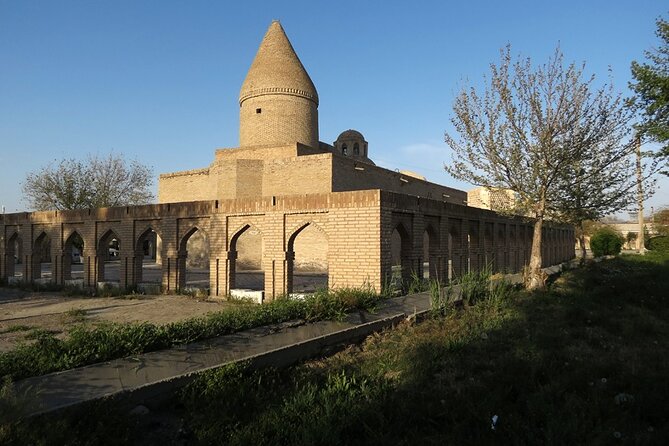
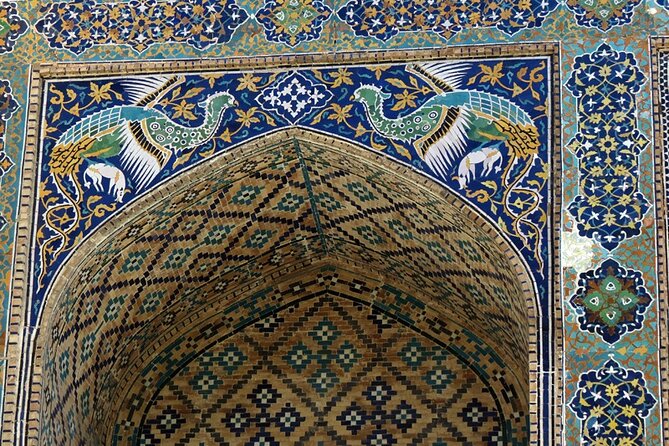
The Ulugbek Madrasa takes about 15 minutes. It is identified as the oldest madrasa in Bukhara and the only Timurid-period monument in the city. That claim gives this small stop real weight, even if the visit itself is short.
Ulugbek was a ruler and patron of learning, and the madrasa connects Bukhara with the wider Timurid world. You will want to study the entrance details and ask your guide how the school fits into the city’s religious and educational life.
The Abdulaziz-Khan Madrasa follows, also for about 15 minutes. It is described as Bukhara’s most magnificent madrasa and the first monument in the city to use yellow coloring. Compared with Ulugbek, it offers a different visual mood and a chance to compare decorative choices across periods.
These stops work well together. One represents the Timurid era, while the other is known for its decoration and later design. The drawback is time. Fifteen minutes per madrasa is enough for an explanation and photographs, but not for a patient inspection of every carved or tiled detail.
Same city, a completely different day out:
- Best of Bukhara: All Day Private Old Town Tour
★ 5.0 · 66 reviews - Best of Bukhara: All Day Private Old Town Tour
★ 4.9 · 62 reviews - From Bukhara: 2-Day Desert Yurt Camp Tour
★ 4.5 · 57 reviews - City Tour Around Bukhara
★ 5.0 · 55 reviews
Poi Kalyan, Bukhara’s great architectural set piece
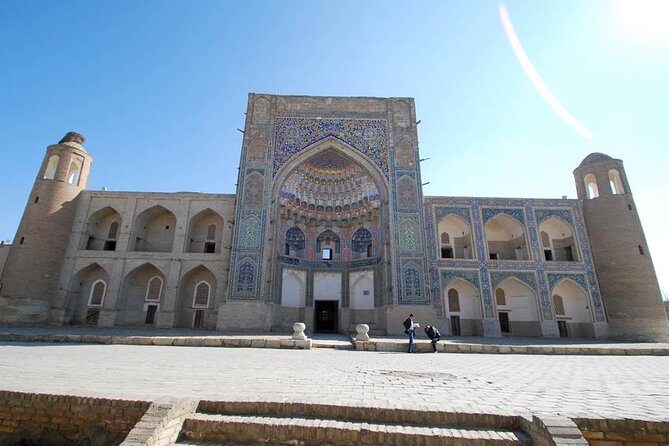
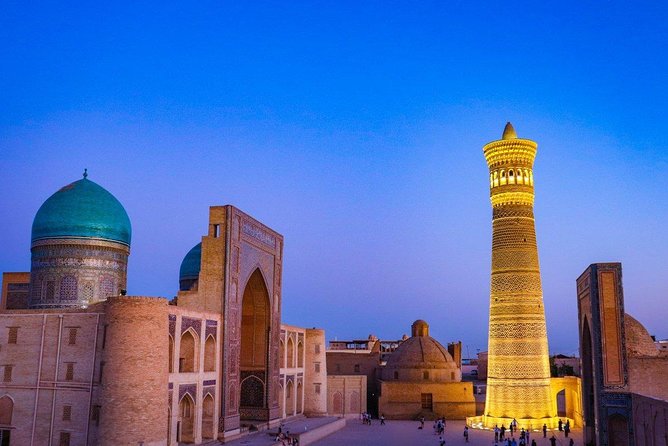
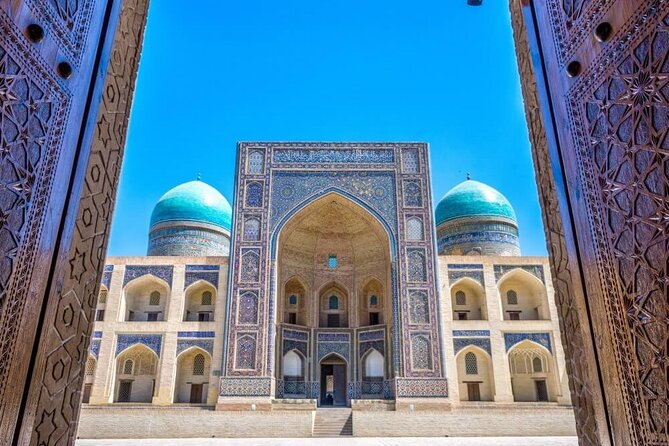
The tour allows about an hour at Poi Kalyan, the most important major complex on the route. It brings together three monuments: the Kalyan Minaret, the Kalyan Mosque, and the Mir-i-Arab Madrasa.
The Kalyan Minaret is a pre-Mongol monument and the highest minaret in the city. It is one of the first structures you will notice in Bukhara, and its survival gives it unusual force. Your guide can explain its place in the old city and why the minaret matters beyond its height.
The Kalyan Mosque is described as the largest medieval mosque in the city. Its scale changes the feel of the walk. After the smaller madrasas and market domes, you arrive at a space built for large numbers of worshippers.
The Mir-i-Arab Madrasa remains a madrasa for males. Access may therefore be limited, and you should treat the exterior as the main part of the visit unless your guide confirms otherwise. This is one of the places where the tour’s explanation matters more than simply stepping inside.
Poi Kalyan is also where the day can feel busiest, especially if other groups are present. Give yourself time to look up, then look down at the details around the courtyard and entrances. The hour-long stop is well judged, but photographers may want more time than the schedule allows.
Inside the Ark, a city within Bukhara
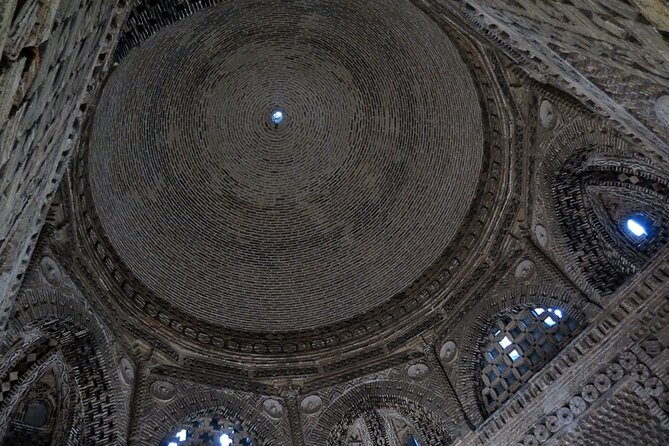
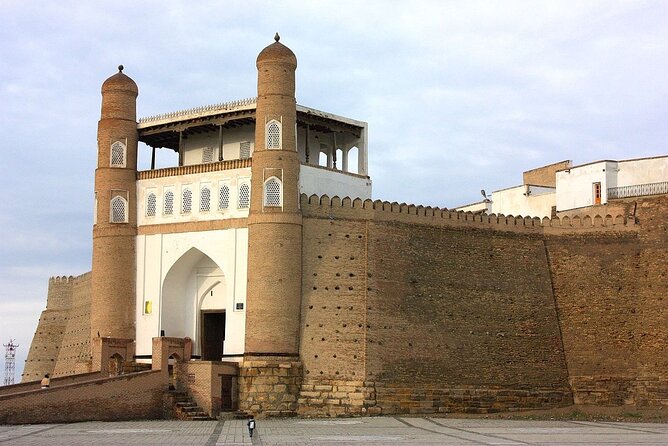
The Ark takes about 40 minutes. This massive fortified enclosure was the winter residence of the Bukhara emirs and was considered a city within the city.
The phrase is useful because the Ark was not merely a palace. It represented government, royal residence, defense, and administration in one enclosed area. As you walk through it, listen for how your guide explains the emir’s court and the role of the fortress in the old city.
Forty minutes gives you a solid introduction, but the Ark is the sort of place where a longer visit could easily be justified. Some interiors or displays may require separate admission, and the tour does not include those entry fees. Ask before paying if you want to know exactly which areas your ticket covers.
This stop is especially useful after Poi Kalyan. The mosque complex shows Bukhara’s public religious life, while the Ark shifts your attention to power and rule. Together, they give you a clearer picture of the city than either would alone.
Bolo Hauz and the reflection of forty columns
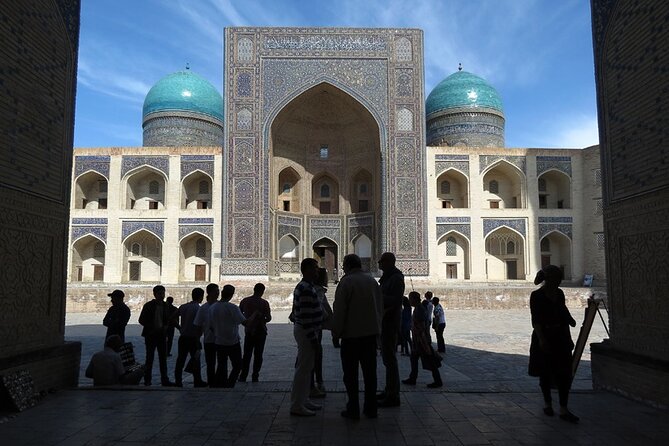
Bolo Hauz Mosque takes about 20 minutes. It is known for having the highest columns in Bukhara and is also called Chilustun, or forty columns.
The name needs a little explaining. The mosque has 20 columns, but their reflection in the reservoir creates the impression of 40. This is the kind of small visual detail that is easy to miss if you are exploring alone and moving quickly.
I would make time for the view across the water before focusing on the building itself. The reflection connects the mosque to the old water systems that helped support life in a dry region.
The stop is short, and the itinerary does not promise an extensive interior visit. Even so, Bolo Hauz gives you a different setting from the enclosed madrasas and fortress. It is a calmer architectural pause before the final mausoleums.
Chashmai Ayub and the story of water
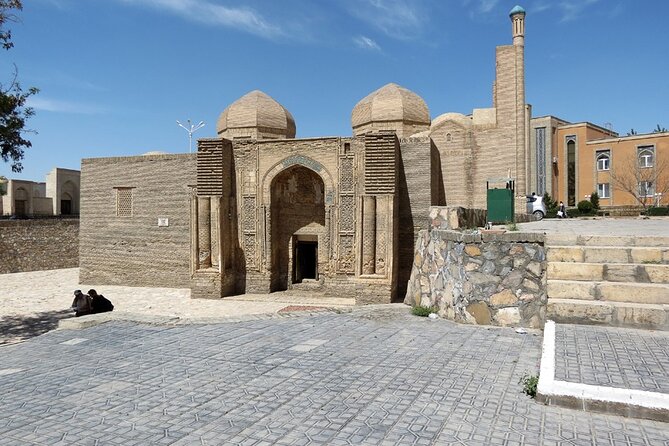
Chashmai Ayub Mausoleum is scheduled for about 20 minutes. It also houses Bukhara’s water-supply museum and is linked with Ayub, or Job, referred to in the description as St. Jehovah.
The water museum adds practical context to the city’s monuments. Bukhara’s grand buildings depended on systems that brought, stored, and distributed water, so this stop helps connect architecture with everyday survival.
You will not need a long visit to understand the basic idea, but the subject rewards questions. Ask your guide how the city’s water supply worked and why a mausoleum and water museum share this site.
Like several stops on the tour, admission is separate. If you are carefully managing your spending, ask your guide which interiors are most worthwhile. The $28 tour price covers the professional guide and all fees and taxes charged for the service, not the monument tickets.
Finishing at the Samanid Mausoleum
The final stop is the Ismail Samani Mausoleum, with about 30 minutes set aside. The tour ends here, so plan your next move before you arrive.
This is described as the first mausoleum in Central Asia and the second mausoleum in the Islamic world. It is also connected with the founder of the first local Central Asian empire. The structure is a pre-Mongol monument, making it another key survivor from an early chapter of Bukhara’s past.
Ending here makes sense. The Samanid Mausoleum is not just another stop added to a long list. It gives the walk a clear historical finish and brings you back to the city’s earliest major Islamic architecture.
The end point is the Samanid Mausoleum at the supplied map location, not Lyab-i-Hauz. You should be prepared to arrange your own onward transport or continue on foot. No air-conditioned vehicle is included, and the experience is built as a walking tour.
What the $28 price really covers
At $28, this is a strong price for a private five to six-hour introduction to Bukhara. The value comes from the amount of ground covered and from having a guide connect the monuments rather than leaving you to identify them from signs.
The private format matters. You are not sharing the activity with other groups, and the guide can be flexible and patient. Peri is praised for careful explanations and patience, while Nilufar is described as punctual, energetic, fluent in English, and able to explain her hometown with exceptional range. The supplied details do not guarantee which guide you will receive, but they do indicate the kind of guiding style to expect.
The price does not cover:
- Entrance tickets to the listed monuments
- Lunch
- Personal expenses
- Transportation by air-conditioned vehicle
That makes the final cost higher than $28 if you enter several paid sites or buy lunch along the way. Still, the guide, taxes, route planning, and private format make the base price fair, especially if you have only one full day in Bukhara.
Pace, comfort, and practical planning
The schedule totals roughly five to six hours, with the longest stops at Lyab-i-Hauz and Poi Kalyan. Most other visits last 15 to 40 minutes, so expect a steady walk with frequent pauses.
Wear comfortable shoes and carry water. These are simple suggestions, but they matter more here than on a vehicle tour because the route links many separate monuments. You should also leave room in your day for a meal afterward, since lunch is not included.
The tour can suit most participants, and confirmation arrives at booking. It is a private activity, which is useful if you want to ask many questions or need the guide to adjust the pace. The route still covers a lot, so tell your guide early if you prefer fewer interiors and more time at major sites.
Guiding is offered in English, Spanish, French, German, and Russian. English-language feedback specifically praises patience, clarity, and strong communication, with the highest praise directed at Peri and Nilufar. If language is important to your booking, confirm your preferred language in advance.
Free cancellation is available if you cancel at least 24 hours before the local start time. Changes or cancellations inside that window are not accepted and are not refunded.
Who should book this Bukhara walk?
I would choose this tour if you want a one-day overview with context, especially if Bukhara is one stop in a larger Uzbekistan trip. It gathers the city’s major religious, royal, commercial, and funerary sites into one route.
It is also a good fit if you prefer a private guide and want to ask questions. The puppet-theater visit and Jewish quarter give the walk more character than a simple monument checklist.
I would hesitate if you dislike long walks, want a fully escorted day with transport and meals, or prefer spending an hour inside every madrasa. In that case, a shorter private walk focused only on the central monuments may suit you better.
FAQ
Where does the Bukhara Walking Tour start?
It starts at the Lyabi Khause ensemble, near Divan-Beghi in Bukhara.
Where does the tour finish?
The tour finishes at the Ismail Samani Mausoleum.
How long does the walking tour last?
It lasts approximately five to six hours.
Is this a private tour?
Yes. Only your own group participates in the activity.
What languages are available?
Professional guides are offered in English, Spanish, French, German, and Russian.
Are entrance tickets included?
No. Entrance fees for the monuments listed in the program are not included.
Is lunch included?
No. Lunch and other personal expenses are separate.
Is transportation included?
No. An air-conditioned vehicle is not included. The experience is arranged as a walking tour.
Can I cancel for a refund?
Yes, if you cancel at least 24 hours before the experience start time. Cancellations within 24 hours are not refunded, and changes within that period are not accepted.
Should you book it?
Book this tour if you want to cover Bukhara’s main sights efficiently while still seeing less obvious corners, such as the puppet theater and Jewish quarter. The private format, multilingual guiding, and $28 starting price offer good value, but remember to budget for entry tickets and lunch.
For a first visit, this is a practical way to understand why Bukhara is called the Pillar of Islam. Just bring comfortable shoes, allow for a steady pace, and ask your guide to help you choose which monument interiors deserve the extra admission cost.
Just added around Bukhara
- Bukhara: City Highlights Guided Tour with Pickup★ 5.0 · 3 reviews
- Full-Day Private Guided Tour to Islamic 7 Saints of Bukhara★ 4.5 · 3 reviews
- Uzbekistan 8 Days Private Guided Tour★ 4.6 · 3 reviews
- 9 Days Private Guided Tour to Uzbekistan★ 5.0 · 3 reviews
- Legends of Bukhara: Exclusive Full-Day Tour★ 5.0 · 4 reviews
- 2 Day Ukhum Hiking Tour from Bukhara★ 5.0 · 4 reviews
- Bukhara day tour★ 4.0 · 4 reviews
- Bukhara in a Day History, Culture, and Local Insight Private Tour★ 5.0 · 4 reviews
Walking Tours in Bukhara, compared.
All You Need To Know About Bukhara. A Walk In The Town
Read our review →
Bukhara Historical City Highlights Guided Walking Tour
Read our review →
Bukhara: Private Guided Walking Tour with Hotel Pickup
Read our review →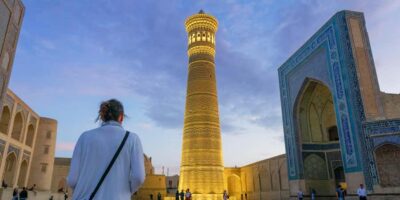
Browse the lists this tour appears in