
Reviewed · BUKHARA TOURS
One-Day Private Tour in the Old Town of Bukhara
Bukhara’s old town is best understood as a chain of courtyards, domes, mosques, and former schools, and this private tour ties them into one clear story. You move from the 1,000-year-old Ismail Samani Mausoleum to the Ark, the Kalon Minaret, old trading halls, and the shaded pond at Lyab-i-Hauz.
I like the private format, which lets guides such as Madina, Sho, and Nargiza adjust the pace and answer detailed questions. I also like the mix of grand monuments and everyday crafts, from carpets and ceramics to embroidery and miniature work. The main caution is timing: five to six hours is tight, and evening departures may leave some interiors closed.
Key points to know before booking
- The private guide makes the history easier to follow: You get one guide for your group, with the chance to shape the conversation around architecture, religion, culture, or modern Uzbekistan.
- Bukhara’s major sights fit into one well-planned circuit: The route covers the Ark, Poi Kalon, trading domes, Magoki Attori Mosque, Lyab-i-Hauz, and several madrasahs.
- The tour includes more than monuments: Craft workshops, old markets, the Museum of Water Supply, and the carpet museum add useful local context.
- The air-conditioned vehicle helps with longer connections: Much of the old town is explored on foot, but transport is available when necessary.
- Only two listed entrance fees are extra: The Ark costs $3.50 per person and Magoki Attori Mosque and the carpet museum cost $2 per person.
- The timing matters: An early start is the better choice if you want to enter attractions and spend time inside them.
Why Bukhara works best with a guide
Bukhara can look simple on a map. Many major sights sit close together, and you can walk between several of them. The trouble is that the city’s meaning is not always obvious from the brickwork alone.
A private guide gives you the connections. You learn how the old town grew around Islam, trade, water, learning, and the Great Silk Road. A madrasah becomes more than a decorated facade. A trading dome becomes part of a network of streets where merchants once sold cloth, metalwork, carpets, and other goods.
This format also suits the way Bukhara rewards questions. The tour is not limited to dates and architectural labels. Past visitors have used the time to ask about current cultural, political, and economic life in Uzbekistan, and guides have adapted the conversation accordingly.
The named guides bring different language options. Madina has led tours in fluent German, while Sho, also known as Shokhrukh, has provided tours in Japanese and English. Saodq is described as fluent in five languages. The exact guide and language should be confirmed when booking, but the experience clearly suits people who want more than a memorized speech.
A few more Bukhara days to weigh up
- Bukhara: Walking Tour with a Small Group
★ 4.9 · 260 reviews - Best of Bukhara: All Day Private Old Town Tour
★ 5.0 · 66 reviews - Best of Bukhara: All Day Private Old Town Tour
★ 4.9 · 62 reviews
From the Ismail Samani Mausoleum to the water museum
The tour starts at Lyab-i-Hauz Square and ends at the Ismail Samani Mausoleum, according to the stated meeting details. Pickup is offered, and some bookings have included collection from a hotel, airport, or train station when the timing worked.
The Ismail Samani Mausoleum is a strong opening or closing sight. Built more than 1,000 years ago, it is described as the only preserved structure from Bukhara’s most flourishing early period. Its design brings together three architectural styles connected with three religions, making it an excellent place to begin a conversation about the city’s layers.
Allow about 20 minutes here. That is enough for an explanation and a close look at the patterned brickwork, but not a long independent study. Admission is not included, so check the current price before you arrive.
The next stop is the Chashmai Ayub Mausoleum, also known as the source connected with the story of the prophet Job. Inside, the Museum of Water Supply explains how water shaped life in old Bukhara.
That museum is a useful change of pace. The city’s grand mosques and madrasahs can make Bukhara seem like a place built only for religion and ceremony. Water tells a more practical story. You get a glimpse of the systems that supported daily life in a dry region.
The visit is scheduled for about 20 minutes, with admission not included. There is also a newer museum building devoted to the life of Imam Al-Bukhari, a religious learner whose name is closely linked with Islamic scholarship. The supplied schedule does not give a separate time or admission price for this stop, so treat it as a possible part of the visit rather than a guaranteed long museum session.
Bolo Hauz Mosque and the Emir’s Ark
Bolo Hauz Mosque is a functioning mosque with a history of about 300 years. Its most memorable feature is the forest of wooden columns supporting the front porch. The setting also includes a square with trees and benches, making it one of the tour’s natural rest points.
You have about 20 minutes here, and admission is free. Because it remains a working religious site, your guide can help you understand appropriate behavior and the difference between seeing a monument and entering an active place of worship.
Then comes the Ark of Bukhara, the old citadel and former residence of the Emirs. This is one of the stops where a guide adds real value. The Ark is not simply a wall to photograph. It represents the political center of old Bukhara, where rulers, officials, soldiers, and court life were concentrated.
The schedule allows 40 minutes, the longest single stop on the route. Admission costs $3.50 per person and is not included. If you want to explore its interiors at a relaxed pace, choose a morning or early afternoon departure. An evening walk can still explain the citadel well, but it may not allow entry, as one evening group discovered.
That point is important. The tour can work as a general introduction to the city at different times of day, but the full sightseeing value depends on opening hours. Ask for an early start if the Ark is a priority.
Poi Kalon, where Bukhara reaches its visual peak
The Great Minaret of the Kalon is the centerpiece of the old town. About 900 years old, it rises above the Poi Kalon ensemble, which also includes the Grand Mosque of Kalon and the Miri-Arab religious school.
You have around 30 minutes here. That gives you time to take in the square and hear how its buildings relate to one another. It is one of the places where Bukhara’s scale becomes clear. The minaret is tall, but the surrounding space makes it powerful, especially when you understand its role as part of a religious and educational center.
Admission fees are not included for this stop. The details provided do not list the separate prices, so carry some local currency or confirm the current rates before the tour.
A guide can also prevent Poi Kalon from becoming a quick photo stop. Ask about the minaret’s construction, the role of the mosque, and how a madrasah functioned as a place of religious learning. The tour’s focus on both the medieval past and present-day Uzbekistan makes this a good place to ask how these buildings are viewed and used today.
Same city, a completely different day out:
- From Bukhara: 2-Day Desert Yurt Camp Tour
★ 4.5 · 57 reviews - City Tour Around Bukhara
★ 5.0 · 55 reviews - Bukhara Full Day Old City Private Tour
★ 5.0 · 46 reviews - Bukhara: Historic Center Guided Sightseeing Tour
★ 4.8 · 44 reviews
Trading domes and Bukhara’s craft traditions
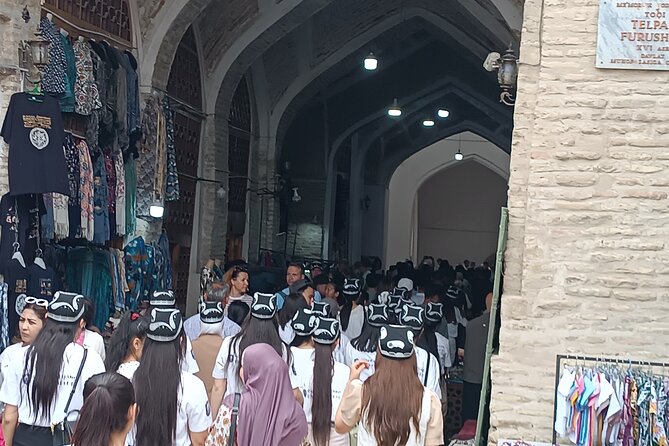
The old trading domes give the middle of the tour a more human scale. Taqi-Zargaron is a craft and shopping dome with workshops and souvenir stalls selling silk carpets, ceramics, embroidery, and clothing.
The scheduled visit is 20 minutes and admission is free. You may find the time enough for a quick look, but not enough for serious shopping or a careful carpet comparison. If you are interested in buying something, tell your guide early so the visit does not feel rushed.
Taqi-Telpakfurushon sits at the crossing of five old trading streets. It includes miniature and embroidery workshops, along with a 16th-century bathhouse. The bathhouse is a useful reminder that the domes were not isolated shops. They were part of a larger commercial district serving people who lived, worked, and passed through Bukhara.
Another 20-minute stop is planned here, with no admission fee listed. Taqi-Sarrafon, also visited for about 20 minutes, adds more souvenir shops and miniature workshops. Its name and the descriptions of caravansaries connect the market with the needs of long-distance trade.
I like this part of the tour because it keeps the day from becoming a parade of formal monuments. You see objects still made in recognizable local traditions, and you can ask questions about materials, technique, and modern demand. Still, shopping is not the same as a museum visit. Sellers may be eager to show you goods, so set your own budget and remember that the tour’s main purpose is sightseeing.
Kosh Madrasah and Magoki Attori Mosque
Kosh Madrasah consists of two madrasahs facing one another. Their facades represent different historical periods, so the value here lies in comparison. Instead of seeing one school in isolation, you can look across the street and notice changes in design and decoration.
The stop lasts about 20 minutes, and admission is not included. This is another place where a guide can point out details that blur together when you are walking independently.
Magoki Attori Mosque is one of the more unusual religious sites in Bukhara. It sits below the present street level and was once a fire temple. That earlier use gives the building a longer religious story than its current name suggests.
The visit includes the carpet museum and costs $2 per person. The schedule allows about 20 minutes. That is enough for a focused explanation and a look at the collection, though carpet enthusiasts may want more time than the group schedule permits.
The site also illustrates why Bukhara is worth seeing with historical context. Islam is central to the city’s identity, but the built environment records earlier beliefs and older urban layers. You do not need specialist knowledge to appreciate this. You simply need someone to explain what changed and what survived.
Lyab-i-Hauz and Kukaldosh Madrasah
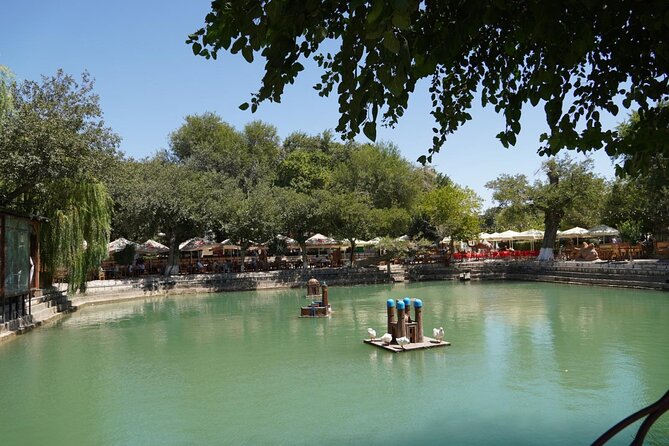
Lyab-i-Hauz is both a historic ensemble and a place where people still sit, rest, and have drinks. Its three main monuments are the Devonbegi Madrasah, Devonbegi Khanaka, and the Devonbegi pond.
The tour allows 30 minutes here. That makes sense. The pond and shade offer a welcome pause after the denser sequence of monuments and market domes. You can use the time to sit, look at the surrounding buildings, or ask your guide about how public spaces function in Bukhara today.
The final named stop is Kukaldosh Madrasah, the biggest madrasah in the old town. It is allotted 30 minutes and has wall paintings showing scenes from everyday life in old Bukhara.
This is a good finish because it shifts attention from rulers and grand religious buildings to ordinary routines. The exact access and admission details are not specified, and the tour ends at the Ismail Samani Mausoleum in the meeting information, so confirm the day’s final sequence with the operator.
How much can you really see in five to six hours?
The listed stops add up to a substantial day. Most visits last 20 minutes, while the Ark, Lyab-i-Hauz, Kukaldosh Madrasah, and Poi Kalon receive more time. The schedule is practical for an overview, but it is not designed for long museum visits or slow photography.
Much of the old town portion is on foot. The air-conditioned vehicle is included and is used when needed, which matters when connecting sights outside the tightest central cluster or when the heat becomes tiring. You should still expect a moderate level of walking and general physical fitness.
A private group of up to four is a major advantage. You are not waiting for a large bus group, and a guide can adjust the pace around your interests. Solo visitors also receive the benefit of personal attention, while a small family or group can spread the $67 price across several people.
At $67 per group, the value is strongest for two to four people. For four, the guiding and vehicle cost works out to $16.75 each before entrance fees. For one person, it is a more significant spend, but the private format and the ability to arrange pickup can still make sense if your time in Bukhara is short.
The listed extras are modest: $3.50 per person for the Ark and $2 per person for Magoki Attori Mosque and the carpet museum. Other entrance costs may apply at sites where the price is not specified, so ask for a current breakdown before setting out.
The guides and the human side of the tour
The strongest feature of this experience is the guide. Madina has been praised for explaining both Bukhara’s past and Uzbekistan’s current culture, while also making solo visitors feel comfortable. Nargiza is described as patient and willing to adapt the route to personal interests.
Sho, or Shokhrukh, has received especially strong praise for his command of Bukhara’s heritage, polished English, flexibility, and ability to adjust airport and train station transfers around the sightseeing schedule. His Japanese service has also been described as fluent and humorous. These details matter if language is central to your choice.
The guide names are not a guarantee that one particular person will lead every departure. Ask who is available when you book, especially if you need German, Japanese, or another language.
The tour also appears suitable during Ramadan, when a guide continued with warmth and energy despite fasting. That does not remove the need to be respectful about meal breaks and religious customs, but it suggests the operator is used to handling different travel conditions with care.
What to know before you book
Start early if you want to enter the Ark and other attractions. An evening version can be pleasant for atmosphere and storytelling, but it may function more as an exterior walk.
Wear comfortable shoes and keep your expectations realistic. The schedule covers a great deal, so you will see many places without having unlimited time in each one.
Bring money for admissions and any purchases. The tour includes the vehicle, but entrance fees are separate at several sites, and the stated price does not include the Ark or Magoki Attori charges.
Pickup is offered, and the tour begins at Lyab-i-Hauz Square in the stated meeting details. Since some arrangements have involved hotels, the airport, and the train station, confirm the exact pickup and final drop-off plan before the day begins.
Free cancellation is available up to 24 hours before the start time. Inside that window, the payment is not refunded, and changes are not accepted.
Should you book this Bukhara old town tour?
I would choose this tour if you want a well-informed private guide to connect Bukhara’s monuments, religious traditions, trade, water systems, and present-day culture in one half-day outing.
It is especially useful for a first visit, a short stay, a solo schedule, or anyone who prefers asking questions instead of reading every explanation from a guidebook. The $67 group price is fair for up to four people, and the air-conditioned vehicle adds practical value.
I would hesitate only if you want to linger inside every museum, shop slowly, or photograph each monument at your own pace. In that case, ask for a longer custom program. For most people seeking a clear, personal introduction to Bukhara’s old town, this is a sensible way to get oriented quickly without reducing the city to a list of photo stops.
FAQ
How long does the private Bukhara tour last?
The tour lasts approximately five to six hours.
How many people can join the private tour?
The price covers one private group of up to four people. Only your group participates.
What is included in the tour price?
An air-conditioned vehicle is included. Pickup is offered.
Which entrance fees are specifically not included?
Admission to Magoki Attori Mosque and the carpet museum costs $2 per person. Admission to the Ark of Bukhara costs $3.50 per person. Other listed attractions also show admission as not included, but no prices are provided for them.
Where does the tour start and end?
The stated start point is Lyab-i-Hauz Square, at Divan-Beghi in Bukhara. The stated end point is the Ismail Samani Mausoleum.
Is the tour suitable for people with limited fitness?
A moderate level of physical fitness is advised. The program includes walking between old town sights, although a vehicle is available when necessary.
Can I cancel for a full refund?
Yes. You can cancel at least 24 hours before the experience start time for a full refund. Cancellations or changes made within 24 hours are not refunded or accepted.
Just added around Bukhara
- Bukhara: City Highlights Guided Tour with Pickup★ 5.0 · 3 reviews
- Full-Day Private Guided Tour to Islamic 7 Saints of Bukhara★ 4.5 · 3 reviews
- Uzbekistan 8 Days Private Guided Tour★ 4.6 · 3 reviews
- 9 Days Private Guided Tour to Uzbekistan★ 5.0 · 3 reviews
- Bukhara Walking Tour★ 5.0 · 4 reviews
- Legends of Bukhara: Exclusive Full-Day Tour★ 5.0 · 4 reviews
- 2 Day Ukhum Hiking Tour from Bukhara★ 5.0 · 4 reviews
- Bukhara day tour★ 4.0 · 4 reviews
Bukhara Tours, compared.
Bukhara: Historic Center Guided Sightseeing Tour
Read our review →
All You Need To Know About Bukhara. A Walk In The Town
Read our review →Browse the lists this tour appears in