
Reviewed · WALKING TOURS IN BUKHARA
All You Need To Know About Bukhara. A Walk In The Town
Bukhara makes more sense once someone explains how its monuments fit together. This 4.5-hour walking tour links mosques, madrasas, bazaars, mausoleums, and the Ark area into one clear route, with guide Hamza adding the historical background that is easy to miss when you explore alone.
I especially like two things here: the focus on history and architecture, and the chance to ask questions instead of simply following a guide with a flag. The price is also reasonable at $55 because the walk is shared with roughly 10 to 15 people. The main drawback is that this is not a private tour, despite the private-group wording used in the booking details.
Key points at a glance
- A useful first walk: The route helps you understand Bukhara’s Old Town before returning to individual monuments on your own.
- Hamza leads in English: His style combines dates and dynasties with stories, local customs, food tips, and a relaxed sense of humor.
- Major sights in one route: See Lyabi Khauz, the trading domes, Poi Kalan, Bolo Haouz, Chashma-Ayub, and the Samanid Mausoleum.
- Strong value for a shared tour: At $55, the cost covers a guide and all-day support, but not entrances, meals, or transport.
- A walking tour with shopping built in: Uzbek textiles, carpets, spices, and handicrafts appear along the route.
- Plan for sun and uneven sightseeing days: Bring water, a hat, a camera, and a charged phone.
Why Bukhara is best understood on foot
Bukhara is more than 2,000 years old and grew into one of Central Asia’s key Silk Road cities. Its streets bring together Islamic scholarship, royal power, religious pilgrimage, long-distance trade, and everyday local life.
That mixture can be confusing at first. A mosque may sit beside a trading dome, a madrasa may face another religious school, and a quiet pond may once have been a busy social center. A good guide gives you the connecting thread, so the buildings stop looking like isolated photo stops.
This tour begins near Nadir Divan Begi Madrasah and ends at the Ismail Samani Mausoleum. That makes it useful on your first day, especially if you want to get your bearings fast. Several people who took the walk early in their stay found it helped them decide which places deserved a second look.
The route lasts 4.5 hours, although the description also calls it a one-day tour. Treat the shorter duration as the practical figure. It is a half-day walking experience, not a full morning-to-evening program.
More Walking Tours in Bukhara
- Bukhara: Walking Tour with a Small Group
★ 4.9 · 260 reviews - Bukhara Walking Tour
★ 4.7 · 25 reviews - Bukhara Historical City Highlights Guided Walking Tour
★ 4.5 · 16 reviews
Starting at Nadir Divan Begi Madrasah
The meeting point is near the donkey statue, by Nadir Divan Begi Madrasah. Confirm the exact spot with the guide before setting out, since a large historic square can have several obvious meeting places.
Nadir Divan Begi Madrasah is part of the Lyabi Khauz area, one of Bukhara’s best-known public spaces. Starting here gives the guide an easy place to explain the city’s social and religious life before the group moves into the lanes.
You should expect an introduction to the route and a chance to meet the other people in the group. The social side is a real part of the experience. If you prefer having company while walking and asking questions, this format works well. If you want to stop silently at every doorway or set your own pace, a private guide would suit you better.
Lyabi Khauz and the first taste of Old Bukhara
The short guided stop at Lyabi Khauz introduces one of the city’s central gathering places. Its name refers to the area around a pool, and the space helps you picture how water, shade, trade, and conversation once shaped daily life in Bukhara.
This is also a practical orientation point. From here, the route moves toward the old trading districts, so you begin to understand the basic layout instead of wandering from one famous building to the next.
The guide’s role matters most at stops like this. On your own, you may admire the setting but miss why it became important. Hamza is especially good at placing individual buildings within the wider story of Central Asia, including the changes brought by different ruling dynasties.
Trading domes and Bukhara’s shopping streets
The walk continues to Toqi Sarrafon Bazaar, one of Bukhara’s old covered trading domes. These domes once organized commerce by trade, and they remain among the most atmospheric parts of the Old Town.
The shopping is not just a break from sightseeing. It shows how Bukhara worked as a market city. You might find hand-woven textiles, carpets, spices, and other Uzbek handicrafts in or near the pedestrian streets and former trading areas.
This is a good place to ask your guide about prices, materials, and suitable souvenirs. Hamza also gives restaurant suggestions, which is useful when the route leaves you ready for lunch. Just remember that shopping is optional and purchases are not included in the tour price.
Same city, a completely different day out:
- Best of Bukhara: All Day Private Old Town Tour
★ 5.0 · 66 reviews - Best of Bukhara: All Day Private Old Town Tour
★ 4.9 · 62 reviews - From Bukhara: 2-Day Desert Yurt Camp Tour
★ 4.5 · 57 reviews - City Tour Around Bukhara
★ 5.0 · 55 reviews
Magok-i-Attari Mosque and the layers beneath the city
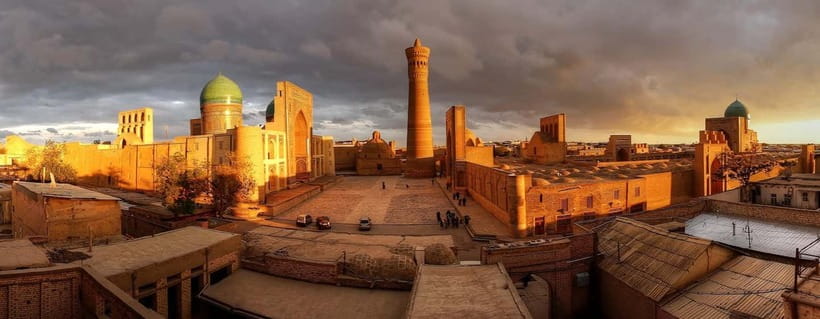
Magok-i-Attari Mosque is one of the more striking stops because it reflects the many layers beneath Bukhara’s present streets. The short guided visit is less about spending a long time inside and more about understanding the site within the city’s earlier religious and commercial life.
Bukhara’s Old Town rewards close attention. A doorway, a lowered pavement, or a building partly hidden by later construction can point to an older city below the modern one. This is where a history-focused guide adds real value, since the physical remains can be difficult to interpret without context.
Several brief stops follow this section of the route. The supplied schedule gives two to ten minutes for these unnamed points, so you should expect quick explanations rather than long visits. That keeps the walk moving, but it also means photography time may be limited.
Ulugbek Madrasa and the world of Islamic learning
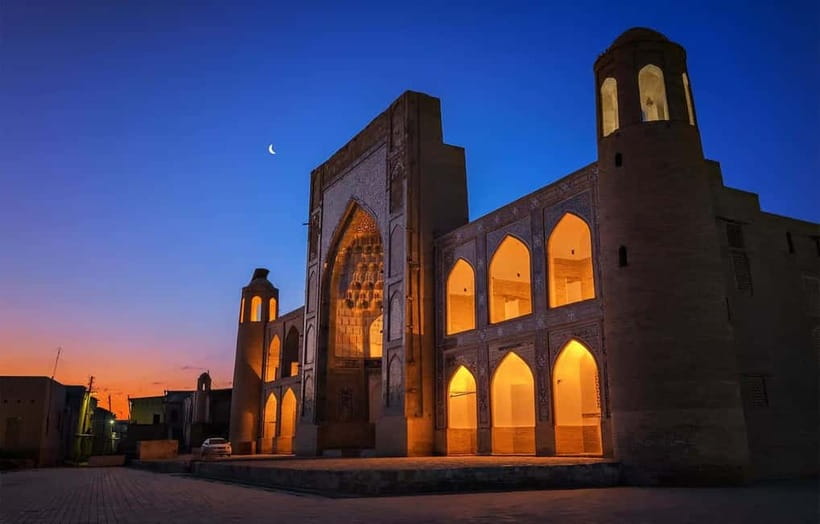
The route reaches Ulugbek Madrasa, one of the important educational buildings in Bukhara. The guide explains how madrasas worked and how learning formed part of the city’s religious and civic life.
One useful detail from the tour is the explanation that a madrasa typically included a lecture hall and a mosque. That kind of practical information helps you read the layout of other buildings later in Uzbekistan, rather than treating each one as a separate monument.
Entry rules and opening access can change, and entrance tickets are not included. You may need to pay on the spot for places that allow entry. The tour includes a skip-the-ticket-line feature, but you should still check what that applies to when booking and carry some money for admission.
Poi Kalan, the visual centerpiece of Bukhara
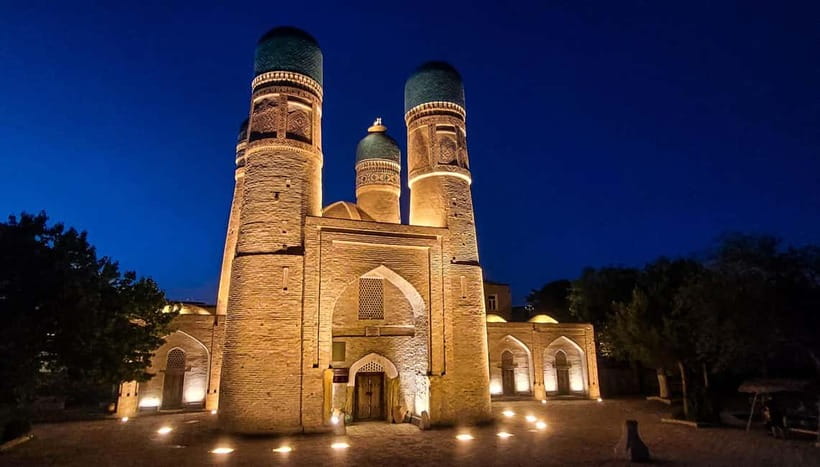
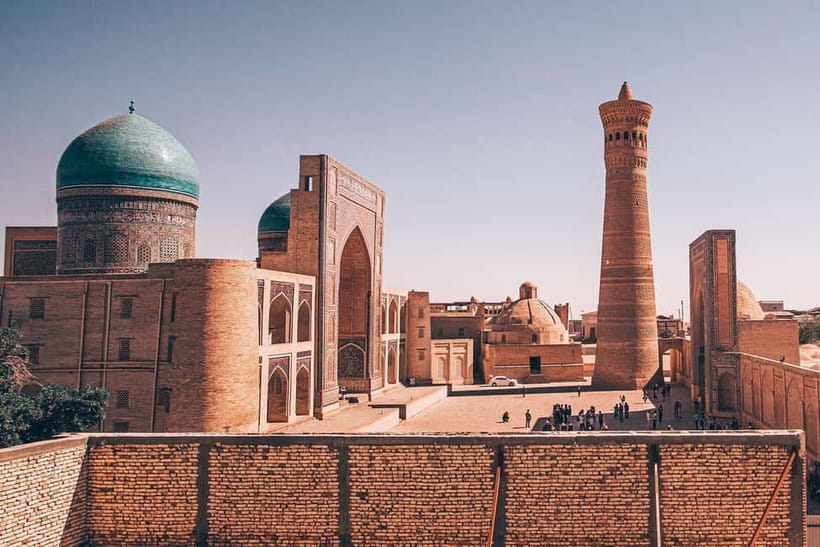
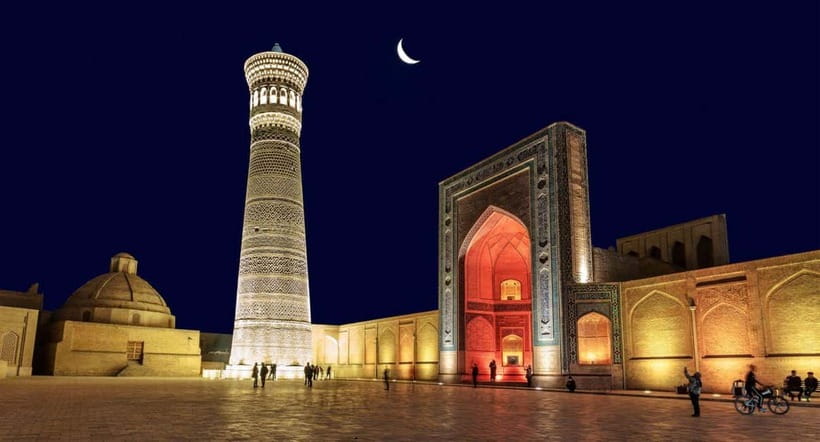
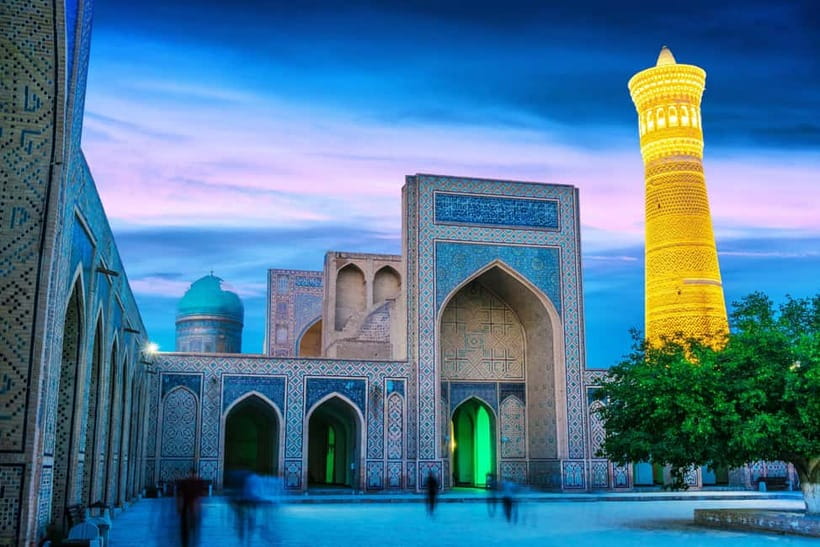
Poi Kalan is the architectural high point of the walk. The ensemble includes the Kalan Mosque, the great Kalan Minaret, and Mir-i-Arab Madrasa, creating the classic Bukhara view many people come to see.
The Kalan Minaret is not simply a tall landmark. It helps explain the scale and ambition of medieval Bukhara, as well as the role of religious buildings in the city’s public life. Looking at the whole ensemble is more rewarding once you understand how the mosque and madrasa relate to it.
The stop at Kalan Mosque is scheduled for about five minutes, followed by a brief visit to Mir-i-Arab Madrasa. That may feel short if you want detailed architectural study or many photographs. The benefit is that the tour covers a large part of the Old Town in one sweep, leaving you free to return later for a slower visit.
This is also one of the busiest sections of the route. Expect other people, active streets, and a steady stream of souvenir sellers. The guide can keep the history central, but you will not have the quiet of a private architectural visit.
Bolo Haouz Mosque and the quieter northern sights
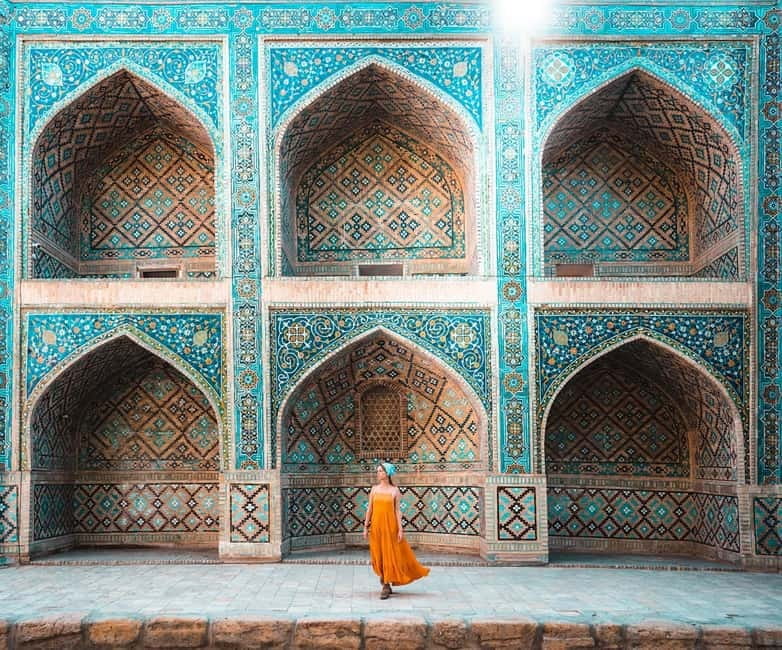
From the central ensemble, the tour continues to Bolo Haouz Mosque. The mosque is known for its elegant wooden columns and covered entrance, giving you a different architectural mood from the brick and tile work around Poi Kalan.
This contrast is one of the strengths of the route. You see grand religious complexes, but also buildings whose character comes from wood, proportion, and local craftsmanship. A guide can point out details you might otherwise pass without noticing.
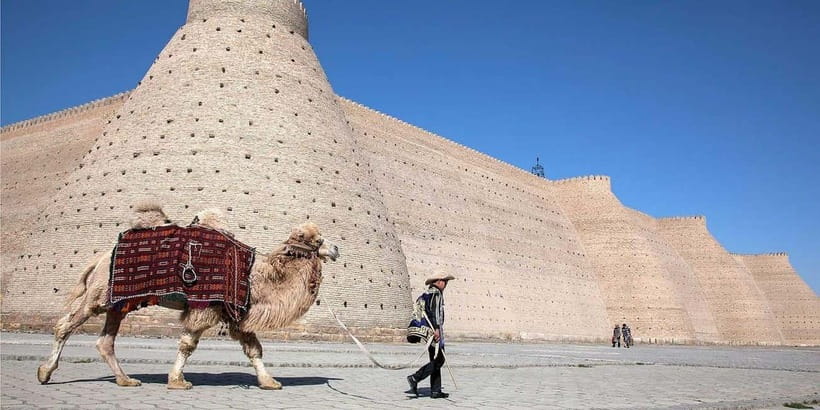
The walk then reaches Chashma-Ayub Mausoleum. Its name is linked to the idea of Job’s spring, and the site adds a different layer of religious tradition to the day. The five-minute stop is enough for an introduction, though not for a long examination of every feature.
The distance between the central sights and the final mausoleum area also gives you a feel for Bukhara as a real city, not just a cluster of postcard monuments. Wear comfortable shoes and bring water, particularly in hot weather.
The Samanid Mausoleum, where the tour ends
The final stop is the Ismail Samani Mausoleum, one of Bukhara’s most important early Islamic monuments. Its brickwork is restrained compared with the colorful tile of later buildings, but the patterns and changing light across the surface reward a close look.
Ending here gives the walk a useful chronological shape. You begin with later public and religious spaces, then finish with one of the oldest major monuments on the route. The result is not just a list of attractions. You get a basic timeline for understanding how Bukhara developed.
The tour ends at the mausoleum rather than returning you to your accommodation. The description says the guide can take you back to your accommodation after the day’s sightseeing, but the practical itinerary lists the mausoleum as the finish. Clarify this point before booking if you need a return transfer or have a fixed evening plan.
What Hamza adds to the walk
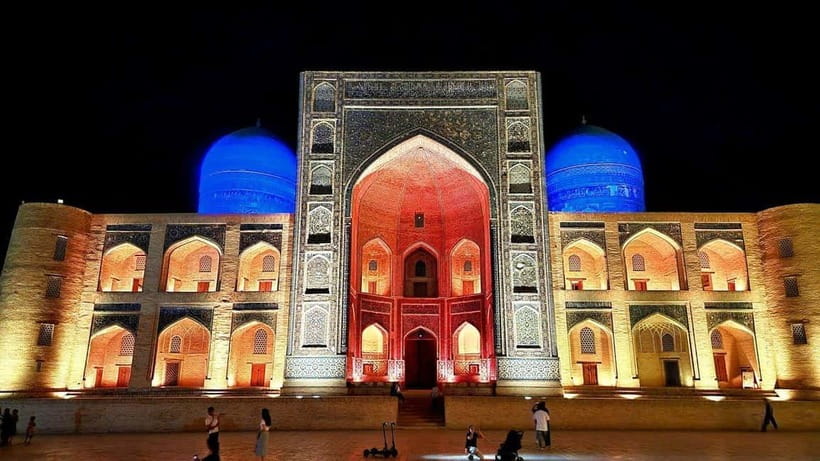
The guide is one of the strongest reasons to choose this experience. Hamza leads in fluent English and is praised for explaining the city’s history in a way that remains light and conversational.
His approach is not limited to dates and building names. He connects Bukhara to wider Central Asian history, then brings the discussion back to the street in front of you. That helps if you arrive knowing little about Uzbekistan or the Silk Road.
I also like that the tour includes questions and answers. You can ask about religious buildings, local customs, food, shopping, or the meaning of a monument instead of waiting for a scripted speech to finish.
The tone is another plus. Hamza is described as funny, relaxed, and encouraging, but the humor does not replace substance. People who want a serious history lesson with some breathing room should find the balance comfortable.
The $55 price and what it really covers
At $55 per person, the tour offers fair value if you want a strong introduction to Bukhara and do not want to organize the Old Town alone. A guide, group walking route, suggestions, and all-day support are included, along with 24-hour assistance from the provider.
The lower price comes from sharing the experience with around 10 to 15 people. The booking details also use the phrase private group, but the important point is that you should not expect a private tour. Group size can change, and one off-season booking had only one participant, but you should plan for a shared walk.
You pay extra for entrance tickets, food, accommodation, flights, trains, and transport with a driver. Since the main route is on foot, the missing vehicle is not a major problem for most people. It matters if you have limited mobility, want to cover distant sights quickly, or need transport at the end.
The wheelchair-accessible label is helpful, but the route includes historic streets and multiple outdoor areas. Ask the provider about the exact conditions if you need a fully step-free experience.
How to prepare for the four-and-a-half-hour route
Bring water, a sun hat, a camera, and a charged smartphone. A phone is especially useful for meeting-point communication, navigation after the tour, and recording restaurant or shopping suggestions.
Wear shoes you can walk in for several hours. The tour is not a vehicle-based sightseeing loop, and you will gain more from it if you are comfortable rather than dressed only for photographs.
Book it early in your stay if you want an introduction to the city. Then use the remaining time to revisit Poi Kalan, the trading domes, or the mausoleums at your own pace.
An evening start can also work well. Bukhara’s monuments can look particularly appealing after sunset, and one tour participant found the timing convenient after arriving in the morning. Check the available start times for your date rather than assuming the same schedule every day.
Cancellation is free up to 24 hours in advance, and you can reserve now and pay later. Those options are useful if your train schedule or wider Uzbekistan plans are still changing.
Who should book this Bukhara walk?
I would choose this tour if you want the main Old Town sights explained in one organized route. It is especially suitable for first-time visitors, solo travelers who like meeting other people, couples who want historical context, and anyone with only a short stay.
It is also a good match for people who care more about history, architecture, and local culture than about rushing through a checklist. The guide’s restaurant and shopping advice adds practical value after the monuments are finished.
I would look elsewhere if you want total control over the pace, long photography stops, or a truly private conversation with a guide. You may also prefer a private booking if your group has mobility needs or wants to spend extra time inside each monument.
Final verdict: a strong first look at Bukhara
Book this walk if you want Bukhara explained rather than simply photographed. Hamza’s historical storytelling, clear English, local suggestions, and relaxed manner make the route more useful than a bare monument-to-monument stroll.
Just book with the correct expectations: it lasts about 4.5 hours, it is normally shared with 10 to 15 people, and tickets, meals, and transport are extra. For $55, it is a sensible way to learn the city’s layout and choose which places deserve a second visit.
FAQ
How long does the Bukhara walking tour last?
The activity lasts 4.5 hours. Although the description calls it a one-day tour, the stated duration indicates a half-day walking experience.
Where does the tour begin?
The tour starts at Nadir Divan Begi Madrasah. The meeting point is near the donkey statue.
Where does the tour finish?
The listed finish point is the Ismail Samani Mausoleum.
Is this a private tour?
No. The tour normally includes around 10 to 15 people. The lower price is based on the shared group format, even though the booking information also uses the term private group.
What is included in the price?
The $55 price includes a professional English-speaking guide, the group tour, all-day support, suggestions, 24-hour assistance, and the chance to meet other people on the tour.
Are entrance tickets, meals, and transport included?
No. Entrance tickets can be paid on the spot, while lunch, dinner, accommodation, flights, train tickets, and transport with a driver are not included.
Just added around Bukhara
- Bukhara: City Highlights Guided Tour with Pickup★ 5.0 · 3 reviews
- Full-Day Private Guided Tour to Islamic 7 Saints of Bukhara★ 4.5 · 3 reviews
- Uzbekistan 8 Days Private Guided Tour★ 4.6 · 3 reviews
- 9 Days Private Guided Tour to Uzbekistan★ 5.0 · 3 reviews
- Legends of Bukhara: Exclusive Full-Day Tour★ 5.0 · 4 reviews
- Bukhara Walking Tour★ 5.0 · 4 reviews
- 2 Day Ukhum Hiking Tour from Bukhara★ 5.0 · 4 reviews
- Bukhara day tour★ 4.0 · 4 reviews
Walking Tours in Bukhara, compared.
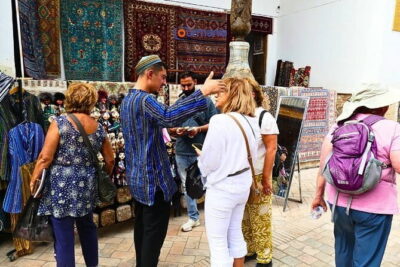
Bukhara Historical City Highlights Guided Walking Tour
Read our review →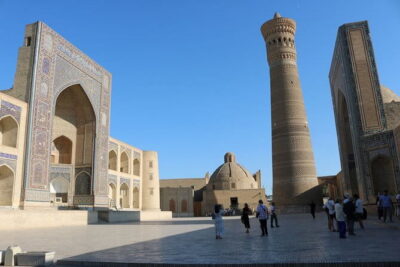
Bukhara: Private Guided Walking Tour with Hotel Pickup
Read our review →
Browse the lists this tour appears in