
Reviewed · WALKING TOURS IN BUKHARA
Bukhara Walking Tour
Bukhara’s story comes alive in its old brickwork, especially at the Samanid Mausoleum, one of Central Asia’s earliest mausoleums, and the Magok-i-Attari Mosque, a pre-Mongol monument built on older layers of the city. I like that this walk links grand landmarks with smaller local details, including the Jewish quarter, a 16th-century men’s bathhouse, and a puppet theater.
I also like the private format and the way the route covers the city’s main sights without rushing from one distant place to another by vehicle. Guides including Lola, Zara, and Guljan have been praised for clear explanations and friendly service. The catch is simple: entry tickets cost extra, and five and a half hours on foot can feel long in Bukhara’s summer heat, so start early.
Key points at a glance
- A full old-city route: See Lyabi Hauz, the trading domes, Poi Kalan, Ark Citadel, Bolo Haouz Mosque, and both major mausoleums in one outing.
- Private attention: The $90 rate covers a group of up to two people, making it $45 per person before admission fees when shared by two.
- Rare early architecture: Magok-i-Attari Mosque, the Kalan Minaret, and the Samanid Mausoleum offer some of the best surviving pre-Mongol sights.
- Strong guide choice: English, Russian, French, German, and Japanese are offered, with especially warm feedback for French-speaking guide Zara and guides Lola and Guljan.
- A small cultural surprise: You may see a two-minute puppet performance and possibly find a puppet made to resemble you, although that depends on luck.
- Best timing: An early start is wise in summer and helpful during the busier part of the day.
Why this walk makes sense in Bukhara
Bukhara is compact enough to explore on foot, yet packed with monuments that can blur together if you visit without context. One blue-tiled madrasa can start to look much like the next. This tour gives you a guide to explain how the buildings differ, who built them, and why Bukhara became one of Central Asia’s major religious centers.
The route also gives you a useful sense of the city’s layout. You begin near Lyabi Hauz, move through the old trading center, reach the Poi Kalan complex, then continue toward the Ark Citadel and the mausoleums beyond it. That progression helps you understand Bukhara as more than a collection of photogenic facades.
The private format matters here. You can ask questions, pause for photographs, and request a different starting time. The activity is listed at five and a half hours, with the practical range given as five to six hours, so this is a serious half-day walk rather than a quick orientation.
More Walking Tours in Bukhara
- Bukhara: Walking Tour with a Small Group
★ 4.9 · 260 reviews - All You Need To Know About Bukhara. A Walk In The Town
★ 4.9 · 31 reviews - Bukhara Historical City Highlights Guided Walking Tour
★ 4.5 · 16 reviews
Lyabi Hauz and the first look at old Bukhara
The walk begins around Lyabi Hauz, the old city’s best-known gathering place, near the monument of a man sitting on a donkey. The meeting instructions also direct you to the entrance of As-Salam Hotel, so confirm the exact meeting point with your guide before setting out.
At Lyabi Hauz, you see a traditional urban setting built around a pool, with the Nadir Devonbegi Madrasa, its khanaka, and the Kukaldosh Madrasa nearby. The scheduled visit to Nadir Devonbegi Madrasa lasts about 45 minutes, making it one of the longer stops at the beginning of the walk.
That extra time is useful. Instead of taking a quick photograph and moving on, you can ask about the role of madrasas and khanakas in Bukhara’s religious and social life. The site also provides an easy start because you can get oriented before the more concentrated run of monuments later in the day.
Magok-i-Attari and Bukhara’s older layers
Magok-i-Attari Mosque is one of the most important stops on the route. It is described as the first mosque in Uzbekistan and a pre-Mongol monument. A 15-minute visit does not sound long, but the point here is not simply the building’s appearance. It is the sense of age and continuity beneath modern Bukhara.
The mosque is connected with older layers of the city, which makes it especially valuable for anyone interested in how religious buildings changed over time. Your guide can help you distinguish its early character from the later Islamic architecture seen at the madrasas and Poi Kalan.
This is one place where a guide adds real value. Without explanation, an older brick monument may not seem as immediately grand as a tiled courtyard. With context, it becomes one of the key clues to Bukhara’s early development.
Trading domes and the old commercial center
The walk then reaches the trading domes, including Toqi Telpak Furushon and Toqi Zargaron. The planned visits are brief, about five minutes at each dome, but the route also includes a third trading dome and the traditional men’s bathhouse from the 16th century, viewed through its reception area.
These covered market structures show how Bukhara’s commercial life was organized. The names point to the goods and crafts once associated with them, including hats and jewelry. Today, the domes are also practical places to pause from the sun and see how the old city’s streets were shaped around trade.
Do not expect a long shopping session built into the tour. The stops are mainly for orientation, architecture, and photographs. If you want to browse carefully or buy souvenirs, you may need to return later, since the schedule continues at a steady pace.
Same city, a completely different day out:
- Best of Bukhara: All Day Private Old Town Tour
★ 5.0 · 66 reviews - Best of Bukhara: All Day Private Old Town Tour
★ 4.9 · 62 reviews - From Bukhara: 2-Day Desert Yurt Camp Tour
★ 4.5 · 57 reviews - City Tour Around Bukhara
★ 5.0 · 55 reviews
Two madrasas, two different moods
The Ulughbek Madrasa receives about 15 minutes. It is identified as the oldest madrasa in Uzbekistan, giving it special weight even if its facade is less ornate than some later buildings.
The nearby Abdul Aziz Khan Madrasa is presented as the most luxurious madrasa on the route. Its decoration offers a useful contrast with Ulughbek Madrasa. One stop emphasizes age and early scholarship, while the other gives you a sense of later artistic ambition and decorative detail.
I like this pairing because it prevents the tour from becoming a parade of unrelated monuments. Your guide can compare the two buildings directly, which makes architectural changes easier to see. Still, the scheduled time is short, so if ornate tilework is your main interest, ask early in the tour how much time you will have for close viewing and photographs.
Poi Kalan, Bukhara’s signature monument group
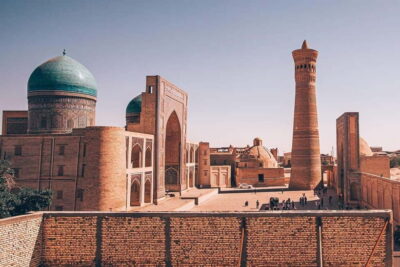
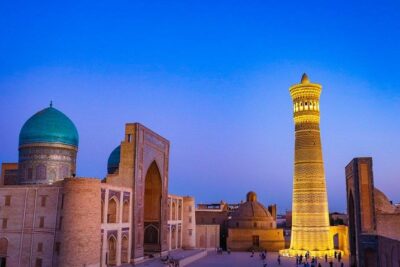
Poi Kalan is the visual center of the walk. The complex includes the Kalan Mosque, the Miri Arab Madrasa, and the Kalan Minaret. The mosque visit is scheduled for about 20 minutes, while the madrasa and minaret receive roughly 15 minutes each.
The Kalan Minaret is a pre-Mongol monument and one of Bukhara’s defining landmarks. Its survival gives the complex a strong link to the city’s early Islamic period. The Kalan Mosque is described as the largest mosque in the city, so this is one of the places where scale becomes part of the experience.
Miri Arab Madrasa remains a working madrasa for male students. That makes it different from a monument visited only for its decoration. You should follow your guide’s instructions about where you may enter and what you may photograph, since an active religious school deserves a respectful approach.
Poi Kalan is also a natural place to take your best wide photographs. The complex can be busy, and the stone surfaces offer little relief from strong sun. An early start helps you see the group with more breathing room.
The Ark Citadel and Bolo Haouz Mosque
The Ark Citadel gets the longest single stop, about 45 minutes. This fortified compound was the seat of Bukhara’s rulers, and its massive entrance gives you a sharp change of scale after the smaller streets and market domes.
A guided visit helps you make sense of the citadel as a center of power rather than just a large wall. You can ask about the rulers who governed from here and how the Ark related to the surrounding city. The exact sections accessible on your visit may vary, so treat the 45 minutes as a focused introduction rather than an exhaustive exploration.
Bolo Haouz Mosque follows, with about 20 minutes. Its most recognizable feature is the line of tall wooden columns at the front. The mosque gives you another architectural contrast, this time between the heavy defensive character of the Ark and a more open, finely worked prayer space.
Because these stops come after several hours of walking, this part of the route can feel tiring. Comfortable shoes, sunglasses, a sun hat, and light, respectful clothing are practical choices, not just packing suggestions.
Chashma-Ayub and the Samanid Mausoleum
Chashma-Ayub Mausoleum is scheduled for about 25 minutes. Its name is linked with Job, or Ayub, and the building has a distinct profile that differs from the domed structures seen earlier. It is a quieter change of pace after the Ark and Bolo Haouz Mosque.
The final major stop is the Samanid Mausoleum, with about 30 minutes set aside. This is one of the tour’s most important historical sights. It is described as the first mausoleum in Central Asia and the second mausoleum in the Islamic world, as well as a pre-Mongol monument.
The Samanid Mausoleum is especially rewarding if you pay attention to its brick patterns and geometric design. Its importance does not depend on bright tile. The restrained brickwork shows how much can be done with texture, proportion, and repeating forms.
Ending near these early monuments gives the walk a sensible arc. You begin with Bukhara’s later madrasas and trading center, then finish with buildings that reach farther back into the city’s past.
The puppet theater stop
Along the way, you have the chance to visit the only place in Uzbekistan described here as a center for the history of Central Asian puppets and puppet theater. The visit includes a two-minute performance by the master.
This is a small part of the day, but it may be one of the most memorable. Major monuments tell you about rulers, religion, and trade. Puppets give you a glimpse of popular performance and craft traditions that can be harder to encounter on a standard monument route.
There is also a playful twist. If luck is on your side, you may find a puppet that looks like you. That is not guaranteed, so treat it as an amusing possibility rather than a promised feature.
Guide quality and language choices
The guide is the heart of a walking tour, and the available languages are unusually broad: English, Russian, French, German, and Japanese. Guides named in the feedback include Lola, Zara, and Guljan.
Zara is specifically praised for excellent French and detailed explanations. Guljan is described as friendly, passionate about Bukhara, and good at steering a private pair away from noisy, crowded areas. Lola is also praised for her understanding of the city and for making the walk enjoyable.
The consistent strengths are clear explanations, warmth, and flexibility. You are not simply handed a list of dates. The best use of your guide is to ask comparisons: Why is this madrasa different from the next one? Which structures are pre-Mongol? How did the trading domes fit into daily life?
Price, walking effort, and what you still pay
The price is $90 for a private group of up to two people. Shared by two, that works out to $45 per person before admission fees. For a half-day private guide covering this many major sites, that is a reasonable price if you value personal attention and historical explanation.
The important limitation is that entry tickets are not included. You should budget separately for admissions, along with any personal expenses not listed in the program. The exact total will depend on which sites require payment on your date.
The value is strongest for couples or two friends who want a private pace. Solo visitors pay the full group rate, so the per-person cost is higher. The tour also advertises skip-the-ticket-line access, which can save time, but it does not remove the cost of admission.
Timing, comfort, and who should book
Summer heat is the main practical concern. Start early if you can. One private group finished in time for lunch when starting early, and an early departure also helps before the streets become hotter and more crowded.
Wear comfortable shoes and clothes suitable for mosque and madrasa visits. Bring sunglasses and a sun hat. You should expect several hours of walking, frequent stops, and periods in open sun.
This tour suits you best if you want Bukhara’s major sights explained in one organized morning or afternoon. It is also a good match if you prefer a private guide, need a particular language, or want to adjust the start time.
You may prefer a shorter tour if you dislike long walks or already plan to visit most of these buildings independently. Since tickets are extra and the route is packed, you should also allow time on another day for a slower return to the monuments that interest you most.
The activity is listed as wheelchair accessible, but the route includes historic buildings and old-city surfaces. If you use a wheelchair, confirm the practical access details for each stop before booking.
Should you book the Bukhara Walking Tour?
Book it if you want a strong first look at Bukhara and prefer a private guide to connect the monuments. The route covers the city’s essential sights, from Lyabi Hauz and the trading domes to Poi Kalan, the Ark, and the Samanid Mausoleum.
I would choose it with an early start, especially in summer. I would also confirm the meeting point at As-Salam Hotel, ask about current admission costs, and tell the guide which subjects matter most to you.
Skip it if you want a very relaxed day with long independent visits at each site. For most people, though, the private price, broad route, language choices, and strong guide feedback make this a practical way to get your bearings in Bukhara.
FAQ
Where does the Bukhara Walking Tour meet?
Your guide will meet you near the entrance of As-Salam Hotel. The walking route begins around the main square of Old Bukhara at the Lyabi Hauz complex, near the monument of a man sitting on a donkey.
How long does the tour last?
The tour lasts about five and a half hours. The stated practical range is five to six hours.
How much does the tour cost?
The price is $90 for a private group of up to two people. Entry tickets and personal expenses are not included.
Is this a private tour?
Yes. The activity is organized as a private group, with the price covering up to two people.
Which languages are available?
Guided tours are available in English, Russian, French, German, and Japanese.
Are entry tickets included?
No. Entry tickets are separate, so you should budget for them in addition to the tour price.
What sights are included?
The route includes Lyabi Hauz, Nadir Devonbegi Madrasa, Magok-i-Attari Mosque, the trading domes, Ulughbek Madrasa, Abdul Aziz Khan Madrasa, Poi Kalan Mosque, Miri Arab Madrasa, the Kalan Minaret, the Ark Citadel, Bolo Haouz Mosque, Chashma-Ayub Mausoleum, and the Samanid Mausoleum.
What should I bring?
Bring comfortable shoes, sunglasses, a sun hat, and comfortable clothing.
Can I cancel or pay later?
You can cancel up to 24 hours in advance for a full refund. You can also reserve now and pay later, keeping your plans flexible.
Just added around Bukhara
- Bukhara: City Highlights Guided Tour with Pickup★ 5.0 · 3 reviews
- Full-Day Private Guided Tour to Islamic 7 Saints of Bukhara★ 4.5 · 3 reviews
- Uzbekistan 8 Days Private Guided Tour★ 4.6 · 3 reviews
- 9 Days Private Guided Tour to Uzbekistan★ 5.0 · 3 reviews
- Legends of Bukhara: Exclusive Full-Day Tour★ 5.0 · 4 reviews
- Bukhara Walking Tour★ 5.0 · 4 reviews
- 2 Day Ukhum Hiking Tour from Bukhara★ 5.0 · 4 reviews
- Bukhara day tour★ 4.0 · 4 reviews
Walking Tours in Bukhara, compared.
All You Need To Know About Bukhara. A Walk In The Town
Read our review →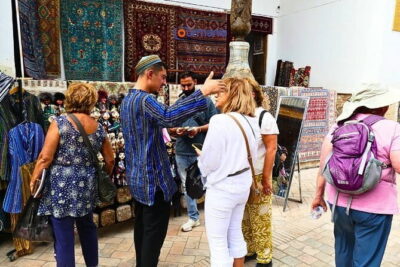
Bukhara Historical City Highlights Guided Walking Tour
Read our review →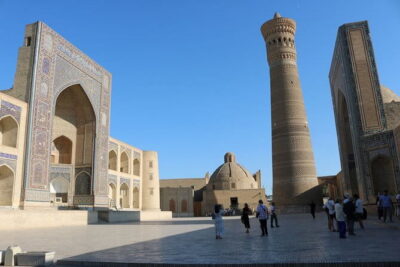
Bukhara: Private Guided Walking Tour with Hotel Pickup
Read our review →
Browse the lists this tour appears in