
Reviewed · WALKING TOURS IN BUKHARA
Bukhara: Walking Tour with a Small Group
Bukhara is best understood on foot, and this tour covers an impressive sweep of the old city in about four and a half hours. You move from shaded ponds and trading domes to blue-tiled madrasahs, the great Kalon Minaret, and two of Central Asia’s most important mausoleums. It is a lot of ground, but the route gives you a useful first map of Bukhara.
I like the small maximum group of 10, which makes it easier to hear the guide and ask questions. I also like the focus on architecture, faith, trade, and daily culture rather than pushing you from shop to shop. Guides including Sunny and Nuriddin are described as fluent English speakers who use stories, answer questions, and adapt the walk to the group.
The main consideration is pace. You will walk for hours, and several interiors cost extra. The Ark Fortress is shown from outside rather than toured through its museums, and the entry fees for places such as Magoki-Attori Mosque, the madrasahs, Poi Kalyan Mosque, and the Ismail Samani Mausoleum are not included.
Key points at a glance
- Sixteen major sights in one walking route: The tour links Bukhara’s central monuments, trading domes, mosques, and mausoleums.
- A group capped at 10 people: You get a more personal setting than on a large city bus tour.
- Strong guide-led storytelling: Sunny and Nuriddin are named guides praised for fluent English, local customs, and engaging stories.
- The Ark is an exterior stop: You see the fortress from outside, while its museums would require about 1.5 extra hours.
- No shopping-first agenda: Artisan workshops are used to show local life and culture, not to fill the tour with sales stops.
- Good value at $28: The fee covers a professional guide and small-group walking tour, but meals, drinks, and monument entry are extra.
Why this route works for seeing Bukhara
Bukhara can feel confusing at first. Its major sights are spread through an old center of lanes, market domes, religious schools, and open squares. This walk gives you a clear sequence, beginning at Lyabi-Hauz and moving toward the Poi Kalyan complex before continuing to the Ark area and the Samanid Mausoleum.
That order matters. You first see the city as a place of social life and commerce, then move into its grand religious architecture. By the end, the focus shifts to older Islamic and pre-Islamic-era architectural traditions. I like that balance because Bukhara becomes more than a string of pretty facades.
The tour is in English and lasts about four to four and a half hours. Since there is no included vehicle, you should expect steady walking between stops. The route includes time at many monuments, but it is not designed as a long museum visit at every location.
More Walking Tours in Bukhara
- Bukhara: Walking Tour with a Small Group
★ 4.9 · 260 reviews - All You Need To Know About Bukhara. A Walk In The Town
★ 4.9 · 31 reviews - Bukhara Walking Tour
★ 4.7 · 25 reviews
Starting at Lyabi-Hauz and the old city’s social heart
The meeting point is Nodir Devonbegi Madrasah on Bakhovuddin Naqshbandi Street. The walk begins at Lyabi-Hauz, a historic ensemble built around a pool and made up of the Kukeldash Madrasah, Nodir Divan Begi Madrasah, and the Nadir Divanbegi Hanaka.
You have about 40 minutes here, the longest single stop on the route. That gives the guide room to explain how the complex worked as a place for study, worship, gathering, and public life. The pool also gives this part of the city a calmer feel than the stone lanes around the trading domes.
This is a good place to begin because you can get your bearings before the route becomes denser. Look closely at the tilework and decorative details, but also pay attention to the arrangement of the buildings around the water. Bukhara’s architecture often makes the most sense when you see how buildings relate to public space.
Magoki-Attori Mosque and a look at local craft
The next stop is the 12th-century Magoki-Attori Mosque, part of the Lyabi-Hauz area. Its age and position below the present street level give it a different character from the larger, more open monuments later in the walk.
The stop lasts about 20 minutes. Admission is not included, and the itinerary also identifies a carpet museum connected with this stop. Confirm with your guide which interior visits are planned on the day, since the listed price covers the walking tour rather than entrance tickets.
The tour may also include an artisan workshop. This is not presented as a shopping circuit. Instead, the point is to show one part of local life and craft. That distinction matters if you want cultural context but would rather not spend your afternoon being steered from one sales counter to another.
Trading domes where Bukhara did business

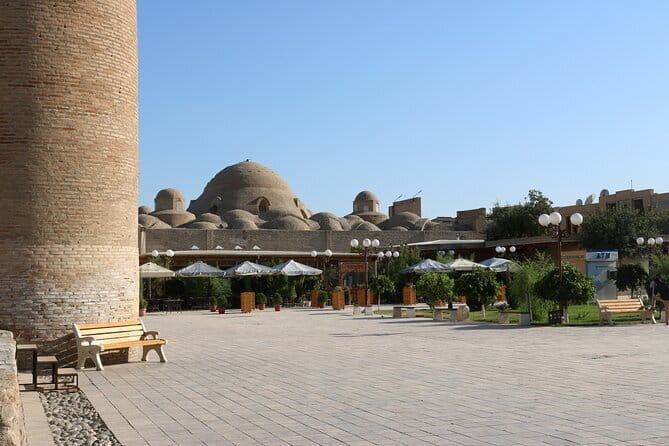
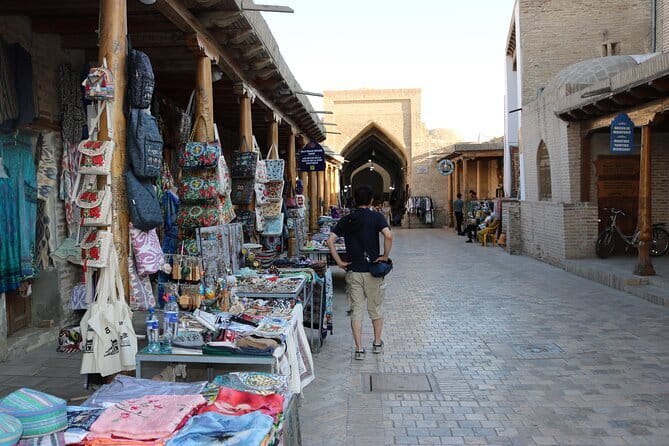
Bukhara’s covered market domes are among the most memorable parts of the walk. At Toqi Telpakfurushon, traditionally linked with the sale of hats, you see how the old city organized trade under brick roofs. The 20-minute stop gives you time to listen, look around, and understand the dome as part of a wider commercial network.
You then continue toward Toqi Zargaron, the Dome of Jewelers. This market structure dates to the 16th century and was associated with gold and jewelry trading. The stop is shorter, about 15 minutes, but it helps connect Bukhara’s architecture with the commercial life that supported its rulers, schools, and mosques.
Sayfuddin Caravanserai and Toki Sarrafon are also included in the overall route, even though the timed itinerary gives more detail for the other domes. These places add useful context about lodging, money changing, and trade. If you enjoy old marketplaces, this part may be more rewarding than simply photographing the grand monuments.
Do not expect a long shopping break. The stated purpose is to explain the city and its crafts. If you wish to buy something, you can look, but the tour is not built around bargaining or retail time.
Same city, a completely different day out:
- Best of Bukhara: All Day Private Old Town Tour
★ 5.0 · 66 reviews - Best of Bukhara: All Day Private Old Town Tour
★ 4.9 · 62 reviews - From Bukhara: 2-Day Desert Yurt Camp Tour
★ 4.5 · 57 reviews - City Tour Around Bukhara
★ 5.0 · 55 reviews
Two madrasahs, two styles of decoration
The Abdulaziz-Khan Madrasah gives you one of the route’s best chances to compare decorative styles. Built in 1652 during the reign of Abdulaziz Khan, it is known for elaborate tilework and painted decoration. You spend about 20 minutes here, with entry extra.
The Ulugbek Madrasah is older and tied to Ulugbek, the grandson of Amir Timur. The visit lasts about 15 minutes. It is a useful contrast with Abdulaziz-Khan because the buildings belong to different periods and express different tastes in religious education and design.
I would pay attention to the guide’s explanation of what a madrasah was rather than treating each one as just another ornate courtyard. These were centers of Islamic study, and their entrances, courtyards, and inscriptions carried meaning. A good guide can help you notice details you would otherwise pass without understanding.
The practical catch is that several entry fees accumulate. The tour price is only $28 per person, but you should keep extra money available if you plan to enter the paid sites. You can still appreciate the exteriors without paying every fee, but the interior views may be important to you.
The Poi Kalyan complex and Bukhara’s famous skyline
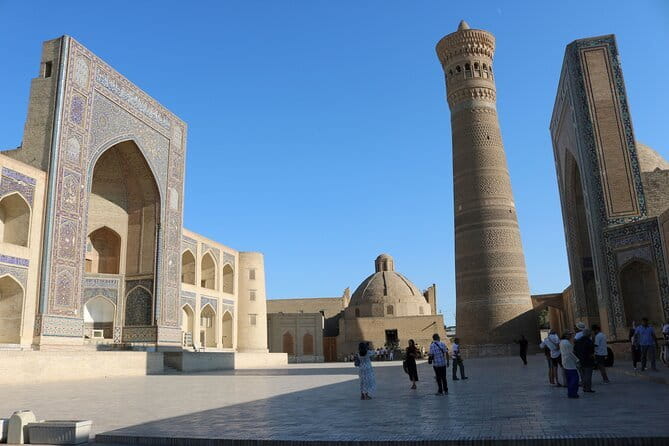
The Kalon Minaret is the visual high point of the walk. Built in 1127 by the Karakhanid ruler Arslan Khan, it rises about 47 meters above the old city. Its patterned brick surface is especially impressive up close, where you can see that the decoration comes from the structure itself rather than from a blanket of colored tile.
The minaret is included as a free exterior sight. You spend about 20 minutes in the area, enough to understand its size and role in the city.
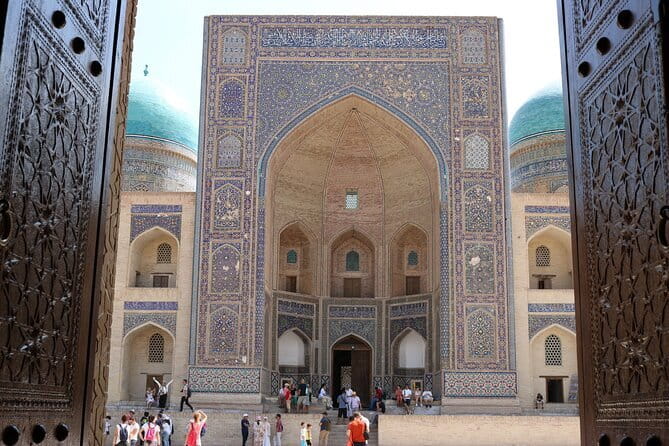
Next comes the Miri Arab Madrasah, built in the early 16th century under Shaybanid ruler Ubaydullah Khan and named for his spiritual mentor, Sheikh Abdullah. It faces the Poi Kalyan Mosque, creating one of Bukhara’s most recognizable architectural compositions.
Poi Kalyan Mosque, built in the 16th century during the Shaybanid period, completes the complex. The planned stop is about 15 minutes, and entry is not included. The short timing means you should not expect an extended independent exploration of every courtyard and prayer space.
Still, this cluster rewards careful attention. From one spot, you can read several layers of Bukhara’s religious and political past: the older minaret, the later mosque, and the madrasah that remains tied to Islamic education. The guide’s role is especially useful here because the buildings can look similar if you do not know what changed and when.
Seeing the Ark and the Bolo-Hauz Mosque

The Ark of Bukhara is one of the city’s oldest structures, with origins dating to the 5th century. It served as a royal residence and military stronghold for the emirs of Bukhara.
This tour shows the Ark from the outside. The museums inside would take about 1.5 additional hours, so they are not part of the standard visit. That is a reasonable choice for a four-hour route, but it is important to know before booking. If the Ark is your main reason for visiting Bukhara, you may want to return separately.
The route then reaches Bolo-Hauz Mosque, associated with the 18th to 20th centuries. Its name connects it with a pool, and the building provides a quieter architectural counterpoint to Poi Kalyan. The stop lasts about 15 minutes and has no listed admission fee.
In late autumn and winter, the tour ends at Bolo-Hauz Mosque rather than continuing to the Ismail Samani Mausoleum. Check the season when planning your day, especially if you are counting on the final mausoleum visit.
Ismail Samani Mausoleum and the oldest architecture on the route
In the warmer-season route, the final stop is the Ismail Samani Mausoleum, with about 30 minutes allocated to it. The mausoleum is regarded as one of the key examples of early Islamic architecture and one of the oldest funerary buildings in Central Asian architecture.
Its importance is not based on bright tilework. The building is famous for its brick construction and geometric patterning. After the grand scale of Poi Kalyan, this smaller structure gives the tour a more intimate ending.
The mausoleum is outside the tightest cluster of central monuments, which explains the longer walking route and the planned duration. Admission is not included. If the walk ends here, you can plan the rest of your afternoon around the mausoleum rather than having to return to the starting point.
Guide quality and the value of a small group
The guide can make or break a historic-city walk. Here, the experience is designed around professional English-speaking guides rather than trainees or language students. Sunny is described as making the tour interactive, while Nuriddin is noted for fluent English, engaging stories, and the ability to answer questions about Uzbek traditions and habits.
That kind of local explanation is valuable in Bukhara. You are not only looking at monuments; you are trying to understand why a market dome, a religious school, a mosque, and a water pool were placed where they were. The guide also has some flexibility to adjust the walk and, in at least one case, add another sight or a short café break.
The maximum group size is 10. That is small enough for questions and conversation, though it does not guarantee a private tour. If your group wants a fully customized pace, a private booking may suit you better, but the small-group format keeps the $28 price reasonable.
The tour includes online support, which can be useful before the walk, but it does not include meals, drinks, or entry tickets. Bring water, wear comfortable shoes, and allow room in your budget for the interiors you care about most.
Who should book this Bukhara walking tour?
I would choose this tour if you have one day or one first afternoon in Bukhara and want a broad introduction without arranging separate visits to every major sight. It suits first-time visitors who want the city’s main story explained as they walk.
It is also a good match if you value local customs and architecture as much as photographs. The workshop visits, guide-led explanations, and discussion of Uzbek habits add more than a basic monument checklist.
You may want another plan if you dislike long walks, want extended museum time, or mainly want to shop. The Ark museums are not included, and paid interiors can make the day longer and more expensive than the advertised fee suggests.
At $28, the tour offers solid value for a professional guide, a small group, and a route that reaches nearly all of Bukhara’s headline sights. You will get the best value by treating it as an orientation walk, then returning on your own to the two or three interiors that interest you most.
Should you book it?
Book this walk if you want Bukhara explained by an English-speaking local guide and prefer a compact group to a large coach tour. Sunny and Nuriddin are useful names to look for when confirming your guide, and the route gives you a strong mix of public squares, market domes, madrasahs, mosques, and mausoleums.
Skip it only if you need a slow, museum-heavy day or cannot manage several hours on foot. For most visitors, the combination of coverage, guide access, and a $28 base price makes this a sensible first look at Bukhara, provided you budget separately for admission fees.
FAQ
How long does the Bukhara walking tour last?
The tour lasts about four to four and a half hours.
What language is the tour in?
The tour is conducted in English.
How large is the group?
The experience has a maximum of 10 travelers.
Where does the tour start?
It starts at Nodir Devonbegi Madrasah on Bakhovuddin Naqshbandi Street in Bukhara.
Where does the tour end?
In the regular route, it ends at the Ismail Samani Mausoleum. During late autumn and winter, it ends at Bolo-Hauz Mosque.
Is entry to the monuments included?
No. Entry fees are not included, and meals and drinks are also excluded from the price.
Can I cancel for a full refund?
Yes. You can cancel at least 24 hours before the local start time for a full refund. Cancellations or changes made less than 24 hours before the start time are not refunded or accepted.
Just added around Bukhara
- Bukhara: City Highlights Guided Tour with Pickup★ 5.0 · 3 reviews
- Full-Day Private Guided Tour to Islamic 7 Saints of Bukhara★ 4.5 · 3 reviews
- Uzbekistan 8 Days Private Guided Tour★ 4.6 · 3 reviews
- 9 Days Private Guided Tour to Uzbekistan★ 5.0 · 3 reviews
- Legends of Bukhara: Exclusive Full-Day Tour★ 5.0 · 4 reviews
- Bukhara Walking Tour★ 5.0 · 4 reviews
- 2 Day Ukhum Hiking Tour from Bukhara★ 5.0 · 4 reviews
- Bukhara day tour★ 4.0 · 4 reviews
Walking Tours in Bukhara, compared.
All You Need To Know About Bukhara. A Walk In The Town
Read our review →
Bukhara Historical City Highlights Guided Walking Tour
Read our review →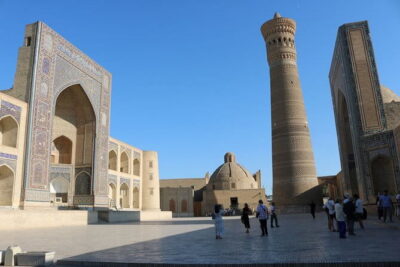
Bukhara: Private Guided Walking Tour with Hotel Pickup
Read our review →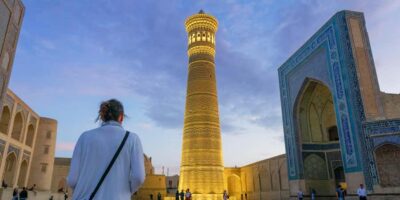
Browse the lists this tour appears in