
Reviewed · ARAL SEA & MUYNAK EXPEDITIONS
Aral Sea Tour from Nukus 1 night / 2 days
The Aral Sea is not simply a place you visit. It is a warning written across a huge stretch of salt, dust, rusting ships, and empty horizon. This private trip from Nukus takes you to the dry seabed itself, where you can walk, touch the soil, and see how a great inland sea became desert.
I like two things here. First, the route packs in Muynak’s ship cemetery and the Ustyurt Plateau, not just a quick stop at the shore. Second, sleeping in a yurt beside the former sea gives the trip a quiet, human finish, with a campfire and clear night sky.
The main drawback is the road. You spend about seven hours getting to camp and eight hours returning, much of it over rough, potholed tracks. If you have back or spine problems, this is not a sensible choice.
Key points to know before you go
- The ship cemetery is in Muynak, a stark reminder of the port town that lost its water.
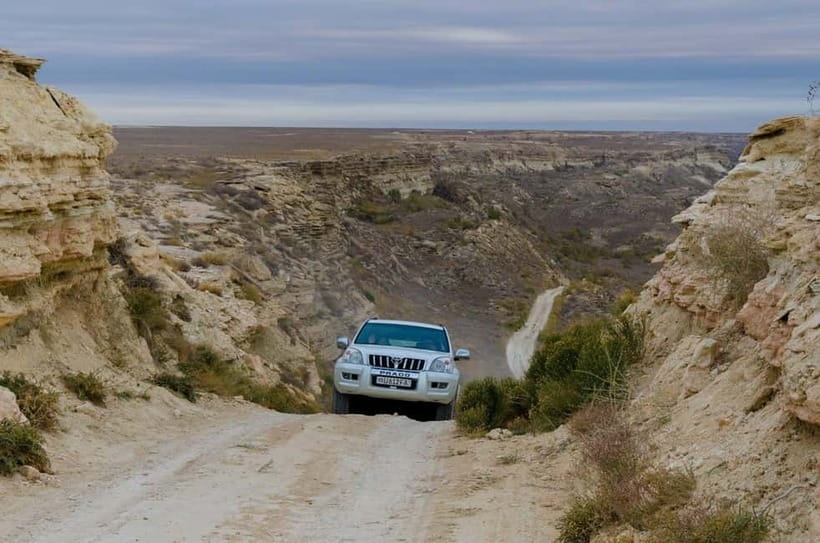
- The 4×4 is essential, since the route includes badly maintained desert roads and uneven seabed tracks.
- The yurt night costs extra, listed at $25 per person, with meals also outside the tour price.
- The dry Aral seabed is a hands-on stop, where you can walk, touch the ground, and possibly swim at the camp area.
- Ustyurt Plateau adds dramatic scenery, including pale canyon-like formations and nomad cemeteries.
- There is no mobile or internet connection, but the camp has electricity and a local telephone is available.
Why this Aral Sea trip matters
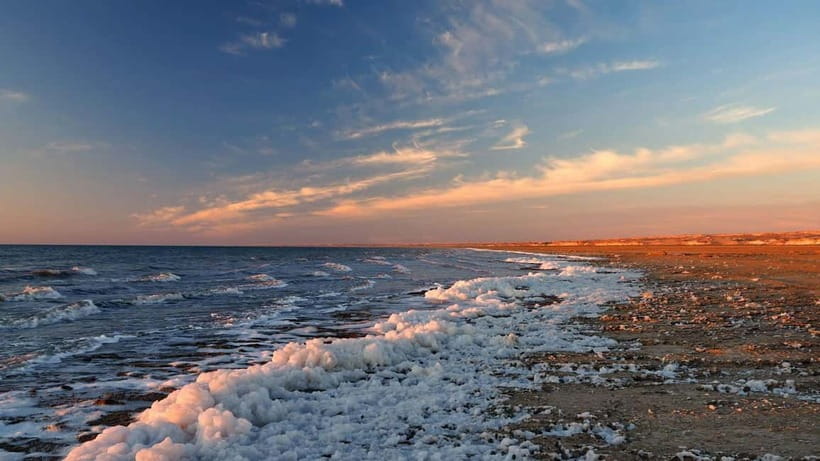
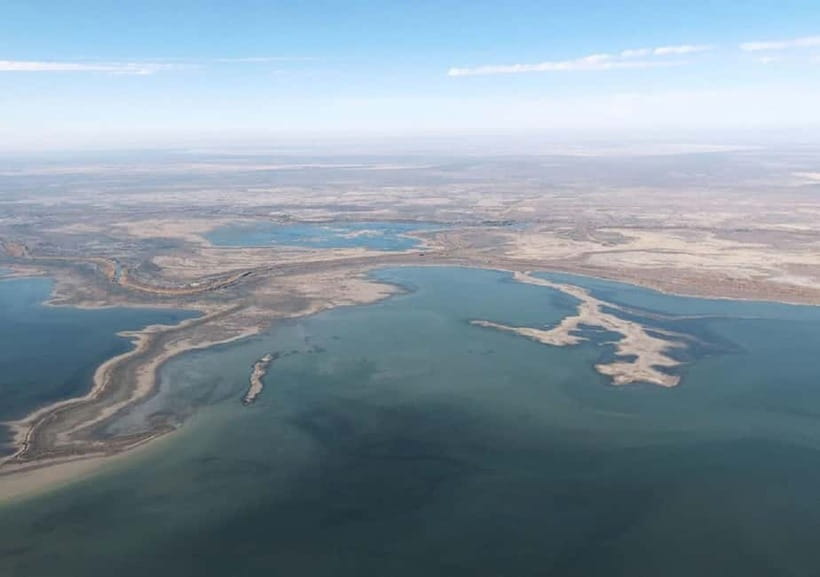
The Aral Sea once supported fishing towns and regular shipping. Water diversion changed that, and the remaining water pulled far away from Muynak. What you see now is not a normal beach holiday. It is a vast, exposed seabed marked by salt, sand, abandoned vessels, and long distances between settlements.
That gives the journey unusual value. You are not only looking at a famous site. You are seeing the physical result of poor environmental decisions. The scale is hard to grasp in a museum or photograph, but easier to understand when your vehicle crosses the former sea floor and the horizon stays dry in every direction.
This is also a serious road trip. The tour covers roughly 800 kilometers over two days, with long stops and detours. The advertised duration is 1.5 days, but in practical terms you leave Nukus on day one, sleep near the former sea, and return around 5:00 p.m. on day two.
The private format helps. The vehicle and driver are reserved for your group of up to four people, so you can manage stops more easily than on a large coach. You still need patience, though. A private 4×4 does not make rough roads smooth.
More Aral Sea and Muynak expeditions:
- Daytrip from Khiva to Aral Sea Cemetery of Ships. All in one
★ 4.3 · 52 reviews - Muynak Ship Cemetery Tour From Nukus
★ 4.3 · 32 reviews - Aral Sea Adventures (2 day)
★ 5.0 · 30 reviews
Leaving Nukus for Mizdakhan
Pickup is available from your Nukus hotel, airport, or railway station. The drive begins with Mizdakhan, an old cemetery complex sometimes described as the city of the dead. Mausoleums and burial sites cover the area, and traces of pre-Islamic customs can still be seen.
This is a useful first stop because it gives the day some cultural context before the focus shifts to environmental damage. Mizdakhan is not just a quick photo point. It connects the route to the older communities of Karakalpakstan and the traditions that existed before the modern crisis.
Wear shoes with a firm sole. The tour involves walking through open, dry areas, and the advice to bring sport shoes or hiking boots is sensible. Long trousers, a hat, sunglasses, and sunscreen will help with sun and dust.
After Mizdakhan, the route continues toward Kungrad. A lunch stop is recommended in the Kungrad area. You should expect the day to feel more like an expedition than a polished sightseeing circuit, with long stretches between stops and basic roadside arrangements.
Muynak and the rusting ships
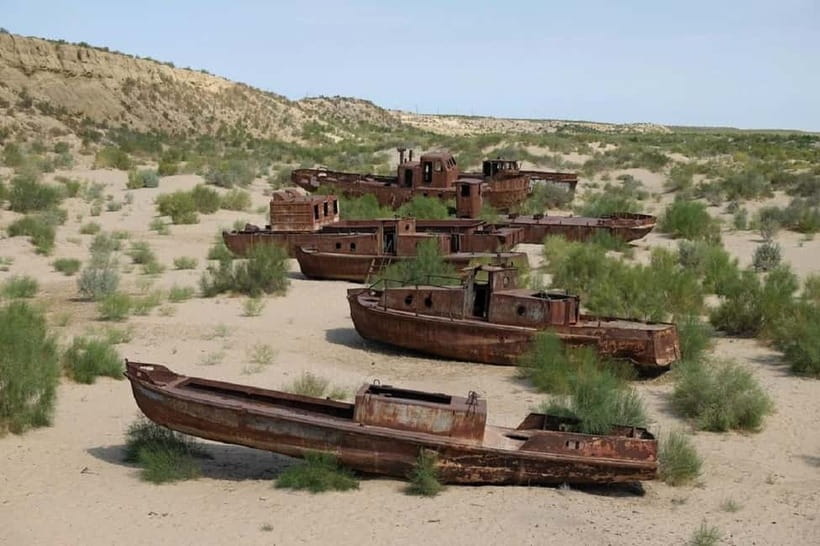
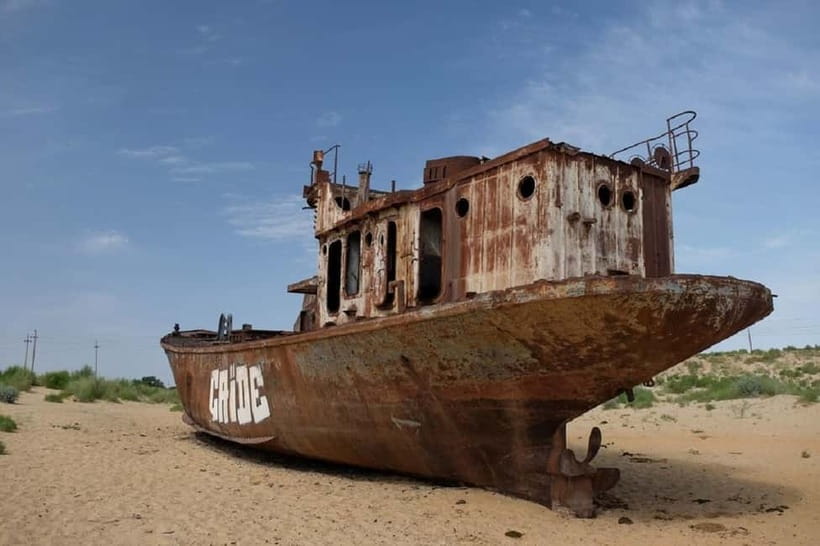
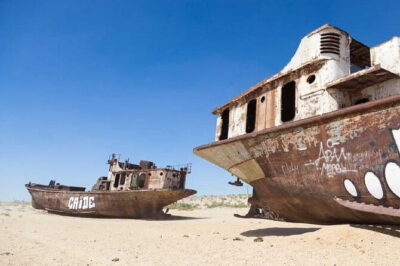
Muynak is the emotional center of the first day. Once linked directly to the Aral Sea, the town now sits far from the water. Its ship cemetery shows the change better than any short explanation can.
The vessels rest on dry ground rather than floating in a harbor. Their rusting hulls and tilted forms make a memorable sight, but the scene is not meant to be treated as a quirky collection of old boats. These ships point to a vanished fishing economy and to the people whose work depended on the sea.
You also visit the Aral Sea Ecological Museum of Muynak. The entry ticket is listed separately at $5 per person. It is a small extra cost, but worthwhile because it helps explain what you are seeing outside.
Lunch is also recommended in Muynak. Since the exact restaurant arrangements can vary, it is wise to clarify the meal plan after booking, especially if you need vegetarian food. Karakalpak cooking commonly includes beef, lamb, fish, rice, wheat or sorgo dough, and vegetables.
Crossing the dry seabed near Uchsay
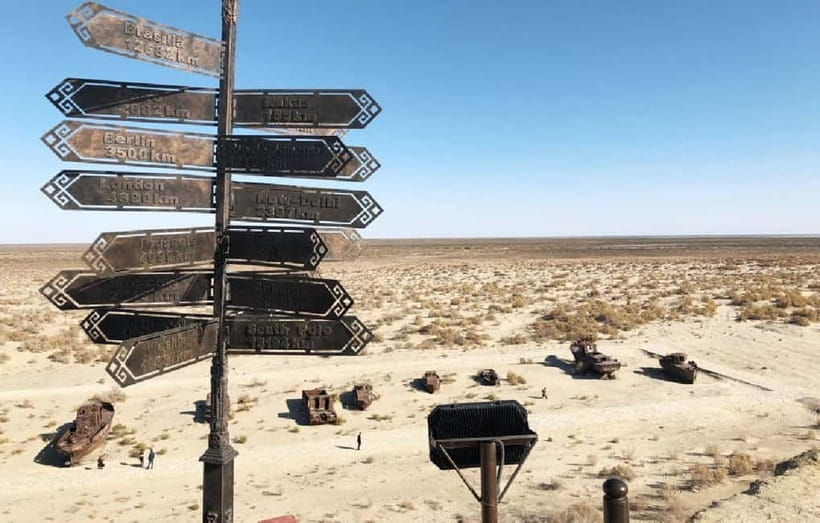
From Muynak, the road heads through Uchsay village and onto the former seabed. This is where the loss of the sea becomes physical. You can step out, walk across the dry ground, touch the surface, and feel the dust and salt under your shoes.
The stop may sound simple, but it is the reason to tolerate the long drive. A viewpoint from a road cannot show the full scale of the change. Standing on the seabed makes the absence of water clear.
Bring a hat and sunglasses, and keep sunscreen handy. The area is open and exposed. You should also protect your camera and phone from dust. Drinks and food are not allowed inside the vehicle, so follow the provider’s instructions and use scheduled stops for eating and drinking.
The road can be very rough here. Expect repeated jolts, not just a short bumpy patch. One driver may speak English or Russian, but communication quality can vary, so confirm your preferred language before departure. If you need detailed explanations in English at every stop, this is worth settling in advance.
A few more Uzbekistan days to weigh up
- Tashkent : Classic City Tour. (Day & Night Shift)
★ 4.8 · 52 reviews - Fergana – Golden Valley From Tashkent 1 night / 2 days
★ 4.5 · 41 reviews - Life As Nomads – Yurt Camp Tour with Night from Samarkand
★ 3.6 · 36 reviews - Yurt Camp Tour with Night from Bukhara
★ 3.8 · 35 reviews
The Ustyurt Plateau and the yurt camp
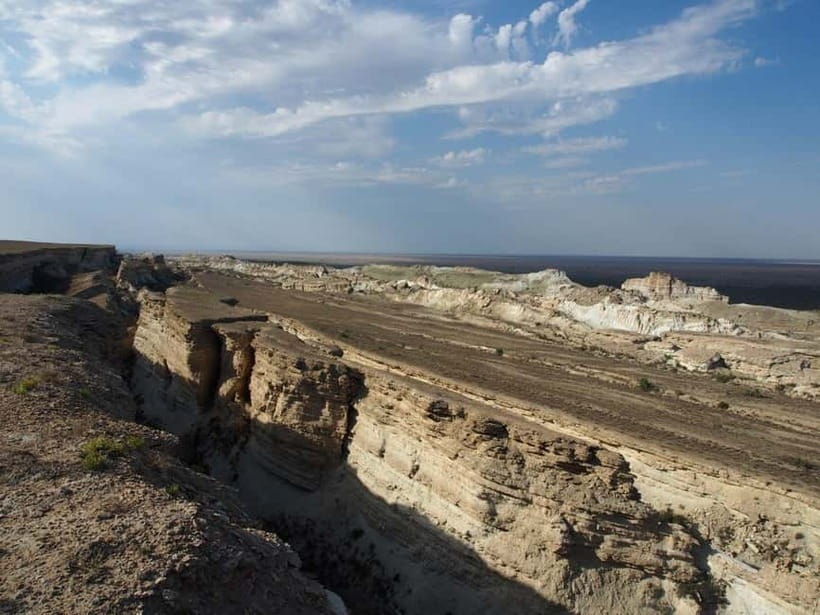
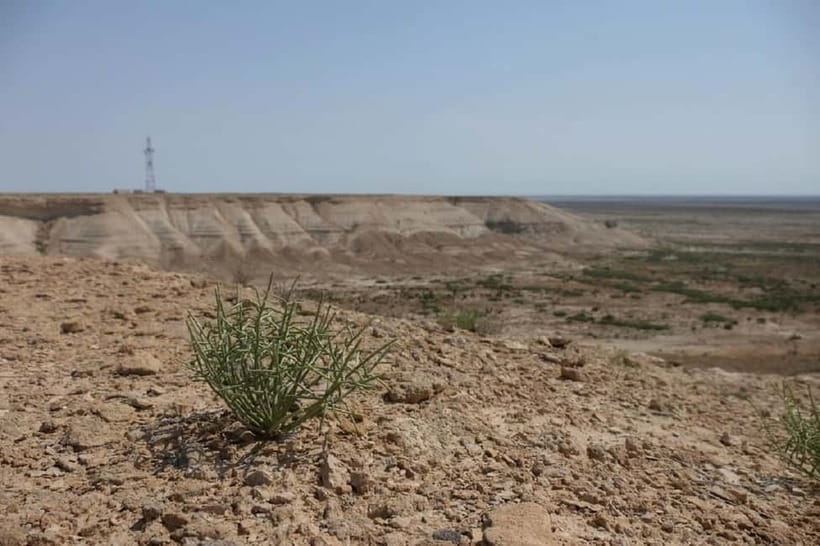
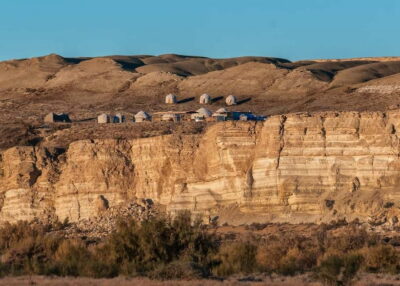
The Ustyurt Plateau gives the route a different mood. Its pale, eroded formations are often compared with the Grand Canyon, though this is a broad and remote Central Asian setting rather than a developed national park. The white-toned cliffs and open desert create some of the most striking views of the trip.
You may also see cemeteries connected with local nomadic communities along the route. These quiet sites add another layer to the journey. The plateau is not only empty space. It carries signs of movement, burial, trade, and life in a hard environment.
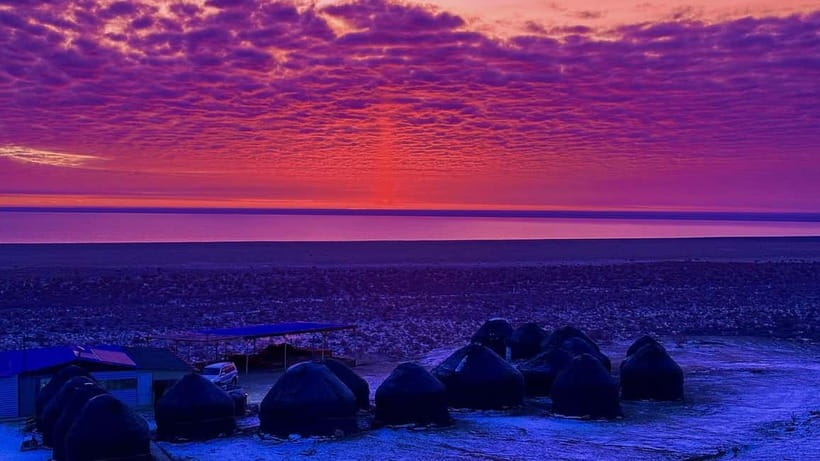
The yurt camp sits near the Aral Sea area. Overnight accommodation costs an additional $25 per person. The camp has electricity for charging devices, a fresh shower for washing away salt and mud, and a telephone for local communication.
There is no mobile or internet connection. For many people, that will be part of the appeal. You can sit by the campfire without checking messages, then look at the night sky if conditions are clear. A Japanese booking from August specifically praised the sunrise from camp, so setting an alarm for dawn is a smart idea.
Swimming is listed as an option at the camp, and the water is described as safe for swimming. Bring swimwear if you want to take advantage of it. Pack warm clothing too, even outside winter, since early spring and late autumn can be cold.
What the long return day includes
Day two begins with breakfast, which is extra, followed by the drive back to Nukus. The return route includes several stops, but it is still an eight-hour day in the vehicle.
Davlatgirey caravanserai, also called Kurgancha Kala, is an abandoned trading stop. Caravanserais once offered shelter along long-distance routes, so this ruin fits the wider story of movement across the desert. It also breaks up the journey before the plateau views and lake stop.
The route crosses more of the Ustyurt Plateau. This section is especially appealing if you like stark geology and broad views rather than busy attractions. The pale canyon-like formations can look dramatic, but there are no modern visitor facilities described along the remote sections. Plan for basic conditions.
Sudochie Lake provides a change from dry ground. It is an important stop for migrating birds, including pink flamingos, white swans, ducks, and other species. The lake is also known as a hunting area. You should treat this as a nature stop, not a guaranteed wildlife encounter, since sightings depend on season and conditions.
Lunch is planned as a picnic around Kungrad. Bring a flexible attitude. The route is remote, and the schedule is built around distance, road conditions, and available stops rather than a fixed restaurant timetable.
Arrival in Nukus is expected at about 5:00 p.m. Drop-off can be arranged at your hotel, airport, or railway station. If you have a same-evening train or flight, leave a generous margin. The stated arrival time is approximate, and desert roads can slow the return.
What the $590 price really covers
The price is $590 per private group of up to four people. That can be fair value if four people share the cost, since it includes an air-conditioned 4×4 and all listed fees and taxes. For one or two people, the per-person cost becomes much higher.
The main extras are important:
- Yurt accommodation: $25 per person
- Four meals, including one breakfast, two lunches, and one dinner: listed at $50
- Aral Sea Ecological Museum entry: $5 per person
- Personal expenses and anything not listed
Confirm how the $50 meal charge is calculated before you commit, since the wording does not make clear if it is per person or for the group. Vegetarian meals and other food preferences should also be arranged in advance.
The final cost can therefore approach $700 for a small group once accommodation, meals, and museum entry are added. That is a meaningful amount for a short tour, but the 4×4, private setup, remote route, and overnight camp explain why it costs more than a basic city excursion.
The value depends on what you want. If you only want to see the ship cemetery, a shorter local visit may suit you better. If you want the seabed, plateau, yurt night, lake, and caravanserai in one trip, this package saves you from arranging several difficult transfers yourself.
Comfort, safety, and packing
The road is the biggest comfort issue. The vehicle is designed for the route, but it cannot remove the constant bumps. Anyone with back pain, spine problems, or limited mobility should skip this tour.
Pack light, practical clothing:
- Protective hiking boots or sport shoes
- Long trousers
- Warm jacket in early spring and late autumn
- Sunglasses and a sun hat
- Sunscreen
- Swimwear
- Comfortable clothing
There is a shower at camp, but the trip is still remote and basic. Bring personal medication and any small essentials you cannot easily replace. Electricity is available at the camp, though charging several devices at once may not be convenient.
Drinks and food are not allowed in the vehicle. You will need to use planned meal and rest stops. This rule may feel strict on a long drive, so clarify where water can be carried and consumed before setting out.
The tour is not suitable for people with mobility impairments. The walking surfaces, long drives, and rough roads make that limitation practical, not merely administrative.
Who will enjoy this journey most
I would choose this trip if you care about environmental history, remote desert scenery, unusual cultural sites, and the chance to spend a night away from roads and phone service. It is also a good fit for a private group of three or four, since the group price spreads more comfortably.
You should be comfortable with basic accommodation and long hours in a vehicle. The experience asks for endurance. You will not have much time for leisurely meals, soft seats, or quick access to shops.
Families with young children may find the driving difficult, though the supplied information does not set a specific age limit. People who dislike remote places, rough tracks, or uncertain arrival times should think carefully before booking.
The driver is listed as speaking English and Russian. Because English service has not always been consistent, confirm the language arrangement clearly. If an English-speaking guide is essential rather than an English-speaking driver, ask exactly who will explain Mizdakhan, Muynak, and the plateau.
Should you book the Aral Sea tour from Nukus?
Book it if you want the full story rather than a single photograph. The ship cemetery is powerful, but the dry seabed, plateau, yurt camp, sunrise, lake, and old caravanserai make the two days feel more complete.
Skip it if you have back trouble, very little time, or a tight onward connection from Nukus. The roads are genuinely rough, the drives are long, and the extra costs push the final price well above the headline figure.
For the right person, this is a memorable and sobering journey. Go prepared for dust, silence, salt, and jolting roads, and you will come away with a much clearer sense of what happened to the Aral Sea.
FAQ
How long does the Aral Sea tour from Nukus take?
The tour lasts 1.5 days. Day one includes about seven hours of driving to the yurt camp, and day two includes about eight hours returning to Nukus. Arrival on the second day is expected around 5:00 p.m.
What is included in the $590 price?
The price covers a private air-conditioned 4×4 vehicle and all listed fees and taxes. It does not include the yurt night, meals, the Aral Sea Museum ticket, or personal expenses.
How many people can join the private tour?
The price covers a private group of up to four people. Pickup and drop-off are available from a Nukus hotel, airport, or railway station.
How much do the yurt and meals cost?
The yurt night is listed at $25 per person. Four meals, consisting of one breakfast, two lunches, and one dinner, are listed at $50. Confirm the meal pricing basis after booking.
Is swimming possible at the Aral Sea camp?
Swimming is listed as an option at the camp, and the water is described as safe for swimming. Bring swimwear and use the fresh shower afterward to remove salt and mud.
Will I have mobile or internet service?
There is no mobile or internet connection in the camp area. A telephone for local communication is available in the car and at the camp, and electricity is available for charging devices.
Is this tour suitable for someone with back pain or limited mobility?
No. The roads are in poor condition and the ride is very bumpy. The tour is not suitable for people with mobility impairments, and it is specifically unwise for anyone with back or spine problems.
More 2-Day Experiences in Uzbekistan
- From Bukhara: 2-Day Desert Yurt Camp Tour
★ 4.5 · 57 reviews - 2 Days Tour to Bukhara and Samarkand from Tashkent by train
★ 5.0 · 53 reviews - Yurt stay and Hiking in the Nurata Mountains tour – 2 days
★ 5.0 · 35 reviews - From Khiva To Aral Sea 2-Days One Night In Yurt Stay
★ 4.6 · 20 reviews
Just added around Uzbekistan
- Tashkent Mountain Tour Amirsoy with Transport★ 3.5 · 3 reviews
- Bird Watching Tours in Samarkand★ 3.6 · 3 reviews
- Aral Sea One Day Trip from Nukus.★ 4.0 · 3 reviews
- Bukhara: City Highlights Guided Tour with Pickup★ 5.0 · 3 reviews
- Seven Lakes Panjakent: One-Day Adventure from Samarkand★ 5.0 · 3 reviews
- Khorezm Fortress and KyzylKum Desert Private Tour★ 5.0 · 3 reviews
- A Night In The Kyzylkum Desert [2] From Khiva★ 4.5 · 3 reviews
- Ancient and Modern tour in Samarkand with Transport★ 5.0 · 3 reviews
Aral Sea & Muynak Expeditions, compared.
Daytrip from Khiva to Aral Sea Cemetery of Ships. All in one
Read our review →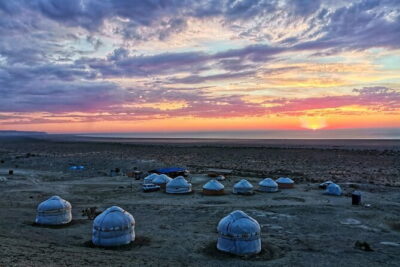
Daytrip From Khiva to Savitsky Museum & Mizdakhan & Chilpik
Read our review →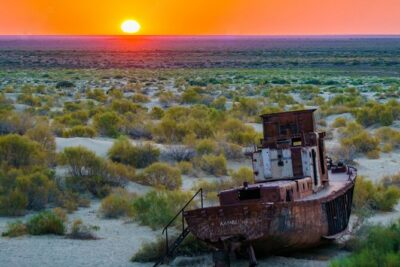
Browse the lists this tour appears in