
Reviewed · KHIVA TOURS
A Night In The Kyzylkum Desert [2] From Khiva
The most unusual part of this two-day trip is the sharp change in mood: one day brings you to the vanished Aral Sea and Muynak’s rusting ships, the next places you beside ancient fortresses and a Kyzylkum desert yurt beneath a star-filled sky. It is a big slice of northwestern Uzbekistan in a short time.
I like the mix of modern environmental tragedy and ancient Khorezm. I also like that the tour is private, with an air-conditioned vehicle, hotel pickup, and room for only your group of up to three. The main drawback is distance. You spend long hours on the road, and the $499 group price does not include the yurt stay or entry fees.
Key points to know before booking
![A Night In The Kyzylkum Desert [2] From Khiva - Key points to know before booking](https://w.uzbekistan-guide.com/wp-content/uploads/a-night-in-the-kyzylkum-desert-2-from-khiva-1.jpg)
- Aral Sea history in one day: Visit the Muynak museum and ship cemetery, where the retreat of the sea becomes painfully real.
- Seven ancient sites: See Chilpiq, Ayaz-Kala, Toprak-Kala, Guldursun Qala, Kyzyl Kala, Koi Krylgan Kala, and Angka Kala.
- One night in the desert: The yurt near Ayaz-Kala costs an extra $50 per day and includes dinner and breakfast.
- Private transport from Khiva: Pickup is offered in Khiva or Nukus, with drop-off in Khiva or Urgench.
- A museum stop worth planning for: Nukus’s Savitsky Museum adds a surprising art collection to a trip otherwise focused on ruins and desert life.
- A demanding but rewarding pace: Moderate physical fitness is required, and the minimum age is seven.
Why this trip is different from a standard Khiva excursion
![A Night In The Kyzylkum Desert [2] From Khiva - Why this trip is different from a standard Khiva excursion](https://w.uzbekistan-guide.com/wp-content/uploads/a-night-in-the-kyzylkum-desert-2-from-khiva-2.jpg)
Most trips from Khiva keep you close to the old city or follow the better-known Silk Road route toward Bukhara. This one pushes north into Karakalpakstan, an autonomous region of Uzbekistan with its own traditions, stark desert scenery, and a very different travel rhythm.
You are not simply ticking off ruins. You are moving between several layers of Central Asian history. Chilpiq is a Zoroastrian funerary monument. The fortress towns belonged to ancient and medieval Khorezm. Nukus holds a remarkable collection of art. Muynak tells the story of a sea that almost disappeared within a human lifetime.
That range gives the trip its appeal. It also explains the packed schedule. You cannot treat every stop as a slow archaeological visit. Most fortress stops last about 30 minutes, enough to walk around, take in the setting, and hear the supplied audio guide, but not enough for a long study of every wall.
The tour is private for your group, up to three people. That matters on a route with many stops. You can keep your bags in the vehicle, set your own pace within the day’s plan, and avoid being tied to a large coach group. The driver takes you to the locations, and an audio guide is provided. The information does not specify a named live guide, so book this expecting driver transport plus recorded interpretation rather than a full-time personal archaeologist.
More yurt camp nights in the Kyzylkum:
- From Khiva To Aral Sea 2-Days One Night In Yurt Stay
★ 4.6 · 20 reviews - Khorezm Fortress and KyzylKum Desert Private Tour
★ 5.0 · 3 reviews - From Bukhara: 2-Day Desert Yurt Camp Tour
★ 4.5 · 57 reviews
Day one begins with Chilpiq’s round stone tower
The first stop is Chilpiq, also written as Shilpiq or Chilpak Kala. This ancient Zoroastrian dakhma is more than 2,200 years old. It rises about 15 meters and measures roughly 65 meters across, with a round, roofless form on high ground.
You have around 30 minutes here. That is enough to appreciate its unusual shape and position, but the visit is brief. The admission ticket is not included, so keep small entry costs in your budget.
Chilpiq sets the tone for the whole trip. This is not a polished city monument with signs at every corner. It is an exposed archaeological site, where the open desert and the old structure share equal billing. You should wear practical shoes and be ready for sun, wind, and uneven ground. The tour requires moderate physical fitness, which is most relevant at the hilltop and fortress sites.
Nukus brings art into the desert route
![A Night In The Kyzylkum Desert [2] From Khiva - Nukus brings art into the desert route](https://w.uzbekistan-guide.com/wp-content/uploads/a-night-in-the-kyzylkum-desert-2-from-khiva-4.jpg)
The State Museum of Art named after I.V. Savitsky is one of the most unexpected stops on the journey. Nukus is the capital of Karakalpakstan, and the museum is known for its important collection of Uzbek and Russian art.
You get about an hour inside. The admission fee is listed as $10 and is paid separately. That extra cost is modest compared with the value of adding a major cultural stop to a route that could otherwise feel dominated by remote ruins.
I like this pause in the schedule because it changes the subject. After Chilpiq, you are thinking about ancient religious practice and desert settlements. In Nukus, the focus shifts to paintings and modern cultural history. The contrast helps you understand that Karakalpakstan is not only a place of archaeological remains. It has a living artistic identity too.
An hour will not cover every room in detail, especially if you already know you enjoy museums. Still, it gives you time to see the collection’s character before continuing north. If art is a major reason for your visit, you may wish this stop lasted longer. On this route, though, the limited time is part of the tradeoff.
Muynak and the Aral Sea’s painful lesson
![A Night In The Kyzylkum Desert [2] From Khiva - Muynak and the Aral Sea’s painful lesson](https://w.uzbekistan-guide.com/wp-content/uploads/a-night-in-the-kyzylkum-desert-2-from-khiva-5.jpg)
The Muynak Regional Studies Museum, also called the Ecological Museum of Muynak, takes about 30 minutes. The ticket costs $7. It is a small museum by capital-city standards, but its subject is enormous: the history and disappearance of the Aral Sea.
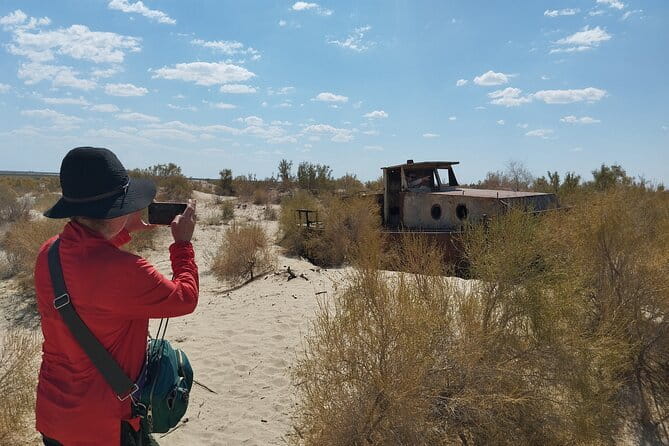
Once one of the world’s largest inland seas, the Aral Sea retreated dramatically during the Soviet period after river water was diverted for irrigation. Muynak was once a port. Today, its most famous reminder is the ship cemetery.
The museum gives you context before you see the ships. That order helps. Without background, the cemetery can look like a collection of old metal hulls in a dry place. With the museum visit first, the scene becomes evidence of a major environmental disaster and the collapse of a local way of life.
This is one of the tour’s strongest sections, but it is not light sightseeing. The Aral Sea story is a modern tragedy and a warning about human choices. You should allow yourself time to take in the seriousness of the place rather than treating it as a quick photo stop.
A few more Khiva days to weigh up
- Tashkent : Classic City Tour. (Day & Night Shift)
★ 4.8 · 52 reviews - Fergana – Golden Valley From Tashkent 1 night / 2 days
★ 4.5 · 41 reviews - Life As Nomads – Yurt Camp Tour with Night from Samarkand
★ 3.6 · 36 reviews - Yurt Camp Tour with Night from Bukhara
★ 3.8 · 35 reviews
The ship cemetery is brief but unforgettable
![A Night In The Kyzylkum Desert [2] From Khiva - The ship cemetery is brief but unforgettable](https://w.uzbekistan-guide.com/wp-content/uploads/a-night-in-the-kyzylkum-desert-2-from-khiva-6.jpg)
The ship cemetery is free to enter and lasts about 30 minutes. You see the remains of vessels that once worked on the Aral Sea, now stranded far from the water.
The visit is short because the site is simple in layout. Its force comes from the setting and the story, not from a long list of exhibits. Rusting ships in a dry expanse are hard to forget because they make the scale of the environmental change visible.
I would not book this trip only for a quick photograph of the ships. The museum and the cemetery work best together. You need both the human background and the stark physical remains.
This is also the point where the tour’s long driving distances become worthwhile for many people. Muynak is not a casual side trip from Khiva. Reaching it takes time, so the experience suits you if the Aral Sea is a personal priority, not if you want a relaxed selection of nearby sights.
A night near Ayaz-Kala in the Kyzylkum
![A Night In The Kyzylkum Desert [2] From Khiva - A night near Ayaz-Kala in the Kyzylkum](https://w.uzbekistan-guide.com/wp-content/uploads/a-night-in-the-kyzylkum-desert-2-from-khiva-7.jpg)
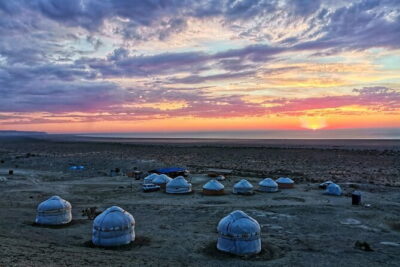
The overnight stay is near Ayaz-Kala, in the middle of the Kyzylkum Desert. The yurt accommodation is an extra $50 per day, with dinner and breakfast included.
The setting is the main attraction. Camels walk around the desert camp, and local families may offer camel milk. You also get a look at traditional life in Karakalpakstan and the way people live in a desert zone. These details give the night more meaning than a standard hotel stop.
After the long first day, the yurt is also a change in pace. The desert becomes quiet, open, and simple. At night, you can look up at the stars without the city lights of Khiva or Nukus competing with the sky.
You should keep your expectations practical. This is a yurt night, not a luxury hotel room. The supplied information confirms dinner and breakfast with the $50 stay, but it does not give details about private bathrooms, heating, bedding, or other camp facilities. Ask about those points if comfort is important to you.
The overnight is especially well suited to you if you want a taste of nomadic-style desert life rather than merely passing through the fortresses. It is less suited to someone who dislikes basic accommodation or needs a full night of hotel comforts after a long day on the road.
Ayaz-Kala gives the second day its grand opening
![A Night In The Kyzylkum Desert [2] From Khiva - Ayaz-Kala gives the second day its grand opening](https://w.uzbekistan-guide.com/wp-content/uploads/a-night-in-the-kyzylkum-desert-2-from-khiva-8.jpg)
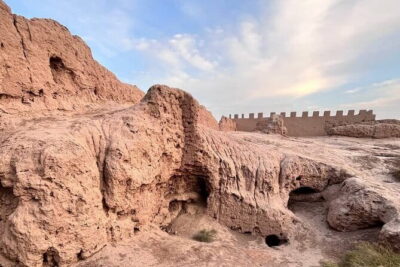
The next morning begins at Ayaz-Kala, an archaeological site built between the fourth century BCE and the seventh century CE. Its hilltop position looks over the Kyzylkum, giving you a strong sense of why defensive settlements were placed here.
You have about an hour at the site, and admission is free. Compared with the 30-minute fortress stops later in the day, this longer visit lets you walk more slowly and take in the walls, hill, and desert setting.
Ayaz-Kala is the natural centerpiece of the overnight portion. Sleeping near it means you do not simply arrive, take a hurried photograph, and leave. You wake up in the same broad desert region that shaped the fortress’s purpose and position.
The ground is uneven at archaeological sites, so good footwear matters. The tour’s moderate fitness requirement is worth taking seriously, especially if heat, slopes, or extended walking are difficult for you.
Toprak-Kala reveals royal Khorezm
![A Night In The Kyzylkum Desert [2] From Khiva - Toprak-Kala reveals royal Khorezm](https://w.uzbekistan-guide.com/wp-content/uploads/a-night-in-the-kyzylkum-desert-2-from-khiva-9.jpg)
Toprak-Kala dates to the Kushan period, around the second and third centuries CE. It served as a royal residence for the kings of Khorezm and first functioned as a royal sanctuary before being abandoned for a time.
You get about 30 minutes here. The admission fee is not included. That short visit gives you a broad view of the site, but you should not expect a detailed excavation tour.
Toprak-Kala adds political weight to the route. Ayaz-Kala feels strongly tied to defense and position. Toprak-Kala helps you picture a center of royal power, administration, and ceremony. Together, the two sites show that this desert region supported organized kingdoms, not just isolated outposts.
Guldursun Qala and Kyzyl Kala show changing defenses
Guldursun Qala is a fortified town with exterior walls and towers dating to the 12th century. Archaeologists found pottery, bronze objects, and coins within the site. You have 30 minutes, and admission is free.
The value here lies in the remains of a medieval town rather than a single grand building. Look for the shape of the fortification and the way the settlement spreads within it. The site rewards curiosity, but the short time means you will need to move on before every detail has been absorbed.
Kyzyl Kala was first built in the Late Antique period, from the first to fourth centuries CE. It was later abandoned and rebuilt in the 12th and 13th centuries, shortly before the Mongol invasions. Admission is not included, and the stop lasts about 30 minutes.
Kyzyl Kala gives you a clear sense of repeated use and rebuilding. The place was not frozen in one period. Different generations adapted the fortification as political conditions changed. The debate about parts of its history is a reminder that archaeology often gives you clues rather than a perfectly finished story.
Koi Krylgan Kala and Angka Kala keep the route moving
Koi Krylgan Kala is an archaeological site outside Taza-Kel’timinar in the Ellikqala District. The visit lasts about 30 minutes and admission is free.
Its name is memorable, but the practical appeal is the chance to see another type of ancient settlement within the wider Khorezm network. By this stage, the sites can begin to blur together if you are not paying attention. Use the audio guide and ask the driver to confirm each location so you keep the chronology and purpose of each fortress clear.
Angka Kala lies about 22 kilometers north of Turtkul. The settlement dates from the first to third centuries and again from the 10th to 12th centuries. Its fortress is described as well preserved, with an almost square plan.
You have another 30-minute stop, and admission is free. The square form makes this site easier to read than a scattered ruin. It gives you a final chance to compare the layouts of the different fortresses before returning toward Khiva.
The repeated short visits are both a strength and a weakness. You see a remarkable number of sites in two days, but you do not get long, reflective time at each one. I would bring a simple note on your phone with the names and dates so the sequence stays clear.
The final stop is Itchan Kala, but check the wording
The itinerary lists Itchan Kala as the final stop, with about 20 minutes and free admission. It describes Duman Kala as having three connected sections, including a western enclosure, a citadel, and a northern enclosure.
This part needs a little care when you book. Itchan Kala is generally known as Khiva’s famous walled old city, while the description supplied for this stop refers to Duman Kala. Since the information combines those names, confirm with Oxus Travel exactly which site you will visit on day two.
The timing is also brief. Twenty minutes would be enough for a short look or orientation, not a full exploration of Khiva’s old city. If you are returning to Khiva, you may have a separate chance to visit Itchan Kala at your own pace. The tour’s value here comes from adding one more ancient site to an already packed circuit, but the precise arrangement deserves clarification before departure.
What $499 means for the real cost
The base price is $499 per group of up to three people. Split three ways, that is about $166 per person before extras. For one person, the same private price is much harder to justify, although the cost includes private transportation, an air-conditioned vehicle, pickup, drop-off, and the driver’s service.
The yurt stay adds $50 per day and includes dinner and breakfast. Museum tickets add $10 for the Savitsky Museum and $7 for the Muynak museum. Fortress admission is around $2 at sites that charge, while several stops are free. Your final total will therefore be higher than the advertised group rate, but the add-on costs are clear and fairly modest.
The value depends on what you would otherwise need to arrange. This route covers Khiva, Nukus, Muynak, the ship cemetery, a desert overnight, and seven archaeological stops. Doing that independently would require arranging a vehicle, a driver, accommodation, and a workable route across large distances.
For three people, the price looks reasonable for a private two-day circuit. For two, it is still defensible if the Aral Sea and fortresses are high on your list. For a solo visitor, I would compare the cost with a shared departure or ask if the operator can offer a smaller rate.
Who will enjoy this trip most
I would choose this experience if you want the Aral Sea and are willing to spend long hours in a vehicle to reach it. I would also choose it if ancient Central Asian fortresses interest you more than polished city attractions.
It suits people who enjoy:
- Remote places and long overland routes
- Archaeology presented in a simple, open-air setting
- Environmental history and difficult modern stories
- A basic yurt night with dinner and breakfast
- Private transport for a small group
- A full schedule with many short stops
I would hesitate if you want a slow holiday, dislike uneven ground, or need detailed guided interpretation at every site. The audio guide helps, but the supplied details do not promise a named specialist guide. The youngest accepted age is seven, though the long drive and packed schedule may suit older children better.
Pickup is offered from Khiva or Nukus at 8:00 a.m. Drop-off is available in Khiva or Urgench. The vehicle is air-conditioned, an important feature on a route through the desert, but the overall day will still be long.
Should you book this Kyzylkum Desert overnight?
Book it if you want one ambitious trip that links the Aral Sea’s ship cemetery, Nukus art, Karakalpak culture, and the ancient fortresses of Khorezm. The most praised part of the experience is the combination itself: you see a modern environmental disaster, meet the idea of desert life through the yurt stay, and then spend the next day among old royal and defensive sites.
I would confirm the Itchan Kala and Duman Kala wording, ask what facilities the yurt provides, and budget the separate tickets before paying. If you accept the long road days and basic overnight, this is a memorable way to reach places that are difficult to fit into a normal Khiva visit. If you prefer comfort and free time, choose a shorter regional tour instead.
FAQ
How long does the tour last?
The experience lasts approximately two days, including one night in the Kyzylkum Desert near Ayaz-Kala.
Where does the tour start?
The start time is 8:00 a.m. Pickup is offered from Khiva or Nukus.
Where can I be dropped off?
Drop-off is offered in Khiva or Urgench.
How many people can join the private tour?
The price covers one private group of up to three people. Only your group participates.
Is the yurt accommodation included?
No. The yurt overnight costs $50 per day and includes dinner and breakfast.
Are museum tickets included?
No. The Savitsky Museum costs $10, and the Muynak museum costs $7.
Are fortress admission fees included?
No. Some fortress tickets cost around $2, while several listed sites have free admission.
Is transportation included?
Yes. The tour includes private transportation in an air-conditioned vehicle, with a driver taking you to the locations.
Is an audio guide provided?
Yes. An audio guide is provided as part of the experience.
What is the minimum age and fitness requirement?
The youngest accepted age is seven. Participants should have a moderate level of physical fitness.
Can I cancel for a full refund?
Yes, if you cancel at least 24 hours before the experience start time. Cancellations made within 24 hours are not refunded, and changes within that period are not accepted.
Just added around Khiva
- Khorezm Fortress and KyzylKum Desert Private Tour★ 5.0 · 3 reviews
- Khiva: City Highlights Guided Walking Tour★ 4.6 · 3 reviews
- Best of Khiva: Exclusive Private Tour!★ 5.0 · 3 reviews
- Khiva: classic Half-Day Tour★ 3.7 · 3 reviews
- Traditional Khiva Cooking Class with Market Visit & Lunch★ 5.0 · 4 reviews
- Master Class – Uzbek Bread (Khiva)★ 3.5 · 4 reviews
- Uzbekistan 6 Days Private Tour Khiva-Bukhara-Samarkand by Train★ 5.0 · 4 reviews
- Old Khiva Stories with Your Local Guide★ 5.0 · 5 reviews
Khiva Tours, compared.
Khiva: Historical City Highlights Guided Walking Tour
Read our review →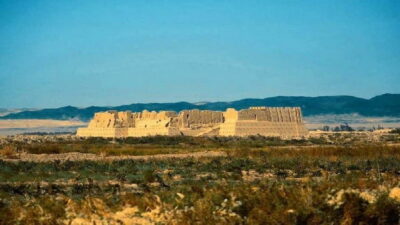
Master Class – Shivit Osh Traditional Food Of Khiva
Read our review →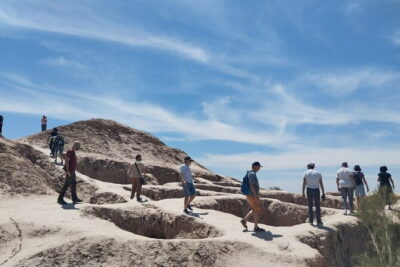
Browse the lists this tour appears in