
Reviewed · KHIVA TOURS
Ayazkala, Toprakkala & Kizilkala Fortress Tour From Khiva
Khorezm’s desert is dotted with old fortresses, and this private trip takes you to three of the most memorable in one half-day. Toprakkala offers the strongest historical setting, while Ayazkala delivers the big views and the hardest climb.
I like the comfortable private car, flexible pickup, and low group price. I also like the route itself: cotton fields give way to dry steppe and red clay ruins. The main catch is simple but important: you get a driver, not a guide, and English ability may be limited.
Key points to know before booking
- Toprakkala was an early capital of Khorezm, with discoveries linked to city planning, writing, a calendar, and plaster figures of singers.
- Kizilkala means Red Fortress, a smaller garrison site named for the color of its clay.
- Ayazkala includes three fortress sections, set near the northern edge of the oasis and reached by a sandy walk and climb.
- The private car makes the outing flexible, with pickup possible at your hotel, Khiva’s West Gate, Urgench airport, or either railway station.
- There is no included guide, so bring a translation app, download background reading, or arrange a guide separately if history matters to you.
- The $90 price covers up to three people, round-trip air-conditioned transport, and taxes, but entrance fees cost extra.
Why these fortresses matter in Karakalpakstan
Khorezm was once filled with fortified settlements. The region became known as Ellikkala, meaning 50 fortresses, a useful reminder that this was not empty desert in ancient times.
These walls protected towns, rulers, garrisons, and trade routes around the Khorezm oasis. Fortresses were often placed along the outer edge of cultivated land, where farming territory met the open steppe. From their high positions, defenders could watch for raids from the north.
You will not find a polished museum complex at every stop. Much of the appeal comes from the setting: eroded walls, broad skies, dry earth, and the sense that these places have not been dressed up for visitors. That also means you need imagination. Without a guide, the ruins can become impressive shapes without much explanation.
More desert fortress routes:
- Transfer: Bukhara – Khiva via Ancient Fortresses
★ 4.5 · 101 reviews - Daytrip From Khiva To Ancient Fortresses
★ 4.6 · 60 reviews - Guided Tour To Old Fortresses
★ 5.0 · 25 reviews
Leaving Khiva for the old oasis
Pickup is available at Ata Darwaza, the West Gate of Ichan Kala, or at your hotel in Khiva. You can also arrange pickup or drop-off at Khiva Railway Station, Urgench Railway Station, or Urgench Airport.
The advertised duration is five hours, including the return to Khiva. That makes this a compact outing rather than a slow archaeological day. You will spend a fair share of the time in the car, but the private format means you do not have to wait for a large group.
The drive takes you away from Khiva’s blue-tiled monuments and into a more open part of Uzbekistan. Cotton fields, desert, and dry steppe provide the changing scenery. Take sunglasses, a sun hat, water, and comfortable clothing. Comfortable shoes matter most at Ayazkala.
The vehicle is air-conditioned, which is a real benefit in a region where the heat can make even a short walk tiring. The car is private for your group of up to three people, so the $90 cost can be good value when shared. For one person, it is a much larger expense, although the same private transport and airport or station flexibility may still make it useful.
Toprakkala, the clay capital
Toprakkala means Clay Fortress, and it is the most important stop if you want historical context rather than only dramatic ruins. It is described as one of the first capitals of Khorezm, with evidence connected to fourth-century A.C. statehood.
The site is especially significant because excavations found early examples of city plans. Written sources from Khorezm were also found here, along with a calendar and plaster statuettes of singers. Those details give Toprakkala more weight than a simple ruined fort. You can picture a planned center with administration, records, and cultural life, even though what you see today is largely weathered earth and broken walls.
Take time to look at the shape of the settlement rather than rushing straight to photographs. The value of the stop is in understanding what the site once represented: not just a defensive wall, but a political center.
There is no included guide to explain the excavated finds on site. If you arrive without preparation, you may know that Toprakkala is important but not understand why. A short article or downloaded guide on Khorezm before departure will make this stop far more rewarding.
Entrance fees are not included and are listed as about $1 to $2 per monument per person. Carry small cash if possible, though the tour information does not specify payment methods.
Kizilkala and its red clay walls
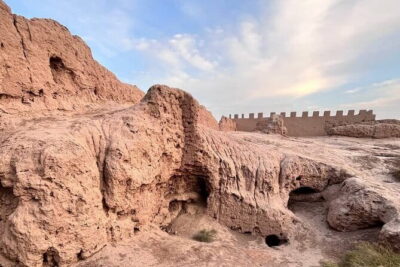
Kizilkala is the smaller, quicker stop on the route. Its name means Red Fortress, referring to the color of the clay. It served as one of the oasis garrison fortresses.
That military role helps you read the site. Kizilkala was not presented as a capital like Toprakkala. Its value lies in seeing how the wider defensive system worked. The fortress formed part of a network that guarded the edge of settled Khorezm.
The red tone of the earth can be striking in strong sunlight, especially against the pale steppe. You may spend less time here than at the larger sites, but do not treat it as a filler stop. It gives the route a useful change of scale and purpose.
Since the driver is not normally a guide, ask in advance how long you will have at Kizilkala and how to identify the main remains. The driver may speak English or Russian, but language ability is not guaranteed. One English-speaking driver is not promised, and several bookings have involved drivers with little or no English.
A translation app can prevent small problems from becoming large ones. Download the needed language pack before leaving Khiva, because you should not rely on a mobile connection in remote areas.
A few more Khiva days to weigh up
- Khiva: Historical City Highlights Guided Walking Tour
★ 4.8 · 156 reviews - Aral Sea Adventures (2 day)
★ 5.0 · 30 reviews - Khiva Historical City Highlights Guided Walking Tour
★ 5.0 · 30 reviews - Master Class – Shivit Osh Traditional Food Of Khiva
★ 4.2 · 27 reviews
Ayazkala, the dramatic final stop
Ayazkala is the grandest stop in terms of setting and scale. It consists of three fortress sections and was built as part of the defensive line around the oasis. The name is translated as Severe Frost Fortress, a reference to the bitter cold of the steppe in winter.
The approach is part of the experience. You may need to cross sand and then climb toward the fortress. The walk and ascent can be demanding, particularly in hot weather, strong sun, or poor footwear. One account specifically describes the climb as difficult, and another raises safety concerns when climbing alone.
This is where sturdy shoes matter most. Sunglasses and a hat are not fashion extras here. The open setting offers little relief from the sun, so wear comfortable clothing and bring water.
At the top, the reward is the broad view across the dry steppe and former oasis. The fortress feels remote, organized, and defensive. Its position helps you understand why ancient builders chose high ground and why the site formed part of the northern frontier.
You should not expect handrails, a paved route, or a museum-style visit based on the information provided. If you have limited mobility, ask before booking. The activity is advertised as wheelchair accessible, but the sandy approach and climb at Ayazkala may make this particular stop difficult.
The best time of year depends on what you value. Winter may make the fortress name easier to understand, with severe cold on the steppe. Summer gives stronger sun and heat. The tour provider does not give a seasonal timetable, so check conditions when you reserve.
The driver question matters
This is a transport-led excursion. A driver takes you from Khiva to the fortresses and back, but a guide is not included. That distinction should shape your decision.
A driver may help with the route and basic practical arrangements, but you should not assume detailed explanations at Toprakkala, Kizilkala, or Ayazkala. English and Russian are the listed languages, yet actual English ability can vary. Some drivers may speak very little English.
The experience can still work well if you enjoy exploring ruins independently. You can walk, take photographs, and use your own reading to supply the background. It is less suitable if you want a flowing explanation of ancient politics, excavation finds, defensive design, and the connection between the three sites.
If you book close to the departure date, confirm the language situation. One Italian booking had a pleasant and punctual driver who did not speak English, which was understandable for a last-minute reservation but still worth knowing in advance. Another booking praised a driver named Sascha for being friendly and driving well.
Driving quality may also vary. One account describes fast driving and a flat tire, while other experiences praise the driver’s punctuality, courtesy, and skill. You can reasonably ask for a careful pace, especially on rough roads and near remote sites.
What $90 buys you
The $90 price is for a private group of up to three people. It includes round-trip air-conditioned transport and all listed taxes. It does not include a guide, entrance fees, or personal expenses.
For three people, the transport works out to $30 each before entrance fees. That is attractive for a full half-day private outing, especially when you compare it with arranging separate taxis to several remote fortresses.
For two people, it remains a fair convenience price. For one person, it is less of a bargain, though the ability to start from a hotel and finish at an airport or railway station may justify the cost.
The price also buys simplicity. You do not need to organize the route yourself or negotiate several long-distance rides. That matters in a region where the fortresses are spread well outside Khiva.
The weak point is the missing guide. If interpretation is central to your visit, the true cost may be higher because you could want to arrange a guide separately. The activity information does not give a guide supplement, so ask the provider before committing.
Timing, comfort, and practical preparation
Five hours is enough for a brisk visit to all three fortresses, but it is not an unhurried archaeological survey. You will need to keep moving, particularly if the route includes both the drive and the climb at Ayazkala.
Start with breakfast or a snack in Khiva. The provided information does not list meals or refreshments, so do not count on food being included. Carry water and small personal supplies.
Wear shoes that can handle sand, uneven ground, and a climb. Loose, comfortable clothing is better than formal sightseeing clothes. A sun hat and sunglasses are specifically recommended, and they make sense for the exposed sites.
The private group format is useful for families or friends who want their own pace. It also helps if you need hotel pickup or a direct finish at Urgench Airport or a railway station. Pickup instructions ask you to wait in the hotel lobby five minutes before the scheduled time.
Free cancellation is available up to 24 hours before departure, and you can reserve now and pay later. Those terms help if your Khiva plans depend on train or flight schedules.
Who will enjoy this trip most
I would choose this outing if you have an extra day in Khiva and want to see a side of Uzbekistan far beyond the famous tiled cities. The route offers old fortresses, open steppe, cotton fields, and a private ride without the work of arranging transport yourself.
It suits independent visitors who are happy to read background material and explore without a formal guide. It is also a sensible choice for a small group of up to three people, because the cost becomes easier to share.
You may want another arrangement if you need detailed historical commentary in English, dislike long road transfers, or find sandy climbs difficult. Ayazkala is not simply a roadside photo stop. The approach can require real effort.
I would also think carefully if you are traveling alone and feel uneasy on remote climbs. Stay within your comfort level, ask about the route, and do not feel obliged to reach every high point.
My verdict on the Khiva fortress route
Book this tour if you want remote ruins and flexible private transport, and if you are prepared to supply your own historical background. Toprakkala gives the strongest cultural context, Kizilkala shows the defensive network, and Ayazkala provides the most powerful setting.
The main decision is not the fortresses. It is the guide situation. If you expect an expert explanation at every stop, this basic driver-only format may disappoint. If you see it as a comfortable way to reach remarkable ruins and are happy to explore with a translation app and downloaded notes, the $90 group price is sensible.
FAQ
Where does the tour start?
Pickup is available at Ata Darwaza, the West Gate of Ichan Kala in Khiva, or from your hotel in Khiva.
Can I be picked up at a railway station or airport?
Yes. Pickup and drop-off can be arranged at Khiva Railway Station, Urgench Railway Station, or Urgench Airport.
Where does the tour finish?
The standard return point is Khiva. You can also choose Urgench Airport or Urgench Railway Station for pickup or drop-off.
How long does the tour last?
The listed duration is five hours.
How many people can join for $90?
The price is for a private group of up to three people.
Is a guide included?
No. The tour includes a driver, but a guide is not included.
What languages are available?
English and Russian are listed for the activity, but the driver’s actual English ability may vary.
Are entrance tickets included?
No. Entrance tickets cost about $1 to $2 per monument per person and are paid separately.
Is the tour wheelchair accessible?
The activity is advertised as wheelchair accessible. However, Ayazkala includes a sandy approach and climb, so ask the provider about the exact access conditions before booking.
What should I bring?
Bring comfortable shoes, sunglasses, a sun hat, and comfortable clothes. Water and a translation app are also practical choices, though they are not listed as included items.
Just added around Khiva
- A Night In The Kyzylkum Desert [2] From Khiva★ 4.5 · 3 reviews
- Khorezm Fortress and KyzylKum Desert Private Tour★ 5.0 · 3 reviews
- Khiva: City Highlights Guided Walking Tour★ 4.6 · 3 reviews
- Best of Khiva: Exclusive Private Tour!★ 5.0 · 3 reviews
- Khiva: classic Half-Day Tour★ 3.7 · 3 reviews
- Traditional Khiva Cooking Class with Market Visit & Lunch★ 5.0 · 4 reviews
- Master Class – Uzbek Bread (Khiva)★ 3.5 · 4 reviews
- Uzbekistan 6 Days Private Tour Khiva-Bukhara-Samarkand by Train★ 5.0 · 4 reviews
Khiva Tours, compared.
Khiva: Historical City Highlights Guided Walking Tour
Read our review →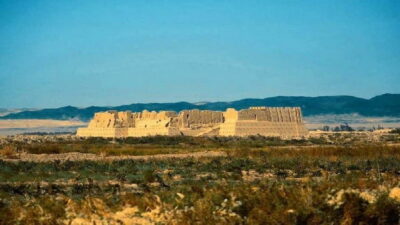
Master Class – Shivit Osh Traditional Food Of Khiva
Read our review →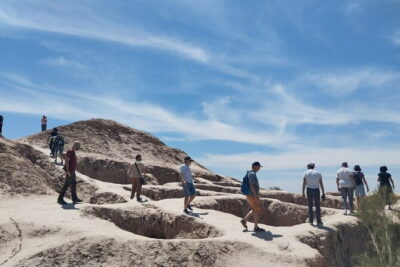
Browse the lists this tour appears in