
Reviewed · ARAL SEA & MUYNAK EXPEDITIONS
Lost Paradise – Aral Sea Tour 2 days/1 night
The striking thing here is not simply the Aral Sea, but the way you reach it: by crossing hundreds of kilometers of dry seabed, desert tracks, old settlements, and the white-edged Ustyurt Plateau. At Muynak, rusting ships sit far from the water. Later, you can swim in what remains of the sea and sleep in a yurt beside it.
I like the private 4×4 format, since the road is long, uneven, and easier to manage at your own pace. I also like the overnight camp, where dinner is cooked over an open fire and the lack of mobile internet gives the place a welcome sense of remoteness. The catch is the amount of time spent in the vehicle: day one takes about seven hours, and the return takes about eight.
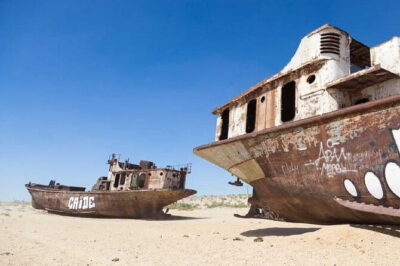
- The Ship Cemetery puts the Aral disaster in plain view: Rusting boats rest on ground that was once a working harbor.
- The route covers about 800 kilometers: This is a serious road trip, not a quick side outing from Nukus.
- The salty Aral Sea is still swimmable: A fresh shower at camp lets you wash off salt and mud afterward.
- A night in the yurt camp changes the pace: Open-fire dinner, a campfire, electric power, and a clear view of the Milky Way replace city comforts.
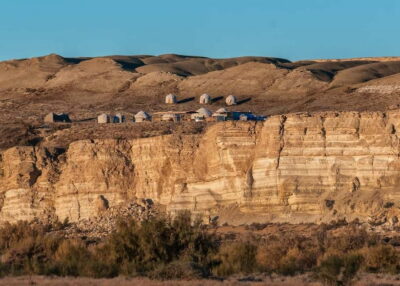
- The return route adds different sights: Kurgancha kala, white-toned Ustyurt cliffs, nomad cemeteries, and Sudochie Lake break up the drive.
- The $410 price buys a private setup: It covers the 4×4, four meals, one night in a yurt, and entry to the Aral Sea Museum.
What the Aral Sea trip is really like
This two-day journey is best understood as a remote road trip with powerful stops, not as a conventional sightseeing tour. You leave Nukus and spend much of the next two days in a 4×4, traveling through Karakalpakstan toward the former shoreline and then back by a different route.
The payoff is unusual. You are not looking at a preserved ancient city or a scenic resort coast. You are seeing the physical remains of an environmental catastrophe, along with traces of caravan trade, local burial traditions, nomadic life, and bird migration.
The private format matters. You can be picked up at your hotel, airport, or railway station, and the starting time can be changed by request. In summer, an early start is sensible because of the heat and the long drive.
The driver speaks English and Russian. In practice, the level of spoken English can vary, so you should ask at the start for a clear run-through of the plan, the stops, and any changes between the two days. One useful lesson from the trip reports is that the order of stops may shift, and the driver may not always explain that immediately.
Day one: from Nukus to the dry seabed
The first day covers roughly 400 kilometers. The route begins in Nukus, passes Mizdakhan and Kungrad, reaches Muynak for lunch, and then continues through Uchsay village and the dried Aral seabed toward the yurt camp.
This is a long day, but each stop gives you a different piece of the region. The road itself is part of the story. As you move away from Nukus, the settled world thins out and the scale of the desert becomes more apparent.
More Aral Sea and Muynak expeditions:
- Daytrip from Khiva to Aral Sea Cemetery of Ships. All in one
★ 4.3 · 52 reviews - Muynak Ship Cemetery Tour From Nukus
★ 4.3 · 32 reviews - Aral Sea Adventures (2 day)
★ 5.0 · 30 reviews
Mizdakhan, the city of the dead
Mizdakhan is an old cemetery complex known for its large number of mausoleums. It is also a place where customs from before Islam can still be seen in local traditions.
The site is atmospheric, but it is not the main reason to book this tour. I would keep this stop focused and save your energy for Muynak and the Aral Sea. On a packed two-day route, every extra half-hour can affect your time at the camp later in the day.
Muynak and the former harbor
Muynak is the emotional center of the first day. It was once connected to the Aral Sea as a port town. The retreat of the water left the town far inland, and the old boats now sit in open desert.
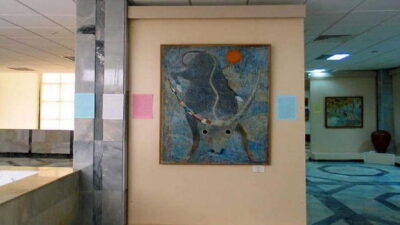
You visit the Ecological Museum of Muynak and the Ship Cemetery. The museum gives basic context, while the boats outside make the change easier to understand. A short film and museum visit help explain what happened, but the outdoor site is the part that stays with you.
The ships are not simply old objects lined up for a photograph. Their distance from the present shoreline shows the scale of the retreat. You can walk around the rusted hulls and see how a working fishing port became a symbol of a vanishing sea.
The stop at Muynak also includes lunch in a Karakalpak family home. The food is based on local cooking and may include beef, lamb, fish, rice, wheat or sorgo dough, and vegetables. Portions and timing can vary, so if you are being picked up at the airport and have not eaten, do not count on the first lunch being a large meal.
Tell the operator in advance if you need vegetarian food or have other dietary preferences. That is much easier than trying to solve the problem on the road.
Crossing the upper seabed
After Muynak, the road reaches the upper seabed of the Aral Sea. This is where the trip becomes more physical. You can walk across ground that was once underwater, touch the dry surface, and see the sea catastrophe at close range.
Expect dust, heat, glare, and rough tracks. Protective boots or sturdy sports shoes are more useful than casual sandals. Long trousers, a hat, sunglasses, and sunscreen are practical choices.
The route from Muynak to the camp takes about three hours according to one detailed account, and that timing matters. If you stop too long earlier in the day, you may reach camp with little daylight left for walking, swimming, or taking in the setting.
The safest plan is to ask the driver early how much time remains and how long the transfer to camp will take. If you want a swim and a short hike, say so before leaving Muynak.
A few more Uzbekistan days to weigh up
- Tashkent : Classic City Tour. (Day & Night Shift)
★ 4.8 · 52 reviews - Fergana – Golden Valley From Tashkent 1 night / 2 days
★ 4.5 · 41 reviews - Life As Nomads – Yurt Camp Tour with Night from Samarkand
★ 3.6 · 36 reviews - Yurt Camp Tour with Night from Bukhara
★ 3.8 · 35 reviews
Ustyurt Plateau and the road to camp
The Ustyurt Plateau gives the journey a different mood. It is broad, bare, and hard to read, with pale cliff edges and large open views. The route is sometimes described as Uzbekistan’s version of a grand canyon area, though the colors here are often white and muted rather than red.
You may also pass cemeteries connected with local nomadic communities. These stops are simple and exposed, with little shade or formal infrastructure. Their value comes from their isolation and from the reminder that people have long crossed and lived around this difficult region.
The road is not smooth. Expect bumps, potholes, and stretches of dirt track. The drivers are used to avoiding the worst sections, but even a skilled driver cannot turn this into a comfortable highway ride. If you suffer from motion sickness, bring whatever normally helps you.
A night beside the Aral Sea
The yurt camp is the main comfort break of the journey. You sleep in a yurt with warm bedding, and electric power is available for charging devices. A fresh shower is also available, which is particularly useful after swimming in salty water or walking across dusty seabed.
Dinner is cooked over an open fire. The setting is informal and social, with time to sit near the campfire, hike, or relax while the meal is prepared.
The sea is safe for swimming, and the water is highly salty. Bring swimwear, but do not assume you will spend hours in the water. The salt and mud make the shower afterward essential, and you should keep sunscreen, sunglasses, and a towel or changing layer close at hand.
The best part of the camp comes after dinner. With no mobile or internet connection, you get a rare break from messages and notifications. A telephone is available in the car and at the camp for local communication, and the camp has electricity, but you should still download anything you need before leaving Nukus.
The clear sky can reveal the Milky Way. An early morning start may also give you the chance to see sunrise over the remaining water. That quiet hour is one reason not to treat the yurt as just a place to sleep.
Day two: caravan ruins, cliffs, birds, and the road home
After breakfast, you begin the roughly 400-kilometer return to Nukus. The drive takes about eight hours, with arrival expected around 17:00, though the exact timing depends on road conditions and stops.
The return route is not simply a repeat of day one. It includes Davlatgirey caravanserai, also called Kurgancha kala, more of the Ustyurt Plateau, Sudochie Lake, and lunch near Kungrad.
Davlatgirey caravanserai
Davlatgirey is an abandoned trading caravanserai. Its remains recall the old routes that crossed this part of Central Asia before modern roads and vehicles.
Do not expect a restored monument with extensive signs or visitor facilities. This is an atmospheric ruin in a remote setting. The stop works best if you enjoy sparse historic sites and can appreciate what is missing as much as what remains.
More of the Ustyurt Plateau
The second day gives you another look at the plateau, often from a different angle. Pale cliffs, open ground, and scattered burial sites make the route feel remote and almost otherworldly, but the trip is still a working route with long stretches in the vehicle.
Keep water, sunglasses, and a light jacket within reach. Early spring and late autumn can be cold, while summer brings strong sun and heat. The supplied clothing advice is sensible: comfortable clothing, a hat, sun protection, and shoes you can walk in.
Sudochie Lake and migrating birds
Sudochie Lake adds a welcome change from dry ground. It lies on a migration route used by pink flamingos, white swans, ducks, and other birds. The lake is also known as a favorite place for hunters.
Bird sightings depend on season, conditions, and luck. You should regard the stop as a chance to look for birdlife, not a guarantee of a particular species. After the dry seabed and pale plateau, the presence of water and birds gives the return journey a different rhythm.
Lunch near Kungrad
Lunch is arranged as a picnic in the Kungrad area. This is the second lunch included in the trip, alongside breakfast and dinner at the camp.
The four included meals are breakfast, two lunches, and dinner. Alcohol is not included, and personal purchases are your responsibility. Since the route is remote, carry any personal snacks or drinks you know you will need.
How much comfort should you expect?
This is not a luxury outing. The vehicle is a 4×4 because the route requires it, and the rough road is part of the price of reaching the remote camp. The yurt is comfortable and warm according to the available trip details, but you should still pack for changing temperatures and basic desert conditions.
There is no mobile or internet connection during the remote sections. That can be a pleasure, but it also means you need to prepare. Charge your phone before departure, save maps or booking information offline, and tell family or friends that communication may be limited.
The language setup is functional rather than formal. The driver speaks English and Russian, but one account specifically notes that there was no separate English-speaking guide. If you want detailed explanations of archaeology, ecology, or local traditions, ask questions during the drive and confirm what will be interpreted at each site.
The private group arrangement is a real advantage. You are not tied to the pace of a large coach, and the departure point can be your hotel, airport, or railway station. You can also request a different start time, although the trip still needs to fit the long driving schedule.
Is $410 a fair price?
At $410 per person, this is an expensive two-day excursion by ordinary Uzbekistan standards. It becomes easier to justify when you count what is included: private 4×4 transport, pickup and return in Nukus, four meals, a yurt night, and entry to the Aral Sea Museum.
You are also paying for access. The Aral Sea camp is far from Nukus, and reaching it requires a capable vehicle, fuel, a driver familiar with the route, and an overnight setup. A cheap day trip would not offer the same amount of time at the sea.
Still, the value depends on your priorities. If you dislike long drives, rough tracks, basic facilities, or remote conditions, the cost will not make the trip more enjoyable. One report called the offer expensive but still worth doing for the once-in-a-lifetime setting, which is a fair way to view it.
I would compare this with the cost of arranging a similar private route yourself, but the main question is not simply the number of dollars. Ask yourself if seeing the Ship Cemetery, bathing in the salty sea, sleeping near the former shoreline, and crossing the Ustyurt Plateau are worth two very full days.
Who should book it?
I would recommend this tour to you if you want unusual places, dramatic environmental stories, and a private road trip rather than polished sightseeing. It suits people who can handle long hours in a vehicle and who enjoy simple accommodation when the setting is extraordinary.
It is also a good match if you are already visiting Nukus and want to understand Karakalpakstan beyond its museums and city sights. The combination of Mizdakhan, Muynak, the dry seabed, caravan ruins, plateau cliffs, and Sudochie Lake gives the region more depth than a quick visit to the boats alone.
I would be cautious if you have limited mobility, dislike bumpy roads, or need dependable internet. The itinerary includes walking on uneven ground, exposure to sun and wind, and a lot of sitting. The remote setting is the point, but it also limits comfort.
Book it if you can accept that the journey is as important as the destination. To get the most from it, request an early summer start, confirm the order of stops with the driver, ask about vegetarian meals or dietary needs before departure, and protect your time at the camp.
FAQ
Where does the Aral Sea tour start and finish?
The tour starts in Nukus, with pickup from your hotel, airport, or railway station. You return to a hotel, airport, or railway station in Nukus on day two.
How long is the drive to the Aral Sea?
The drive to the yurt camp takes about seven hours with stops and covers roughly 400 kilometers. The return to Nukus takes about eight hours and also covers about 400 kilometers.
What is included in the $410 price?
The price includes four meals: one breakfast, two lunches, and one dinner. It also includes one night in a yurt camp, a 4×4 vehicle, and entry tickets to the Aral Sea Museum.
Can you swim in the Aral Sea?
Yes. The sea is described as safe for swimming, and swimwear is recommended. A fresh shower is available at the camp to remove salt and mud afterward.
Is there mobile or internet service at the camp?
There is no mobile or internet connection at the remote camp. A telephone for local communication is available in the car and at the camp, and electric power is available for charging devices.
What languages are available?
The driver speaks English and Russian. A separate English-speaking guide is not specified, so detailed interpretation may be limited.
What should you bring?
Bring comfortable walking shoes or protective hiking boots, long trousers, warm clothing, sunglasses, a sun hat, swimwear, sunscreen, and comfortable clothes. A warm jacket is especially useful in early spring and late autumn.
More 2-Day Experiences in Uzbekistan
- From Bukhara: 2-Day Desert Yurt Camp Tour
★ 4.5 · 57 reviews - 2 Days Tour to Bukhara and Samarkand from Tashkent by train
★ 5.0 · 53 reviews - Yurt stay and Hiking in the Nurata Mountains tour – 2 days
★ 5.0 · 35 reviews - From Khiva To Aral Sea 2-Days One Night In Yurt Stay
★ 4.6 · 20 reviews
Just added around Uzbekistan
- Bird Watching Tours in Samarkand★ 3.6 · 3 reviews
- Tashkent Mountain Tour Amirsoy with Transport★ 3.5 · 3 reviews
- Aral Sea One Day Trip from Nukus.★ 4.0 · 3 reviews
- Bukhara: City Highlights Guided Tour with Pickup★ 5.0 · 3 reviews
- Seven Lakes Panjakent: One-Day Adventure from Samarkand★ 5.0 · 3 reviews
- Khorezm Fortress and KyzylKum Desert Private Tour★ 5.0 · 3 reviews
- A Night In The Kyzylkum Desert [2] From Khiva★ 4.5 · 3 reviews
- Ancient and Modern tour in Samarkand with Transport★ 5.0 · 3 reviews
Aral Sea & Muynak Expeditions, compared.
Daytrip from Khiva to Aral Sea Cemetery of Ships. All in one
Read our review →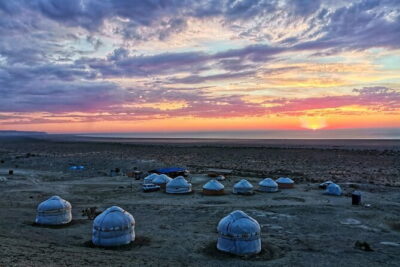
Daytrip From Khiva to Savitsky Museum & Mizdakhan & Chilpik
Read our review →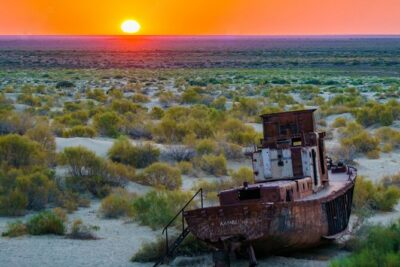
Browse the lists this tour appears in