
Reviewed · KHIVA TOURS
Daytrip from Khiva to Five Ancient Fortresses
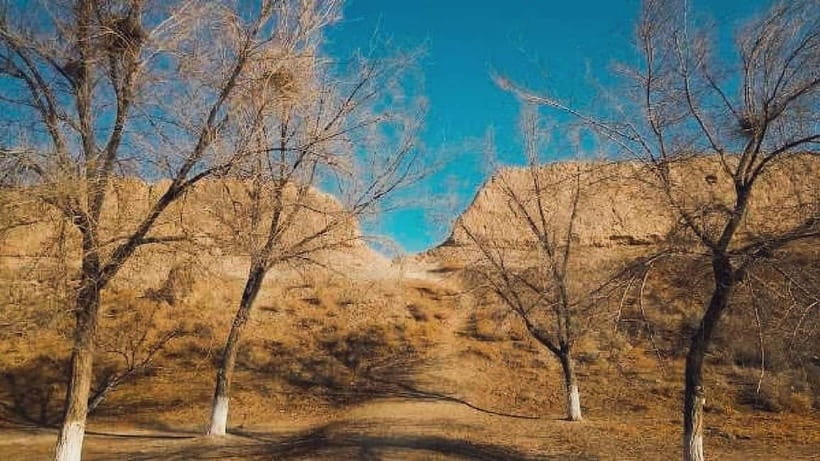
The most striking part of this day is the sheer emptiness around the ancient Khorezm fortresses. From Khiva, you leave tiled mosques and busy lanes behind for broad, dry country dotted with huge mud-brick walls. Ayaz-Kala and Toprak-Kala make the strongest impression, but the full circuit helps you understand how large this old defensive zone once was.
I like the private vehicle and flexible departure time, especially since the forts are spread across Karakalpakstan rather than gathered in one neat archaeological park. I also like the chance to stop at all five sites, compare grand citadels with half-eroded ruins, and see a side of Uzbekistan that a Khiva walking tour cannot provide.
The main drawback is simple: this is transport with sightseeing, not a fully guided archaeology tour. Several drivers have limited English, and one report raises a serious concern about fast driving, so speak up about speed and confirm the lunch and entry arrangements before setting off.
Key points at a glance
- Five very different fort sites: Ayaz-Kala and Toprak-Kala offer the clearest remains, while Kavat-Kala and parts of Kyzyl-Kala require more imagination.
- Private travel for up to three people: The $115 group price can be good value when shared, particularly with hotel or airport pickup included.
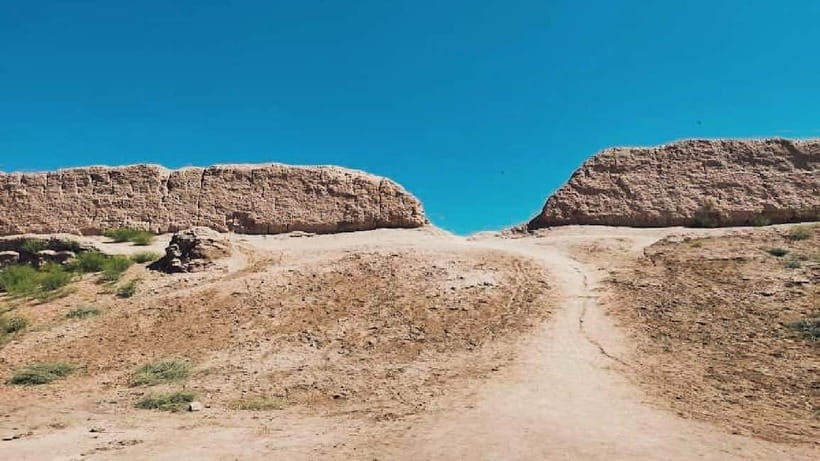
- Guldursun-Kala reaches back to the second or first century BC: Its broad rectangular walls give you a sense of the scale of ancient Khorezmian defenses.
- Ayaz-Kala is the visual highlight: This is a group of three fortresses around a hill, not just one isolated ruin.
- No guide is included: You receive a driver and private transport, so bring background notes or arrange a separate guide if interpretation matters to you.
- Plan for extra costs: Entry tickets and lunch are separate, and site charges should be confirmed locally.
Why this fort circuit is worth your day
Khiva is one of Central Asia’s great historic towns, but its polished old center can make the region feel smaller than it really is. This trip takes you out to the fortified edge of ancient Khorezm, where mud-brick citadels rise from flat, open ground.
The forts were not built as pretty monuments. They guarded settlements, farming areas, rulers, and water channels in a difficult environment. Their walls also show how much local life depended on irrigation. Kavat-Kala, for example, spread along the Gavhore Channel, while Kyzyl-Kala had a system intended to bring water into the fort.
You should set your expectations correctly. The phrase five fortresses sounds like five complete castles, but the sites vary sharply. Some have clear walls and towers. Others are low mounds, broken lines of mud brick, or remains that only become meaningful once you know what you are looking at.
That contrast is part of the appeal. I enjoy the stops where the archaeology asks you to use your imagination, but you may prefer a shorter day focused on the two or three best-preserved places.
More desert fortress routes:
- Transfer: Bukhara – Khiva via Ancient Fortresses
★ 4.5 · 101 reviews - Daytrip From Khiva To Ancient Fortresses
★ 4.6 · 60 reviews - Ayazkala, Toprakkala & Kizilkala Fortress Tour From Khiva
★ 4.3 · 33 reviews
A practical start from Khiva or Urgench
Pickup is available from a hotel in Khiva, or from an airport or train station in Urgench. Drop-off can be arranged in either Khiva or Urgench. You are asked to wait at your address from ten minutes before the scheduled pickup.
The drive is in a private, air-conditioned vehicle, with parking fees included. For a group of one to three people, $115 is a reasonable transport price because you are not being placed on a large coach with a fixed route. Shared by three, it becomes especially attractive. For one person, the value depends more heavily on how much you care about private timing and reaching all five locations.
The stated duration is seven hours. That is enough for a brisk circuit, but not a slow archaeological study with long walks at every fort. The schedule includes photo stops, free time, and self-guided visits. You should expect the driver to get you between sites rather than lead a detailed tour inside them.
Driver quality matters here. Izzat received especially warm praise for being friendly, flexible, and willing to share parts of local culture despite the language gap. Other accounts describe limited English, which is important to know before booking. The drivers are trained for the program, but you should not assume fluent explanations at each ruin.
One practical safety point deserves clear attention. A report describes very fast driving on poor roads. Ask the driver to slow down if needed. A day of ruins is not worth an unsafe ride.
Guldursun-Kala: huge walls and a hard-to-read past
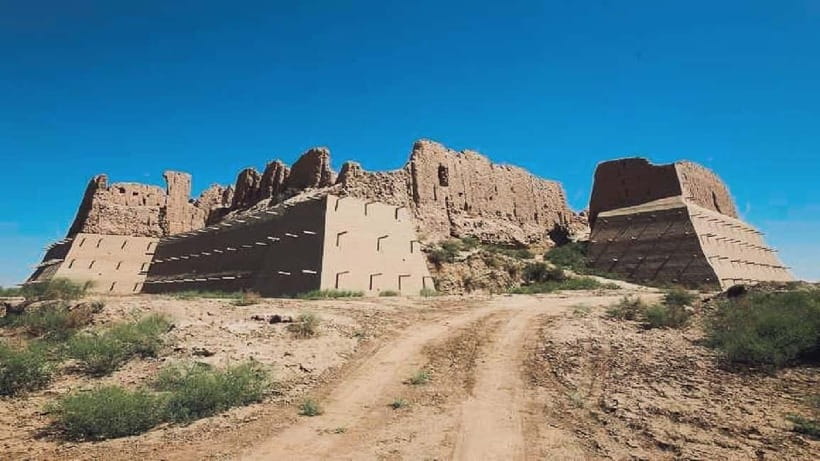
Guldursun-Kala is an excellent first lesson in the size of Khorezm’s defensive network. The fortress dates to the second or first centuries BC and covers roughly 35 hectares. Its rectangular plan was protected by adobe walls built in two rows, with loopholes worked into the fortifications.
Even in ruin, that footprint matters. You can look across the wide enclosure and picture a substantial settlement rather than a small watchtower. The scale also helps explain why these places are spread so far apart. They were connected to a wider system of power, farming, roads, and water.
The site was later abandoned for reasons that are not known. Archaeological evidence suggests occupation continued until about 1220, during the rule of Shah Ala ad-Din Muhammad, just before the Mongol conquest of the Khwarezmian Empire.
Guldursun is mainly a photo stop and walking visit. There may be less intact detail here than at Toprak-Kala, so a little preparation pays off. Look for the double wall lines, the rectangular layout, and the relationship between the fortress and the open country around it.
Ayaz-Kala: the day’s clearest wow moment
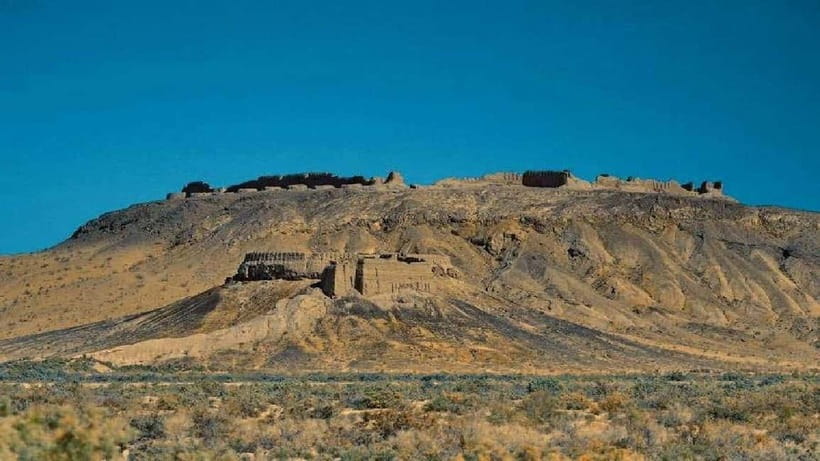
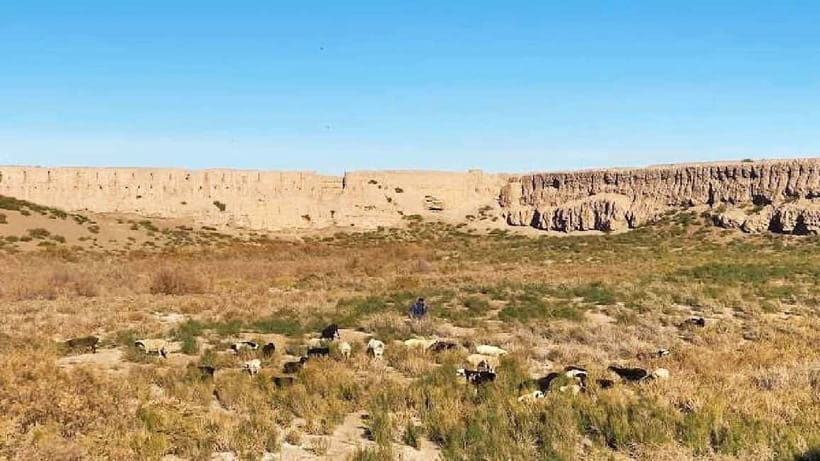
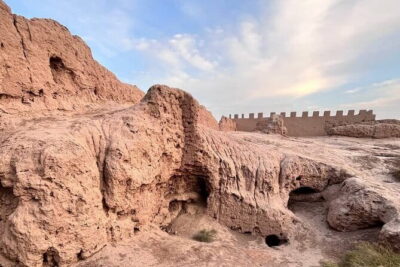
Ayaz-Kala is usually the highlight of this route, and I can see why. It is not one fortress but a group of three fortresses arranged around a hill on the eastern side of the Sultan Uizdak ridge.
The setting gives Ayaz-Kala its power. You gain broad views across the dry plain, and the walls read clearly from a distance. The approach helps you understand the fort as a defensive position rather than just a pile of old bricks.
The name is linked to a Turkic word meaning frosty or cold. The site is about 96 kilometers from Khiva and 30 kilometers from Buston settlement. Those distances explain why a private vehicle is useful. Public transport would not give you the same easy movement between scattered ruins.
You have free time to walk and take photographs. Wear shoes suited to uneven ground and be ready for sun and wind, since the information provided does not indicate shaded visitor facilities. Do not rush this stop. If you have limited energy, give Ayaz-Kala and Toprak-Kala the longest visits.
A few more Khiva days to weigh up
- Khiva: Historical City Highlights Guided Walking Tour
★ 4.8 · 156 reviews - Khiva Historical City Highlights Guided Walking Tour
★ 5.0 · 30 reviews - Aral Sea Adventures (2 day)
★ 5.0 · 30 reviews - Master Class – Shivit Osh Traditional Food Of Khiva
★ 4.2 · 27 reviews
Kavat-Kala: a large archaeological zone, not a single postcard ruin
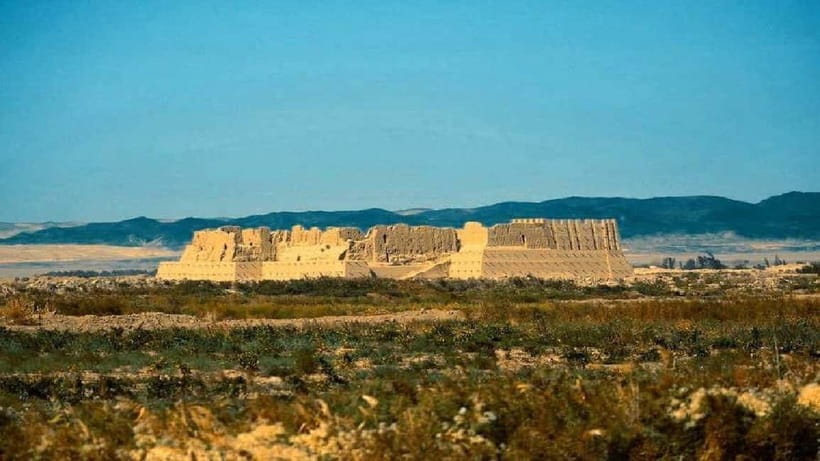
Kavat-Kala can be the hardest stop to judge at first glance. It is described as a medieval monument stretching about 15 kilometers along the Gavhore Channel, with a width of two to three kilometers. The central fortress measures about 160 by 190 meters.
From the twelfth to the thirteenth centuries, the central part was heavily populated, with as many as 90 estates in the area. That fact changes how you read the remains. You are not simply looking at a lone citadel. You are seeing part of a broad settlement zone shaped by water and agriculture.
The drawback is that much of Kavat-Kala is not preserved in a crisp, instantly recognizable form. Ruins of homes and clay buildings have been recorded, and archaeological work continues, but the site asks more from you than Ayaz-Kala does.
I would treat this as a context stop. It helps explain how people lived around the fortresses, how channels supported settlement, and why a fortress could be the center of a large oasis community. If you want five dramatic silhouettes, Kavat-Kala may disappoint. If you enjoy scale and the clues of everyday life, it earns its place.
Toprak-Kala: the best stop for royal history
Toprak-Kala is one of the most rewarding sites on the route because its purpose is unusually clear. Built in the third century, it served as a residence for the Khorezmian rulers until about AD 305.
That royal role gives the ruins extra weight. This was not only a defensive refuge. It was a seat of government, and excavations found objects linked to court life and religious practice. Finds include coins, Zoroastrian ossuary fragments, fine ceramics, wool and silk textiles, gold ornaments, and a necklace made with 300 beads of glass paste, amber, and coral.
You will not see all those museum finds lying around the fortress. Their importance is in what they reveal about the people who once occupied these walls. Toprak-Kala was connected to administration, ceremony, trade, craft, and belief.
Aggressive wars eventually pushed the rulers to leave. After that, the city declined. As you walk the site, look beyond the broken walls and consider the change from royal residence to abandoned settlement. This is one of the places where even incomplete remains can tell a strong story.
Allow yourself time for a photo stop and a walk. Toprak-Kala is one of the two sites I would prioritize if the schedule becomes tight.
Kyzyl-Kala: refuge, watchtowers, and an ancient water system
Kyzyl-Kala gives the route a different angle. It served as a refuge during raids by nomadic groups, with smoke signals used to warn nearby communities when enemy forces approached.
The fort was protected by a double wall, with watchtowers at the corners. That defensive design is easier to appreciate when you think about communication. A warning from one high point could alert people elsewhere, giving them time to prepare for battle or move inside the citadel.
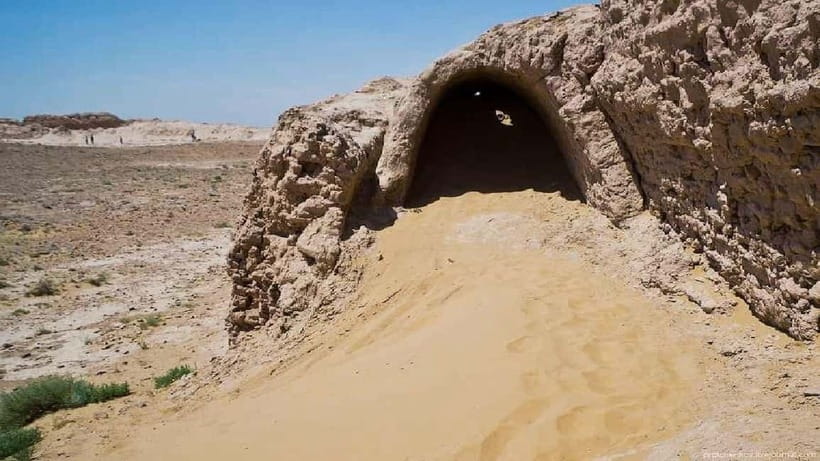
The water system is just as interesting. Ceramic pipes were installed to bring a steady supply of water into the fort. In an arid region, that was not a minor convenience. A citadel could have thick walls and strong towers, but without water it could not hold out for long.
Kyzyl-Kala includes time for walking, photographs, and a safety briefing. The visit may feel less instantly dramatic than Ayaz-Kala, yet the combination of signaling, walls, and water makes it one of the most useful sites for understanding how these forts functioned.
Food, entry fees, and the costs beyond $115
The $115 price covers private round-trip transport, air conditioning, parking, pickup, and drop-off. It does not cover entry tickets, a guide, or lunch.
That distinction matters. The advertised group price is not the complete cost of the day. One reported arrangement involved paying 20,000 Uzbek som at three sites, but you should confirm the current amount and what each payment covers before entering. Carry local cash, since the information provided does not promise card payment.
Lunch is optional. The driver may suggest a restaurant, but you should ask to see the menu with prices before ordering. One account describes being directed toward poorly rated or unclear-price restaurants, so you are right to be cautious. If you have a preferred place, say so clearly before the meal stop.
The strongest value comes from using the trip as a private transport service and bringing your own historical notes. If you want a scholar’s explanation at every wall, the lack of an included guide is a real limitation. If you are happy to explore at your own pace, the private format gives you freedom to linger at Ayaz-Kala or move quickly through a less recognizable site.
Who will enjoy this seven-hour outing
I would recommend the trip to anyone with at least one spare day in Khiva who wants to see the wider Khorezm region. It suits people who like archaeology, open spaces, old defensive systems, and places where the past is not packaged into a polished museum visit.
It is also useful for small groups. Three people can share the fixed price, and the private vehicle avoids the stop-and-go rhythm of a large organized excursion. Flexible departure is helpful if you are fitting the forts around a train, flight, or another Khiva activity.
You should think twice if you need constant interpretation, dislike long drives, or want every stop to look like a complete castle. Two sites provide the clearest visual reward, while the others can be fragmentary.
Bring water, sun protection, sturdy footwear, and a phone or printed notes with basic background information. Keep your schedule realistic. Seven hours is a working day, not an invitation to linger for an hour at every fortress.
FAQ
Where does pickup take place?
Pickup is available from any hotel in Khiva, or from Urgench airport or train station. You should wait at your address from ten minutes before the scheduled pickup time.
Where can I be dropped off?
Drop-off is available in Khiva or Urgench.
How long does the trip last?
The stated duration is seven hours.
Which fortresses are included?
The route includes Guldursun-Kala, Ayaz-Kala, Kavat-Kala, Toprak-Kala, and Kyzyl-Kala.
Is the tour private?
Yes. It is a private group experience for up to three people.
Is a guide included?
No. A guide is not included. The driver provides the transportation, and some drivers may have limited English.
Are entrance tickets and lunch included?
No. Entry tickets are separate, and lunch is optional rather than included.
How much does the trip cost?
The price is $115 per group of up to three people. Private transport, air conditioning, parking fees, pickup, and drop-off are included.
Should you book the five-fortress trip?
Book it if you want to get beyond Khiva and see the wide defensive world of ancient Khorezm in one day. Ayaz-Kala and Toprak-Kala are the strongest reasons to go, while Guldursun-Kala, Kavat-Kala, and Kyzyl-Kala add scale and useful context.
I would book this as a private driving day, not as a guided history lesson. Confirm entry fees, ask for safe driving, check the lunch plan, and prepare to explore on your own. With those expectations, the $115 group price can be a sensible way to reach remote ruins that would otherwise be difficult to visit.
Just added around Khiva
- Khorezm Fortress and KyzylKum Desert Private Tour★ 5.0 · 3 reviews
- A Night In The Kyzylkum Desert [2] From Khiva★ 4.5 · 3 reviews
- Khiva: City Highlights Guided Walking Tour★ 4.6 · 3 reviews
- Best of Khiva: Exclusive Private Tour!★ 5.0 · 3 reviews
- Khiva: classic Half-Day Tour★ 3.7 · 3 reviews
- Traditional Khiva Cooking Class with Market Visit & Lunch★ 5.0 · 4 reviews
- Master Class – Uzbek Bread (Khiva)★ 3.5 · 4 reviews
- Uzbekistan 6 Days Private Tour Khiva-Bukhara-Samarkand by Train★ 5.0 · 4 reviews
Khiva Tours, compared.
Khiva: Historical City Highlights Guided Walking Tour
Read our review →
Master Class – Shivit Osh Traditional Food Of Khiva
Read our review →
Browse the lists this tour appears in