
Reviewed · KHIVA TOURS
Old Khiva Stories with Your Local Guide
Khiva’s old city is compact, beautiful, and easy to miss in the wrong way. With local guide Sarvar, you walk through Itchan Kala while its turquoise minarets, carved wooden columns, khans’ palaces, and caravan routes are still close enough to connect. The stories give shape to what might otherwise feel like one long procession of grand buildings.
I like the route’s strong mix of major sights and smaller cultural stops, especially the wood-carving workshop and Scholars Museum. I also like that Sarvar offers practical advice on eating, shopping, and exploring after the tour. The main drawback is cost clarity: the $22 guide fee does not include the separate 250,000-sum admission ticket.
Key points to know
- Sarvar is a Khiva-born guide: He leads the tour in English and adds personal knowledge of Uzbekistan to the sightseeing.
- The route covers Itchan Kala’s essential sights: You see Kalta Minor, Kunya Ark, Tash Khauli Palace, Juma Mosque, and the Islom Khodja Complex.
- The tour lasts about three hours: The pace is designed for a broad introduction rather than a slow, detailed visit to every room.
- Admission is extra: The 250,000-sum ticket covers 10 to 13 museums, with payment accepted by cash or card.
- The group is limited to 15 people: That is small enough for a walking tour to feel manageable, though not necessarily private.
- The tour begins and ends at the west gate: Meet at Ata Darwaza, the western entrance to Itchan Kala.
Starting at Ata Darwaza, Khiva’s western gate
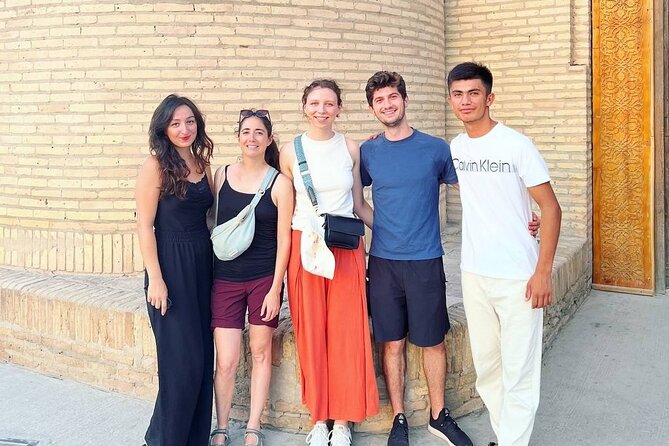
The tour begins at Ata Darwaza, the main western entrance to Itchan Kala. This is a useful meeting point because it puts you directly inside Khiva’s walled core, where the principal sights are packed into a walkable area.
Sarvar uses the gate to set the scene. Caravans and traders once entered here while moving along Silk Road routes, and the walls help you understand why Khiva feels so different from a modern Uzbek city. You are not being driven from one isolated monument to another. The old city unfolds on foot, through lanes and courtyards.
The opening stop lasts about 10 minutes and has no separate admission charge. Use this time to get oriented and make sure you understand the ticket arrangement. The main tour price is $22 per person, but admission to the museums and palace complexes costs an additional 250,000 sum per person. That ticket includes access to 10 to 13 museums, and payment can be made with cash or a card.
A few more Khiva days to weigh up
- Khiva: Historical City Highlights Guided Walking Tour
★ 4.8 · 156 reviews - Transfer: Bukhara – Khiva via Ancient Fortresses
★ 4.5 · 101 reviews - Daytrip From Khiva To Ancient Fortresses
★ 4.6 · 60 reviews
Kalta Minor and Muhammad Amin Khan Madrassah
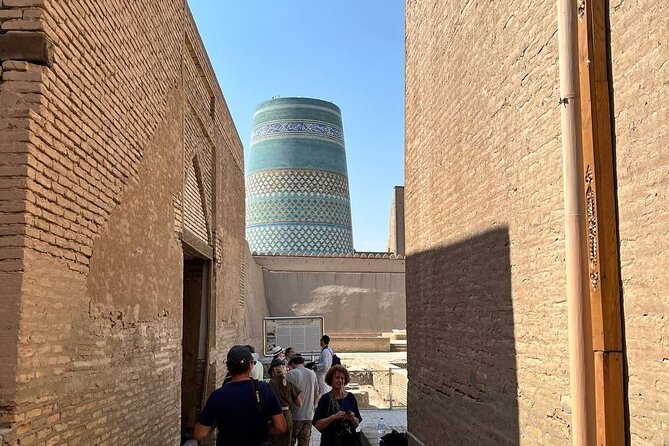
The first major architectural pair is the Muhammad Amin Khan Madrassah and the Kalta Minor Minaret. They sit beside each other, so you get an immediate lesson in how Khiva’s religious schools and monuments worked together.
The madrassah was built in 1851 by Muhammad Amin Khan and once had room for more than 250 students. Sarvar explains the building’s role as an Islamic school and places it within the ambitions of one of Khiva’s most influential rulers. The stop is scheduled for about 15 minutes, enough to take in the facade and hear the main story without spending too long in one place.
Next comes Kalta Minor, the city’s most recognizable landmark. Its turquoise tilework and unusually broad, short shape make it unlike the tall, slender minarets found elsewhere in Central Asia. The plan was for a much taller tower, but construction ended before the project was complete. That unfinished quality is part of its appeal.
You get about 10 minutes here. It is a brief stop, so keep your camera ready and listen for the explanation before wandering off to photograph the tilework. The minaret is visually striking, but a guide is especially helpful because the monument’s story is tied to the political ambitions of Muhammad Amin Khan.
Inside Kunya Ark, the khans’ fortress
Kunya Ark is one of the most important stops on the walk. This fortress served as the residence of Khiva’s khans and contained the working parts of royal life: a throne room, harem, mint, mosque, and reception spaces.
The planned visit lasts about 25 minutes, making it one of the longer stops. That is sensible. Kunya Ark is not a single room or facade. It is a complex of spaces that made up a court and government center, and you need some explanation to understand how the pieces fit together.
I like this part of the tour because it moves beyond decorative architecture. You see where rulers received visitors, worshipped, produced currency, and managed court life. Sarvar’s role is important here. His strongest qualities, according to the information available about his guiding, are his clear English, his ability to explain Uzbekistan’s past, and his friendly manner.
The tour is not designed as a private palace study. You will get a guided overview rather than a scholarly examination of every chamber. Still, Kunya Ark gives the old city political depth, and it is one of the places where a local guide adds real value.
Khiva’s wood-carving tradition
A visit to a local wood-carving workshop adds a welcome change of pace. Khiva is known for carved wooden columns, doors, and decorative objects, and the stop lets you see the craft as a living tradition rather than something locked behind glass.
You spend about 15 minutes here. That is enough to watch artisans at work and understand how much skill goes into the patterns and details. The stop also gives you a better eye for the carved wood you will see later at Juma Mosque.
This is one of the tour’s more useful choices. Khiva can sometimes feel like a city of monuments, with one tiled facade after another. A working craft tradition connects the historic buildings with present-day local life. You can also ask about souvenirs here, though the tour does not promise a purchase or specify workshop prices.
Same city, a completely different day out:
- Ayazkala, Toprakkala & Kizilkala Fortress Tour From Khiva
★ 4.3 · 33 reviews - Aral Sea Adventures (2 day)
★ 5.0 · 30 reviews - Khiva Historical City Highlights Guided Walking Tour
★ 5.0 · 30 reviews - Master Class – Shivit Osh Traditional Food Of Khiva
★ 4.2 · 27 reviews
The Scholars Museum and Central Asian thinkers
The Scholars Museum focuses on professors and thinkers from Uzbekistan whose work contributed to world civilization. The names highlighted include Al-Khwarizmi, Al-Biruni, Al-Zamakhshari, and Abu Ali Ibn Sina.
The stop lasts about 15 minutes. It provides a wider setting for Khiva and the Khorezm region, moving the conversation beyond khans, mosques, and caravan trade. These figures represent mathematics, science, language, medicine, and scholarship, so the museum helps correct the idea that the old city is only about royal architecture.
This portion may appeal most to you if you like cultural context. It is shorter and less visually dramatic than the minarets and palaces, but it adds intellectual weight to the walk. Sarvar’s wider knowledge of Uzbekistan is useful here, particularly if you want to connect Khiva with the country’s larger historical story.
Tash Khauli, the Stone Palace
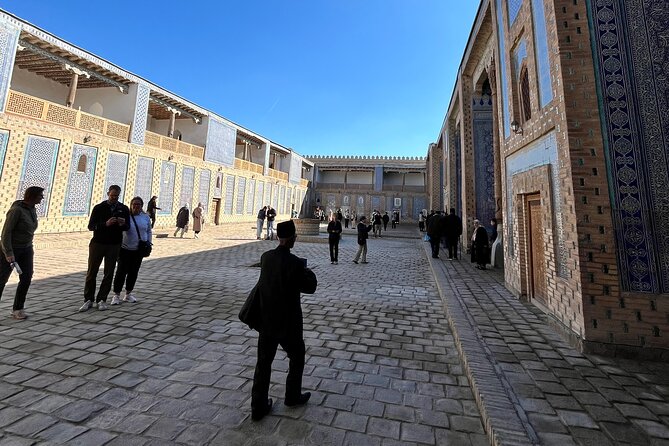
The next palace is Tash Khauli, also called Tosh Khovli or Allakulikhan Palace. Built in the 19th century, it served as a residence for the khan and his court.
The planned stop is about 15 minutes. You will see another side of elite Khivan life, with attention to the palace’s architectural design and its role as a royal residence. Since Kunya Ark was the older fortress center, visiting Tash Khauli afterward gives you a useful comparison between two major seats of power.
Admission to Tash Khauli is not included in the $22 tour fee. The general 250,000-sum ticket is described as covering 10 to 13 museums, but you should be prepared to pay the required admission as part of the wider ticket system. The tour information says cash or card is accepted.
The short visit is a practical compromise. You get an introduction to the palace, but you should not expect a long, room-by-room examination of its courtyards and decoration. If palace interiors are your main interest, you may want to return later with more time.
Allakuli Khan’s caravanserai and market
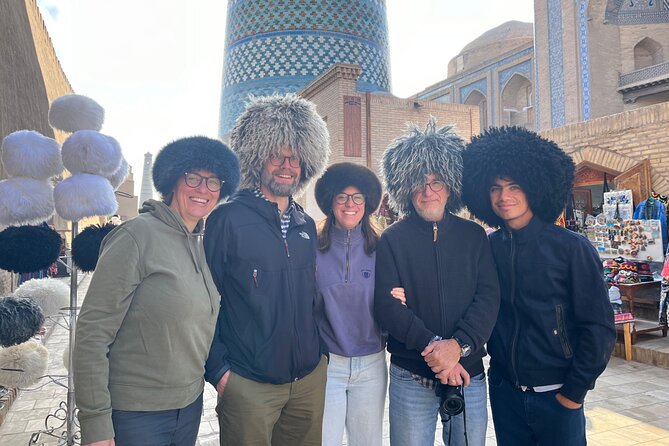
Allakuli Khan’s Tim Market and caravanserai bring the Silk Road theme back into focus. The caravanserai was built as a stopping place along the ancient trade routes and is now a place to browse local souvenirs.
You have about 15 minutes here. It is a short shopping stop, not a dedicated market tour, so use it to see what is available and note places you might return to later. Sarvar also gives advice on where to shop and what else to explore during your stay.
This stop helps keep the tour practical. You are not only looking at the past. You are learning where to find souvenirs and how to continue exploring Khiva after the guide leaves. Prices, product quality, and specific shops are not provided, so you should treat the visit as an orientation rather than a guaranteed shopping bargain.
Juma Mosque and its forest of wooden columns
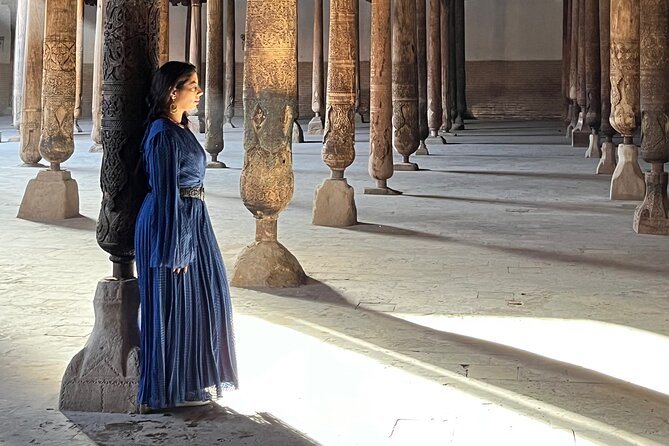
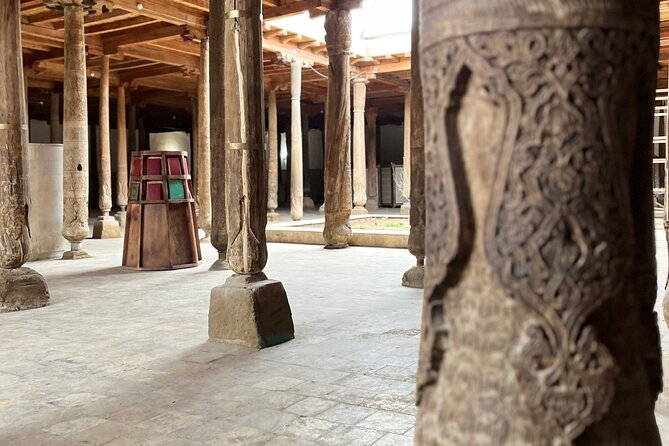
Juma Mosque is one of Khiva’s most memorable interiors. Built in the 10th century, it is famous for 215 carved wooden columns. The columns create the unusual feeling of walking through a forest of timber inside a mosque.
The scheduled visit lasts about 20 minutes. That gives you time to look up, compare the columns, and hear how the mosque combines Islamic design with local artistic traditions. The earlier wood-carving stop makes this visit more meaningful because you have already seen the craft in practice.
Juma Mosque is also a good reminder that Khiva’s beauty is not limited to bright tilework. Its atmosphere comes from repetition, shadow, carved surfaces, and the age of the wooden supports. A guide helps you notice those details instead of simply taking a quick photograph and moving on.
As with the other museum sites, admission is handled through the separate entrance ticket. The route description lists the stop as included in the walking itinerary, but the general admission fee remains extra.
Islom Khodja and Khiva’s tallest minaret
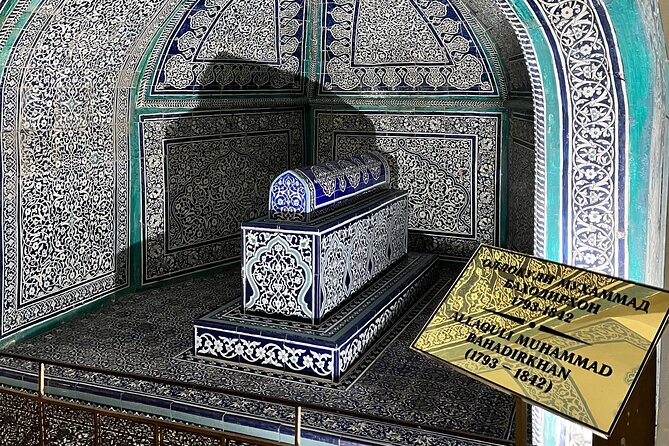
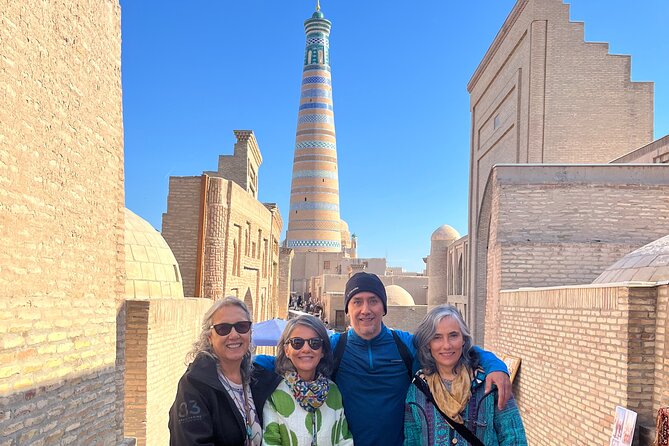
The final major stop is the Islom Khodja Complex, home to the city’s tallest minaret. The complex includes the Islom Khodja Madrassah, built in the 19th century and named for the prominent figure Islom Khodja.
The visit is planned for about 15 minutes. You will hear about the madrassah and the minaret’s place in Khiva’s skyline. The information provided does not say that the tour includes climbing the minaret, so do not book expecting a guaranteed ascent or panoramic view.
Admission to the Islom Khodja Complex is not included in the tour price. It forms part of the extra ticket arrangement, listed at 250,000 sum per person for access to 10 to 13 museums. The tour ends back at the meeting point, giving you a simple finish inside the old city.
What Sarvar adds to the walk
A local guide matters in Khiva because the monuments are close together but the stories are not always obvious. Sarvar was born and raised in Khiva, speaks English, and explains both local history and broader Uzbek culture.
His guiding style appears particularly useful for three kinds of visitors. First, you get help sorting out the khans, palaces, madrassahs, and changing roles of each building. Second, you hear local legends and personal stories rather than only dates. Third, you can ask for advice about food, shopping, and places to visit after the walk.
The strongest praise connected with Sarvar focuses on his English, kindness, helpful planning, and ability to explain the history of Uzbekistan. One account also describes a long professional relationship with him dating back to 2018, suggesting that guiding is not a casual sideline for him.
That does not mean the tour will suit someone seeking a highly academic or private experience. The group can reach 15 people, and the three-hour schedule requires steady movement. For most first visits, though, the balance of major landmarks and local explanation makes sense.
Price, ticket costs, and the real value
The tour costs $22 per person. For a three-hour English-language walking tour in a UNESCO-listed old city, that is a reasonable guide fee, especially if you want help making sense of the buildings rather than simply photographing them.
The important extra cost is the entrance ticket. You pay 250,000 sum per person, by cash or card, for access to 10 to 13 museums. The tour price includes only the English-speaking guide, so budget for both amounts when comparing this walk with other Khiva options.
The ticket arrangement can still offer good value if you plan to visit several interior sites during your stay. You are not paying separate admission for every stop in the usual way, although specific palace and complex entries are marked as not included in the tour price. Ask the guide at the start how the ticket applies to the day’s visits so you know what you are paying for.
At an average of 108 days booked in advance, the experience appears to attract early planning. If your Khiva dates are fixed, booking ahead is sensible. Confirmation is provided at booking, and free cancellation is available up to 24 hours before the start time. Changes or cancellations inside that window are not refundable.
Who should book this Khiva walking tour
I would choose this tour if you are visiting Khiva for the first time and want a clear introduction to Itchan Kala in a single morning or afternoon. It suits you if you enjoy history but also want local advice about shopping, food, and what to see next.
It is also a good fit for couples, families, and small groups who prefer walking to a vehicle-based city tour. Most people can participate, the route is near public transportation, and the maximum group size is 15.
You may want another option if you have already spent several days studying Khiva’s architecture and want a specialist tour focused on one subject. The itinerary covers many places, so some stops are necessarily brief. It is broad rather than slow.
Wear practical walking shoes and leave room for pauses at the entrances and courtyards. Khiva’s old city is compact, but a route with 10 stops still requires steady walking and attention.
Should you book Old Khiva Stories?
Book it if you want a well-rounded first look at Itchan Kala led by someone who grew up in Khiva. Sarvar’s English, friendly approach, and practical advice are the main reasons to choose this experience over walking alone.
The $22 price is fair, but remember the separate 250,000-sum admission ticket. If you accept that extra cost and are comfortable with a group of up to 15, this is a useful, focused way to meet Khiva’s khans, craftsmen, scholars, and Silk Road past in about three hours.
FAQ
How long does the Old Khiva Stories tour last?
The tour lasts approximately three hours.
Where does the tour begin?
It begins at Ata Darwaza, the west gate of Ichan Kala in Khiva. The listed location is 99H4+CRQ, Khiva, Xorazm Region, Uzbekistan.
Where does the tour end?
The activity ends back at the meeting point.
Is the entrance ticket included in the $22 price?
No. The guide fee does not include admission. The entrance fee is 250,000 sum per person, with payment accepted by cash or card, and it includes access to 10 to 13 museums.
What language does the guide speak?
The tour includes an English-speaking guide. The guide, Sarvar, was born and raised in Khiva.
How many people can join the tour?
The tour has a maximum group size of 15 people.
Can I cancel for a full refund?
Yes. You can cancel at least 24 hours before the experience start time for a full refund. Cancellations or changes made less than 24 hours before the start time are not accepted for a refund.
Just added around Khiva
- A Night In The Kyzylkum Desert [2] From Khiva★ 4.5 · 3 reviews
- Khorezm Fortress and KyzylKum Desert Private Tour★ 5.0 · 3 reviews
- Khiva: City Highlights Guided Walking Tour★ 4.6 · 3 reviews
- Best of Khiva: Exclusive Private Tour!★ 5.0 · 3 reviews
- Khiva: classic Half-Day Tour★ 3.7 · 3 reviews
- Traditional Khiva Cooking Class with Market Visit & Lunch★ 5.0 · 4 reviews
- Master Class – Uzbek Bread (Khiva)★ 3.5 · 4 reviews
- Uzbekistan 6 Days Private Tour Khiva-Bukhara-Samarkand by Train★ 5.0 · 4 reviews
Khiva Tours, compared.
Khiva: Historical City Highlights Guided Walking Tour
Read our review →
Master Class – Shivit Osh Traditional Food Of Khiva
Read our review →
Browse the lists this tour appears in