
Reviewed · KHIVA TOURS
Private Daytrip to Muynak and Nukus
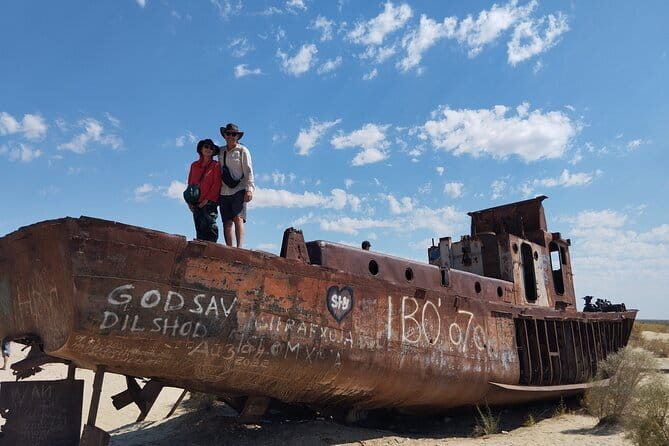
The most striking part of this day is the Muynak ship cemetery, where rusting vessels sit far from the water that once carried them. You also get the rare chance to connect that environmental story with Karakalpak culture and Soviet-era art in Nukus.
I like the private vehicle, which makes the long ride from Khiva more manageable, and I like the unusual mix of stops: Chilpiq qala for ancient Zoroastrian traditions, the Savitsky Museum for remarkable art, and Muynak for the Aral Sea’s human cost. The drawback is simple: 14 hours is a very long day, and much of it is spent on the road.
Key points to know before booking
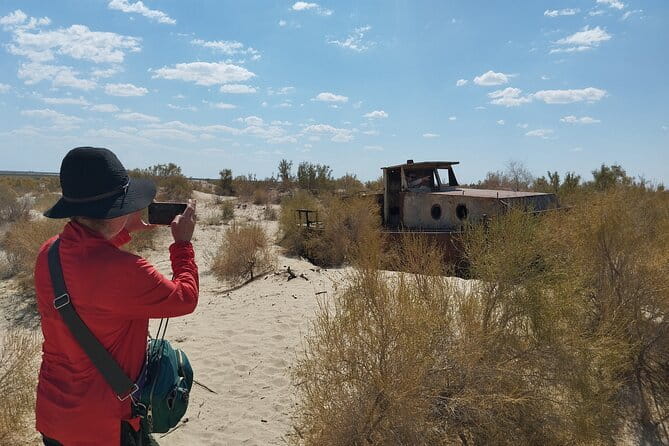
- The ship cemetery is the emotional center: Muynak’s abandoned boats show how dramatically the Aral Sea receded.
- Chilpiq qala adds ancient context: This roofless Zoroastrian monument is more than 2,200 years old.
- The Savitsky Museum changes the pace: Nukus brings Soviet-era art and Karakalpak culture into a day otherwise focused on desert and environmental loss.
- The day is built around a long drive: Transportation is included in the roughly 14-hour duration, so plan for an early start and a late return.
- The price covers a private group: The $299 rate applies to up to three people, with hotel pickup, drop-off, and an air-conditioned vehicle.
- Budget for museum tickets and food: Savitsky costs $7 per person, Muynak Museum costs $3 per person, and lunch and dinner are not included.
Why this Khiva day trip is worth the long road
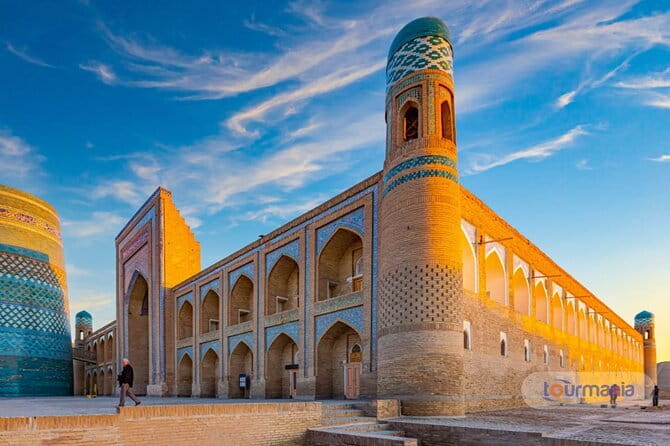
Khiva is one of Uzbekistan’s great historic cities, but its location can make the country’s western reaches feel distant. This private day trip gives you a way to reach two very different places, Nukus and Muynak, without arranging separate transport or joining a large group.
The main appeal is not a single polished attraction. It is the sharp contrast between the stops. You begin with an ancient religious monument, move into an important art collection, then continue toward a town shaped by one of the modern world’s most serious environmental disasters.
The route also gives you a look at the Karakalpakstan region. That matters because the Aral Sea story is not just about a vanished body of water. It is also about towns, jobs, culture, and daily life changed by Soviet irrigation policies and the sea’s retreat.
You should book this as a serious sightseeing day, not a restful excursion. The advertised duration is about 14 hours, and that includes transportation. From Khiva, the drive to Muynak is long enough that the vehicle becomes a major part of the experience. The private format helps, since your group can travel together without waiting for strangers or adjusting to a large coach schedule.
More Aral Sea and Muynak expeditions:
- Aral Sea Adventures (2 day)
★ 5.0 · 30 reviews - From Khiva To Aral Sea 2-Days One Night In Yurt Stay
★ 4.6 · 20 reviews - Daytrip From Khiva to Aral Sea Cemetery Of Ships . All In One
★ 4.5 · 18 reviews
Chilpiq qala and the ancient world above the desert
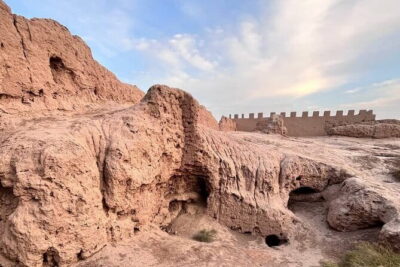
The first stop is Chilpiq, also written as Shilpiq or Chilpak Kala. This round, roofless tower rises about 15 meters and measures roughly 65 meters across. It is believed to be more than 2,200 years old and is linked to Zoroastrian funerary practice.
The site is useful because it pushes the story of the region far beyond the Soviet period. Before Nukus museums and before Muynak’s fishing port, people here followed religious customs that shaped how the dead were treated. The open form of the dakhma is part of that story.
You have about an hour here, and the setting is likely to feel stark and exposed. This is not a reconstructed palace with furnished rooms or a large collection of objects. Its value comes from the age, shape, and location of the monument.
Admission is not included, so confirm the current entry cost with the operator before departure. You should also bring practical sun protection and sturdy footwear. The tour requires a moderate level of physical fitness, and the site’s open setting may make the visit feel more demanding in hot or windy conditions.
Chilpiq works best as an opening chapter. It gives you an ancient reference point before the day turns toward twentieth-century art and the Aral Sea crisis.
Nukus and the unexpected power of the Savitsky Museum
Nukus is the capital of Uzbekistan’s semiautonomous Karakalpakstan region. Its State Museum of Art, named after Igor Savitsky, is the cultural highlight of the day for many people.
The museum’s importance comes from the way its collection preserves art connected with the Soviet era. The visit gives you a different view of life under Soviet rule than you would get from political history alone. Paintings and other works can reveal what official stories left out, including private moods, local identity, and artistic choices made under pressure.
You have about one hour inside the museum. That is enough for a focused visit, but not enough to treat the collection as a slow, room-by-room museum day. If art is your main reason for making the trip, you may wish the schedule allowed longer here.
The $7 admission charge per person is not included. That is a small extra cost beside the private transport, but you should still add it to your budget. Audio-guide materials are included for the trip, though the available information does not identify a personal guide by name or explain exactly which portions use audio commentary.
I like the way Savitsky breaks up the long desert drive. After seeing an ancient monument outdoors, you spend time in an indoor cultural setting with a very different mood. The museum also helps prevent the day from becoming only a disaster-tourism outing. You see that Karakalpakstan has an artistic and cultural life, not just an environmental tragedy.
Muynak’s small museum and the human side of the Aral Sea
Muynak was once one of the largest port cities on the Aral Sea. Today, its regional history and Aral Sea museum explains what happened to the town as the water receded.
The museum is modest by major-city standards, but that is part of its value. A small regional collection can bring the local consequences into focus in a way a broad national museum often cannot. You are looking at the history of a place whose connection with the sea was central to its economy and identity.
The visit lasts about 40 minutes. That is a sensible amount of time for a compact museum, especially after the long drive. Admission costs $3 per person and is not included.
Keep your expectations realistic. This is not presented as a large, modern museum with a full day of exhibits. It is a short stop that supplies background for the ship cemetery outside. Without it, the abandoned boats could look like an odd desert attraction. With it, you can better understand why they are there and what their presence means for Muynak.
I would pay close attention to the local angle. The day becomes more meaningful when you think about the vanished water as a force that changed work, transport, food supply, and the town’s sense of place. The museum is where that connection becomes clearest.
A few more Khiva days to weigh up
- Khiva: Historical City Highlights Guided Walking Tour
★ 4.8 · 156 reviews - Transfer: Bukhara – Khiva via Ancient Fortresses
★ 4.5 · 101 reviews - Daytrip From Khiva To Ancient Fortresses
★ 4.6 · 60 reviews - Ayazkala, Toprakkala & Kizilkala Fortress Tour From Khiva
★ 4.3 · 33 reviews
The ship cemetery and the Aral Sea’s visible warning
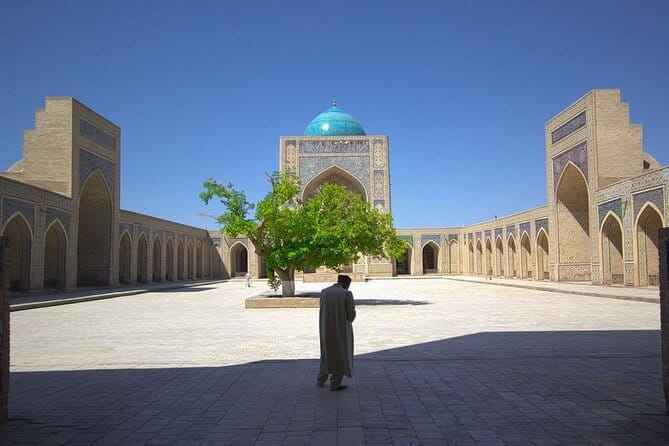
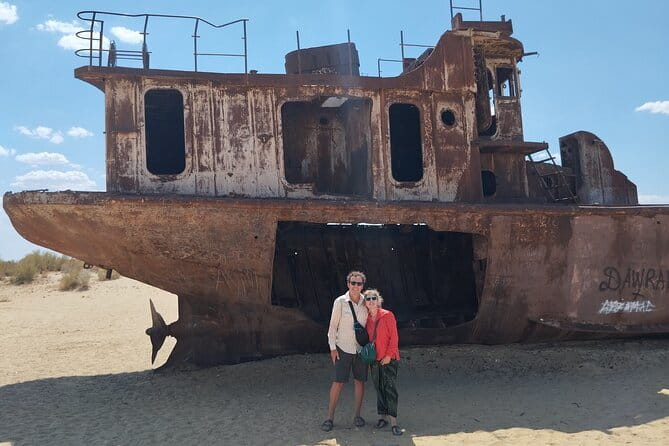
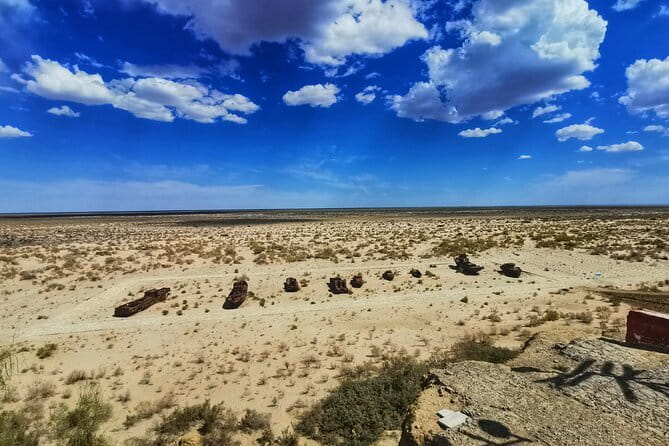
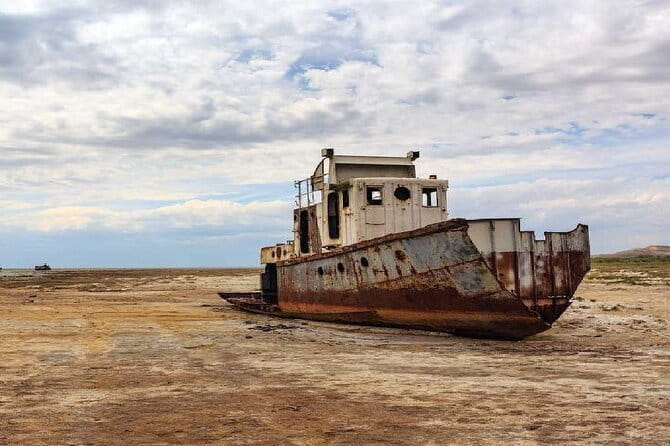
The ship cemetery is the most memorable stop. Rusting vessels remain on dry ground, far from the water they once used. The scene gives you a physical measure of the Aral Sea’s retreat, something a statistic cannot provide as powerfully.
The former Aral Sea was once the fourth-largest inland sea in the world. Its disappearance within a single lifetime is tied to major ecological and climatic changes in the Muynak area. The boats are not simply old machinery. They are evidence of a port economy left behind by a transformed environment.
You have about an hour here, and the admission charge is free. That makes this the easiest stop to explore without an extra ticket, though the open site still calls for sensible clothing, water, and sun protection.
This is also the point where the trip may feel emotionally heavy. The cemetery has a stark, almost surreal quality, but it is worth resisting the urge to treat it as a photo stop alone. Take time to consider what the empty hulls represent. The site connects environmental policy with real communities and lasting consequences.
The Japanese-language account of the experience particularly highlights the safe driving and the satisfaction of reaching the Aral Sea area despite the distance. That is useful practical context. The road is long, and the ship cemetery feels rewarding partly because it is not an easy place to reach from Khiva.
What the private transport adds to a 14-hour day
The $299 price covers the whole group, up to three people, rather than charging each person separately. For three people, that works out to about $99.67 each before museum tickets and meals. For two people, it is $149.50 each, and a solo booking carries the full group price.
Private transport is the main value here. You receive an air-conditioned vehicle, hotel pickup and drop-off, and a return to the original meeting point in Khiva. Those details matter because the route is long and the day has several distinct stops.
The vehicle also gives your group more control over the rhythm of the day than a shared excursion would. Still, do not assume that private means short or relaxed. The distance remains the distance. You will spend many hours in transit, even with a private car.
Audio-guide materials are included, which can help fill in context during the journey. No personal guide name is provided, so you should not book this expecting a named art specialist or an on-board historian. The arrangement is better suited to people who value private transport and a planned route, while remaining comfortable with some independent looking at the sites.
Food is not included. You need to budget for lunch and dinner, and the supplied details do not specify where or when meals take place. Bring water and snacks for the road, especially if you prefer not to depend on an unconfirmed meal stop.
Who will enjoy this experience most
I would recommend the trip most strongly to people who have several days in Khiva and want to understand more of western Uzbekistan. It suits anyone interested in the Aral Sea, Soviet history, Central Asian art, ancient religious sites, or unusual places that are difficult to reach alone.
It also suits a small family or group of friends. The minimum age is five, and the private format means your group travels together. The moderate fitness requirement makes it less suitable for anyone who cannot manage a long day with outdoor walking and extended time in a vehicle.
You should think twice if your priority is a slow holiday. This is not a gentle add-on between relaxed Khiva sightseeing days. It is an ambitious out-and-back journey with a strong educational purpose.
The tour has received a 4.8 rating from 10 reviews, with a 100 percent recommendation figure. Those numbers suggest a strong response, but the sample is small. I would place more weight on the clear practical strengths: private transport, safe driving, the rare chance to reach Muynak from Khiva, and the unusual combination of art, ancient culture, and environmental history.
Costs, timing, and small details that matter
The base price is $299 per group of up to three. Add $7 per person for Savitsky Museum admission and $3 per person for the Muynak Museum. If three people go, the museum total is $30 for the group, bringing the known cost to $329 before meals.
Pickup is offered in Khiva, in the Xorazm Region, and the activity ends back at the meeting point. Confirmation is provided when you book. Since transportation makes up a large part of the day, confirm your pickup time and location clearly before setting off.
The tour requires good weather. If poor weather forces cancellation, you are offered another date or a full refund. You can also cancel for a full refund if you do so at least 24 hours before the start time. Changes made within 24 hours are not accepted, so keep your plans firm once the deadline passes.
The safest planning choice is to reserve this on a day when you can afford a long return journey. Avoid placing a critical evening train, flight, or fixed booking immediately afterward, since the duration is approximate and road conditions can affect the schedule.
Should you book the Muynak and Nukus day trip?
Book it if the Aral Sea ship cemetery is high on your Uzbekistan wish list and you want the simplest private way to reach it from Khiva. The Savitsky Museum and Chilpiq qala make the long road more rewarding by adding art and ancient history to the environmental story.
Skip it if you dislike long drives or want a relaxed day close to Khiva. You should also compare the price carefully if you are alone, since $299 is charged per group rather than per seat.
For two or three people with a strong interest in western Uzbekistan, I think the value is good. You get private transport, air-conditioning, pickup and drop-off, and four very different stops. Just go prepared for the central fact of the trip: reaching Muynak takes time, but that effort is exactly why the ship cemetery feels so far removed from the sea it once served.
FAQ
Where does the tour begin?
It begins in Khiva, in Uzbekistan’s Xorazm Region, with hotel pickup offered.
Where does the tour end?
The experience ends back at the original meeting point in Khiva.
How long does the experience last?
It lasts approximately 14 hours, including transportation time.
How many people can join the private tour?
The $299 price covers one private group of up to three people.
Is transportation included?
Yes. Private transportation in an air-conditioned vehicle is included.
Are hotel pickup and drop-off included?
Yes. Hotel pickup and drop-off are included.
Is lunch included?
No. Lunch and dinner are not included in the price.
How much are the museum entrance fees?
The Savitsky Museum fee is $7 per person, and the Muynak Museum fee is $3 per person. Neither fee is included.
What is the minimum age?
The minimum age is five years old.
Can I cancel for a full refund?
Yes. You can cancel at least 24 hours before the start time for a full refund. Cancellations or changes made less than 24 hours before the start time are not accepted for a refund.
Just added around Khiva
- A Night In The Kyzylkum Desert [2] From Khiva★ 4.5 · 3 reviews
- Khorezm Fortress and KyzylKum Desert Private Tour★ 5.0 · 3 reviews
- Khiva: City Highlights Guided Walking Tour★ 4.6 · 3 reviews
- Best of Khiva: Exclusive Private Tour!★ 5.0 · 3 reviews
- Khiva: classic Half-Day Tour★ 3.7 · 3 reviews
- Traditional Khiva Cooking Class with Market Visit & Lunch★ 5.0 · 4 reviews
- Master Class – Uzbek Bread (Khiva)★ 3.5 · 4 reviews
- Uzbekistan 6 Days Private Tour Khiva-Bukhara-Samarkand by Train★ 5.0 · 4 reviews
Khiva Tours, compared.
Khiva: Historical City Highlights Guided Walking Tour
Read our review →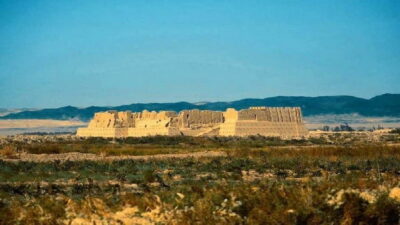
Master Class – Shivit Osh Traditional Food Of Khiva
Read our review →
Browse the lists this tour appears in