
Reviewed · TASHKENT TOURS
Tashkent: 3-Day Horseback Riding Tour in Chimgan Mountains
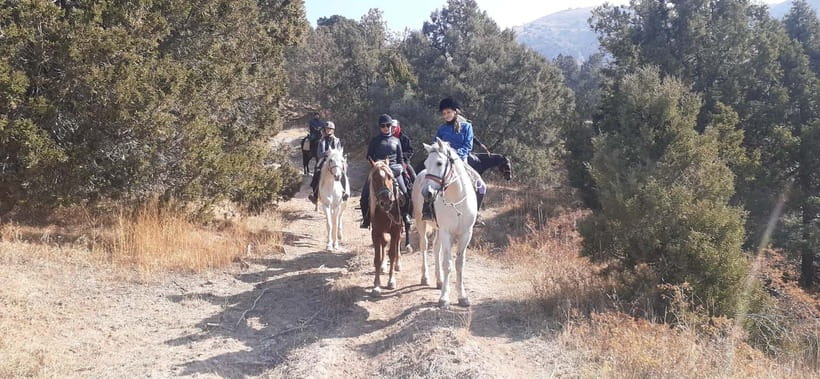
The best part of this three-day trip is the change of pace. You leave Tashkent by van and soon trade city traffic for mountain trails, river crossings, and broad alpine meadows. Most days put you in the saddle for five to six hours, with steep climbs, descents, and long open stretches where you can canter.
I like the home-cooked meals and the small-group format, limited to 10 people. I also like the chance to meet shepherds, villagers, and a mountain bee farmer rather than simply riding from one scenic viewpoint to another. The main caution is that the camping plan and riding times may shift with weather and local arrangements, so you should be comfortable with a rustic trip that does not always follow the printed schedule.
Key points at a glance
- Ride across real mountain terrain: Cross rivers, pass summer grazing areas, climb Chet Kumbel and Akshuran passes, and ride beside Charvak Lake.
- Spend two nights outdoors: Tents, sleeping bags, sleeping rugs, kitchenware, a cook, and full-board meals are provided.
- Expect long days in the saddle: The route calls for roughly 5 to 6 hours of riding each day, with repeated ascents and descents.
- Meet people along the route: You pass villages, shepherds’ pastures, a bee farmer’s shelter, and a family home near the end.
- Plan for simple conditions: Camping takes place near rivers and meadows, with changing weather and limited comfort.
- Value depends on your priorities: At $430 per person, transport, horses, guide, horseman, cook, gear, and food are included, but personal equipment and city meals are extra.
Leaving Tashkent for the Aksai Valley
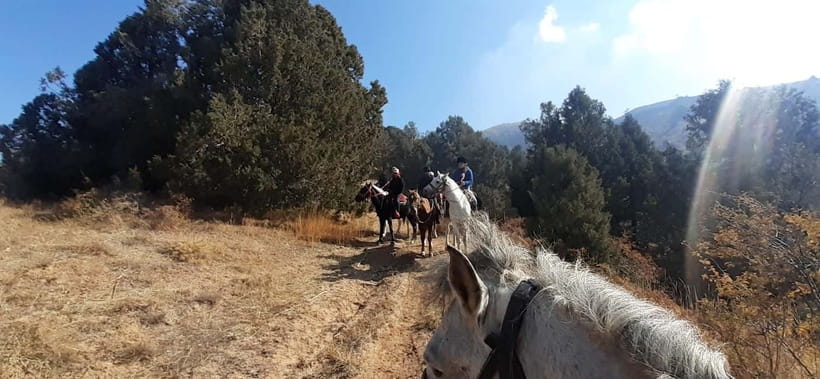
Your first day begins with pickup in Tashkent and a drive toward Aksai Valley. For groups of more than three, transport is provided in a van such as a Hyundai Starex. Smaller groups of up to three may use a Chevrolet Lacetti or a similar light sedan.
The riding begins after you reach the valley. You pass the village and climb toward Aksakata Mountain, then take a short rest before crossing the valley toward Archali Pass. This early stretch gives you a useful introduction to the trip: the route is not a gentle trail ride, but a mountain journey with livestock, horse packs, shepherds, and summer pastures along the way.
At the marble belt, you stop for lunch. The name hints at the geology under your horse’s feet, but the more useful point is practical: the day includes several hours of riding before camp, so lunch is an important pause rather than a quick snack.
After lunch, you descend toward the meeting point of the Aksaka Ata and Nurik Ata rivers. You cross a wooden bridge and continue along a valley known for its alpine plant life. The first camp is near the river, where the team sets up tents, prepares dinner, and makes a fire.
This is the part of the trip that can feel most like proper wilderness camping. You are away from city lights, sleeping near running water and looking up at a clear night sky. It also means you should bring the right attitude. River camps and meadows are beautiful, but they are not hotel grounds. Personal comfort depends on your clothing, sleeping gear, weather, and tolerance for basic facilities.
More Chimgan and Charvak mountain days:
- Best of Tashkent Mountains: Amirsoy, Chimgan & Charvak Trip
★ 4.8 · 567 reviews - Tashkent: Amirsoy Resort, Chimgan Mountain and Charvak Lake
★ 4.8 · 170 reviews - Explore Amirsoy, Chimgan & Charvak – A Full-Day Mountain Tour
★ 5.0 · 158 reviews
What the first camp is really like
The supplied equipment includes a tent, sleeping bag, sleeping rug, and kitchenware. A cook handles the meals, and the tour includes full board during the mountain portion. You should still pack personal mountain equipment, sturdy footwear, suitable clothing, rain gear, and a personal first-aid kit.
One important practical lesson is to confirm the camping setup before departure. Communication about equipment has not always been perfectly clear. One British customer arrived without a tent after being told camping equipment would be supplied, and the guide was not aware of the arrangement. That problem appears to have been an organizational mix-up, not a lack of care from the mountain team, but it is exactly the kind of detail you want settled before leaving Tashkent.
The food is a strong point. The cook prepares meals in camp, and the trip includes breakfast, lunch, and dinner. Expect simple mountain cooking rather than restaurant service, but the chance to eat hot food after a long ride adds real value.
Day two: rivers, a giant tree, and Chet Kumbel Pass
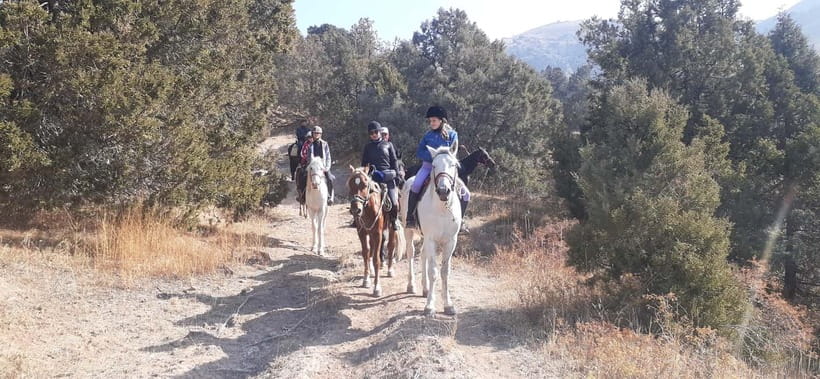
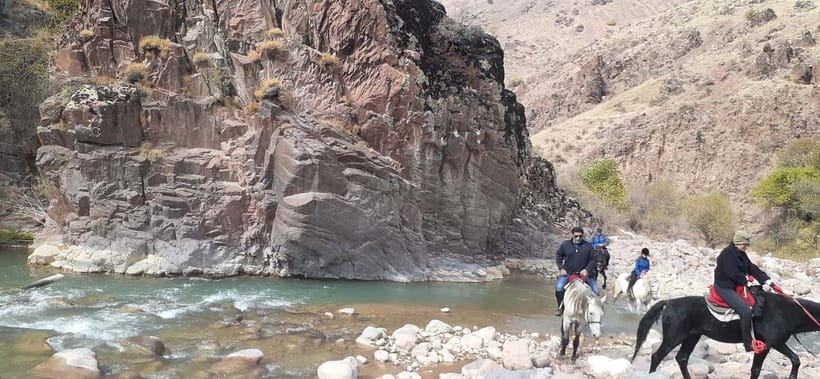
Day two starts early with hiking porridge and hot coffee. You pack up camp, load the donkey with supplies, and begin another long ride. The route crosses rivers and climbs through repeated ascents and descents, so this is likely to be the most demanding day for your legs and balance.
After several hours, you reach a shelter used by a mountain bee farmer. The horses rest here, giving you a chance to get off the saddle and take in a working part of mountain life. This is a small but memorable detail. The route is not only about scenery, and the shelter gives you a glimpse of how people use these high valleys.
The next major target is Chet Kumbel Pass. Near a spring and a tree said to be 1,000 years old, you stop for lunch. The combination of cold spring water, an old tree, and a high mountain route makes this one of the day’s natural highlights, though exact conditions depend on weather and trail access.
From there, you traverse Kumbel Mountain toward a ski slope. You then climb beside the forest to a large rock and continue for about half an hour to a wide alpine meadow. This is one of the best places for a canter, but only if your riding ability and the guide’s instructions match the conditions. A canter on open ground can be thrilling, yet the route still has uneven surfaces, changing gradients, and horses carrying both people and gear.
The marble gorge and Beldersai Valley
After the meadow, you descend toward the marble gorge for another meal and a horse rest. The schedule calls for more riding after lunch, including a climb to Urta Kumbel and a quick descent into Beldersai Valley.
You cross the river and continue through Yakka Archa before climbing toward Chet Kumbel again. The day ends with camp near the river. By this point, you will have spent many hours in the saddle and should expect tired muscles, dusty clothing, and a real need for warm food and dry layers.
The route description includes lunch at more than one point during the day, so the exact meal timing may vary with the guide’s judgment and the pace of the group. That is normal in mountain travel, but the written timing is not perfectly clear. You should ask the operator how meals are handled on your departure date, especially if you need snacks between stops.
Same city, a completely different day out:
- Samarkand One Day Tour – Departure From Tashkent
★ 5.0 · 313 reviews - Samarkand One-Day Tour Departure from Tashkent
★ 4.7 · 171 reviews - From Tashkent: Sightseeing Day Trip to Khujand, Tajikistan
★ 4.7 · 169 reviews - Tashkent City Tour
★ 5.0 · 121 reviews
Day three: villages and the view over Charvak Lake
The final morning begins with breakfast and a ride across a meadow before descending. After about an hour, you reach the Beldersai River bridge and cross it. You then climb toward Uchterak village, where lunch is taken near the settlement.
This section brings the trip closer to local life. You pass through the village, meet residents, and cross the Galvaysai River before climbing toward Akshuran Pass. The cultural contact is informal rather than staged. You are moving through places where people live and work, with the horseman and guide helping you understand the route.
At the pass, you reach another area suitable for cantering. Later, you ride along the ridge through the rolling red cliffs of Kyzyljar. After several hours, you reach the peak known as Last, where Charvak Lake comes into view.
That final view is a fitting payoff. After two days of river valleys, forest, rock, and meadow, you can look back across the surrounding mountains toward the lake. You then rest and walk down to Chorvak Oromgohi, where your driver meets you for the return to Tashkent.
Do not assume the final riding day will always last as long as the description suggests. One reported departure included only about two and a half hours on horseback on the last day, with the rest of the time spent moving by foot and vehicle. Weather, route changes, and the camp location can affect the result.
The people, horses, and group size
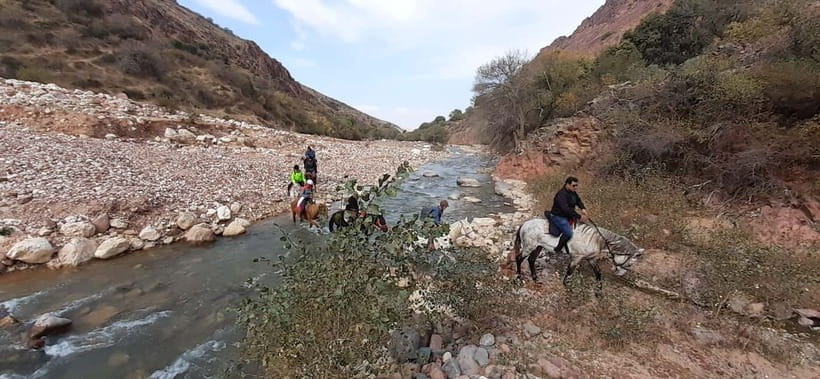
The support team includes an English-speaking guide, a horseman, and a cook. The horseman and guide travel with four horses in total, two for customers and two for the support team, plus a donkey for carrying equipment.
The exact guide names are not provided, so you cannot choose a named horse specialist in advance. What you can expect is a team with long experience in these mountains, according to the supplied feedback, and practical help with riding technique, route finding, meals, and camp.
The group limit is 10 participants. That is small enough to make river crossings and riding instruction easier to manage than on a large coach-style outing. It also means the pace may be shaped by the slowest rider, the horses, and trail conditions. For a trip with steep terrain, that is a fair trade.
The guides have received especially strong praise for mountain experience, riding instruction, food, and route knowledge. The most serious criticism concerns organization and communication, not the warmth of the guides themselves. Keep those two points separate when deciding: the mountain team may be excellent on the trail while pre-trip coordination still needs improvement.
How difficult is the riding?
This is not a beginner-friendly sightseeing ride unless you already know what several hours in the saddle feels like. The route includes river crossings, mountain passes, steep ascents, descents, and stretches where you may canter. You should be comfortable following instructions and managing a horse over uneven ground.
The activity is specifically unsuitable for people with back problems, mobility impairments, heart problems, or respiratory issues. Even without those conditions, you should think carefully about your fitness and riding experience.
Pack hiking shoes, comfortable clothes, gloves, a hat, sunglasses, and rain gear. Bring a change of clothes because river crossings, rain, sweat, and dust can all become part of the day. Your passport or ID card and personal medication are also required items.
Weather matters here. The route moves from warm valley conditions to exposed passes and high meadows, and the tour information warns you to prepare for changing conditions. Layers are more useful than one heavy item. Your footwear should be suitable for walking as well as riding.
Is $430 a fair price?
At $430 per person, the cost is not low, but the package includes more than a basic trail ride. You receive transport from and back to Tashkent, an English-speaking guide, a horseman, horses, a donkey for supplies, camping equipment, kitchenware, a cook, registration, and full-board meals.
That matters because a three-day mountain trip requires a support system. The donkey carries gear, the cook reduces the amount you need to pack, and the guide and horseman handle route decisions and horse logistics. If you tried to arrange the same combination independently, the price difference might narrow quickly.
The value is strongest for someone who wants a self-contained mountain trip and does not already own camping equipment or have local contacts. It is weaker if you expect a fixed schedule, hotel-level comfort, or a full day of riding on every listed day.
You will need to pay for meals in the city and provide your own insurance, visa support, mountain clothing, footwear, backpack, and personal first-aid supplies. Ask for a clear equipment checklist before booking, and confirm exactly what is supplied for sleeping and shelter.
The booking terms are flexible: you can reserve now and pay later, and cancellation is free up to 24 hours before the activity for a full refund. Starting times depend on availability, so confirm the departure details with the operator.
Who will enjoy this most?
I would choose this trip if you want active mountain travel with real camping, not a polished resort excursion. It suits riders who can handle long days, basic conditions, and a route that may change with weather.
It is also a good match if you care about food and local contact. The home cooking is a major part of the appeal, and the final day includes time near a village and a family meal at a local home. That gives the trip a human side that a standard horseback outing often lacks.
You should think twice if you have little riding experience, need reliable access to toilets and indoor beds, or want every hour to follow a precise printed plan. One camp was moved because of weather and ended up in a field near town rather than at the expected remote site. That offered the inconveniences of camping without the same sense of isolation.
The route’s finest moments are tied to its rough edges: sleeping outdoors, crossing rivers, resting beside springs, and following mountain trails rather than roads. If that sounds appealing, the compromises are easier to accept.
Should you book the Chimgan horseback tour?
Book it if your priority is a three-day riding adventure through the Chimgan Mountains, with river valleys, open meadows, local cooking, and a final view toward Charvak Lake. The scenery, horses, food, and mountain support team are the strongest reasons to go.
Before paying, send the operator a short written list of questions. Confirm your riding experience, the number of hours expected each day, the tent and sleeping equipment supplied, the planned camp locations, and what happens if weather changes the route.
I would recommend it to fit and reasonably experienced riders who value a genuine outdoor trip more than perfect organization. I would not recommend it to anyone needing predictable comfort or a tightly controlled timetable. At 4.4 out of 5 overall, with especially strong praise for the guides, meals, and mountain scenery, it offers memorable value, provided you accept that mountain plans can move with the weather.
FAQ
How long is the horseback riding each day?
The tour information says to expect about 5 to 6 hours of riding each day. Actual riding time can change because of weather, route conditions, rest stops, and local arrangements.
What is included in the $430 price?
The price includes transport to and from the mountains, an English-speaking guide and horseman, horses, a donkey for carrying supplies, a tent, sleeping bag, sleeping rug, kitchenware, a cook, registration, and full-board food.
Is camping included?
Yes. The trip includes camping near rivers and in meadows, along with a tent, sleeping bag, and sleeping rug. Confirm the equipment details before departure.
What should I bring?
Bring your passport or ID card, sunglasses, a hat, a change of clothes, hiking shoes, rain gear, comfortable clothing, gloves, and personal medication. You must also provide your own personal mountain equipment and first-aid kit.
Does the tour include transport from Tashkent?
Yes. Pickup and return transport are included. Up to three people may travel in a light sedan, while larger groups use a van.
How large is the group?
The tour is limited to 10 participants. The guide and horseman support the group on the mountain route.
Who should not take this tour?
The activity is not suitable for people with back problems, mobility impairments, heart problems, or respiratory issues. It also requires preparation for long rides, mountain passes, river crossings, camping, and changing weather.
More 3-Day Experiences in Tashkent
- Uzbekistan 3 Day Private Tour Tashkent-Bukhara-Samarkand Bullet Train
★ 4.5 · 23 reviews - 3-Day Chimgan Trekking Tour
★ 5.0 · 10 reviews - Desert yurt camp and Mountain tour – 3 days
★ 4.5 · 15 reviews - From Bukhara: 3-Day Yurt Stay, Hiking & Lake Aydarkul
★ 5.0 · 5 reviews
Just added around Tashkent
- Tashkent Mountain Tour Amirsoy with Transport★ 3.5 · 3 reviews
- Private Intercity Transfer Tashkent – Samarkand – Tashkent★ 3.5 · 3 reviews
- Samarkand: Uloq-Kopkari (Buzkashi) Game Day Tour★ 5.0 · 3 reviews
- Private Tashkent City Tour★ 5.0 · 3 reviews
- Transfer Tashkent Airport / Railway Station – Hotel★ 3.5 · 3 reviews
- Half-day excursion around Tashkent★ 5.0 · 3 reviews
- Amirsoy & Chimgan mountain tour from Tashkent★ 5.0 · 3 reviews
- Heliocomplex “Institute of the Sun” – Remnants of USSR★ 5.0 · 3 reviews
Tashkent Tours, compared.
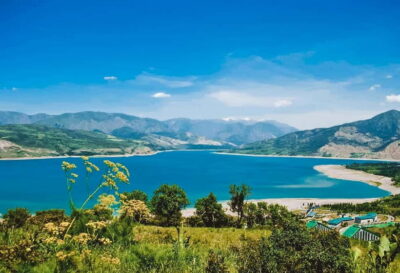
Best of Tashkent Mountains: Amirsoy, Chimgan & Charvak Trip
Read our review →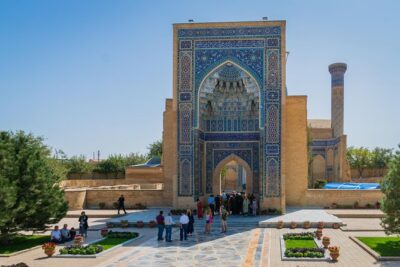
Samarkand One Day Tour – Departure From Tashkent
Read our review →Tashkent: Amirsoy Resort, Chimgan Mountain and Charvak Lake
Read our review →From Tashkent: Sightseeing Day Trip to Khujand, Tajikistan
Read our review →Explore Amirsoy, Chimgan & Charvak – A Full-Day Mountain Tour
Read our review →Tajikistan : Exclusive Seven Lakes Day Tour From Samarkand
Read our review →Explore Amirsoy, Chimgan, Charvak Adventure Tour
Read our review →
Browse the lists this tour appears in