
Reviewed · TASHKENT TOURS
Uzbekistan 3 Day Private Tour Tashkent-Bukhara-Samarkand Bullet Train
The best thing about this three-day private tour is that it turns a tricky Uzbekistan trip into a tidy rail journey. You start at Tashkent’s Northern Railway Station, ride to Bukhara, continue to Samarkand, then return to Tashkent, with drivers and city guides handling the handoffs.
I like the included high-speed trains, which save you from arranging separate tickets, and I like having a different local guide in each city. Guides named Muhlio, Malika, Max, Zinat, Farahat, and Shawkat have all received praise for clear English and strong local knowledge. The catch is simple: this is a fast trip, and Bukhara’s first afternoon can be uncomfortably hot.
Key points to know before booking
- Three Silk Road cities in 72 hours: You see Tashkent only as your rail starting point, then focus your sightseeing on Bukhara and Samarkand.
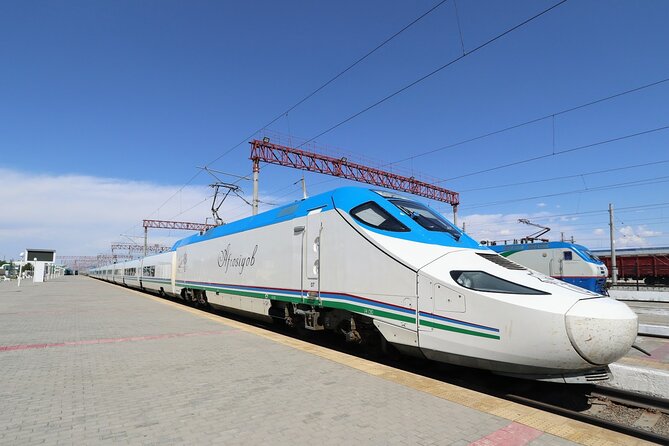
- High-speed rail is built in: Tashkent to Bukhara takes about four hours, Bukhara to Samarkand about two, and Samarkand to Tashkent about two.
- Private touring: Only your own party joins the guided sightseeing, so you can ask questions and request a sensible pace.
- Major monuments are covered: Registan, Shah-i-Zinda, Gur Emir, Poi Kalyan, the Ark, Bibi Khanym, and more are included.
- Hotels and breakfasts are included: You get two nights in central 3 to 4-star or boutique hotels, with two breakfasts.
- Summer heat needs planning: Start walking early when possible, especially in Bukhara, where afternoon temperatures can reach about 100 F.
Why this route works so well by train
Uzbekistan is a large country, and the distance between its famous historic cities can make independent planning tiring. This route uses the country’s high-speed rail system instead of long road transfers. That gives you a more comfortable ride and leaves you free to watch the scenery, rest, or plan your next walk.
The schedule begins at 7:30 a.m. at Tashkent Northern Railway Station. The first train to Bukhara takes roughly four hours, subject to seat availability. A driver meets you at Bukhara Railway Station, takes you to the hotel for check-in, and connects you with your Bukhara guide.
The next rail leg runs from Bukhara’s station in Kagan, about 10 kilometers away, to Samarkand. On the final day, you transfer to Samarkand station and ride back to Tashkent. Train tickets between all three cities are included, which is a major part of the tour’s value.
There is one detail to watch. The first-morning transfer to the railway station and the final transfer from Tashkent station to your hotel or airport are not included. You need to arrange those yourself unless the operator agrees to help. Some arrangements have included extra transfers, but you should not assume that service.
More train legs between the Silk Road cities:
- 2 Days Tour to Bukhara and Samarkand from Tashkent by train
★ 5.0 · 53 reviews - Tashkent Airport & Train Station Pick Up & Drop Off
★ 4.5 · 50 reviews - Day Tour to Samarkand from Tashkent by train.
★ 5.0 · 34 reviews
Day one: Bukhara’s old center after the morning train
Your first Bukhara walk covers a lot. The route begins around Poi Kalyan, then moves to the Ark, Bolo Hauz Mosque, Maghak-i Attari Mosque, the Trading Domes, and Lyab-i-Hauz.
Poi Kalyan is the grand opening act. Its 45.6-meter minaret dates to 1127 and survived the Mongol conquest, making it one of the oldest surviving pieces of Bukhara’s Kara-Khanid period. The mosque and minaret give you an immediate sense of the city’s importance along the Silk Road.
The Ark of Bukhara offers a different kind of history. This was a fortified royal quarter, not just a single building, and rulers of Bukhara lived within its walls for more than a thousand years. You will spend about an hour here, so wear shoes suitable for uneven surfaces and expect a steady stream of historical explanation from your guide.
Across from the Ark is Bolo Hauz Mosque, known for its painted wooden columns and its position beside an old artificial pond. The visit is shorter, around 30 minutes, but it breaks up the larger fortress stop nicely.
Maghak-i Attari is especially interesting for anyone who wants more than grand Islamic architecture. The building is described as the oldest mosque in Central Asia and is associated with earlier Buddhist and Zoroastrian use. Its brickwork is the point here, so listen closely when your guide explains how the site changed over time.
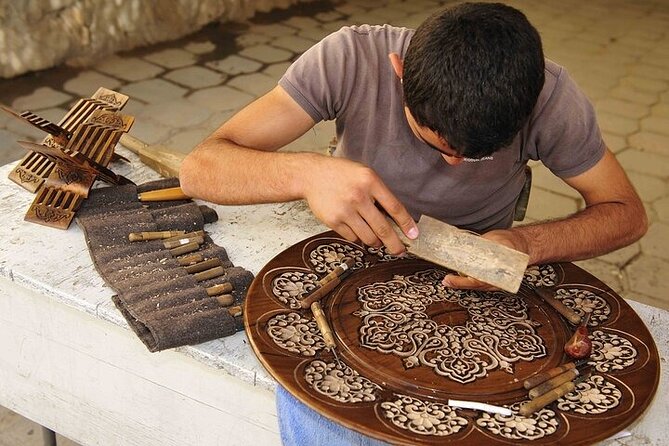
The Trading Domes bring you into Bukhara’s commercial past. This old bazaar area has small workshops and craft sellers, giving you a chance to see the city as a place of work, not only as an outdoor museum. If you want souvenirs, this is one of the natural points in the route to look.
The day ends at Lyab-i-Hauz, a square built in the 16th and 17th centuries around a pool. You have about two hours here, which makes it a useful place to pause after the monuments. The square is often used as a rest stop, and the water and shade can feel welcome after a long walking day.
The main drawback is timing. After a four-hour train ride, hotel check-in, and transfers, you may begin the Bukhara walk during the hottest part of the day. One earlier schedule received criticism for exactly this reason. If you visit in summer, ask if the order can be adjusted so the walking begins earlier or resumes after 4 p.m.
Bukhara hotels and the optional countryside morning
The tour includes two nights in central 3 to 4-star or boutique hotels, with breakfast on both mornings. The accommodation is described as comfortable and decent for the price rather than luxurious. That is a fair expectation.
A central location matters here because Bukhara’s main sights are concentrated around the old center. It reduces the need for extra transport and lets you reach the squares and monuments more easily. Room arrangements should be confirmed carefully. One booking had a double room prepared instead of the requested twin room, creating an avoidable problem at check-in.
Day two morning is free time, or you can arrange an optional four-hour visit to the Bukhara countryside. The optional route includes the Emir’s Summer Palace, the Naqshbandi Mausoleum, and the Samani Mausoleum. Since these places are not part of the standard included sightseeing described for the first day, confirm the extra cost and exact plan before committing.
After lunch, you transfer to Kagan station and board the train to Samarkand. The ride takes about two hours. A driver meets you on arrival and takes you to your Samarkand hotel, so you do not need to navigate the station with luggage.
Day three: Samarkand’s grandest monuments
Samarkand gets the full sightseeing day, and the order is sensible. You begin at Registan, then visit Gur Emir, Shah-i-Zinda, Bibi Khanym Mosque, Siab Bazaar, and Ulugh Beg Observatory.
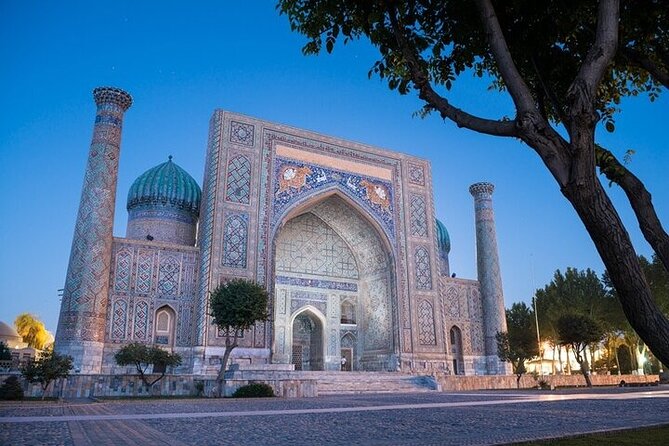
Registan is the centerpiece. The square is framed by three madrasas: Ulugbek, Sherdor, and Tillokori. Your guide can explain how this became Samarkand’s main city square after life shifted away from ancient Afrosiab. Allow two hours here. The tilework, scale, and careful reconstruction deserve more than a quick photograph.
Gur Emir Mausoleum connects the city’s architecture with Timur, also known as Tamerlane. He was a conqueror on a huge scale, and this mausoleum became his tomb. The building dates from 1404 to 1405 and gives you a quieter, more personal counterpoint to the open space of Registan.
Shah-i-Zinda is one of the day’s most memorable walks. The ensemble contains 44 tombs arranged in more than 20 mausoleums on the southeastern mound of Afrosiab. The route is architectural, religious, and visually dense, so take your time. A one-hour visit is enough for the main path, but you may want to linger.
Bibi Khanym Mosque was built on Timur’s order between 1399 and 1404 and named for his wife. Its size makes the stop worthwhile even though the scheduled visit is only about 30 minutes. The structure has undergone reconstruction, so your guide’s explanation helps separate the original story from what you see today.
Next comes Siab Bazaar, Samarkand’s main market. You have about half an hour to see the produce and handicrafts. This is not a long shopping session, but it adds daily life to a day otherwise filled with monuments. If you want to buy something, keep your time short and stay aware of the schedule.
The final stop is Ulugh Beg Observatory. Only the foundations remain, but the site recalls the scientific work of Timur’s grandson, who was an astronomer, scientist, and architect. It is a useful reminder that Samarkand was not only a center of power and religion. It also supported serious study of the stars.
After the observatory, you transfer to the station for the train back to Tashkent. This is a full day, not a relaxed city stroll. You will see the essential Samarkand sights, but anyone wanting time for museums, photography, or unplanned wandering should add another day.
A few more Tashkent days to weigh up
- 3-Day Chimgan Trekking Tour
★ 5.0 · 10 reviews - Tashkent: 3-Day Horseback Riding Tour in Chimgan Mountains
★ 4.4 · 3 reviews - Desert yurt camp and Mountain tour – 3 days
★ 4.5 · 15 reviews - From Bukhara: 3-Day Yurt Stay, Hiking & Lake Aydarkul
★ 5.0 · 5 reviews
Private guides make a real difference
You receive licensed guides in Bukhara and Samarkand, rather than one person trying to cover every city. That arrangement is practical because local guides know the monuments, walking routes, and stories of their own city.
Several guides have been singled out for excellent English and an engaging manner. Muhlio and Malika have guided in Bukhara, while Max has led visits in Samarkand. Zinat, Farahat, and Shawkat have also been praised for making the history easy to follow. Names can change with availability, so treat these as examples, not guarantees.
The private format is valuable if your group has different interests. You can ask for more detail at a mausoleum, move faster through a market, or pause for photographs without waiting for a large coach group. It also gives you a direct person to contact when the day’s transport needs adjusting.
The service team has sometimes helped with unusual problems, including rearranging a trip after a late visa. That kind of support can matter in a tightly timed itinerary. Still, you should keep written confirmation of room type, transfers, optional excursions, and train times.
Is $500 a fair price?
At $500 per person, the tour includes the expensive and time-consuming parts: three intercity high-speed train tickets, two hotel nights, breakfasts, private city guides, entrance fees, air-conditioned vehicles, and driver transfers between stations, hotels, and sights.
That is strong value if you want to see both Bukhara and Samarkand without planning each reservation yourself. The private format would usually cost more than joining a large group, but it also removes much of the coordination work. Group discounts may be available, so ask if you are booking for several people.
The price does not include museum photo and video charges, usually $1 to $2 per site, guide and driver tips, a $40 single-room supplement, or the two Tashkent station transfers. Those are not large costs compared with the tour itself, but they should be part of your budget.
The best value comes when you use the included sightseeing fully. If you prefer slow mornings and long café stops, the schedule may feel rushed. If your priority is seeing the headline monuments in a short visit, the price is easier to justify.
Who should book this three-day tour?
I would choose this for a first visit when you have limited time and want the major sights arranged by someone else. It suits couples, families, and small private groups who value direct guiding and simple rail connections.
It is also a good match for anyone interested in Islamic architecture, medieval trade routes, mausoleums, bazaars, and Central Asian history. The guides provide context that can make the layers of each site much easier to understand.
I would hesitate if you dislike early starts, scheduled transfers, or long sightseeing days. I would also avoid squeezing this into the hottest part of summer without asking for earlier walking times. Three days is enough for an excellent introduction, not enough for a leisurely study of all three cities.
You can cancel for a full refund if you do so at least three full days before the local start time. Cancellations or changes made later are not refunded or accepted under the stated terms. Confirmation arrives within 48 hours, subject to train and tour availability.
Final call: efficient, well supported, and brisk
Book this tour if you want Uzbekistan’s two headline Silk Road cities with the rail tickets, hotels, drivers, guides, and monument admissions handled in one package. The strongest parts are the reliable train plan, private guiding, central accommodation, and broad coverage of Bukhara and Samarkand.
Before paying, confirm the train seats, room setup, Tashkent transfers, and summer sightseeing hours. If the operator can shift Bukhara’s walking tour away from the midday heat, this becomes an even better fit. Add a day if you want time to slow down, but for a focused first look, this route gives you a lot for three days.
FAQ
Where does the tour start?
The tour starts at Toshkent Railway Station, also called Tashkent Northern Railway Station, in Tashkent.
What time does the tour start?
The listed start time is 7:30 a.m.
Where does the tour end?
The activity ends back at the meeting point in Tashkent.
Are the train tickets included?
Yes. Tickets for the high-speed trains from Tashkent to Bukhara, Bukhara to Samarkand, and Samarkand to Tashkent are included, subject to availability.
How long is the train from Tashkent to Bukhara?
The train journey from Tashkent to Bukhara takes about four hours.
How long is the train from Bukhara to Samarkand?
The high-speed train from Bukhara station in Kagan to Samarkand takes about two hours.
Are hotels included?
Yes. The package includes two nights in a centrally located 3 to 4-star or boutique hotel.
Are breakfasts included?
Yes. Two breakfasts are included.
Are entrance fees included?
Entrance tickets to the listed monuments are included. Museum photo and video charges are not included and may cost $1 to $2 per site in cash.
Is this a group tour?
No. It is a private activity, so only your own party participates.
Just added around Tashkent
- Tashkent Mountain Tour Amirsoy with Transport★ 3.5 · 3 reviews
- Tashkent: 3-Day Horseback Riding Tour in Chimgan Mountains★ 4.4 · 3 reviews
- Private Intercity Transfer Tashkent – Samarkand – Tashkent★ 3.5 · 3 reviews
- Samarkand: Uloq-Kopkari (Buzkashi) Game Day Tour★ 5.0 · 3 reviews
- Private Tashkent City Tour★ 5.0 · 3 reviews
- Transfer Tashkent Airport / Railway Station – Hotel★ 3.5 · 3 reviews
- Heliocomplex “Institute of the Sun” – Remnants of USSR★ 5.0 · 3 reviews
- Half-day excursion around Tashkent★ 5.0 · 3 reviews
Tashkent Tours, compared.
Best of Tashkent Mountains: Amirsoy, Chimgan & Charvak Trip
Read our review →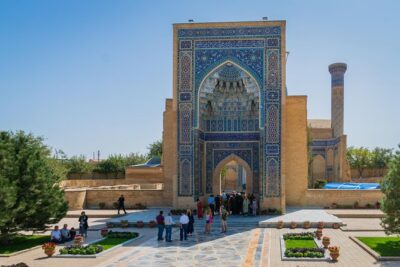
Samarkand One Day Tour – Departure From Tashkent
Read our review →Tashkent: Amirsoy Resort, Chimgan Mountain and Charvak Lake
Read our review →From Tashkent: Sightseeing Day Trip to Khujand, Tajikistan
Read our review →Explore Amirsoy, Chimgan & Charvak – A Full-Day Mountain Tour
Read our review →Tajikistan : Exclusive Seven Lakes Day Tour From Samarkand
Read our review →Explore Amirsoy, Chimgan, Charvak Adventure Tour
Read our review →
Browse the lists this tour appears in