
Reviewed · TASHKENT TOURS
Legends and Crafts: Suzani Masterclass & Cultural Immersion
The most memorable part of this Tashkent experience is that you do not just look at Uzbek craftwork. You make a small Suzani embroidery yourself, then sit down to a traditional meal that connects food, family, and local custom. The mix of stories, handwork, and palov gives you a much better feel for Uzbekistan than a quick shopping stop.
I like two things in particular: the private format, which lets Yusuf or Yulia adjust the pace and answer your questions, and the chance to compare textiles, dolls, jewelry, and metalwork before you try a craft yourself. The main consideration is time. Three to three and a half hours is enough for a strong introduction, but not enough for a long workshop or a detailed tour of every craft tradition.
Key points
- Make your own Suzani: Learn basic embroidery stitches and take home a small piece with traditional protective symbols.
- Start at Navruz Park: Hear Uzbek legends and Silk Road stories while looking at local crafts and customs.
- Meet the culture through objects: See ikat, embroidery, dolls, jewelry, and metalwork, and learn what their patterns are meant to express.
- Eat a full Uzbek meal: The menu includes non bread, salads, palov, green tea, and water in a garden setting.
- Book a private outing: Pickup from your Tashkent hotel is available, with guides speaking English, Polish, Russian, or Uzbek.
- Best timing: I would choose this for your first or second day, when it can help you understand textile quality, craft prices, and local food.
Why a Suzani lesson belongs in your Tashkent plans
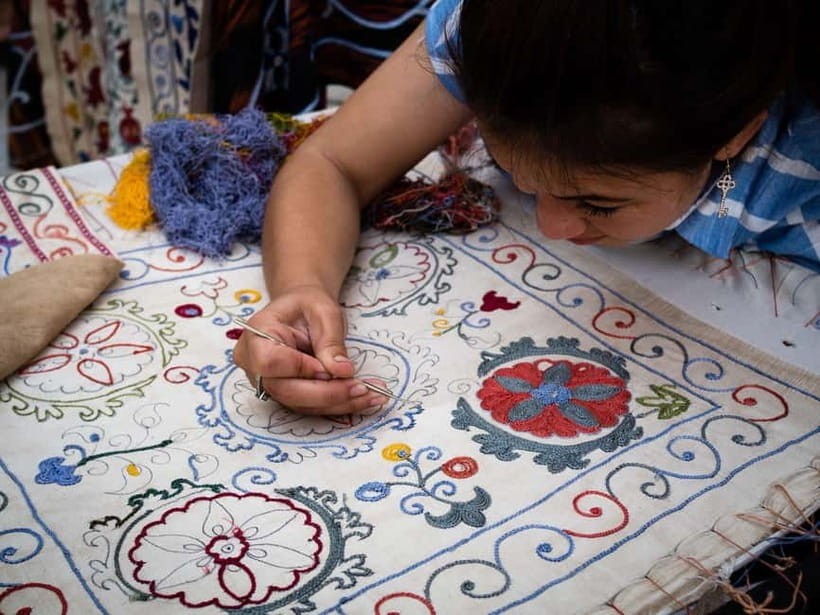
Suzani is not simply decorative cloth. It is embroidery tied to family life, good fortune, protection, and regional tradition. During this experience, you learn basic stitches and work on a small design under an artisan’s guidance. You will not become a master in an hour, but you will understand how much patience goes into the finished textiles sold across Uzbekistan.
That hands-on element matters. It changes the way you look at a finished Suzani later in a shop. A large embroidered panel can appear effortless at first glance. After trying to keep your stitches even and your pattern tidy, you will see the labor more clearly.
The project is also a useful souvenir because it is personal and easy to carry. You take home the piece you create, along with a better sense of the symbols and stories attached to it. If your stitching is not perfect, that is part of the point. One participant jokingly admitted being terrible at the craft, while still finding the lesson worthwhile.
More hands-on masterclasses in Tashkent:
- Tashkent: Uzbek Culture, Food, Crafts & Pottery Masterclass
★ 5.0 · 24 reviews - Tashkent: Cultural Exploration & Pottery Masterclass
★ 5.0 · 24 reviews - Master Class – Uzbek Bread in Khiva
★ 4.4 · 125 reviews
Beginning at Navruz Park with Silk Road stories
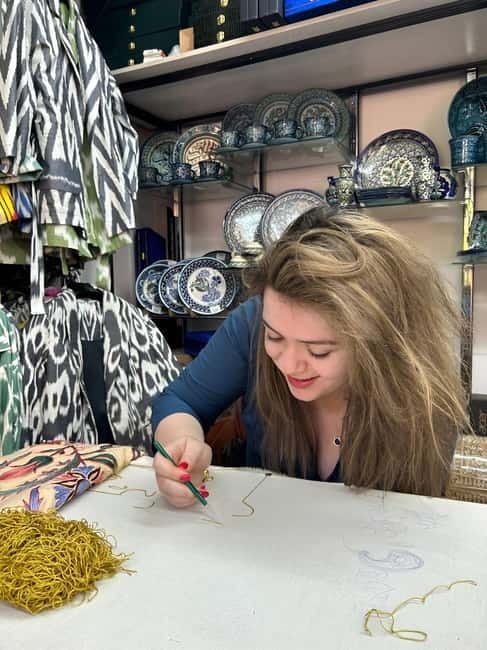
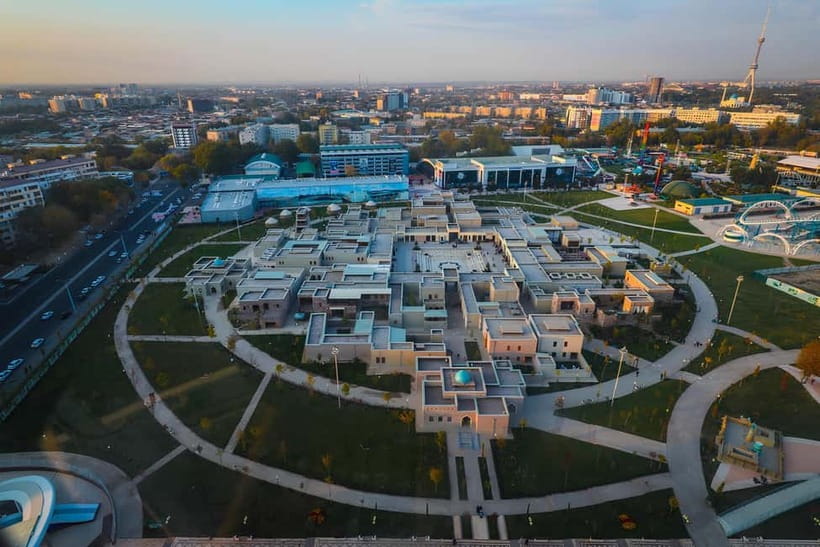
The cultural portion lasts about an hour and takes place at Navruz Park, an ethnographic setting in the Tashkent area. Here, your guide places Uzbek crafts in a wider story about trade, belief, and daily life.
Uzbekistan became an important stop on the Silk Road because it connected routes between Asia and Europe. Textiles, ceramics, metalwork, and jewelry moved through these networks, and their value was not only practical. Many objects were thought to carry blessings, good luck, or protection.
I find this context useful because it keeps the craft discussion from becoming a simple catalog of pretty objects. You learn why patterns mattered, why certain goods were prized, and how old customs still influence modern artisans.
The guide may also explain how globalization has changed Uzbek craftwork. Artisans now balance old designs and legends with new tastes and markets. That tension is worth noticing. A modern textile can still refer to traditional symbols while being made for a contemporary home or an international buyer.
Because the tour is private, you can ask direct questions about materials, design, or the difference between handmade and more modern work. Yusuf is especially good at keeping the conversation lively, and his humor helps when the subject becomes detailed. Yulia has also been praised for her strong English and her enthusiasm for Uzbekistan.
Ikat, embroidery, dolls, and metalwork
The visit gives you a broad look at several craft forms rather than focusing only on Suzani. That makes the experience useful at the start of a longer Uzbekistan trip, especially if you expect to shop for textiles, ceramics, or jewelry later.
You will see examples of Uzbek textiles, including ikat and embroidery. Ikat is recognized for its blurred, flowing color patterns, while embroidered pieces rely on stitched motifs and careful surface work. The guide can help you think about quality and design before you spend money elsewhere.
The Uzbek doll collection adds a different kind of cultural detail. Dolls represent different regions, and each one reflects local legends, customs, or superstitions. This is a simple way to see that Uzbekistan is not culturally identical from one area to another.
Jewelry and metalwork bring belief into everyday objects. Designs may be linked with protection and luck, so they are not merely accessories or household items. You may find that the stories behind the pieces are as interesting as the workmanship.
The pace is fairly full. You see many types of craft in roughly an hour, then move into the workshop. If you want a long shopping session or a museum-style examination of every object, this experience may feel brief. Its strength is range and explanation, not exhaustive study.
The Suzani workshop: one small piece, plenty of patience
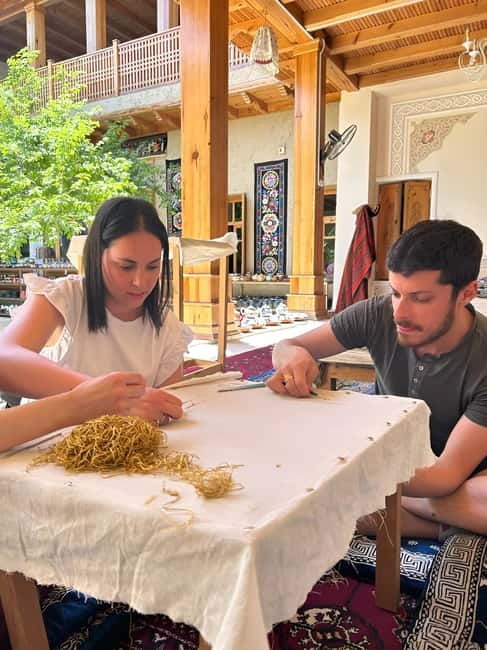
The workshop lasts about one to one and a half hours. An artisan shows you basic stitches and helps you work on a small embroidered design. Materials and guidance are included, so you do not need prior experience or special equipment.
Expect a hands-on lesson rather than a demonstration where you sit quietly and watch. You will handle the fabric, follow the design, and learn how small decisions affect the final look. Your guide can also explain the meaning attached to the motifs, including beliefs that embroidery could help guard against evil spirits.
The private setting is a real advantage here. If you have never embroidered before, you can ask for help without worrying about holding up a large group. The guides have been described as patient, and that matters when your first stitches are uneven or you lose track of the pattern.
This is a good activity for couples, families, and friends who want a shared souvenir. It also suits solo visitors because the guide can keep the conversation moving while you work. You should not book it expecting to produce a large finished textile. The included project is a small keepsake, designed to be completed during the visit.
I would also avoid treating the craft as a race. The pleasure comes from slowing down and noticing the work. You may leave with a slightly crooked line, but you will have a more honest understanding of the skill behind Uzbek embroidery.
A few more Tashkent days to weigh up
- Best of Tashkent Mountains: Amirsoy, Chimgan & Charvak Trip
★ 4.8 · 567 reviews - Samarkand One Day Tour – Departure From Tashkent
★ 5.0 · 313 reviews - Samarkand One-Day Tour Departure from Tashkent
★ 4.7 · 171 reviews - Tashkent: Amirsoy Resort, Chimgan Mountain and Charvak Lake
★ 4.8 · 170 reviews
A garden meal with non, salad, and palov
Food is not an afterthought here. The traditional meal takes about 45 minutes and is presented as part of the cultural experience, with each dish connected to Uzbek stories and customs.
The meal includes freshly baked non, the round Uzbek bread found at tables across the country. You also receive shakarob, a tomato and herb salad, and Kuzchi Kayfiyat Salad. The main course is a choice or variety of traditional Uzbek palov, made with rice, lamb, carrots, and raisins. Green tea and water are included without limit.
Palov is one of the dishes you should make time for in Uzbekistan. It is filling and central to local food culture, and tasting it in the middle of a craft-focused outing gives the day a pleasant change of pace. You eat in a peaceful garden setting rather than rushing through a quick snack.
Additional side dishes can be ordered for an extra cost. If you have already eaten palov several times, tell your guide. One visitor had reached their limit with the dish, and Yusuf adjusted the restaurant plan so they could try something different. That is a useful sign of the private format, though you should confirm any requested menu change before the meal.
The menu is substantial enough to count as lunch or dinner, not just a tasting. Plan accordingly, particularly if you have a full evening meal booked elsewhere.
The guides make the difference
The guides named for this experience include Yusuf and Yulia, also referred to as Julia in some arrangements. English, Polish, Russian, and Uzbek are available. Yusuf has been singled out for clear English, humor, patience, and his ability to answer a long list of questions about old and modern life in Tashkent.
Yulia brings strong English and a clear interest in sharing her country. She has also added practical suggestions for continuing a trip around Uzbekistan. That sort of conversation can be valuable because you can ask about textiles, food, museums, or customs while the subject is already in front of you.
You receive a private group rather than joining a large scheduled crowd. That means more room to set the rhythm. You can spend longer on the doll collection, ask about a jewelry design, or request extra help with the embroidery.
Pickup from your Tashkent hotel is available. After booking, you should contact the local guide by WhatsApp and wait in the lobby five minutes before the scheduled time. The driver will hold a sign with your last name. These details are simple, but following them avoids a needless delay at the start.
Is $90 a fair price?
At $90 per person, this is not the cheapest way to spend a few hours in Tashkent. It is also more than a basic craft demonstration or a standalone restaurant meal. The value comes from combining several paid elements: hotel pickup, a private guide, the park visit, artisan instruction, materials, a take-home item, and a full traditional meal.
I think the price makes the most sense if you want a personal introduction to Uzbek culture rather than a sightseeing checklist. You are paying for interpretation and participation, not just transport. The embroidery project gives you something tangible, while the meal and cultural walk provide the setting around it.
The calculation changes if your main goal is shopping. You might prefer to spend the same time at markets or specialist textile stores, where you can compare more products. This activity is better for learning how to look at Uzbek crafts than for buying a large quantity of them.
The private format also improves the value for couples or small groups. You can ask questions freely, and the guide can respond to your interests. For a solo visitor, the cost is harder to compare with a group tour, but the included meal and materials help balance it.
The best place in your Uzbekistan itinerary
I would schedule this on your first or second day in Tashkent. Several people have found it helpful at the beginning because it introduces local customs, food, textiles, and craft quality before the rest of the trip unfolds.
The timing is also practical. You get a broad cultural orientation without spending an entire day away from the city. Afterward, you will have a better vocabulary for looking at ikat, embroidery, dolls, jewelry, and ceramics in other parts of Uzbekistan.
It also works well near the end of a trip. One visitor used it as a pleasant closing experience, combining a final cultural lesson with a handmade souvenir and a memorable dinner. If you are already tired of formal monuments, the workshop offers a slower and more personal change of pace.
This is not a tour built around major architectural sights. You will not spend hours moving between famous monuments. Instead, you spend time with objects, stories, food, and a small act of making. That difference is important when deciding how to use a short stay in Tashkent.
Who should book this experience?
I recommend it to you if you want to understand the meaning behind Uzbek crafts, not just photograph them. It is especially useful if you plan to shop for textiles or jewelry and want some guidance on design, quality, and cultural context.
Families and couples should find the workshop easy to share, provided everyone is comfortable with a quiet, detail-focused activity. Solo visitors can also benefit from the private guide and relaxed conversation.
You may want to skip it if you dislike handwork, already have a full craft itinerary, or want a long museum visit with plenty of independent time. The workshop is introductory, and the cultural stop covers many subjects in a limited period.
The food component is another reason to choose carefully. If you have strict dietary needs or are not interested in palov, confirm what can be adjusted before booking. The stated meal centers on bread, salads, palov, green tea, and water, with extra sides available for an added charge.
Booking details worth knowing
The experience lasts three to three and a half hours, but starting times depend on availability. Hotel pickup from Tashkent is optional, and the activity operates as a private group.
You can cancel up to 24 hours in advance for a full refund. A reserve-now, pay-later option is also available, which helps if your Tashkent schedule is still changing.
The overall rating is five out of five from 11 ratings, with particular praise directed toward Yusuf and Yulia, the cultural explanations, the patience during the embroidery lesson, the food, and the personal attention. Those strengths match what this experience is designed to do: give you a compact, human introduction to Uzbekistan rather than a rapid list of sights.
Should you book Legends and Crafts?
Book it if you want a personal first look at Uzbekistan through craft, food, and local stories. The Suzani lesson is the heart of the experience, but the wider value comes from understanding how embroidery, dolls, metalwork, jewelry, and palov fit into Uzbek life.
I would place it early in a Tashkent visit, especially if you want help judging textiles and ceramics later. At $90, it asks more than a simple tour, but the private guide, included materials, take-home embroidery, hotel pickup option, and full meal make it a solid choice for the right kind of visitor.
If your priority is major monuments or bargain shopping, choose another outing. If you want to slow down, ask questions, and leave with something you made yourself, this is one of the more distinctive short experiences available near Tashkent.
FAQ
Where does the experience take place?
The activity is based in Tashkent Province, with pickup available from Tashkent. The itinerary includes Navruz Park, a workshop location, and a local restaurant.
How long does the activity last?
It lasts approximately three to three and a half hours. The cultural exploration takes about one hour, the Suzani workshop takes one to one and a half hours, and the meal takes about 45 minutes.
Is hotel pickup included?
Pickup from your Tashkent hotel is available. After booking, contact the local guide through WhatsApp and wait in the hotel lobby five minutes before the scheduled pickup time.
Is this a private tour?
Yes. The experience is offered for a private group.
Which languages are available?
Guides are available in English, Polish, Russian, and Uzbek.
Who are the guides?
The guides named for the experience include Yusuf and Yulia, also referred to as Julia in some arrangements. Yusuf guides in English, and Yulia is also described as having strong English.
What will I make during the Suzani workshop?
You will create a small embroidered piece while learning basic stitches and designs from artisans. Materials and guidance are included, and you can take the finished piece home.
What food is included?
The meal includes non bread, shakarob, Kuzchi Kayfiyat Salad, traditional Uzbek palov with rice, lamb, carrots, and raisins, plus unlimited green tea and water.
Can I order extra food?
Additional side dishes can be ordered for an extra cost. If you have already eaten palov or want a different dish, discuss that with your guide.
What is the cancellation policy?
You can cancel up to 24 hours in advance for a full refund. A reserve-now, pay-later option is also available.
Just added around Tashkent
- Tashkent Mountain Tour Amirsoy with Transport★ 3.5 · 3 reviews
- Tashkent: 3-Day Horseback Riding Tour in Chimgan Mountains★ 4.4 · 3 reviews
- Samarkand: Uloq-Kopkari (Buzkashi) Game Day Tour★ 5.0 · 3 reviews
- Private Intercity Transfer Tashkent – Samarkand – Tashkent★ 3.5 · 3 reviews
- Private Tashkent City Tour★ 5.0 · 3 reviews
- Transfer Tashkent Airport / Railway Station – Hotel★ 3.5 · 3 reviews
- Heliocomplex “Institute of the Sun” – Remnants of USSR★ 5.0 · 3 reviews
- Half-day excursion around Tashkent★ 5.0 · 3 reviews
Tashkent Tours, compared.

Best of Tashkent Mountains: Amirsoy, Chimgan & Charvak Trip
Read our review →
Samarkand One Day Tour – Departure From Tashkent
Read our review →Tashkent: Amirsoy Resort, Chimgan Mountain and Charvak Lake
Read our review →From Tashkent: Sightseeing Day Trip to Khujand, Tajikistan
Read our review →Explore Amirsoy, Chimgan & Charvak – A Full-Day Mountain Tour
Read our review →Tajikistan : Exclusive Seven Lakes Day Tour From Samarkand
Read our review →Explore Amirsoy, Chimgan, Charvak Adventure Tour
Read our review →
Browse the lists this tour appears in