
Reviewed · KHIVA TOURS
Khiva Guaranteed Tour
Khiva’s great appeal is that its old city still occupies the place where it was founded. Inside the western gate, you move from a giant unfinished minaret to khan’s palaces, a forest of carved wooden columns, quiet courtyards, and a mausoleum wrapped in local legend. This is a city tour with a strong sense of place, not just a checklist of monuments.
I like the wide sweep of the route, which covers both major sights and less familiar corners, including the East Gates, Said Niyaz Mosque, and the old secular school. I also like the chance to see local bread baked in a clay oven, though that depends on luck. The main drawback is cost control: the $45 tour fee covers the English-speaking guide, but entrance tickets to the sites are extra, and there are several of them.
Key points at a glance
- A full walk through Ichan Kala: The route connects Khiva’s main monuments within the old walled city.
- Kunya Ark gives you the big picture: Its panoramic tower helps you understand how the city fits together.
- Palaces show two sides of royal life: Tosh Hovli includes reception rooms, a harem, and a secret corridor.
- Juma Mosque is wonderfully unusual: More than 120 carved columns support its roof.
- Islamkhudja Minaret is Khiva’s visual marker: The complex includes a museum, a school, and the region’s tallest minaret.
- Pahlavan Makhmud provides a fitting finale: The mausoleum is treated as the emotional high point of the walk.
Starting at Ata Darvaza, Khiva’s western gate
You meet at the ticket office by Ata Darvaza, the main western gate. Tours begin at 9:00 or 15:00 and last about four and a half hours, sometimes described as four to five hours depending on the pace and schedule.
That timing matters. A morning departure gives you the cooler part of the day and leaves your evening free. The afternoon option works well if you arrive later or want to see Khiva at a slower pace as the light changes. You should wear comfortable shoes and light, comfortable clothing, since this is a walking tour through a historic city rather than a coach excursion.
Khiva is often called an open-air museum, and the phrase makes sense once you enter. The old city is compact enough to cover on foot, but the sights are packed closely together. A guide helps you make sense of what you are seeing, especially when a palace courtyard looks quiet and simple from outside but contains a maze of rooms, corridors, and functions within.
The tour is wheelchair accessible, according to the activity information. Still, you should confirm the practical route when booking, since old historic buildings can have uneven surfaces and access restrictions. The tour skips the ticket line, but entrance fees for the listed monuments are not included.
A few more Khiva days to weigh up
- Khiva: Historical City Highlights Guided Walking Tour
★ 4.8 · 156 reviews - Transfer: Bukhara – Khiva via Ancient Fortresses
★ 4.5 · 101 reviews - Daytrip From Khiva To Ancient Fortresses
★ 4.6 · 60 reviews
Muhammad Amin Khan Madrasa and the unfinished Kalta Minor
The first major stop is Muhammad Amin Khan Madrasa, described as the largest madrasa in the area. Its scale gives you an early lesson in Khiva’s past: religious schools were also major architectural statements, with broad facades and repeated decorative patterns facing the main street.
Beside it rises Kalta Minor, the short, wide minaret that has become one of Khiva’s most recognizable sights. Its unusual proportions are part of its story. It was intended to be much taller, but construction stopped, leaving a broad turquoise tower rather than the soaring minaret its builder planned.
This is one of the places where a guide adds real value. You can admire the tilework on your own, but a clear explanation helps you understand why an unfinished building can become such an important symbol. Farhod is one guide associated with the tour, and specific praise for his clear explanations appears in the available feedback. Other departures may use a different English-speaking guide.
Kunya Ark and the khan’s working citadel
Kunya Ark was the ancient citadel and one of the most useful stops for understanding Khiva as a seat of power. The complex includes a panoramic view tower, a coinage yard, and both summer and winter reception areas.
The panoramic tower is especially useful because Khiva’s monuments can otherwise blur together at street level. From above, you can see the dense pattern of domes, minarets, courtyards, and flat-roofed buildings inside the old city walls. The view also helps you understand why Khiva feels so contained and coherent.
The tower is not necessarily a simple climb for everyone. The tour specifically does not include going upstairs into minarets, and access to elevated parts of historic buildings can be limited. Ask your guide what is open on the day and what requires a separate ticket.
Kunya Ark also shows that royal architecture was practical as well as grand. The coinage yard points to the administration of the khanate, while the summer and winter reception rooms reflect the need to adapt court life to the severe climate. These details turn a palace visit into a lesson in how the city actually worked.
Muhammad Rahimkhan II Madrasa and Juma Mosque
The route continues to Muhammad Rahimkhan II Madrasa, another large religious school tied to Khiva’s ruling period. The value here is not only the facade. A guide can place the building within the sequence of khans, religious education, and urban life that shaped the old city.
Then comes Juma Mosque, one of Khiva’s most distinctive interiors. More than 120 carved wooden columns support the roof, creating a calm, shadowed hall that feels very different from the open courtyards outside.
Take your time here. The columns are not simply decoration repeated without thought. Each one has its own shape and carving, and the overall effect is a forest of timber supporting a low, peaceful interior. This is the kind of place where a guide can point out details your eye might skip while you are busy trying to photograph the whole room.
Juma Mosque also gives the tour a welcome change of scale. Khiva’s monumental facades can feel theatrical, but the mosque draws you inward. It is one of the strongest examples on the route of how atmosphere can matter as much as size.
Same city, a completely different day out:
- Ayazkala, Toprakkala & Kizilkala Fortress Tour From Khiva
★ 4.3 · 33 reviews - Aral Sea Adventures (2 day)
★ 5.0 · 30 reviews - Khiva Historical City Highlights Guided Walking Tour
★ 5.0 · 30 reviews - Master Class – Shivit Osh Traditional Food Of Khiva
★ 4.2 · 27 reviews
Tosh Hovli Palace and the complicated life of the court
Tosh Hovli, the second khan’s palace, is one of the tour’s most substantial stops. The palace includes a harem, summer and winter reception rooms, a secret corridor, and a special reception area.
The range of spaces matters. Instead of seeing only a formal throne room, you get a sense of how royal life was divided between public ceremony, private households, seasonal comfort, and controlled movement. The secret corridor is the sort of detail that makes palace architecture easier to picture as a functioning place rather than a collection of decorated rooms.
The palace also includes a gift carriage associated with Tsar Alexander III. That object adds an international thread to the story of Khiva, showing that the khanate was connected to wider imperial politics and diplomatic relationships.
Allow time for the decorative work here, but keep your expectations practical. This is a historic palace complex, not a restored European royal residence with every room arranged like a furnished period set. The guide’s explanation is important because much of the meaning comes from how the rooms were used.
Madrasa courtyards, art, and the East Gates
After Tosh Hovli, the tour moves through Kutlug Murad Madrasa, which houses a museum of surrealist paintings. That is an unexpected turn. You may come to Khiva expecting tilework, Islamic architecture, and royal history, then find a collection that speaks to a much later artistic world.
Allakulikhan Madrasa adds another layer of traditional architecture. At this point, repeated courtyards and facades can begin to blend together, especially on a long walking route. This is where you should ask questions and let the guide focus your attention on differences in design, use, and decoration.
The East Gates area brings in Said Niyaz Mosque and Madrasa. These stops are useful because they move you beyond the most photographed central monuments. The route still stays within the historic core, but it gives you a broader sense of Khiva’s religious and educational quarter.
There may also be a small local food moment along the way. You might see bread being prepared in a clay oven, but it is not guaranteed. The opportunity depends on what is happening that day, so treat it as a pleasant extra rather than a promised cooking demonstration.
Islamkhudja Complex and the tallest minaret in the region
The Islamkhudja Complex is described as a symbol of Khiva. It includes a madrasa with a museum of applied art, Islamkhudja Minaret, and Islamkhudja School.
The minaret is the tallest in the region, making it an important visual reference point as you walk. Its height changes the rhythm of the city. Much of Khiva feels horizontal, with courtyards and low buildings packed behind walls, so the minaret gives the eye a strong vertical marker.
The applied art museum offers a different experience from the major architectural sites. Rather than looking only at buildings, you can consider the objects and decorative traditions connected with local craft. The exact displays may vary, but the stop adds useful context to the tile, wood, and textile details you have already been seeing.
The Islamkhudja School is particularly interesting because it was the first modern and secular school in Khiva. That fact gives the tour a bridge from the khanate’s religious institutions toward a more modern educational system. It also keeps the day from becoming a simple parade of ancient monuments.
You should not assume that every minaret can be climbed. Going upstairs into minarets is specifically excluded, and entrance fees are separate. If a high viewpoint is important to you, ask before paying for additional tickets.
Pahlavan Makhmud Complex, the final stop
The Pahlavan Makhmud Complex is presented as the cherry on the cake of the visit, and it makes sense as a final stop. Mausoleums can feel quieter and more personal than palaces or city gates, and this complex brings the route toward devotion, memory, and local identity.
Pahlavan Makhmud is treated as one of Khiva’s important saints. The complex gives you a chance to slow down after the larger architectural sites. Pay attention to the tilework, the way visitors move through the space, and the shift in mood from royal display to reverence.
This is also a good place to ask your guide about the stories connected with the complex. The tour’s strongest purpose is not simply showing you doors and domes. It is helping you connect buildings with the people and beliefs that gave them meaning.
What the $45 price really covers
At $45 per person, the tour is not an all-inclusive pass to Khiva’s monuments. It covers a professional English-speaking guide, while entrance tickets to all the specified sites are extra. Since the route includes multiple madrasas, palaces, mosques, museums, and other historic buildings, you should set aside additional money for admission.
That extra cost is the main point to calculate before booking. If you want to enter nearly every listed site, the final price will be higher than $45. If you prefer a guided orientation and plan to choose only some interiors, the base fee may feel more manageable.
I see the value in paying for the guide because Khiva’s monuments are close together and easy to visit independently, but their stories are not always easy to read from the architecture alone. The guide can explain the khans, schools, court rooms, religious sites, and local customs in one connected walk.
The rating is 4.8 from 17 reviews, and the strongest praise focuses on friendly service, clear explanations, cultural detail, and stories that are not found in ordinary guidebooks. One evening tour was especially valued for the guide’s kindness and photography skills. That does not guarantee the same person or style on every departure, but it tells you what kind of service the company aims to provide.
Timing, comfort, and the right kind of visitor
This is a good first introduction to Khiva if you want the main story in one half-day. You will see the city’s major architectural symbols, royal residences, religious buildings, museums, and mausoleum without needing to plan each ticket and turn yourself.
It suits you best if you enjoy walking, asking questions, and moving between many historic sites. It also works well for a first afternoon in town, since the route helps you decide which places deserve a slower return visit.
You may prefer a shorter or more flexible visit if you dislike structured sightseeing or want long periods for photography. Four and a half hours is enough time for a solid overview, but not enough for a leisurely study of every courtyard and museum display.
The tour is offered in English with a live guide. Smoking indoors is not allowed. You can cancel up to 24 hours before the start for a full refund, and the reserve-now, pay-later option lets you keep your plans flexible.
Should you book the Khiva Guaranteed Tour?
Book it if you want a well-organized introduction to Khiva’s old city and you are comfortable paying entrance fees separately. The route is unusually broad for a half-day walk, and it includes memorable stops such as Juma Mosque’s 120-plus columns, Tosh Hovli’s secret corridor, and the Islamkhudja Complex.
I would especially recommend it for a first visit, for anyone who wants cultural context rather than silent monument-hopping, and for visitors who value a friendly English-speaking guide. If your budget is tight, count the extra tickets before booking. If you want to climb minarets, confirm your options in advance, since that is not included.
For most visitors, the tour offers a useful balance: enough structure to make Khiva understandable, with enough variety to keep the walk from feeling repetitive. Just wear good shoes, start with realistic ticket expectations, and leave room for the possible clay-oven bread stop.
FAQ
Where does the Khiva Guaranteed Tour start?
The meeting point is at the ticket office by Ata Darvaza, the western main gate of the city.
What time does the tour begin?
The tour starts at either 9:00 or 15:00. Availability should be checked when selecting a date.
How long does the tour last?
The stated duration is about 4.5 hours, with the route described as lasting four to five hours.
What language is the tour conducted in?
The tour is conducted in English by a live English-speaking guide.
Are entrance tickets included in the $45 price?
No. Entrance tickets to the specified attractions are not included, and there may be multiple separate admissions.
Is climbing the minarets included?
No. Going upstairs into the minarets is not included in the tour.
Is the tour wheelchair accessible?
Yes, the activity is listed as wheelchair accessible. You should still confirm access details for individual historic buildings before booking.
Can I cancel the tour for a full refund?
Yes. You can cancel up to 24 hours in advance for a full refund. A reserve-now, pay-later option is also available.
Just added around Khiva
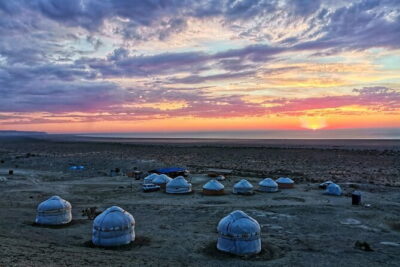
- A Night In The Kyzylkum Desert [2] From Khiva★ 4.5 · 3 reviews
- Khorezm Fortress and KyzylKum Desert Private Tour★ 5.0 · 3 reviews
- Khiva: City Highlights Guided Walking Tour★ 4.6 · 3 reviews
- Best of Khiva: Exclusive Private Tour!★ 5.0 · 3 reviews
- Khiva: classic Half-Day Tour★ 3.7 · 3 reviews
- Traditional Khiva Cooking Class with Market Visit & Lunch★ 5.0 · 4 reviews
- Master Class – Uzbek Bread (Khiva)★ 3.5 · 4 reviews
- Uzbekistan 6 Days Private Tour Khiva-Bukhara-Samarkand by Train★ 5.0 · 4 reviews
Khiva Tours, compared.
Khiva: Historical City Highlights Guided Walking Tour
Read our review →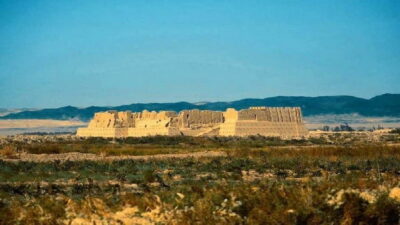
Master Class – Shivit Osh Traditional Food Of Khiva
Read our review →
Browse the lists this tour appears in