
Reviewed · TASHKENT TOURS
Tashkent Modern Tour
Tashkent’s modern story is best read in layers: tsarist Russia, Soviet rebuilding, religious revival, and independent Uzbekistan all sit within one six-hour drive. The 375-meter TV Tower gives you the broad view, while the metro and museums fill in the details below street level.
I like the mix of grand sights and human history, especially the Railway Museum and the earthquake memorial. I also like the private format, since guides such as Din, Ali, Shokat, and a fluent German-speaking guide have adjusted the day around visitors’ interests and changing conditions.
The main catch is that the schedule includes several museums and religious buildings, but entrance fees are extra and access is not guaranteed at every stop. One museum and a church were closed during a recent visit, so keep your expectations flexible.
Key points to know before booking
- The TV Tower gives Tashkent its widest view, from one of Central Asia’s tallest towers.
- The Railway Museum is the tour’s most unusual stop, with older locomotives and railway equipment from the region.
- The Tashkent Metro is an attraction in its own right, often called an underground museum because of its decorated stations.
- The route explains the 1966 earthquake, which led to the rebuilding of much of the city you see today.
- A private car and flexible guide make the tour easy to adjust, especially if you have already visited central Tashkent.
- The $180 price covers a private group of up to two, but museum and other entrance tickets are not included.
Why this six-hour tour helps you understand Tashkent
Tashkent can feel unlike the famous blue-tiled cities of Uzbekistan. Samarkand, Bukhara, and Khiva focus heavily on medieval Islamic architecture. Tashkent has that older Central Asian character too, but it is mixed with broad Soviet avenues, Russian Orthodox churches, modern government buildings, and newer mosques.
This tour concentrates on that modern side. You see how the city changed under the Russian Empire and Soviet rule, how it was rebuilt after the 1966 earthquake, and how independent Uzbekistan has shaped its public spaces. The result is less a parade of ancient monuments and more a lesson in how a capital city keeps remaking itself.
You get a private, air-conditioned vehicle with hotel, airport, or railway station pickup and drop-off. That matters in Tashkent, where the stops are spread across the city. You are not left trying to connect every sight by taxi or metro, though the tour also includes a ride through the metro so you can experience one of the city’s signature public spaces.
The listed price is $180 per group of up to two people. For two, that works out to $90 each before admission fees. For a couple or two friends, the cost can be fair given the private transport, guide, and pickup service. A solo visitor pays the full group rate, so the value is less attractive unless convenience and a custom route matter most.
A few more Tashkent days to weigh up
- Best of Tashkent Mountains: Amirsoy, Chimgan & Charvak Trip
★ 4.8 · 567 reviews - Samarkand One Day Tour – Departure From Tashkent
★ 5.0 · 313 reviews - Samarkand One-Day Tour Departure from Tashkent
★ 4.7 · 171 reviews
The TV Tower and Tashkent from above
The Tashkent TV Tower is the most obvious way to begin. At 375 meters, it is described as the first and tallest tower in Central Asia, built on the city’s highest point at 453 meters. The exact figures are part of the tower’s appeal, but the useful reason to visit is simpler: you get a sense of Tashkent’s scale.
From above, the city’s broad avenues and spread-out districts make more sense. You can look across a capital shaped by Soviet planning and later development, rather than a compact old town built around a single historic center. Bring sunglasses and a camera for the bright days, particularly around the white stone and open spaces of nearby sights.
The tower is also a good orientation stop early in the day. After seeing Tashkent from above, you can better place the mosque, squares, railway area, and central neighborhoods as you move around by car.
The entrance ticket is not included, so confirm the current fee and viewing access before you go. The tour promises a panoramic visit, but opening conditions can affect what you actually see.
The Victims Museum and the cost of political memory
The Museum of Victims of Repressions is dedicated to people who suffered under Stalin’s political repression. It gives the tour a serious turn, moving beyond buildings and viewpoints into the painful parts of Uzbekistan’s twentieth-century story.
This stop is particularly useful if your knowledge of Uzbekistan begins with the Silk Road. Tashkent’s modern identity was also shaped by Soviet control, fear, displacement, and the efforts to remember those who were punished. The museum provides a place to connect national history with the people affected by it.
The museum grounds are also known as a good place to photograph the TV Tower. That gives you a striking contrast: a memorial to repression in the foreground and a major symbol of modern Tashkent behind it.
Allow some quiet time here. This is not simply a quick photo stop, and the subject matter may feel heavy after the more upbeat tower visit. Also note the practical warning: a recent visit found the museum closed. Your guide may need to adjust the route, so do not make this the only reason you book the tour.
Minor Mosque and the city’s newer religious image
Minor Mosque is a newer building, but it has already become one of Tashkent’s recognizable landmarks. Its pale surfaces and open setting make it especially photogenic, though the glare can be strong. Sunglasses are genuinely useful here, not just a packing-list suggestion.
The mosque shows how religious buildings have returned to a prominent place in the capital’s public image. Its recent construction also sets it apart from the older Orthodox and Catholic churches later in the route. You see a city presenting several religious traditions side by side, each tied to a different period of Tashkent’s past.
Your guide can explain the site and local customs. Since this is an active religious building, dress and behavior should be respectful. The supplied information does not specify a dress code or opening schedule, so ask your guide about access on the day.
Same city, a completely different day out:
- Tashkent: Amirsoy Resort, Chimgan Mountain and Charvak Lake
★ 4.8 · 170 reviews - From Tashkent: Sightseeing Day Trip to Khujand, Tajikistan
★ 4.7 · 169 reviews - Explore Amirsoy, Chimgan & Charvak – A Full-Day Mountain Tour
★ 5.0 · 158 reviews - Tashkent City Tour
★ 5.0 · 121 reviews
The 1966 earthquake at the Monument of Courage
The Monument of Courage Earthquake Memorial explains why so much of Tashkent feels rebuilt rather than preserved. A major earthquake struck in 1966, and large parts of the city were reconstructed afterward. The monument marks the end of that recovery from the ruins.
Its style is classic Soviet public art: solid, symbolic, and designed to turn a disaster into a story of collective strength. You may find the monument less ornate than the city’s mosques and churches, but its importance is greater than its decorative detail.
I would pay close attention to the guide’s explanation here. Without context, it can look like another Soviet-era monument. With context, it becomes a key to the whole city. The wide streets, rebuilt districts, and modern scale around you are easier to understand once you know how much of Tashkent was remade after the earthquake.
Orthodox and Catholic Tashkent
The Cathedral of the Assumption of the Virgin is described as the largest and one of the oldest Orthodox church buildings in Central Asia. It remains the center of the diocese of the Moscow Patriarchate and is still known locally as the military hospital church because of its original connection with Russian Empire soldiers.
This is a valuable counterpoint to the newer Minor Mosque. The cathedral reflects the Russian imperial and Orthodox presence in Central Asia, while its continuing religious role shows that Tashkent’s religious history did not end with the Soviet period.
The Sacred Heart of Jesus Cathedral adds another strand. It is described as the largest and one of the oldest Catholic cathedral buildings in Central Asia, with links to the Polish community in Tashkent. The stop gives you a chance to learn about the Polish diaspora and the Catholic population of Uzbekistan, which is a detail many standard city tours skip.
Do not assume every church will be open for entry. One recent visit could not get into a church, and that is an important limitation when the route includes interiors. Even if access is restricted, the buildings still help explain the city’s imperial, migrant, and religious layers.
The Railway Museum, the tour’s most distinctive stop
The Railway Museum is likely to be the surprise of the day. It is described as the first and unique museum devoted to Central Asian railway transport, with locomotives and trains connected to the nineteenth and twentieth centuries.
You get a glimpse of the technology that tied Central Asia to the Russian Empire and later the Soviet Union. The old trains help make that political and economic shift concrete. Instead of hearing only about expanding rail networks, you can look at the machinery that carried people, goods, soldiers, and ideas across the region.
This is not a generic transport museum added to fill time. It fits the tour’s theme because railways helped shape modern Tashkent. The exhibits also offer a change of pace from squares, churches, and government buildings.
If you like trains, industrial history, or unusual museums, give this stop room in your schedule. If you prefer only grand architecture, it may seem less immediately impressive. The appeal is in the objects and the story they tell, not in polished interiors.
A short ride through the Tashkent Metro
Tashkent’s metro was the first in Central Asia and is one of the city’s best-known attractions. It is often called an underground museum because of the decorated stations, and the tour gives you a chance to see why.
The metro adds an everyday side to the day. You are not only looking at official monuments from a private vehicle. You are also entering a public transport system used by residents, with stations that reflect Soviet design and local themes.
The exact stations visited are not specified, so the experience will depend on the route and current operating conditions. Still, this is one of the smartest inclusions in the tour. It connects the official image of Tashkent with ordinary city movement, and it may be the place where the capital feels most like itself.
Wear comfortable shoes. You will want them for the museum, religious sites, squares, and metro access, even though the tour is vehicle-based.
Broadway Alley and Independence Square
Broadway Alley, also called Sayilgoh Street, runs through the heart of modern Tashkent. Its past is more surprising than its present. The area was once a swamp, later drained and made into a leisure place for soldiers of the tsarist period. Today it serves as a central promenade and entertainment area for residents and visitors.
This stop helps you see how the city’s public life has changed. A space once tied to imperial military life became a place for recreation in the modern capital. It is a good place to notice the contrast between Tashkent’s formal squares and its more casual center.
Independence Square, or Mustaqilliq Maidoni, is the country’s main square. Government offices, including the Cabinet and Senate, are located here, and the square now represents independent Uzbekistan. Before independence, it served as an administrative center under Russian imperial and communist rule.
The square can feel grand and official rather than intimate. That is not a flaw, but you should know what you are seeing. This is a place of state symbolism, not a traditional bazaar or preserved old neighborhood. Your guide’s explanation is what turns the formal setting into a useful history lesson.
Guide quality and flexibility
The strongest feature of this experience is the guide-led interpretation. Names associated with particularly strong tours include Din, Ali, Shokat, and Asli, though your assigned guide may be different. English, Spanish, German, French, and Russian are offered.
The best guide moments come from adaptation. Din adjusted the route to avoid sights already seen. Shokat kept the conversation interactive even in rainy weather. A German-speaking guide who had lived in Germany explained both local life and historical subjects in a way that suited a German-speaking visitor. Clear communication through WhatsApp was also noted as part of the organization.
You should tell the company before pickup what you have already seen and which subjects interest you. The route has enough stops to support changes, and a private group gives the guide room to respond.
The six-hour length is useful for a first look, but it is also tight. The TV Tower, museums, two churches, mosque, memorial, metro, alley, and main square cannot all receive equal time. Expect an overview with selected visits, not long museum study sessions at every stop.
Practical details, access, and extra costs
Pickup is available from your hotel, airport, or railway station, and the starting time can be customized. Airport and railway station pickup begins after 9:00, or after 8:00 in summer time. At a hotel, wait in the lobby five minutes before the scheduled pickup.
An air-conditioned vehicle is included, which is useful for a route spread across the city. The tour is private and wheelchair accessible according to the supplied details. Comfortable shoes are the main recommended item to bring.
Entrance tickets are not included. That applies to the places where an admission fee is charged, so ask for the expected total before departure. Personal expenses and anything not named in the program are also your responsibility.
The experience allows free cancellation up to 24 hours in advance for a full refund, and you can reserve now while paying later. The booking information also says skip-the-ticket-line access is available, though this does not mean admission itself is included.
Who should book the Tashkent Modern Tour?
I would choose this tour if you have one day in Tashkent and want a guided explanation of the capital’s recent history. It suits first-time visitors who want to cover widely scattered sights without arranging several taxis, as well as people arriving by air or rail who want pickup built into the day.
It is also a good match for visitors who have already seen the classic old-city sights elsewhere in Uzbekistan. The metro, railway collection, earthquake memorial, churches, and Soviet-era public spaces give you a different picture of the country.
You may want another plan if your main goal is medieval architecture, food, shopping, or a slow visit to a single museum. The route is broad rather than leisurely, and access to some interiors can change. Solo visitors should also compare the $180 private-group price with other options, since the cost is much easier to justify for two people.
Should you book it?
Book it if you value a private vehicle, a flexible guide, and a clear introduction to Tashkent’s imperial, Soviet, religious, and independent eras. The Railway Museum and metro make the route more distinctive than a simple drive past monuments, while the TV Tower and earthquake memorial give you a strong framework for understanding the city.
Before booking, ask which museums and churches are expected to be open and how much admission will cost. If those details are settled, this is a practical, well-rounded way to get your bearings in Tashkent, especially for a couple or pair of friends sharing the $180 group price.
FAQ
How long does the Tashkent Modern Tour last?
The tour lasts six hours.
What is the price for the private tour?
The price is $180 per private group of up to two people.
Are entrance tickets included?
No. Entrance tickets are not included in the tour price.
Where can pickup and drop-off take place?
Pickup and drop-off are available at your hotel, airport, or railway station.
Can the starting time be customized?
Yes. The starting time can be customized. Airport and railway station pickup begins after 9:00, or after 8:00 during summer time.
Which languages are available?
Live guides are available in English, Spanish, German, French, and Russian.
Is this a private group tour?
Yes. The experience is arranged for a private group.
Is the tour wheelchair accessible?
Yes. The activity is listed as wheelchair accessible.
What should I bring?
Bring comfortable shoes. Sunglasses and a camera are also useful at the bright Minor Mosque and TV Tower area.
Can I cancel the booking for a refund?
Yes. You can cancel up to 24 hours in advance for a full refund. You can also reserve now and pay later.
Just added around Tashkent
- Tashkent Mountain Tour Amirsoy with Transport★ 3.5 · 3 reviews
- Tashkent: 3-Day Horseback Riding Tour in Chimgan Mountains★ 4.4 · 3 reviews
- Private Intercity Transfer Tashkent – Samarkand – Tashkent★ 3.5 · 3 reviews
- Samarkand: Uloq-Kopkari (Buzkashi) Game Day Tour★ 5.0 · 3 reviews
- Private Tashkent City Tour★ 5.0 · 3 reviews
- Transfer Tashkent Airport / Railway Station – Hotel★ 3.5 · 3 reviews
- Amirsoy & Chimgan mountain tour from Tashkent★ 5.0 · 3 reviews
- Heliocomplex “Institute of the Sun” – Remnants of USSR★ 5.0 · 3 reviews
Tashkent Tours, compared.
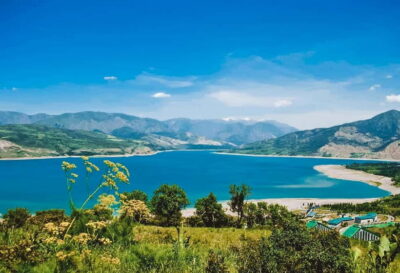
Best of Tashkent Mountains: Amirsoy, Chimgan & Charvak Trip
Read our review →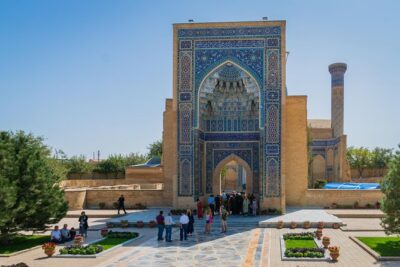
Samarkand One Day Tour – Departure From Tashkent
Read our review →Tashkent: Amirsoy Resort, Chimgan Mountain and Charvak Lake
Read our review →From Tashkent: Sightseeing Day Trip to Khujand, Tajikistan
Read our review →Explore Amirsoy, Chimgan & Charvak – A Full-Day Mountain Tour
Read our review →Tajikistan : Exclusive Seven Lakes Day Tour From Samarkand
Read our review →Explore Amirsoy, Chimgan, Charvak Adventure Tour
Read our review →
Browse the lists this tour appears in