
Reviewed · TASHKENT TOURS
Highlights of Tashkent (old and new part)
The best part of this Tashkent tour is not simply ticking off monuments. It is the way Chorsu Bazaar’s local backstreets connect food, trade, religion, and everyday life. You may taste fresh bread and halwa, watch bakers at work, and see sections of the market where ordinary Tashkent residents shop.
I like two things in particular: the guide explains both ancient and Soviet-era Tashkent, and the private format lets you slow down, skip a stop, or ask about subjects such as family life, politics, religion, and Uzbek customs. The main consideration is that the $120 price covers guiding only, so you will pay separately for food, entrance fees, taxis, and metro rides.
Key points at a glance
- Chorsu Bazaar beyond the main dome: Walk through food stalls, bakeries, dried-fruit counters, butchers, and local side streets.
- Hazrati Imam’s religious heart: See the complex that houses one of the world’s oldest Qurans, along with a grand mosque and Barak-Khan Madrasa.
- A useful old-to-new city lesson: Connect Islamic, Timurid, Soviet, and modern Uzbek history in one morning.
- Local food with a working kitchen: Visit the Central Asian Plov Center and watch cooks prepare plov in large pots.
- Tashkent’s famous metro stations: Use the subway as both transport and a gallery of Soviet-era design.
- Private and adjustable: The $120 rate covers a group of up to five people, with about 3 kilometers of walking.
Start at Hazrati Imam, Tashkent’s spiritual center
The meeting point is the main entrance gate of Hazrati Imam Mosque, in the old part of Tashkent. The scheduled time is 10:00, with the tour running until about 14:30. After booking, you receive the exact meeting point through WhatsApp, which is useful because large religious complexes can have more than one entrance.
Hazrati Imam is a fitting place to begin. It gives you an immediate sense of Tashkent’s Islamic identity, while the rest of the morning gradually introduces the city’s Soviet and modern sides. Your guide will explain the importance of the Quran kept here, then lead you through the complex’s main religious and architectural sights.
Expect to spend about an hour and a half in this area. The visit includes the grand mosque of the old city and Barak-Khan Madrasa, whose historic setting helps explain the role of religious education in Central Asian life. The value here is the conversation as much as the buildings. You can ask about religion in contemporary Uzbekistan, local traditions, and how the country presents its past today.
A practical point: an entrance fee of 60,000 UZS per person is not included. Dress and behavior should suit a mosque visit. The information provided does not specify a formal dress code, but modest clothing is the sensible choice for a religious site.
A few more Tashkent days to weigh up
- Best of Tashkent Mountains: Amirsoy, Chimgan & Charvak Trip
★ 4.8 · 567 reviews - Samarkand One Day Tour – Departure From Tashkent
★ 5.0 · 313 reviews - Samarkand One-Day Tour Departure from Tashkent
★ 4.7 · 171 reviews
Follow the food trail through Chorsu Bazaar
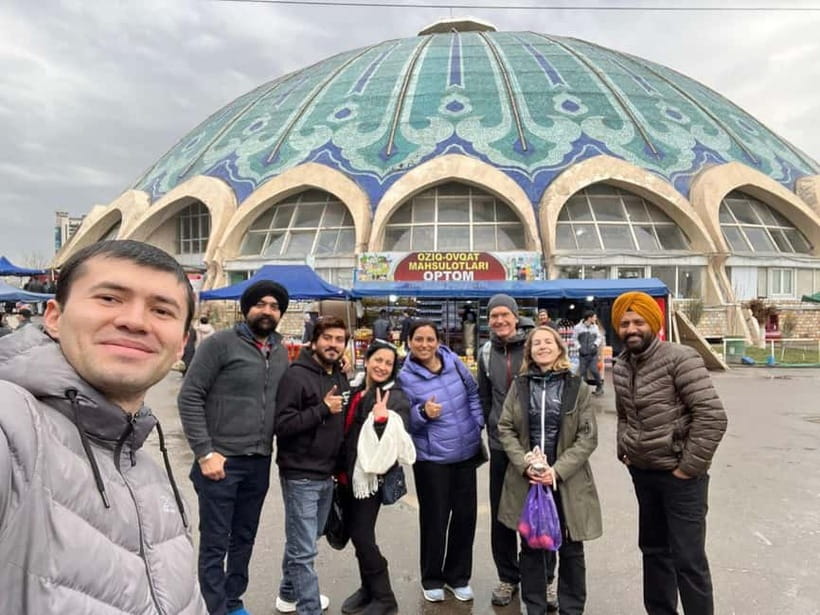
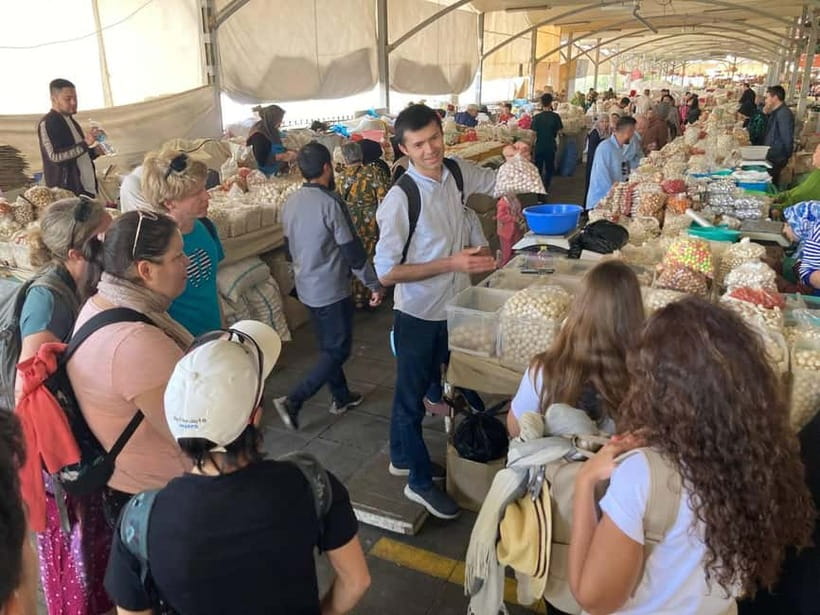
Chorsu Bazaar is the tour’s strongest stop for seeing Tashkent as a living city rather than a collection of monuments. The main market is large and central, but the guide takes you beyond the obvious paths into side streets used by local shoppers.
The route includes the food court, bakery, butchery, dried-fruit section, and other market areas. This is where the tour becomes hands-on. You may sample bread, halwa, and other local foods as you go, and you can ask the guide what ingredients are used, how food is sold, and which products belong in an Uzbek kitchen.
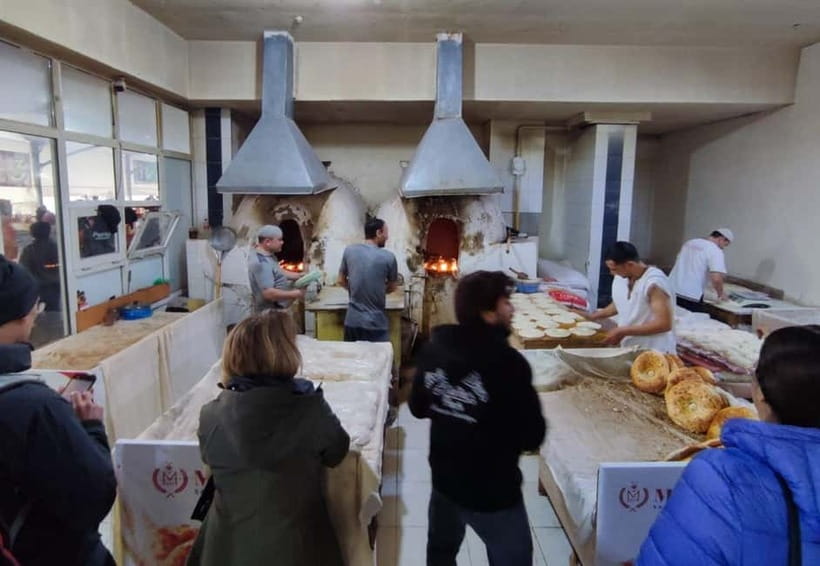
The bakery visit is especially appealing. You may see local bread being prepared and, if conditions allow, take part in baking some of it. That is a far better introduction to Uzbek food than simply ordering a dish at a restaurant. Bread carries social importance in Uzbekistan, and watching it move from dough to oven gives you a small but memorable window into daily life.
The market can also be a shopping stop. Guides such as Shovkat and Bakhtiyor have helped people understand what they are seeing and have been patient when visitors wanted to browse or buy something. Still, shopping is not the main purpose of the tour, so tell your guide if you want more time for purchases.
You should also expect market conditions to be lively and crowded at times. The backstreets may be less polished than the main tourist route, which is exactly why they are interesting, but they are not designed as a quiet museum walk. Wear comfortable shoes and keep your belongings secure in busy areas.
See how plov is made at the Central Asian Plov Center
For lunch, the guide recommends the Central Asian Plov Center. Plov is the heavyweight of Uzbek cuisine, usually built around rice, meat, carrots, and a generous amount of oil. The attraction here is not only eating it. You can watch the cooks prepare the dish in many huge pots and walk around the kitchen area for photographs and video.
That kitchen access makes this more than a standard restaurant meal. You see the scale of the operation and the cooking process before sitting down to eat. If you have limited time in Uzbekistan, this is a useful way to connect a famous national dish with the people and work behind it.
The cost of lunch is not included, and the information supplied does not give a fixed meal price. Ask your guide about the current cost and portion sizes if you are watching your budget. You can also tell the guide in advance if your group has food preferences or wants another lunch option. The tour has already been adjusted for specific requests, including a family’s request for an Indian restaurant.
Ride the Tashkent Metro as part of the sightseeing
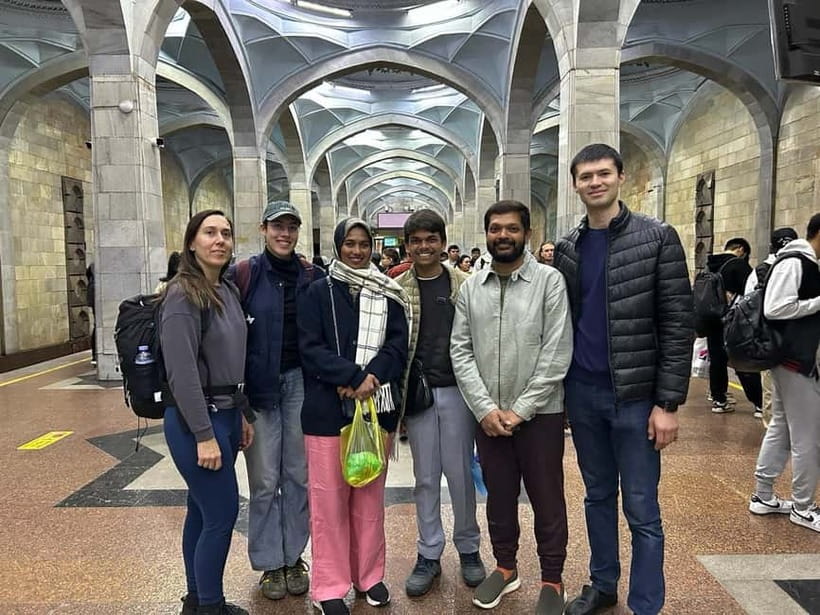
The metro is used for transport, but it is also one of Tashkent’s attractions. The tour includes some of the city’s most attractive stations, giving you a quick look at Soviet-era public design without spending the morning in a museum.
Each station has its own decorative treatment, and the guide provides the context that turns a short subway ride into a city lesson. This is a good example of the tour’s old-and-new balance: Hazrati Imam shows religious and historical Tashkent, while the metro points to the city’s Soviet period and its public infrastructure.
A metro ticket costs 3,000 UZS per person and is not included. The tour uses public transport rather than relying entirely on a private vehicle, so you experience one of the ways people move around the capital. If stairs, crowds, or changing transport are a concern for someone in your group, discuss this with the organizer before booking.
The tour also uses taxis twice. Tashkent’s Yandex GO app is described as the local equivalent of Uber, and the guide can help with ride arrangements. A private car can be organized after booking, but it costs extra because the advertised rate is for guide service only.
Same city, a completely different day out:
- Tashkent: Amirsoy Resort, Chimgan Mountain and Charvak Lake
★ 4.8 · 170 reviews - From Tashkent: Sightseeing Day Trip to Khujand, Tajikistan
★ 4.7 · 169 reviews - Explore Amirsoy, Chimgan & Charvak – A Full-Day Mountain Tour
★ 5.0 · 158 reviews - Tashkent City Tour
★ 5.0 · 121 reviews
Connect Amir Temur Square with modern Tashkent
Amir Temur Square brings the tour into the newer central districts. Here, the focus shifts toward national identity, public spaces, and the changing face of the capital. Your guide can explain the place of Amir Temur in Uzbek history and how modern Uzbekistan uses historical figures in its public life.
The tour also includes a city skyline view from the top floor of the Hotel Uzbekistan. This is one of the more unusual details in the itinerary. Instead of simply passing a Soviet-era hotel from street level, you get a wider look at central Tashkent from above.
The Tashkent TV Tower is visited from outside. It is a photo stop rather than an observation-deck visit, so do not book this expecting to go up the tower. That distinction matters when you compare this tour with a city itinerary built around paid viewpoints.
The optional additions may include the Museum of Applied Arts or Broadway Street. Since the schedule is only five hours, adding stops usually means shortening another part of the route. I would keep Chorsu and the metro if this is your first visit, then use the flexible format to choose between extra art, shopping, or architecture based on your interests.
Learn about Uzbekistan through conversation
The tour’s subject matter reaches well beyond monuments. You can discuss Uzbek customs and traditions, social life, religion, politics, the economy, and modern city life. This gives you a better feel for how Tashkent works today, not just how it looked in the past.
Guide quality matters greatly on a discussion-led tour. The listed guides include Shovkat, Bakhtiyor, Mohira, Marhaba, Murad, Murotjon, Giulia, Gully, and Myiassar. Shovkat and Bakhtiyor are frequently named in the supplied feedback, while other guides have led tours in Italian and German. The operator says the tour is led personally in English, or by a trusted professional colleague if the main guide is unavailable. The activity page also lists Chinese, Japanese, Russian, German, Italian, Spanish, and French, so confirm the language and guide before you rely on a particular arrangement.
The strongest guide moments come from flexibility. One guide changed the order after a taxi dropped a family at the wrong location. Another helped a guest who lost a credit card, including calls to the police. Those examples suggest an operator willing to solve practical problems, though you should not treat extra assistance as a guaranteed part of the paid service.
Several people also received advice for the rest of their Uzbekistan trip, including restaurant suggestions, places outside Tashkent, mountain trips, train bookings, and airport transfers. That makes the tour especially useful on your first day, when you can ask what deserves more of your time later.
How much walking and transport should you expect?
The tour covers about 3 kilometers, or 2 miles, on foot. That is manageable for many people, but the walking is broken up by the metro and two taxi rides. Market floors, mosque courtyards, station areas, and city streets can all feel different underfoot, so comfortable shoes are a wise choice.
The private-group format is a major advantage for families and small groups. The price is $120 for up to five people, not $120 per person. At the maximum group size, that works out to $24 per person before food, tickets, and transport. For one or two people, the per-person cost is much higher, but you are paying for a private guide rather than joining a fixed group.
The pace can be adjusted. You may linger at the bazaar, skip a stop, or add a place such as the Museum of Applied Arts or Broadway Street. That flexibility is useful for families, people with limited time, and anyone more interested in food or local life than in collecting every major sight.
What the $120 price really includes
The advertised rate includes the guide service fee only. You should budget separately for:
- Hazrati Imam entrance: 60,000 UZS per person
- Metro entrance or ticket: 3,000 UZS per person
- Food tastings and lunch
- Taxi rides
- Any privately arranged sedan, minivan, or minibus
- Optional attraction entrance fees
The price is good value for a group of four or five that wants a private introduction to Tashkent. It is less of a bargain for a solo visitor, especially once meals and transport are added. Even so, the guide’s local advice can save time during a short stay, and the route combines religious sights, food, markets, public transport, and modern city views in half a day.
Free cancellation is available up to 24 hours in advance, and you can reserve while paying later. For bookings made only one or two days before the tour, contact the organizer directly through WhatsApp. The organizer warns that last-minute bookings may not be seen promptly by email, and arriving without a confirmed guide could affect refund eligibility.
Who should book this Tashkent tour?
I would choose this tour if you are visiting Tashkent for the first time, have only a day or two, or want a local explanation of subjects that guidebooks often handle poorly. It is also a smart first-day activity because you can use the guide’s suggestions to shape the rest of your Uzbekistan trip.
Families should benefit from the private setup and adjustable pace. Food lovers will get the most from Chorsu’s bakery, tasting stops, and the Plov Center. People interested in architecture will appreciate the mosque, madrasa, metro stations, Hotel Uzbekistan view, and TV Tower stop.
I would think twice if you want a slow, specialist museum tour, a full-day food tour, or a package with every cost included. This is a broad city introduction, not a detailed study of one subject. The schedule also has a lot packed into five hours, so optional additions may require giving up time elsewhere.
Should you book it?
Book it if you want context, conversation, and local food rather than a simple drive past Tashkent’s sights. The strongest parts are Hazrati Imam, the less-touristed corners of Chorsu Bazaar, the bakery, and the plov kitchen.
For the best value, bring a small group of up to five people, start on your first day, and message the organizer promptly if you book at short notice. If you prefer independent wandering, you can visit many of these sights yourself, but you will miss the market guidance, cultural explanations, and practical help that make this half-day route worthwhile.
FAQ
How long does the Tashkent tour last?
The experience lasts five hours, scheduled from 10:00 to 14:30. The listed meeting point is the main entrance gate of Hazrati Imam Mosque.
Where does the tour start?
It starts at Khazrati Imam Maszhidi on Karasaray Kuchasi in Tashkent. The exact meeting location is sent through WhatsApp after booking.
What is included in the $120 price?
The price includes the tour guide service fee for a private group of up to five people. Entrance fees, food, taxis, and any arranged private vehicle are not included.
How much walking is involved?
You will walk about 3 kilometers, or 2 miles, during the tour. The route also uses the Tashkent Metro and taxis twice.
What entrance fees should I expect?
The Hazrati Imam entrance fee is 60,000 UZS per person, and the metro cost is 3,000 UZS per person. These amounts are separate from the tour price.
Can the tour be customized?
Yes. The itinerary is flexible, and you can discuss adding or skipping stops such as the Museum of Applied Arts or Broadway Street. Tell the organizer about your interests when arranging the tour.
Just added around Tashkent
- Tashkent Mountain Tour Amirsoy with Transport★ 3.5 · 3 reviews
- Tashkent: 3-Day Horseback Riding Tour in Chimgan Mountains★ 4.4 · 3 reviews
- Private Intercity Transfer Tashkent – Samarkand – Tashkent★ 3.5 · 3 reviews
- Samarkand: Uloq-Kopkari (Buzkashi) Game Day Tour★ 5.0 · 3 reviews
- Private Tashkent City Tour★ 5.0 · 3 reviews
- Transfer Tashkent Airport / Railway Station – Hotel★ 3.5 · 3 reviews
- Heliocomplex “Institute of the Sun” – Remnants of USSR★ 5.0 · 3 reviews
- Half-day excursion around Tashkent★ 5.0 · 3 reviews
Tashkent Tours, compared.
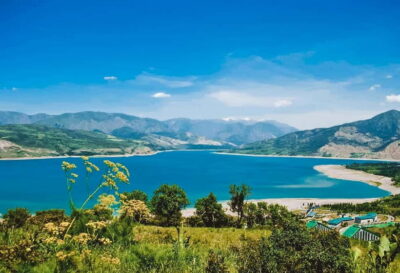
Best of Tashkent Mountains: Amirsoy, Chimgan & Charvak Trip
Read our review →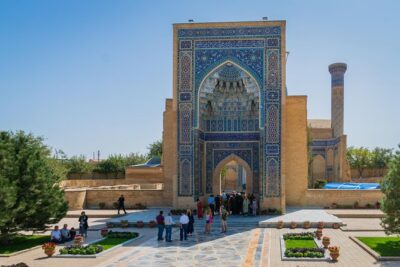
Samarkand One Day Tour – Departure From Tashkent
Read our review →Tashkent: Amirsoy Resort, Chimgan Mountain and Charvak Lake
Read our review →From Tashkent: Sightseeing Day Trip to Khujand, Tajikistan
Read our review →Explore Amirsoy, Chimgan & Charvak – A Full-Day Mountain Tour
Read our review →Tajikistan : Exclusive Seven Lakes Day Tour From Samarkand
Read our review →Explore Amirsoy, Chimgan, Charvak Adventure Tour
Read our review →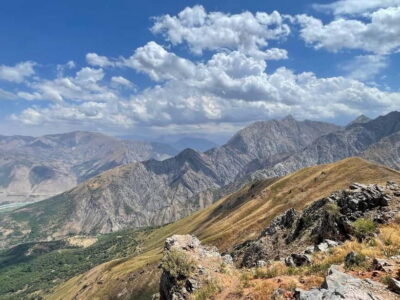
Browse the lists this tour appears in