
Reviewed · SAMARKAND TOURS
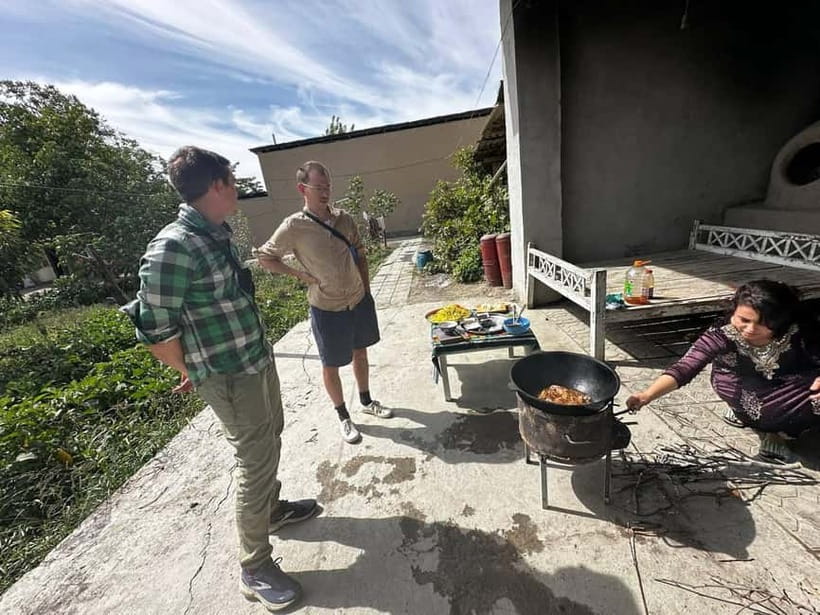
cooking traditional food in Samarkand with local people
Samarkand’s grand monuments tell one part of Uzbekistan’s story. This experience takes you into a family home in Ravot village, where cooking, gardens, bread ovens, and conversation show you how daily life works beyond Registan Square. You begin at Siab Bazaar, then travel about 14 kilometers to a home in the Toyloq district.
I like the chance to prepare plov, Uzbekistan’s famous rice dish, rather than simply order it in a restaurant. I also like the easy transport, with pickup and drop-off available from hotels, stations, and the airport. The main consideration is that the cooking may be more hands-on for some bookings than others, so if you want a formal class where you prepare every stage yourself, make that wish clear in advance.
Key points at a glance
- Siab Bazaar before the kitchen: See the market where ingredients and local food culture come together. The bazaar is closed on Mondays.
- A family home in Ravot: Spend time with local people in a village setting, about 14 kilometers from central Samarkand.
- Plov and other Uzbek dishes: Help prepare traditional food, with options that may include salads, hanim, and other local recipes.
- Gas, o’choq, and tandir cooking: See different ways food is cooked, including bread baked in a traditional tandir oven.
- Five hours with transport included: Pickup and return make this useful if you are arriving, leaving, or staying in Samarkand.
- A cultural visit as much as a cooking class: Expect conversation about Uzbek traditions, family life, gardens, and village routines.
From Siab Bazaar to a family kitchen
The day begins with pickup from your hotel, railway station, or the airport. The exact starting time depends on availability, but the full experience lasts about five hours. That length gives the outing a natural rhythm: market first, village second, meal at the end.
Siab Bazaar is one of Samarkand’s best places to get a feel for everyday food. You can walk through the market with your guide and see the kinds of produce, ingredients, and prepared foods used in Uzbek homes. This is not just a shopping stop before lunch. It gives you context for what appears later on the cooking table.
Plan carefully around the weekly closing day. Siab Bazaar is closed on Mondays, so the market portion cannot run as described then. If the bazaar matters to you, check the day before booking.
The move from the city to Ravot is part of the appeal. The village is in Toyloq district, about 14 kilometers from Registan Square. The road is described as good quality and not bumpy, so you are not signing up for a rough rural transfer. You get a short change of scene without giving up half a day to transport.
More cooking classes in Samarkand:
- Samarkand: Village Tour with Plov Cooking Class & Home Visit
★ 5.0 · 29 reviews - Samarkand: Uzbek Cooking Class in a Village Home
★ 5.0 · 22 reviews - Cooking class in Samarkand with local life experience
★ 5.0 · 19 reviews
What Ravot adds to the experience
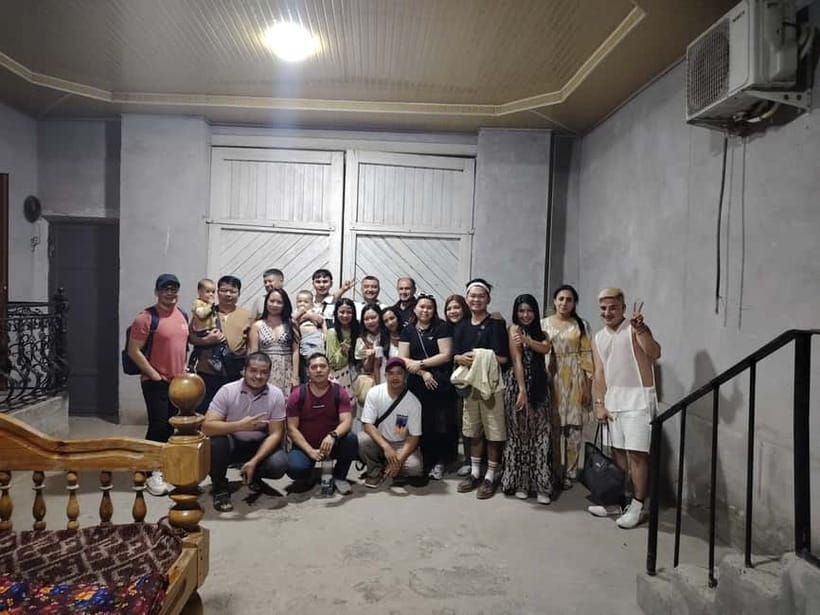
At the village home, the focus shifts from looking to taking part. You are welcomed by the host family, with Akram and Navruz named in the experience feedback as guides and hosts associated with this activity. The exact family member leading your visit may vary, but the central idea stays the same: you spend time in a real household rather than a purpose-built cooking studio.
That difference matters. A studio can teach technique neatly, but a home visit shows where food fits into family life. You may see the garden and fruit trees, talk about local customs, and learn how meals are prepared for family and guests. The experience also includes a look at the surrounding village and neighborhood, depending on the flow of the visit.
I especially like this part for visitors who have already seen Samarkand’s main sights. The Registan, Shah-i-Zinda, and Bibi-Khanym Mosque are essential, but they show you historic Samarkand. A family meal in Ravot gives you a closer look at present-day Uzbekistan.
The hosts’ English is described as strong, and conversation is a major part of the visit. You can ask about Uzbek traditions, food, village life, and the way different generations share a home. That makes this a good choice if you want more than a recipe and a photograph.
Cooking plov, hanim, and local salads
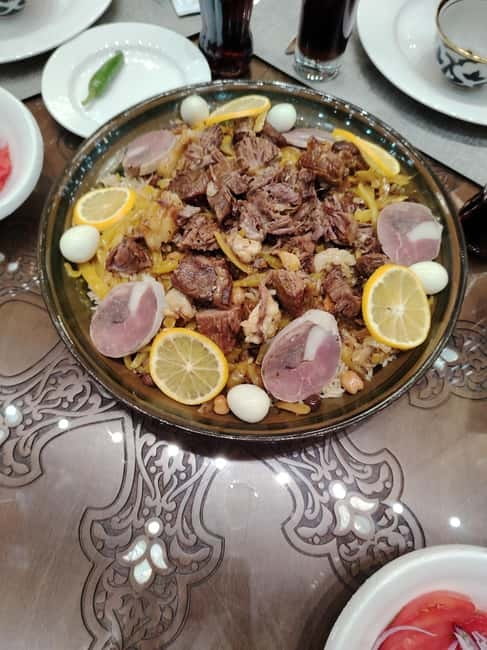
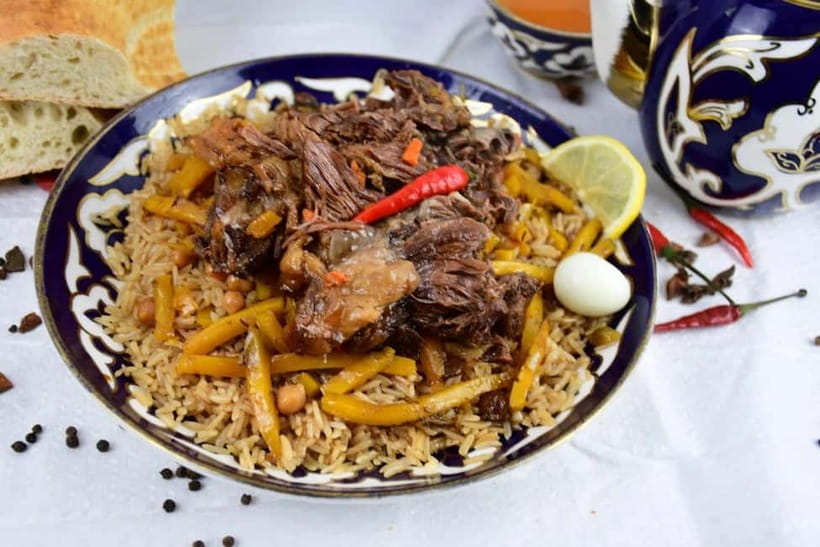
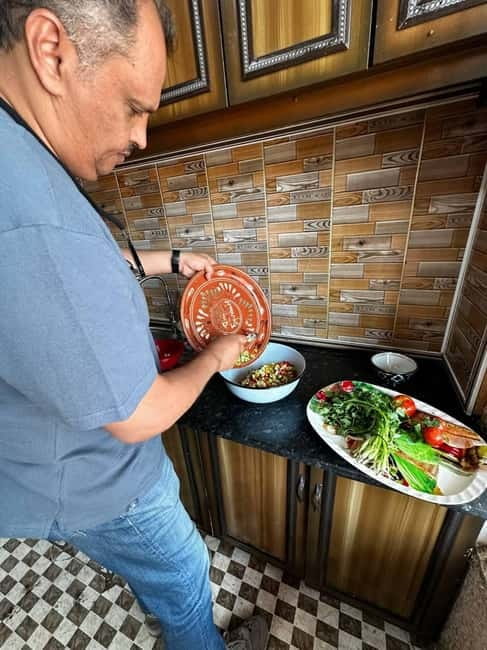
The exact menu can be shaped around your preferences. Plov is the best-known choice, and it is also the dish most closely tied to the experience. You may help with preparation and see the stages that turn rice, vegetables, and other ingredients into a shared meal.
The menu can also include salads and other Uzbek dishes. One possible combination mentioned by past participants is plov with hanim, a traditional dish that gives you a different texture and style of cooking from rice-based plov. You can discuss the available choices with the host rather than assume every dish is prepared on every visit.
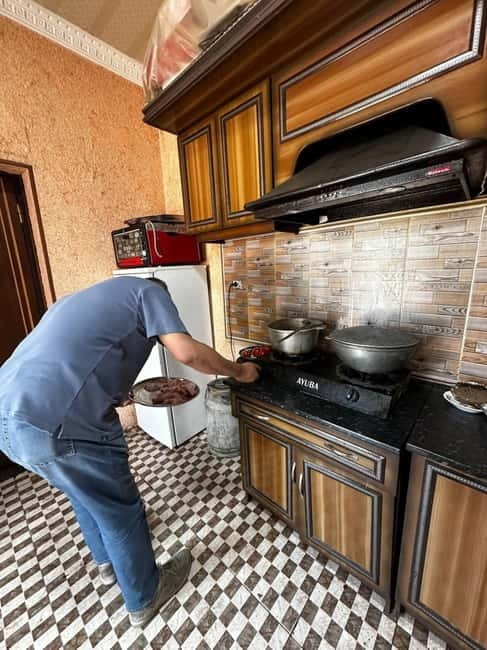
The cooking setup is part of the lesson. Food can be prepared using gas or an o’choq, a traditional cooking hearth. You can also see bread baked in a tandir, the oven used for Uzbek flatbread. These details help explain why the food tastes and feels different from dishes prepared in a modern restaurant kitchen.
Your level of participation deserves a clear note. The experience invites you to take part, and several accounts describe guests preparing dishes themselves, with the host explaining each step before letting them try. One account, however, describes a more limited role, mainly preparing vegetables and watching the cooking.
That means you should set expectations correctly. This is a family cooking experience with a cultural visit, not necessarily a strict professional lesson where you control every pan. If active cooking is your priority, tell Akram or the host at the beginning. Ask which tasks you can handle and which dishes you will prepare directly.
Even with a lighter role, you can still learn useful things: how ingredients are cut, which tools are used, how heat is managed, and how food is cooked in different ways. The value comes from seeing the process in its normal setting.
The meal is the payoff
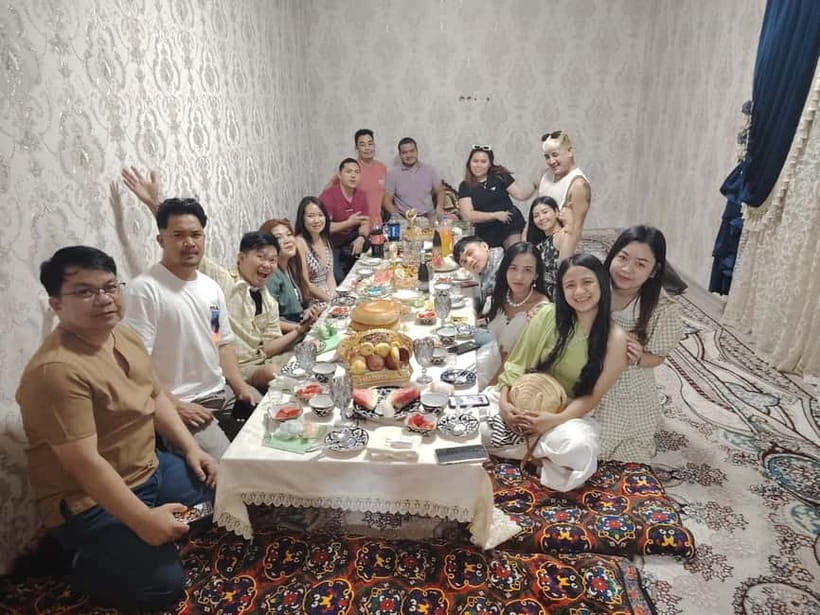
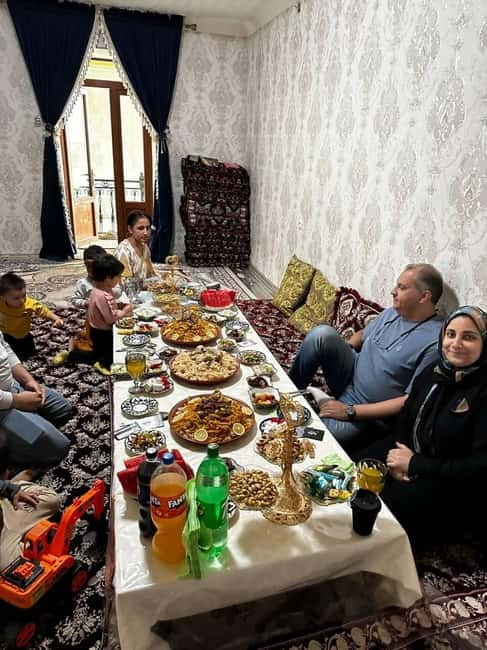
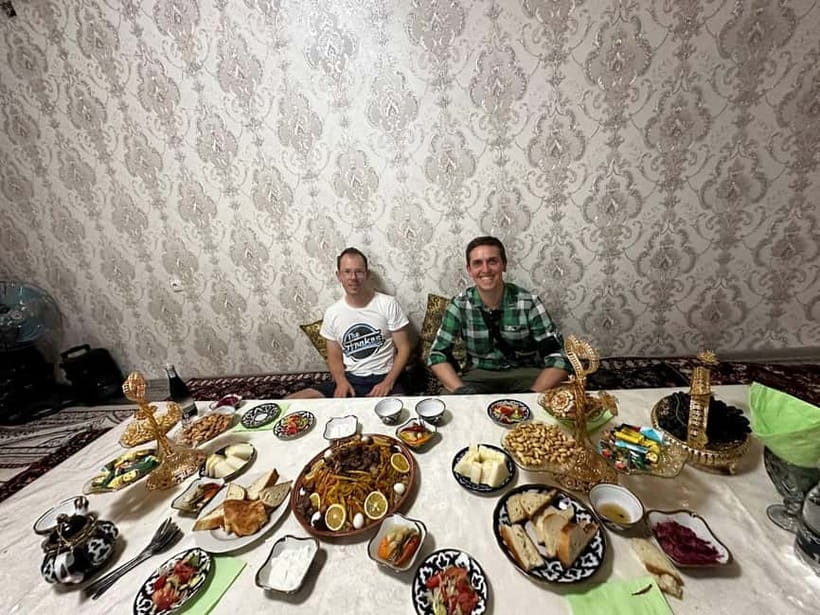
At the end, you sit down for lunch or dinner with the food prepared during the visit. Salads and beverages are included, along with the main dishes. This shared meal is not an afterthought. In Uzbek culture, offering food is a central part of hospitality, and eating together gives the visit its warmest moment.
Plov is particularly suited to a communal meal. It is filling, fragrant, and made to be shared. You can taste it knowing where the ingredients came from and how it was cooked. That connection makes the meal more memorable than ordering the same dish from a menu without seeing any of the work behind it.
The family setting also means the meal may feel less polished than a restaurant service. That is a benefit if you want ordinary hospitality and conversation. It may be less suitable if you need a tightly timed meal or a quiet, formal setting.
You should also tell the host about food preferences when possible. The menu is presented as flexible, with different salads and dishes available according to preference, but the supplied details do not confirm specific vegetarian, vegan, allergy, or religious-diet arrangements. Ask before you go if those needs are important.
More food tours in Samarkand:
- Wine Tasting Tour in Samarkand
★ 4.0 · 21 reviews - Master Class – Shivit Osh Traditional Food Of Khiva
★ 4.2 · 27 reviews - Tashkent: Uzbek Culture, Food, Crafts & Pottery Masterclass
★ 5.0 · 24 reviews - Tashkent Vegan Street Food Tour
★ 5.0 · 22 reviews
Why the $62 price can make sense
The price is $62 per person for five hours. That includes transport from an airport, hotel, or station, a live English-speaking guide, the Siab Bazaar visit, the cooking session, lunch or dinner, beverages, and return transport.
That is a useful package for a short stay in Samarkand. You do not need to arrange a taxi to a village, find your own way back, pay separately for a market guide, and then organize a meal. The transport also helps if you are moving between the airport, railway station, and hotel on the same day.
The value depends on what you want from a cooking class. If you measure value by the number of recipes or the amount of time spent chopping, another class with a formal teaching kitchen could suit you better. If you value a family visit, local conversation, village transport, a market walk, and a shared meal, the price covers much more than food preparation.
I would see it as a half-day cultural outing with cooking at its center, not as a technical chef’s course. That is a fair way to judge the cost.
Transport makes the timing easier
Pickup and drop-off are included from hotels, airports, and stations. This is practical for visitors who are arriving in Samarkand or leaving by train, provided the timing works with the five-hour duration. You should give accurate pickup details when booking and confirm the schedule if you have a tight connection afterward.
The village is close enough to central Samarkand for the transfer to remain reasonable. Since Ravot is 14 kilometers from Registan Square and the road is reported to be in good condition, the journey should feel like a short trip outside the city rather than a major expedition.
Wheelchair access is listed for the activity. Still, because the visit takes place in a private home, garden, village, and market, you may want to ask the provider about the exact route and surfaces if you use a wheelchair or have limited mobility. The activity is marked accessible, but the practical details of every doorway and garden path are not provided.
Small details that shape the visit
Dress matters here. Short skirts and tight clothing are not allowed, so choose loose, respectful clothes that work for a family home and village setting. This is also sensible for cooking, where comfortable clothing gives you room to move.
Weapons, sharp objects, explosives, and nudity are prohibited. Cooking tools are supplied as part of the activity, so do not assume you should bring a knife or other sharp item with you.
The cooking may use a gas stove, o’choq, or tandir. If you are interested in bread, ask to see the tandir stage. Bread baking is one of the most distinctive parts of the visit, but the available information does not promise that every guest will bake a loaf personally.
The bazaar is closed Monday. This is the one scheduling detail most likely to affect your plans, especially if you have a short stay and are choosing a particular day.
Free cancellation is available up to 24 hours before the activity for a full refund. You can also reserve now and pay later, which helps if your Samarkand schedule is still changing.
Who will enjoy this most
I would recommend this experience to you if you want direct contact with local people and have already set aside time for Samarkand’s major monuments. It is also a strong choice for solo visitors, couples, and small groups who prefer conversation and food over another formal sightseeing stop.
Families may enjoy the garden, bread, and meal, though parents should consider the five-hour length and the fact that this is a home visit rather than a children’s attraction. People who enjoy photography will find plenty of ordinary details in the bazaar, garden, kitchen, and village, but the visit should remain respectful of the family’s private space.
It suits curious eaters who want to understand Uzbek cuisine from the inside. You can learn why plov matters, how a meal is assembled, and how cooking changes when it is done over an o’choq or inside a tandir.
It is less ideal if you want a fast, highly structured class with written recipes, exact lesson stages, or a guaranteed amount of hands-on work. The host family controls the kitchen, and the balance between watching and cooking can vary.
Should you book the Ravot village cooking experience?
Book it if your main goal is to meet local people, share a home-cooked meal, and see a side of Samarkand outside the historic center. The strongest parts are the family welcome, the chance to cook plov, the garden and village setting, and the useful door-to-door transport.
Before booking, check that your date is not Monday if you want the Siab Bazaar visit. Also tell the host that you want to cook actively, not only observe. With those points clear, the $62 price is sensible for a five-hour outing that combines market, transport, food, and conversation.
FAQ
Where does the cooking experience take place?
The cooking session takes place in Ravot village in the Toyloq district of the Samarqand Region, about 14 kilometers from Registan Square.
How long does the activity last?
The activity lasts five hours. Starting times depend on availability.
Is Siab Bazaar included?
Yes. Exploring Siab Bazaar is included, but the bazaar is closed on Mondays.
What food can I cook?
You can prepare a range of Uzbek dishes based on your preferences. Plov, salads, and hanim are among the dishes associated with the experience.
Is a meal included?
Yes. Lunch or dinner is included, with salads, food, and beverages.
Can I bake bread?
You can be shown how bread is baked in a traditional tandir. The information does not confirm that every participant will bake bread personally.
Is transportation included?
Yes. Pickup and drop-off are included from the airport, hotel, or stations.
What language is the tour conducted in?
The live guide language is English.
What happens if I need to cancel?
You can cancel up to 24 hours in advance for a full refund. The activity also offers reserve now and pay later booking.
More Food in Samarkand
- Tashkent Walking & Food Tour: Highlights + Local Flavors
★ 5.0 · 18 reviews - With John Private Tashkent city & Food tour
★ 5.0 · 13 reviews - Food tour in Tashkent
★ 4.7 · 7 reviews - Ten Bites Adventure Food Tour in Tashkent
★ 5.0 · 6 reviews
Just added around Samarkand
- Bird Watching Tours in Samarkand★ 3.6 · 3 reviews
- Seven Lakes Panjakent: One-Day Adventure from Samarkand★ 5.0 · 3 reviews
- Ancient and Modern tour in Samarkand with Transport★ 5.0 · 3 reviews
- From Samarkand: 2-Day Yurt Camp Adventure with Camel Ride★ 4.7 · 3 reviews
- Samarkand: city tour★ 4.7 · 3 reviews
- Samarkand: Cooking class with local family★ 5.0 · 3 reviews
- Explore Samarkand Guided Tour with Transfers★ 5.0 · 3 reviews
- Amankutan Trek One Day Tour From Samarkand★ 3.9 · 3 reviews
Samarkand Tours, compared.
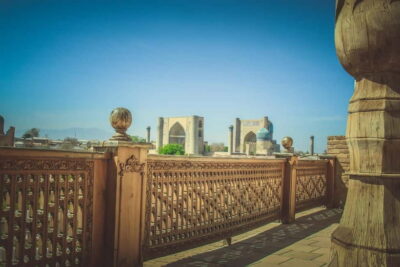
Samarkand: Historical Monuments Guided Walking Tour
Read our review →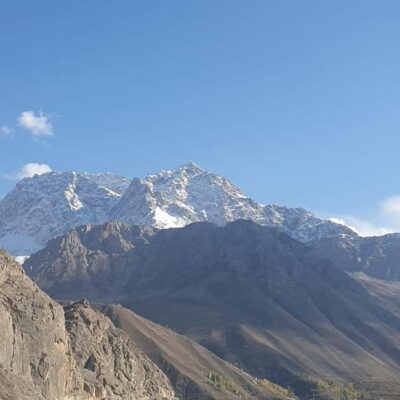
Small group: Tajikistan Seven Lakes Day trip from Samarkand
Read our review →Samarkand: Historical City Highlights Guided Walking Tour
Read our review →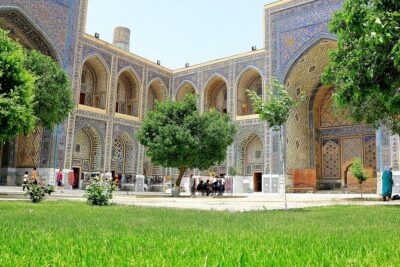
Private Samarkand City Tour With Transportation
Read our review →
A City Tour Of Samarkand: The Pearl Of The East
Read our review →Seven Beauties of Shing -Seven Lakes Day Trip From Samarkand
Read our review →
Full Day Private Tour in Seven Lakes from Samarkand
Read our review →
Samarkand One Day Tour: one day walking & group tour
Read our review →Browse the lists this tour appears in