
Reviewed · TASHKENT TOURS
Tashkent-Samarkand-Bukhara tour-3nights/4 days
The best thing about this private Uzbekistan tour is the way it links three very different cities without making you arrange every train, hotel, ticket, and transfer yourself. You move from Tashkent’s old quarters to Bukhara’s medieval center and then to Samarkand’s grand Timurid monuments, using comfortable road transport and Afrosiyab high-speed trains.
I like the small private format, since you travel only with your own party and can ask your guide for restaurant advice along the way. I also like the practical design: breakfast, twin-share hotels, entrance tickets, car transfers, and three key train journeys are covered. The main drawback is the pace. Four days is enough for an introduction, but Bukhara and Samarkand each deserve more time, and the early departure on Day 2 leaves little room for a relaxed morning.
Key points to know before booking
- Three Silk Road cities in four days: Tashkent, Bukhara, and Samarkand are connected in one compact route.
- Private touring: Only your group participates, which makes questions and timing easier.
- Afrosiyab train travel: The plan includes economy-class high-speed train tickets between the main cities.
- Major sights included: Expect mosques, mausoleums, bazaars, madrasahs, a citadel, and an observatory.
- Breakfast and hotels included: Accommodation is on a twin-share basis in Tashkent, Bukhara, and Samarkand.
- A tightly packed schedule: Early breakfast and several long sightseeing days require energy and comfortable shoes.
What the $1,200 price really covers
At $1,200 per person, this is not a budget independent trip. It is a package price for a private four-day experience, so the value depends on how much you want handled for you.
The package includes twin-share hotel accommodation, three breakfasts, entrance tickets listed in the program, all planned road transfers, and Afrosiyab economy tickets for Tashkent to Bukhara, Bukhara to Samarkand, and Samarkand to Tashkent. Taxes are also included in the tour description.
That matters in Uzbekistan, where a short trip can become complicated if you are arranging trains, station transfers, hotel check-in, and sightseeing in three cities on your own. You are paying for coordination as much as for transport. The private setup is especially useful if your group wants to ask questions, stop for an Uzbek meal, or keep a shared pace instead of joining a large bus.
Still, you need to budget separately for lunches, dinners, tips, personal spending, international flights, early check-in, late check-out, extra hotel services, and photography or video fees at sites that charge them. The information also lists all fees and taxes under exclusions, while the inclusions say taxes are covered, so I would ask the operator to clarify that point before paying.
A few more Tashkent days to weigh up
- Hiking tour to Hayat, Uhum and Asraf villages – 4 days
★ 5.0 · 12 reviews
Day 1: Tashkent’s old city and local color
The tour begins at 7:00 a.m. at Hotel Uzbekistan on Mirzamakhmud Musakhanov Street 45. Pickup can be requested, which is useful if you are staying elsewhere in Tashkent and do not want to cross the city before the first visit.
Your first stop is the Hazrati Imam Ensemble, the religious center of old Tashkent. The complex includes the 16th-century Barak Khan Madrasah and the Kaffal Shashi Mausoleum. You have about an hour here, enough to see the main architectural details and get a first explanation of the city’s religious and scholarly traditions.
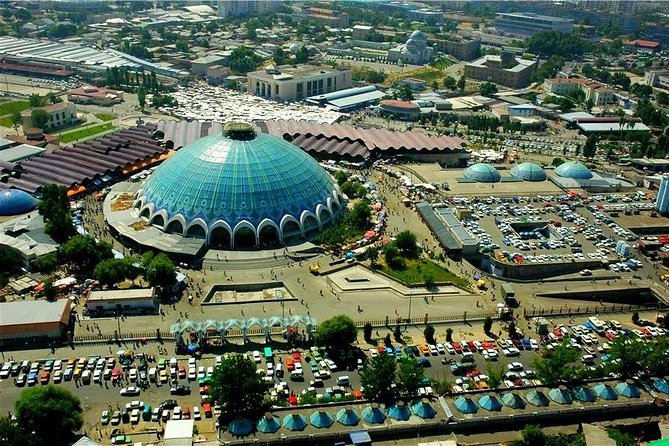
The next stop, Chorsu Bazaar, brings a welcome change of mood. This is one of Uzbekistan’s largest markets, located in the Eski Shahar, or old city. You have about 40 minutes, which is enough to look at the covered market and sample the atmosphere, but not enough for a slow food tour or a long shopping session. Ask your guide which Uzbek foods are worth trying. The tour specifically encourages you to seek local meal recommendations, and this is a natural place to do it.
Kokaldash Madrasah follows. Built in 1569, it was the largest of the 23 madrasahs in old Tashkent. The visit lasts only 20 minutes, so treat it as a focused stop rather than a full museum visit. A guide’s explanation helps put the building into the setting of old Tashkent, where religious schools shaped daily life and public space.
The State Museum of Applied Art gives you a different look at Uzbekistan. Its collection includes more than 4,000 decorative art objects, including wood carving and other traditional crafts. The scheduled visit is 40 minutes. That is enough to appreciate the workmanship, though anyone interested in textiles, carving, ceramics, or metalwork may wish for longer.
The program also includes central Tashkent, including the square used for major state events and national holiday parades, and Amir Temur Square. These are modern civic spaces rather than old monuments, but they help you read the capital as a city with several distinct eras. Tashkent combines Soviet planning, contemporary government buildings, museums, and older religious quarters.
You spend the night in Tashkent. Day 1 is full but manageable. The mixture of bazaar, religious buildings, applied arts, and central squares is a good introduction, though the short stop times mean you should listen closely and avoid getting distracted by shopping.
Day 2: A very early start and Bukhara’s royal past
Day 2 begins early. Breakfast is scheduled around 5:30 to 6:00 a.m., followed by a 6:30 check-out and transfer to the station for the Afrosiyab high-speed train to Bukhara. The listed journey is about 600 kilometers and takes approximately three hours and 50 minutes.
This is one of the tour’s strongest practical features. The train saves you from a long road transfer and gives you a more comfortable way to cover a large distance. The tradeoff is clear: you lose a relaxed hotel morning. If you need coffee and extra sleep to function, plan for this start.
In Bukhara, the first scheduled visit is the Palace of Moon-like Stars, also called Sitorai-Mokhi-Khosa. This was the palace of Bukhara’s last emir and reflects a later period of the city’s ruling family. The three-hour allocation makes it one of the day’s major visits, rather than a quick photo stop.
The palace is valuable because it broadens the story beyond medieval mosques and madrasahs. You see the world of Bukhara’s court and ruling elite, with a different architectural character from the old center. Since the itinerary gives a substantial block of time here, you should expect a slower visit with room for your guide to explain the site.
The schedule for the rest of Day 2 is not laid out in detail, so you should confirm exactly when lunch, hotel check-in, and any additional Bukhara sightseeing take place. That lack of detail is worth checking before departure, especially because the day begins so early.
Day 3: Bukhara’s mosques, citadel, and central pool
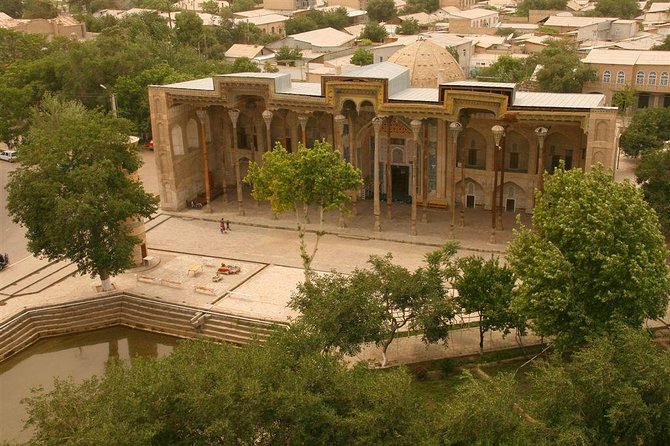
Day 3 brings the heart of historic Bukhara. The Lyab-i Hauz Ensemble is one of the city’s most popular gathering places, built around a pool and surrounded by historic architecture. The setting gives you a pause from formal sightseeing. It is a place to sit, look around, and understand how water and public space shaped life in the old city.
At Magoki Attori Mosque, you see a medieval monument that sits more than 4.5 meters below ground level. That unusual position is one of the site’s most interesting details. The building dates from the 12th to the 16th centuries and now also relates to a carpet museum visit. The scheduled 20 minutes is brief, so focus on the unusual sunken setting and the surviving architectural elements.
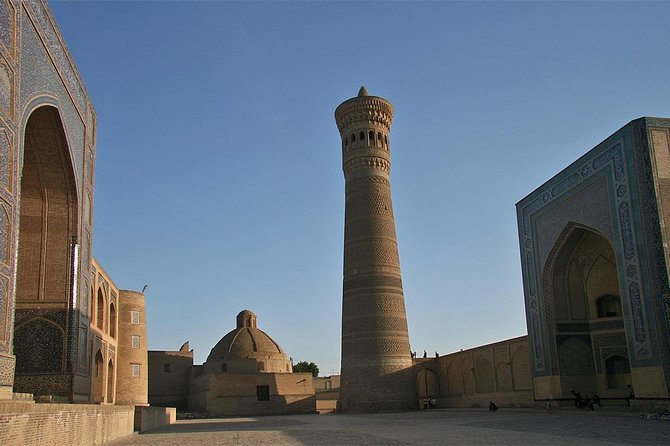
The Kalon Minaret and Poi Kalyan complex offer one of Bukhara’s defining views. The ensemble includes the Kalyan minaret, Kalyan Mosque, and Miri Arab Madrasah, with buildings dating from the 12th to the 16th centuries. You have about 40 minutes. The scale of the minaret and the arrangement of the buildings are best understood from the square, where you can take in the full composition.
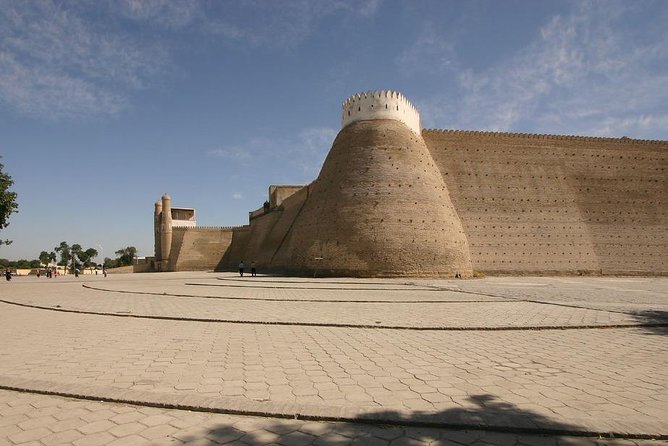
The Ark of Bukhara is next. This ancient citadel rises almost 20 meters above the surrounding area and covers about four hectares. Allow an hour here. The Ark is more than a fortress wall: it represents the seat of power that controlled Bukhara for centuries. The height and mass of the site make it easy to see why the citadel mattered.
Bukhara’s major monuments are close enough in character to form a coherent picture, but the program remains brisk. I would wear shoes with good support and keep water with you. The schedule includes several sites with hard surfaces, steps, and extended periods on foot, even though exact walking distances are not provided.
At 3:50 p.m., you take the Afrosiyab train to Samarkand, arriving around 5:15 p.m. This is an efficient transfer, but it leaves little time to explore Samarkand that evening. You spend the night there, ready for the final sightseeing day.
Same city, a completely different day out:
- Best of Tashkent Mountains: Amirsoy, Chimgan & Charvak Trip
★ 4.8 · 567 reviews - Samarkand One Day Tour – Departure From Tashkent
★ 5.0 · 313 reviews - Samarkand One-Day Tour Departure from Tashkent
★ 4.7 · 171 reviews - Tashkent: Amirsoy Resort, Chimgan Mountain and Charvak Lake
★ 4.8 · 170 reviews
Day 4: Samarkand’s Timurid monuments
Samarkand is the visual climax of the route. The day opens at the Gur Emir Mausoleum, the burial place of Tamerlane, his mentor Mir Sayyid Barak, and members of the Timurid family. Give yourself time to look at the blue decoration, interior proportions, and tomb arrangement rather than rushing straight to photographs. The planned visit is one hour.
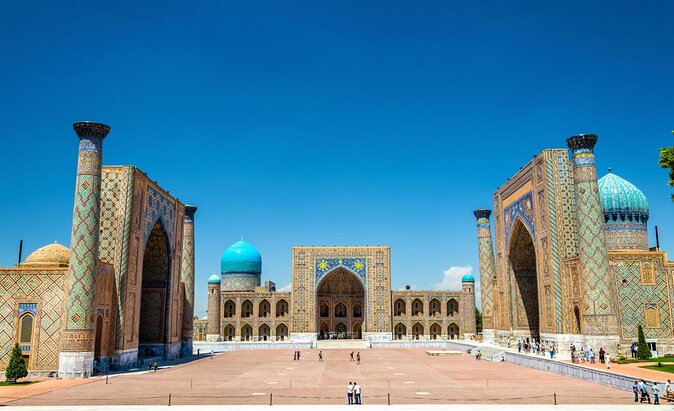
Registan Square follows, with its three monumental madrasahs: Ulughbek, built in the 15th century, and Shirdar and Tillakori, built in the 17th century. This is the place where the scale of Samarkand becomes fully clear. You have an hour, which should cover the main square and courtyards, though you may wish you had more time to study the tile work.
The Ulugh Beg Observatory shows Samarkand’s scientific side. Built between 1424 and 1428 on Kuhak Hill, it was one of the most important observatories of the Middle Ages. The visit lasts about 40 minutes. It is a useful counterpoint to the grand religious architecture because it shows that the Timurid court also supported astronomy and mathematics.
Shah-i-Zinda is scheduled for an hour. This ensemble of mausoleums belonged to Karakhanid and Timurid nobility, and the surviving complex includes eleven mausoleums. The narrow sequence of decorated structures makes this one of the more intimate visits on the route, even though the architecture is highly ornate.
The program also includes Bibi Khanum Mosque, the grand cathedral mosque commissioned by Tamerlane between 1399 and 1404. Its decoration includes tilework, carved marble, and murals. The schedule does not give a separate duration for this stop, so confirm whether it is a short visit, a photo stop, or folded into the surrounding Samarkand sightseeing.
At 5:30 p.m., you take the Afrosiyab train back to Tashkent. The journey takes about two hours and ten minutes, with arrival scheduled around 7:40 p.m. This makes the tour efficient for a flight or onward plan from Tashkent, but you should not book a same-evening international departure without allowing a generous buffer.
The private guide and the human side of the tour
The tour is designed for your private party only. That is a real advantage in places such as Chorsu Bazaar, where a large group can become awkward, and at religious monuments, where you may want to ask about customs or architectural details.
No guide names are provided, so I would not choose this experience based on a promised individual guide. Instead, ask who will lead each city visit and how the handoff works between Tashkent, Bukhara, and Samarkand. The team is described as friendly and thoughtful, and the experience has a 5 out of 5 rating based on five published ratings. That is a small sample, but it supports the idea that personal service is one of the tour’s strongest points.
The best use of the guide is not just listening to dates. Ask for authentic Uzbek meal recommendations, help understanding market foods, and advice on how to approach religious sites respectfully. Lunches and dinners are not included, so food advice can make a real difference to both your budget and your experience.
Trains, hotels, and the pace you should expect
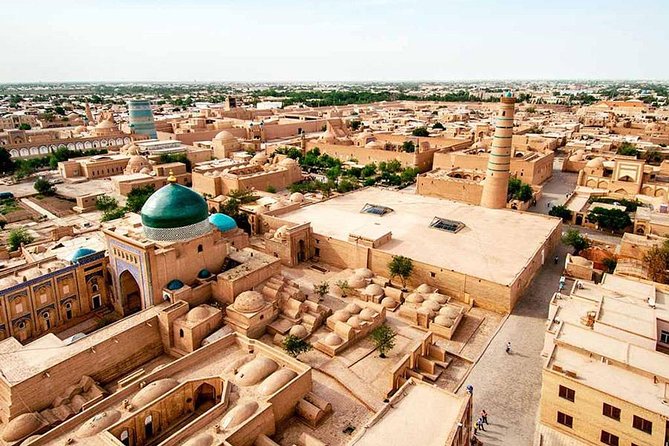
The Afrosiyab trains are a major reason this route works in only four days. You avoid spending most of each day on the road, and the three listed rail segments connect the cities in a logical order. Economy tickets are included, so confirm the exact departure times and seating details once the booking is confirmed.
Hotels are included in Tashkent, Bukhara, and Samarkand on a twin-share basis, with breakfast included each morning. Solo guests should ask how the price changes if a single room is required, since the stated accommodation basis is twin share.
The tour begins and ends at Hotel Uzbekistan, with pickup available on request. Confirmation is provided at booking, and the activity is near public transportation. Service animals are allowed, and the information says most people can participate, but the exact accessibility arrangements are not described.
Free cancellation is available if you cancel at least 24 hours before the local start time. Changes or cancellations inside that window are not accepted for a refund. That is useful flexibility, but I would still verify hotel and train booking conditions with Silk Road Travellers.
Who should book this four-day route
I would recommend this tour to a first-time visitor who wants to see Uzbekistan’s headline sights without managing a complicated chain of trains and hotels. It also suits couples, families, and friends who prefer a private guide and want to ask for food advice or adjust the conversation to their interests.
It is less suitable if you want unhurried museum visits, long market walks, or time to simply sit in Bukhara and Samarkand. The early start, compact sightseeing windows, and same-day return to Tashkent on Day 4 make this a highlights tour, not a slow cultural stay.
Should you book it?
Book this tour if your priority is efficient coverage with private support. The included Afrosiyab trains, hotels, breakfasts, transfers, entrance tickets, and guide remove much of the planning work, while the route covers the three cities most visitors want to see.
Think twice if $1,200 feels high for four days or if you prefer independent travel. Lunches, dinners, tips, personal expenses, and possible site photography fees remain outside the price, and the schedule is demanding. Before booking, confirm the hotel names, guide arrangements, Bibi Khanum timing, and the conflicting wording about included taxes.
FAQ
How long is the Tashkent, Samarkand, and Bukhara tour?
The experience lasts approximately four days and includes three nights of accommodation.
Where does the tour start?
The listed meeting point is Hotel Uzbekistan, Mirzamakhmud Musakhanov Street 45, Tashkent.
What time does the tour start?
The stated start time is 7:00 a.m.
Is hotel pickup available?
Yes. You can request pickup if meeting at the listed hotel is not convenient.
Is this a private tour?
Yes. Only your private party participates in the activity.
Which cities does the tour visit?
The route covers Tashkent, Bukhara, and Samarkand.
Are train tickets included?
Yes. Economy tickets on the Afrosiyab high-speed trains are included for Tashkent to Bukhara, Bukhara to Samarkand, and Samarkand to Tashkent.
Are hotel stays included?
Yes. Accommodation on a twin-share basis is included in Tashkent, Bukhara, and Samarkand.
Are meals included?
Three breakfasts are included. Lunches and dinners are not included.
What is the cancellation policy?
You can cancel at least 24 hours before the experience start time for a full refund. Cancellations or changes made less than 24 hours before the start time are not accepted for a refund.
Just added around Tashkent
- Tashkent Mountain Tour Amirsoy with Transport★ 3.5 · 3 reviews
- Tashkent: 3-Day Horseback Riding Tour in Chimgan Mountains★ 4.4 · 3 reviews
- Private Intercity Transfer Tashkent – Samarkand – Tashkent★ 3.5 · 3 reviews
- Samarkand: Uloq-Kopkari (Buzkashi) Game Day Tour★ 5.0 · 3 reviews
- Private Tashkent City Tour★ 5.0 · 3 reviews
- Transfer Tashkent Airport / Railway Station – Hotel★ 3.5 · 3 reviews
- Heliocomplex “Institute of the Sun” – Remnants of USSR★ 5.0 · 3 reviews
- Half-day excursion around Tashkent★ 5.0 · 3 reviews
Tashkent Tours, compared.
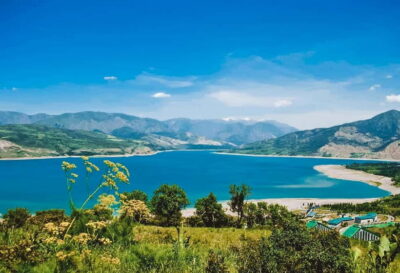
Best of Tashkent Mountains: Amirsoy, Chimgan & Charvak Trip
Read our review →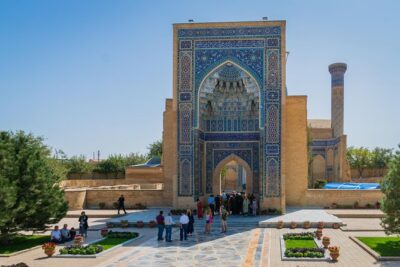
Samarkand One Day Tour – Departure From Tashkent
Read our review →Tashkent: Amirsoy Resort, Chimgan Mountain and Charvak Lake
Read our review →From Tashkent: Sightseeing Day Trip to Khujand, Tajikistan
Read our review →Explore Amirsoy, Chimgan & Charvak – A Full-Day Mountain Tour
Read our review →Tajikistan : Exclusive Seven Lakes Day Tour From Samarkand
Read our review →Explore Amirsoy, Chimgan, Charvak Adventure Tour
Read our review →
Browse the lists this tour appears in