
Reviewed · TASHKENT TOURS
Bukhara One Day Tour – Departure From Tashkent
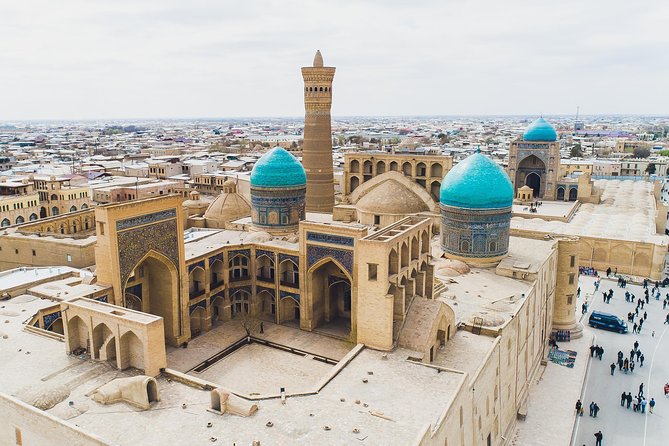
Bukhara is the kind of city that makes a long day worthwhile. Its old center gathers blue-domed madrassas, brick mausoleums, mosques, trading domes, and the massive Ark Fortress in a walkable historic core. This tour gets you there by Afrosiyob high-speed train and brings you back by flight, so you can see the city without arranging a separate hotel stay.
I like the private format, which lets you set the pace and ask questions as you go. I also like that the price includes train and flight tickets, a private guide, local transport, entrance fees, and lunch. The drawback is the schedule: you leave Tashkent early, arrive in Bukhara late in the morning, and may have only a few hours for sightseeing before the airport. It is efficient, but not leisurely.
Key points to know before booking
- Afrosiyob train out, flight back: You travel from Tashkent to Bukhara by economy-class train and return by economy-class flight.
- Thirteen major stops: The route covers Bukhara’s best-known mosques, madrassas, mausoleums, markets, and citadel.
- Private guide and driver: Only your group takes part, with transport between the railway station, old city, sights, airport, and Tashkent hotel or home.
- Lunch and admission fees included: You do not need to budget separately for the listed sightseeing stops or midday meal.
- A very long day: Pickup begins around 6:30 a.m., and you may not reach Tashkent again until around midnight.
- Strong but not perfect feedback: The experience is rated 4.6 out of 5, with 92 percent recommending it, but transport coordination has occasionally caused serious problems.
Why this Bukhara day trip works
The main trick here is the transport plan. Bukhara is far enough from Tashkent that a normal road trip would eat up much of your day. The morning train gives you a relatively comfortable four-hour ride, and the evening flight avoids another long return journey.
Your day begins with a transfer to Tashkent Railway Station at about 6:30 a.m. The Afrosiyob is scheduled to leave at 7:30 and arrive in Bukhara at 11:17. That early departure is not easy, especially if you have just arrived in Uzbekistan, but the train gives you a chance to sleep or rest while covering the distance.
At Bukhara station, a guide and driver meet you before taking you toward the old city. From there, the day focuses on the historic center and its major monuments. After sightseeing, you are driven to the airport for the return flight, then met at Tashkent airport and transferred back to your hotel or home.
I see the $249 price as reasonable for visitors who value convenience. Train tickets, airfare, a private guide, a driver, lunch, entrance fees, and all listed transport are bundled together. Booking those pieces yourself could be cheaper or more expensive depending on availability, but it would certainly require more planning.
The real cost is your time and energy. You are paying to see Bukhara in one day, not to experience it slowly. If you have only a short stay in Uzbekistan, this is a useful solution. If you can spare two or three nights in Bukhara, an overnight visit would give the city more room to breathe.
A few more Tashkent days to weigh up
- Samarkand One Day Tour – Departure From Tashkent
★ 5.0 · 313 reviews - From Tashkent: Sightseeing Day Trip to Khujand, Tajikistan
★ 4.7 · 169 reviews - All in One Day Tour of Samarkand from Tashkent
★ 5.0 · 34 reviews
Lyabi Khause, the social heart of old Bukhara
The first major stop is the Lyabi Khause ensemble, a square built around a historic reservoir. Three large buildings frame the area: Kukeldash Madrassah to the north, the khanaka and Nodir Divan-begi complex to the west, and another historic building to the east.
You have about an hour here, which is one of the longer stops on the route. That is welcome because Lyabi Khause is not just a monument to glance at. Its layout helps you understand how old Bukhara worked, with water, religious schools, lodging, trade, and public life gathered in one place.
This is a good opening stop because it gives you a sense of the city before the schedule moves into shorter visits. Your guide can explain the role of the reservoir and the surrounding buildings, while you take in the scale of the square.
Magoki Attori Mosque and the carpet museum
The Magoki Attori Mosque is a smaller urban mosque in the middle of the city. Its setting in a residential quarter makes it different from the grand open courtyards of the Kalyan complex.
You have 30 minutes here, including time connected with the carpet museum. The stop adds texture to the day because Bukhara was not only a city of monumental religious buildings. It was also a place of homes, workshops, trade, and daily worship.
The short visit means you should listen closely to the guide and avoid lingering too long in any one corner. As with several stops on this tour, the value comes from the explanation as much as from the building itself.
Chor Minor and Bukhara’s playful architecture
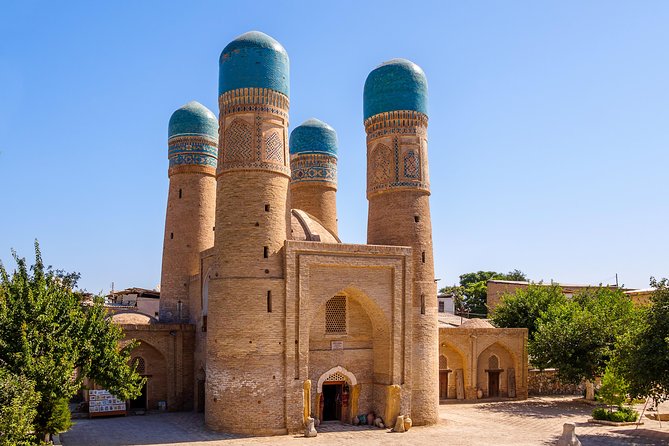
Chor Minor, meaning four minarets, is one of Bukhara’s most distinctive structures. Four small minarets with blue domes decorate the corners of the square-rectangular building, and each has different decorative details.
You get about 30 minutes here. That is enough for a close look and photographs, though not enough for a slow architectural study. Chor Minor is a useful reminder that Bukhara’s religious architecture was not all grand courtyards and towering portals. This building has a compact, almost whimsical profile.
The stop is located behind Lyabi Khause, so it fits naturally into the old-city route. Comfortable shoes matter, since you will be moving from site to site on foot and by vehicle throughout the day.
Same city, a completely different day out:
- Best of Tashkent Mountains: Amirsoy, Chimgan & Charvak Trip
★ 4.8 · 567 reviews - Samarkand One-Day Tour Departure from Tashkent
★ 4.7 · 171 reviews - Tashkent: Amirsoy Resort, Chimgan Mountain and Charvak Lake
★ 4.8 · 170 reviews - Explore Amirsoy, Chimgan & Charvak – A Full-Day Mountain Tour
★ 5.0 · 158 reviews
Trading domes and the pressure to shop
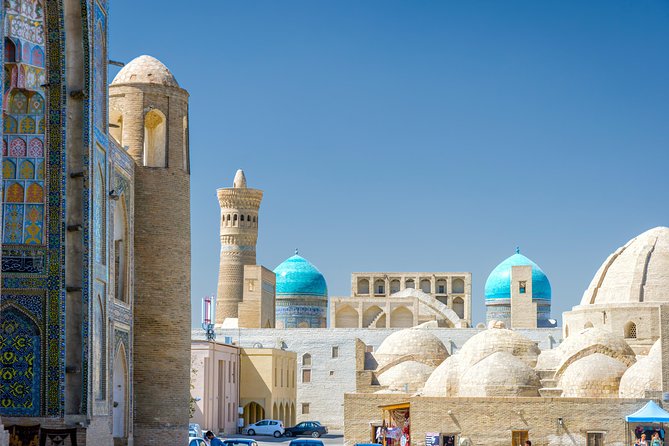
The trading domes are historic covered market structures with a hexagonal plan and broad spherical domes. Shops under the domes sell knives, jewelry, musical instruments, and souvenirs.
You have 30 minutes here. This is enough to look around, but it is also where you need to manage your time. A common concern with tightly scheduled tours is that shop visits can reduce the time available for monuments. If shopping interests you, this is your chance. If not, tell your guide politely that you would rather keep moving.
The domes are important because they show Bukhara as a commercial center, not simply a collection of religious buildings. They also provide a change of pace after the madrassahs and mosques.
The Kalyan Minaret and Kalyan Mosque
The Kalyan Minaret is one of Bukhara’s defining sights. It rises above the old city and belongs to the Po-i-Kalyan mosque complex. The minaret’s presence gives the surrounding square a strong sense of scale, even during a short 30-minute visit.
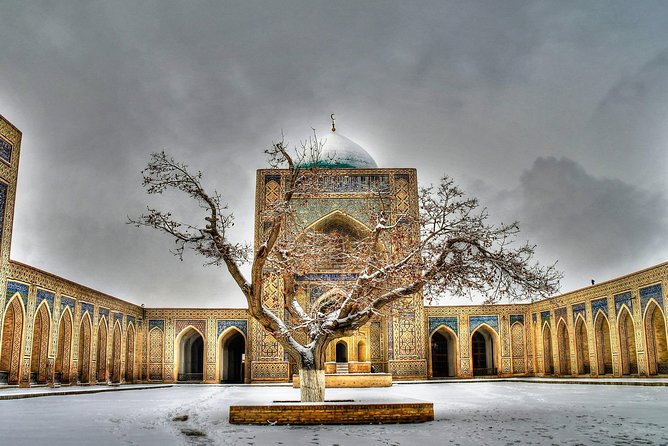
Next comes the Kalyan Mosque, a fifteenth-century monument with a broad courtyard and monumental design. You also have about 30 minutes here. The two stops belong together, so your guide can explain how the minaret and mosque function as parts of one major religious complex.
This is likely to be one of the day’s visual high points. I would pay attention to the relationship between the open courtyard, the surrounding walls, and the minaret rather than rushing straight to photographs. The visit is brief, but the complex rewards careful looking.
Mir-i-Arab Madrasa, still a working religious school
Across from the Kalyan Mosque is Mir-i-Arab Madrasa, one of Bukhara’s most important religious monuments. It remains an active institution where future imams and religious mentors study.
That living function gives the building added weight. You are not only looking at an old facade. You are seeing a place that still has a religious and educational role. The visit is scheduled for 30 minutes, and access may focus on exterior views and approved areas because it remains active.
This stop is especially useful if you want context for the madrassahs rather than treating them as decorative ruins. The guide’s explanation can help connect the building to Bukhara’s continuing religious life.
Ulugbek and Abdulaziz-Khan madrassahs
The Ulugbek Madrassah dates to 1417 and was built by the architects Ismail Isfagani and Najmeddin Bukhari. It was long used as a model for Islamic schools in other Central Asian cities.
Its design is restrained, with harmonious proportions and relatively little decoration. That simplicity makes it a useful contrast with the more heavily decorated buildings nearby. You have 30 minutes here.
The Abdulaziz-Khan Madrassah dates from 1651 to 1652 and is described as the last large madrassah built in Bukhara. Its four-iwan courtyard is more complex, with unusual arrangements of rooms, domed structures, and decorative details.
You receive another 30-minute stop. The two madrassahs work well as a pair because they show different periods and design approaches. Try to notice the difference between Ulugbek’s measured form and Abdulaziz-Khan’s more ambitious composition.
Inside the Ark of Bukhara
The Ark is Bukhara’s great citadel and the former residence of its khans. Excavations indicate that a citadel occupied this site as far back as the fourth century BC. Centuries of construction and destruction created an artificial hill about 20 meters high, with upper layers added during the time of the final Bukharan emirs.
You have about 30 minutes here. That is enough to understand the fortress’s scale and importance, but the site could easily occupy much longer. The Ark is not simply a fortified wall. It represents the political center of Bukhara, built up over many centuries.
If you have a strong interest in fortress architecture or local government, this is one place where you may wish for extra time. Still, the tour gives you a useful overview without requiring a separate visit.
Bolo Hauz Mosque and the old Registan
The Bolo Hauz Mosque was built in 1712 opposite the Ark in the Registan district. It is included within the UNESCO-listed historic area of Bukhara.
The mosque provides a calmer counterpoint to the Ark. After seeing the citadel as the seat of political power, you see a religious building positioned directly across from it. Your scheduled time is 30 minutes.
The short stop also reflects the overall character of the tour. You will see many important buildings, but you must accept quick visits. If you enjoy studying architectural details at length, this itinerary may feel rushed.
The Samanid Mausoleum and early Islamic design
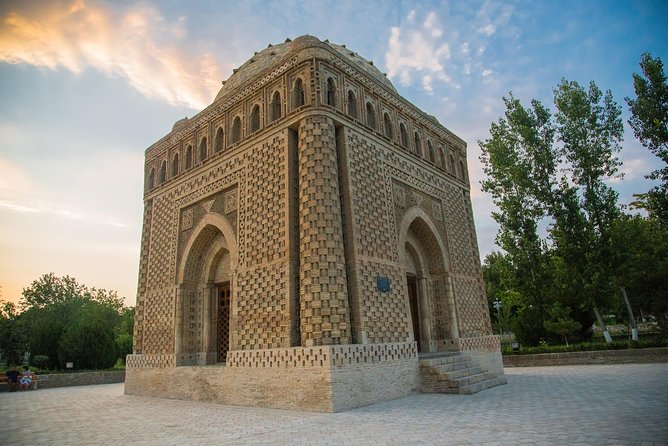
The Ismail Samani Mausoleum is one of the day’s most important monuments. Built in the tenth century, it is often identified as the oldest funerary building in Central Asian architecture and a major example of early Islamic design.
Located just outside the historic center, it offers a different mood from the busy monument clusters. The building’s brickwork and geometric form are the main attraction. You have 30 minutes, which gives you time to walk around it and hear why it matters.
This is a stop I would not skip. Its importance is easy to miss if you are focused only on blue tile and huge portals, but the mausoleum’s age and disciplined design make it one of Bukhara’s essential sights.
Chashma-Ayub and the Museum of Water
The final listed stop is the Chashma-Ayub Mausoleum, a religious building with a holy spring. The complex began under Karakhanid rulers in the twelfth century and was rebuilt several times between the fourteenth and nineteenth centuries. It was completed during the reign of Tamerlane.
Today, the site includes a Museum of Water. You have 30 minutes here, giving you a final look at the connection between Bukhara’s monuments and the practical need for water in a dry region.
After this stop, the driver takes you to the airport. The return flight is included, but you should expect downtime at the airport and a late arrival in Tashkent, around midnight. Plan nothing demanding for the next morning.
What the private format really changes
A private tour is more than a smaller group. It gives you a chance to ask for clearer explanations, adjust the pace, and tell the guide when shopping is not your priority. That matters here because the route contains 13 stops and many are limited to 30 minutes.
The private format cannot create extra hours. The train arrives at 11:17, and the evening flight sets a firm departure time. Some schedules may leave only about three hours for active sightseeing, so ask for the exact flight and expected city tour time before booking.
Transport coordination is also important. Most of the day depends on tickets and timed transfers. One poor experience involved a visitor not finding the promised representative at Bukhara station, followed by stress with taxi drivers. Another booking was affected when no return flight seat was available on the day of travel. These problems appear uncommon, but they show why you should confirm the pickup name, meeting point, train details, and return flight before departure.
The operator provides confirmation at booking, and the tour has free cancellation up to 24 hours before the start time. Changes or cancellations inside that window are not accepted, and poor weather or failure to meet the minimum number of participants can lead to a different date or a full refund.
Who should book this Bukhara tour?
I would choose this tour if you are based in Tashkent, have only one free day, and want the practical work handled for you. It suits visitors who want major monuments, a private guide, lunch, and door-to-door transfers without arranging a complicated train and flight combination.
It is also a good match for first-time visitors to Bukhara. The route covers the essential sights and gives you historical context instead of leaving you to identify every madrassah yourself.
I would hesitate if you dislike early starts, long travel days, or fast sightseeing. You need a moderate level of physical fitness, and the schedule leaves little room for delays. Anyone hoping for quiet evening walks, extended market time, or slow visits inside museums should stay overnight in Bukhara instead.
Should you book it?
Book it if time matters more than pace. The combination of Afrosiyob train, private guide, included tickets, lunch, and evening flight makes Bukhara possible from Tashkent in a single day.
Do not book it expecting a relaxed city break. You will leave before breakfast, visit a remarkable number of places, spend much of the day moving, and return near midnight. Confirm the return flight and station meeting instructions before paying, then bring comfortable shoes and keep your expectations focused on seeing the highlights. For a one-day introduction, the value is strong. For a deeper feel for Bukhara, add nights in the city.
FAQ
What is the price of the Bukhara day tour?
The price is $249 per person.
How long does the experience last?
The full experience takes approximately 12 to 16 hours, with departure in the morning and arrival back in Tashkent around midnight.
What time does the tour start?
The scheduled start time is 7:00 a.m., with transfer to Tashkent Railway Station at about 6:30 a.m.
How do I travel from Tashkent to Bukhara?
The outbound journey uses an economy-class Afrosiyob high-speed train. It is scheduled to leave Tashkent at 7:30 a.m. and arrive in Bukhara at 11:17 a.m.
How do I return to Tashkent?
The return journey uses an economy-class flight from Bukhara to Tashkent. Airport transfer and transfer from Tashkent airport to your hotel or home are included.
Is this a private tour?
Yes. Only your group takes part in the activity.
Is lunch included?
Yes. Lunch is included in the tour price.
Are entrance fees included?
Yes. Entrance fees for all listed sightseeing places are included.
Does the tour pick me up from my hotel?
Pickup is offered from Tashkent hotels or the Tashkent airport, with transport also provided to the railway station and after your return flight.
What happens if the high-speed train is unavailable?
The high-speed train may be replaced by the most comfortable class of regular train if Afrosiyob is unavailable.
Can I cancel for a full refund?
You can cancel at least 24 hours before the experience begins for a full refund. Cancellations or changes made less than 24 hours before the start time are not accepted for a refund.
Just added around Tashkent
- Tashkent Mountain Tour Amirsoy with Transport★ 3.5 · 3 reviews
- Tashkent: 3-Day Horseback Riding Tour in Chimgan Mountains★ 4.4 · 3 reviews
- Private Intercity Transfer Tashkent – Samarkand – Tashkent★ 3.5 · 3 reviews
- Samarkand: Uloq-Kopkari (Buzkashi) Game Day Tour★ 5.0 · 3 reviews
- Private Tashkent City Tour★ 5.0 · 3 reviews
- Transfer Tashkent Airport / Railway Station – Hotel★ 3.5 · 3 reviews
- Amirsoy & Chimgan mountain tour from Tashkent★ 5.0 · 3 reviews
- Heliocomplex “Institute of the Sun” – Remnants of USSR★ 5.0 · 3 reviews
Tashkent Tours, compared.
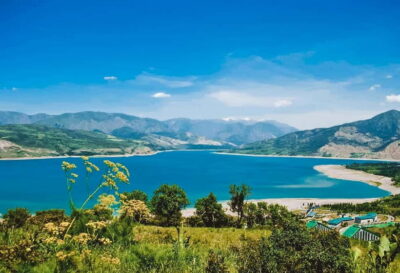
Best of Tashkent Mountains: Amirsoy, Chimgan & Charvak Trip
Read our review →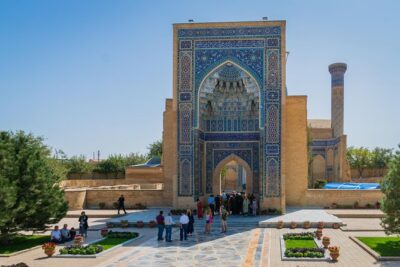
Samarkand One Day Tour – Departure From Tashkent
Read our review →Tashkent: Amirsoy Resort, Chimgan Mountain and Charvak Lake
Read our review →From Tashkent: Sightseeing Day Trip to Khujand, Tajikistan
Read our review →Explore Amirsoy, Chimgan & Charvak – A Full-Day Mountain Tour
Read our review →Tajikistan : Exclusive Seven Lakes Day Tour From Samarkand
Read our review →Explore Amirsoy, Chimgan, Charvak Adventure Tour
Read our review →
Browse the lists this tour appears in