
Reviewed · TASHKENT TOURS
Samarkand One-Day Tour Departure from Tashkent
Samarkand is the reason many people come to Uzbekistan, and this tour gives you its grandest sights in one very full day. You travel by Afrosiyob train, then move from blue-domed mausoleums to Timurid mosques, a medieval observatory, and the great square of Registan.
I like the clean, fast train ride and the way hotel pickup, rail transfers, local transport, entry fees, lunch, and the guide are bundled together. I also like the guides’ mix of history and everyday Uzbek culture. Mokhigul, Hakimjon, Sevinch, Alina, and others are praised for clear storytelling and thoughtful help.
The catch is the schedule. You may leave around 8 a.m. and return near 10 p.m., with a late lunch, so eat breakfast and carry a snack. The train ride is comfortable, but fellow passengers may not always respect quiet-car manners.
Key points to know before booking
- Afrosiyob makes the day possible: The ride takes about 2 hours and 17 minutes each way, far less tiring than a long road transfer.
- Samarkand’s major sights fit into six hours: You visit Registan, Gur-Emir, Bibi-Khanym, Shah-i-Zinda, and Ulugbek Observatory.
- The guides are a major strength: English and Russian tours are available, with guides including Mokhigul, Hakimjon, Sevinch, Alina, and others.
- Lunch is local rather than forgettable: Traditional Uzbek dishes such as manti may be served in a restaurant used by local people.
- Hotel-to-hotel handling saves effort: Pickup in Tashkent, train assistance, a Samarkand driver, and the return transfer are included.
- The price reflects convenience: At $219 per person, this is not a budget rail ticket, but it can be good value if you have only one free day.
Why Samarkand works as a one-day trip
Samarkand is not a minor side trip. It was one of the great cities of Central Asia, shaped by trade, science, religion, and the rule of Amir Timur, also known as Tamerlane. Its monuments are large, theatrical, and covered in tilework that rewards close attention.
The high-speed train changes the calculation. You spend roughly 4 hours and 34 minutes on the round trip, but much of that time is seated and relatively easy. That leaves about six hours for the city, enough for the main historic sights but not enough for a slow, unplanned wander through every neighborhood.
I would choose this tour if you are based in Tashkent and have limited time in Uzbekistan. If Samarkand is central to your trip, an overnight stay would let you see the monuments at a calmer pace and return to places that deserve a second look.
A few more Tashkent days to weigh up
- Best of Tashkent Mountains: Amirsoy, Chimgan & Charvak Trip
★ 4.8 · 567 reviews - Samarkand One Day Tour – Departure From Tashkent
★ 5.0 · 313 reviews - Tashkent: Amirsoy Resort, Chimgan Mountain and Charvak Lake
★ 4.8 · 170 reviews
Leaving Tashkent by Afrosiyob train
Your day begins with hotel pickup in Tashkent. The tour team takes you to the train and helps you board, which matters because early departures and unfamiliar stations can add needless stress.
The Afrosiyob journey to Samarkand takes about 2 hours and 17 minutes. The train is described as clean and comfortable, with complimentary water, tea, coffee, and a snack. Toilets are also reported to be clean, a small point that becomes important on a long day.
Once you are on board, you normally travel with your group without a tour representative sitting beside you. Staff help you get onto the correct train, and your Samarkand guide and driver meet you after arrival.
One practical warning: train etiquette can be uneven. Some passengers may play music or watch videos without headphones. Earplugs or headphones are worth packing, especially if you want to rest before the sightseeing starts.
If the Afrosiyob high-speed service is unavailable, the operator says it will substitute the most comfortable class of regular train. That keeps the trip running, but the journey may not feel as quick or polished.
Registan Square and the Timurid city
Registan is the visual centerpiece of Samarkand. Three enormous madrasahs frame the square, their facades covered with geometric tilework, calligraphy, arches, and blue ornament.
This is a place where a guide earns their fee. Without context, you see three beautiful buildings. With a good explanation, you begin to understand how the square worked as a center of religious study, public life, and royal display.
Your guide should give you time to look around and take photographs, not simply rush you from one doorway to the next. That balance is important on a one-day visit. Several guides, including Mokhigul and Hakimjon, are praised for explaining the past while also discussing modern Uzbek life.
Registan can feel visually overwhelming, especially if this is your first introduction to Central Asian Islamic architecture. Take a few minutes to study the repeated patterns and the way the three buildings differ. The details are easier to appreciate when you stop treating the square as one giant photograph.
Gur-Emir and the blue dome of Tamerlane
Gur-Emir is the mausoleum of Amir Timur, the ruler whose empire reached across much of Central Asia and beyond. The building is smaller than Registan but has a more intimate power, with a striking blue dome and a richly decorated interior.
The visit gives your guide a natural chance to explain Timur’s role in Samarkand. He was a conqueror, patron, and builder, and the city’s grand monuments are closely tied to his dynasty. If you know little about him before arriving, a short video or reading about Amir Timur can help you follow the stories more easily.
This stop is also a useful change of scale. After the open space of Registan, Gur-Emir brings you close to tilework, inscriptions, and the atmosphere of a royal burial place.
Photography and quiet observation matter here. Give yourself time to look upward at the dome and then down toward the tombs, where the building’s decoration becomes more personal and less purely monumental.
Same city, a completely different day out:
- From Tashkent: Sightseeing Day Trip to Khujand, Tajikistan
★ 4.7 · 169 reviews - Explore Amirsoy, Chimgan & Charvak – A Full-Day Mountain Tour
★ 5.0 · 158 reviews - Tashkent City Tour
★ 5.0 · 121 reviews - Tajikistan : Exclusive Seven Lakes Day Tour From Samarkand
★ 4.9 · 102 reviews
Bibi-Khanym Mosque and the old market
Bibi-Khanym Mosque was once among the largest mosques in the world. Its size helps explain the ambition of Samarkand under Timur, though the surviving structure also shows the damage and rebuilding that have shaped the city over time.
The mosque is best approached as both an architectural wonder and a reminder that grand projects have costs. Massive scale, huge arches, and decorated surfaces create the drama, while the worn sections help you see that this is an old monument rather than a perfect stage set.
Nearby, the tour includes time for the local market and shopping. This is one of the more grounded parts of the day. Instead of moving only between famous monuments, you get a glimpse of food, daily commerce, and the products people buy and sell.
Your guide can help you understand what you are seeing and may assist with local market tips. You should still treat shopping as optional. The purpose of this stop is not to pressure you into buying souvenirs, but to connect the monumental Samarkand with ordinary city life.
Shah-i-Zinda, the most detailed stop
Shah-i-Zinda is a necropolis lined with mausoleums. Its narrow route and jewel-colored tilework make it one of Samarkand’s most memorable places, but it can also be the hardest stop to take in quickly.
Each facade has its own patterns and colors. Walk slowly when the group allows, and look at the tile borders, repeated motifs, and changes in shade. This is not just a single monument to photograph from outside. It is a sequence of spaces that gains force as you move through it.
The path may be busy, and the day’s schedule means you cannot linger indefinitely. Comfortable shoes are sensible, since the tour involves substantial walking between and within historic sites.
Shah-i-Zinda also asks for respectful behavior. It is a burial complex, not only a scenic backdrop, so listen carefully to the guide’s instructions about conduct and photography.
Ulugbek Observatory and medieval science
At Ulugbek Observatory, the focus shifts from rulers and religious buildings to astronomy. Ulugbek, a Timurid ruler and scholar, supported careful observations of the sky and helped produce remarkably precise astronomical measurements for his time.
The surviving remains are not as visually grand as Registan or Shah-i-Zinda. The value comes from understanding what happened here. Your guide can explain how medieval scholars tracked celestial movements and why Samarkand was an important center for learning.
This stop broadens the day. Samarkand was not only a city of armies and monumental buildings. It also supported mathematics, astronomy, and scholarship. That context makes the earlier monuments feel less like isolated attractions and more like parts of a larger intellectual and political world.
If you are tired by this point, the observatory may require extra attention. It rewards curiosity more than quick photographs, so ask your guide questions if you want the science explained in plain terms.
Lunch with Uzbek dishes
Lunch is included, and it is usually served at a local restaurant rather than treated as an afterthought. Traditional Uzbek food is part of the experience, not simply fuel between monuments.
Manti, steamed dumplings often filled with meat, receives particular praise. You may also encounter other local dishes, but the exact menu is not specified, so do not book this expecting one guaranteed plate.
The timing is worth noting. Lunch can come late, which is why breakfast and a small snack are practical. Water is provided in the car, but carrying your own refreshments will make the long day easier.
At $219, an included local meal adds some value, especially when paired with private or small-group arrangements. The real benefit is not the cost of one meal. It is avoiding the time and effort of finding a restaurant during a tightly planned sightseeing day.
Transport, guides, and group size
The tour is available privately or in a small group. That choice can change the feel of the day. A private tour gives you more room to ask questions, pause for photographs, and shape the pace, while a small group can reduce the cost per person and add company on the long journey.
A local driver handles transport around Samarkand. The guide leads the historic visits, explains the sites, and helps connect architecture with Uzbek culture. The strongest part of the service is the coordination between these roles.
The arrangements generally include hotel pickup and drop-off in Tashkent, a transfer to the train, a meeting in Samarkand, transport around the city, and assistance getting back onto the evening train. That is a lot of moving parts for one day.
There was at least one reported delay at Samarkand station, when the guide arrived about 20 minutes after the train. It was resolved, but the episode shows why you should keep your phone available and have the tour contact details at hand. The station can be crowded with taxi drivers, and a clear meeting plan helps.
Guides named in the feedback include Mokhigul, Hakimjon, Sevinch, Alina, Henry, Moha, Maftuna, and Zaynab. The repeated praise centers on clear explanations, patience, warmth, and the ability to discuss both history and present-day Uzbekistan.
Is $219 good value?
The price is $219 per person. You are paying for more than a train ticket, and the value depends on how much planning you want to avoid.
Included are transportation, entrance fees, a guide, lunch, and hotel pickup and drop-off. You also get the practical benefit of having someone coordinate the connection between Tashkent, the railway, Samarkand’s driver, the sites, and the return train.
For a solo visitor or first-time visitor to Uzbekistan, that package can be sensible. Booking rail seats, arranging a local car, choosing restaurants, buying entries, and timing every stop yourself may cost less, but it takes time and leaves more room for mistakes.
The price is less compelling if you already have reliable local transport and prefer to explore slowly. A do-it-yourself visit could give you more freedom, especially if you want markets, side streets, or extra time at one monument.
The tour’s 4.7 rating from 171 reviews points to a consistently strong experience, but I would still focus on the schedule rather than the number. This is a long, efficient sightseeing day, not a relaxed city break.
Who should book this Samarkand tour?
I would recommend it to you if you are staying in Tashkent, have only one day available, and want the main landmarks with minimal planning. It is also a good fit if you value historical explanation and prefer a guide who can handle the transport details.
First-time visitors to Uzbekistan may find the structure especially useful. The city’s names, rulers, architectural styles, and religious terms can blur together without help, and a good guide gives the day a clear shape.
You should think twice if you dislike early starts, long travel days, or fixed schedules. One review also suggested choosing a mountain trip instead if your time in Uzbekistan is extremely limited and your interests lean toward nature rather than architecture and history.
If you can stay overnight in Samarkand, do so. But if you cannot, this is a well-planned way to see the city’s central sights in one shot.
Practical verdict for a one-day visit
I would book this tour for the logistics and the guide, not simply because Samarkand is famous. The train makes the distance manageable, the included transport removes friction, and the best guides add meaning to buildings that could otherwise become a blur of blue tiles.
Pack breakfast or a snack, headphones, comfortable shoes, a phone charger, and layers. The tour runs across a long stretch of the day, and the ability to leave a jacket in the car can help as temperatures change.
Free cancellation is available up to 24 hours before departure, and you can reserve now and pay later. English and Russian guides are offered. For a single, carefully organized day from Tashkent, the $219 cost is fair if you want comfort, structure, and the main Samarkand sights without arranging each piece yourself.
FAQ
How long is the train journey from Tashkent to Samarkand?
The high-speed Afrosiyob train takes about 2 hours and 17 minutes each way.
What sights are included in the Samarkand visit?
The tour includes Registan Square, Gur-Emir Mausoleum, Bibi-Khanym Mosque, Shah-i-Zinda necropolis, Ulugbek Observatory, and a local market visit.
Is lunch included?
Yes. Lunch is included, with traditional Uzbek food served at a local restaurant. Manti may be among the dishes served, but the exact menu can vary.
Are hotel transfers included?
Yes. Pickup and drop-off at your Tashkent hotel are included, along with transport to and from the train and local transport in Samarkand.
What languages do the guides speak?
Live guides are available in English and Russian.
What happens if the Afrosiyob train is unavailable?
The tour provider says the high-speed train will be replaced with the most comfortable class of regular train.
Just added around Tashkent
- Tashkent Mountain Tour Amirsoy with Transport★ 3.5 · 3 reviews
- Tashkent: 3-Day Horseback Riding Tour in Chimgan Mountains★ 4.4 · 3 reviews
- Samarkand: Uloq-Kopkari (Buzkashi) Game Day Tour★ 5.0 · 3 reviews
- Private Intercity Transfer Tashkent – Samarkand – Tashkent★ 3.5 · 3 reviews
- Private Tashkent City Tour★ 5.0 · 3 reviews
- Transfer Tashkent Airport / Railway Station – Hotel★ 3.5 · 3 reviews
- Heliocomplex “Institute of the Sun” – Remnants of USSR★ 5.0 · 3 reviews
- Half-day excursion around Tashkent★ 5.0 · 3 reviews
Tashkent Tours, compared.
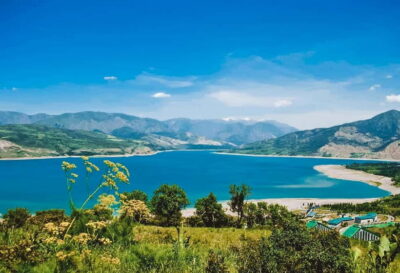
Best of Tashkent Mountains: Amirsoy, Chimgan & Charvak Trip
Read our review →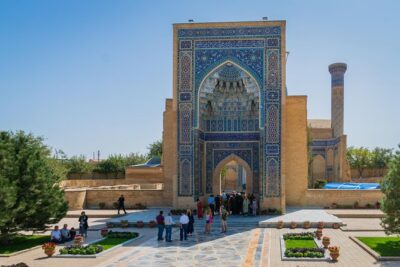
Samarkand One Day Tour – Departure From Tashkent
Read our review →Tashkent: Amirsoy Resort, Chimgan Mountain and Charvak Lake
Read our review →From Tashkent: Sightseeing Day Trip to Khujand, Tajikistan
Read our review →Explore Amirsoy, Chimgan & Charvak – A Full-Day Mountain Tour
Read our review →Tajikistan : Exclusive Seven Lakes Day Tour From Samarkand
Read our review →Explore Amirsoy, Chimgan, Charvak Adventure Tour
Read our review →
Browse the lists this tour appears in