
Reviewed · CITY TOURS IN SAMARKAND
Samarkand: Private Tour of Ancient City and Traditional Art
Samarkand’s grandest sights are spread across the city, and this private tour gives you a sensible way to connect them in one day. You move from the tiled courts of Registan Square to the blue-domed Bibi Khanum Mosque, the tomb-lined Shah-i-Zinda ensemble, and Ulugbek’s remarkable observatory.
I like the flexible private format, especially if you want to ask questions or adjust the pace. I also like the mix of famous monuments and living culture, including the traditional making of silk paper, an art valued in Samarkand since the 8th century.
The main consideration is the pace. Six hours covers a great deal, and several stops involve walking over uneven ground and standing outdoors. Entry fees are also extra, listed at $11 per person, so budget for that on top of the tour price.
Key points at a glance
- Registan Square anchors the day: Learn how the Ulugbek, Sher-Dor, and Tillya-Kari madrasahs shaped Samarkand’s public, religious, and educational life.
- The route covers the city’s major monuments: Bibi Khanum Mosque, Shah-i-Zinda, Hojja Ahrar, Ulugbek Observatory, and the Mausoleum of Hodja Daniyar are all included.
- Silk paper adds a hands-on cultural stop: See a traditional craft with roots reaching back to the 8th century.
- Private guiding makes the schedule adaptable: Guides such as Sevinch, Adiba, Adi, Guli, and Shakhlo have been praised for clear explanations and practical help.
- Transport saves time: Hotel pickup and drop-off connect sites that are too spread out for a comfortable walking tour.
- The price makes most sense for a solo visitor or very small private party: Entry fees are separate, and the advertised rate is $180 for a group up to one person.
Why this six-hour route works in Samarkand
Samarkand is one of those cities where a map can mislead you. The headline sights may look close together, but a full visit involves several separate areas. A private vehicle lets you spend your time looking at monuments rather than working out how to get from one to the next.
This tour also gives the day a clear shape. You start with the city’s best-known square, move through Timurid architecture and burial sites, then reach the observatory and the craft demonstration. That combination helps you understand Samarkand as more than a collection of beautiful facades.
Your guide is an important part of the experience. The tour is offered in Uzbek, Russian, English, French, Italian, and German. Several named guides have received especially warm praise for their communication and patience, including Adi, Sevinch, Shakhlo, Adiba, Guli, and Lola.
I would tell you to use the private setting well. Ask about the difference between a madrasa and a mosque, how Timurid rulers used architecture, or what daily life looks like in modern Samarkand. The guide can also explain details that are easy to miss when you walk through the sites alone.
More City Tours in Samarkand
- Samarkand: Historical City Highlights Guided Walking Tour
★ 4.8 · 153 reviews - Private Samarkand City Tour With Transportation
★ 5.0 · 149 reviews - A City Tour Of Samarkand: The Pearl Of The East
★ 5.0 · 133 reviews
Registan Square and the three madrasahs
Registan Square is the natural starting point because it explains so much about Samarkand. Three monumental madrasahs face the open space: Ulugbek Madrasah, Sher-Dor Madrasah, and Tillya-Kari Madrasah.
The scale is the first thing you notice. The square was not simply built for photographs. It was a center of teaching, public life, and ceremony, and its buildings show how education and religion were tied to the power of the ruling dynasty.
Ulugbek Madrasah connects the square to Ulugh Beg, the ruler and astronomer whose work receives more attention later in the day. Sher-Dor is known for its striking exterior decoration, while Tillya-Kari adds a richly decorated interior. Your guide can help you compare the three rather than treating them as one repeated monument.
Allow yourself time to look up. The tile patterns, inscriptions, domes, and geometric forms reward patience. You may be tempted to rush from one photo point to another, but the square is best understood slowly, with an explanation of what each building was designed to do.
Registan is also the most visually demanding stop. Open spaces can feel hot in strong sun and exposed in bad weather. Comfortable shoes, water, and a hat are sensible choices, although food and drinks are not included in the tour.
Bibi Khanum Mosque and Timurid ambition
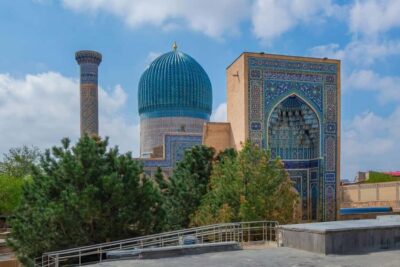
Bibi Khanum Mosque brings you into the age of Timur, one of the key periods in Samarkand’s development. The mosque is presented as a major example of Timurid architecture, with large forms and detailed surface decoration.
The building’s appeal is its sense of ambition. It was designed to make an impression, and the scale helps you understand how rulers used architecture to express authority. Look closely at the decorative work rather than viewing the mosque only from a distance.
A guide is useful here because the site’s visual impact can overshadow its historical meaning. Ask your guide to connect the mosque to the wider story of Timur’s Samarkand and to point out details in the design.
This is another stop where walking and outdoor exposure matter. If your mobility is limited, the tour is not recommended. The official guidance also says the tour runs rain or shine, so bring suitable footwear and clothing for the forecast.
Shah-i-Zinda, Samarkand’s most atmospheric memorial complex
Shah-i-Zinda is one of the tour’s most distinctive stops. This memorial ensemble contains the burial places of royals and members of the nobility, with a sequence of decorated structures creating a powerful passage through the site.
The experience here differs from Registan. Registan is broad and monumental; Shah-i-Zinda feels more like a processional route, with tiled facades close to the eye. The changing patterns and colors give you plenty to examine as you move through the ensemble.
I would not rush this section. The value lies in the details: the tilework, the layout of the memorial buildings, and the sense that this is a place of remembrance as well as architecture. Your guide can explain why the complex matters and help separate fact from the first impressions created by the decoration.
Shah-i-Zinda may be one of the more physically demanding sections because the route includes walking through a memorial complex. The supplied information specifically warns that the tour does not suit people with mobility impairments, so consider this carefully before booking.
A few more Samarkand days to weigh up
- Samarkand: Historical Monuments Guided Walking Tour
★ 4.8 · 446 reviews - Small group: Tajikistan Seven Lakes Day trip from Samarkand
★ 4.8 · 299 reviews - Day Trip to the Seven Lakes of Tajikistan: From Samarkand
★ 4.7 · 133 reviews - Bukhara: Historical City Highlights Guided Walking Tour
★ 4.6 · 102 reviews
Hojja Ahrar and the spiritual side of the city
The Hojja Ahrar Ensemble adds a different layer to the day. It includes memorial, religious, spiritual, and educational buildings, showing that Samarkand’s importance was not limited to royal projects.
This stop is valuable because it broadens the story. The city was shaped by scholars, religious figures, students, pilgrims, craftspeople, and ordinary residents, not only by rulers. A good guide can explain how the ensemble fits into Samarkand’s cultural and spiritual life.
The stop may feel less immediately familiar than Registan or Bibi Khanum. That is part of its appeal, but it also means the quality of the explanation matters. Guides such as Lola and Sevinch have been praised for connecting historical information with local culture, which is exactly the kind of context that helps at a site like this.
Ulugbek Observatory and the science of the Timurid era
Ulugbek Observatory is one of the tour’s most rewarding contrasts. After the monumental religious and royal architecture, you turn to astronomy and measurement.
Ulugh Beg personally carried out astronomical research and calculations here. That fact gives the site unusual force. Samarkand was not only a center of power and faith; it was also a place where scholars studied the heavens with serious precision.
The observatory helps you see Ulugh Beg as more than a ruler whose name appears on one of Registan’s madrasahs. His legacy links government, education, and scientific work. Your guide can explain why the observatory matters and how it fits into the city’s wider intellectual past.
This stop is especially good for you if you want more than architecture. The remains themselves may not have the visual drama of the tiled monuments, but the ideas connected to the site make it a necessary part of the route.
Mausoleum of Hodja Daniyar and shared reverence
The Mausoleum of Hodja Daniyar is described as a revered place for Muslims, Christians, and Jews. That shared respect gives the stop a special place in the tour.
You will see another side of Samarkand here, one shaped by overlapping religious traditions and long-standing pilgrimage. The site provides a useful pause from the grand Timurid monuments and reminds you that the city’s cultural story reaches across communities.
The meaning of the place is more important than a long checklist of architectural features. Listen to the guide’s explanation and take a respectful approach. As with the other religious and memorial sites, appropriate behavior and attention to the setting matter.
Silk paper and an enduring Samarkand craft
The traditional silk-paper demonstration is the tour’s most distinctive cultural addition. Silk paper has been valued in Samarkand since the 8th century, and seeing how it is produced gives you a link to working craft rather than only monumental history.
This is also a welcome change of pace after several major sites. Instead of looking up at domes and facades, you watch a traditional applied art being made. That helps connect the ancient city to skills and production that remain part of its cultural identity.
I like this stop because it gives you something concrete to remember beyond photographs. It also supports a better understanding of Samarkand as a place where art, trade, learning, and daily work have long overlapped.
The supplied details do not specify how long the demonstration lasts or whether products are available to buy, so I would treat it as a cultural viewing stop rather than plan your day around shopping.
What the private guide and vehicle add
Hotel pickup and drop-off are included, which is useful in a city where the major sights are not all in one compact pedestrian zone. You are asked to wait in the hotel lobby 10 minutes before pickup, with the driver holding a sign showing your last name.
The private format gives you more control than a large group tour. You can ask follow-up questions, spend longer at a favorite monument, or make a small adjustment when practical. Adiba, for example, has helped visitors with food suggestions and nearby Siyob Bozor, while Guli’s patient approach suited people who had many questions.
A driver can also be more than a person behind the wheel. Utkur was praised for helping find suitable meals and shops for specific items, while another driver was noted for waiting patiently during the visits. Those details matter when you are managing a full day in an unfamiliar city.
Still, the service is not a custom itinerary advertised without limits. The route contains many scheduled sights, and six hours is finite. Tell your guide early if one place matters most to you, so you can spend your available time wisely.
Price, entry fees, and overall value
The advertised price is $180 per group up to one person, with hotel transfers and a professional guide included. Entry fees are not included and are listed at $11 per person.
For a solo visitor, that price is easiest to justify if you value time, transport, and personal attention. Samarkand’s key sights are numerous, and the private vehicle reduces the effort of organizing each transfer yourself. You are also paying for explanations in your chosen language, not simply a ride between monuments.
The value changes if the booking conditions allow more than one person at the same rate, so check the final group pricing carefully before paying. The supplied price specifically says up to one person, and the experience is described as a private group.
Food and drinks are extra. That is not a serious flaw, but it means you should plan for a meal or snacks during a six-hour outing. Guides have helped with meal suggestions, but the tour itself does not include them.
Free cancellation is available up to 24 hours in advance for a full refund, and you can reserve now and pay later. Those terms are useful if your Uzbekistan schedule is still changing.
Who should book this Samarkand tour?
I would choose this tour if you have one day in Samarkand and want the main monuments arranged into a practical route. It suits solo visitors, couples, and small private parties who prefer asking questions without a large group around them.
It is also a good fit if you want more than a photo stop at Registan. The observatory, Hojja Ahrar Ensemble, Hodja Daniyar Mausoleum, and silk-paper demonstration give the day more range.
You should think twice if you have limited mobility. The tour is not recommended for people with mobility impairments, and the six-hour schedule includes walking through large historical and memorial sites. Rain does not cancel the experience, so your comfort will depend partly on your clothing and footwear.
Language choice is another strength. You can request Uzbek, Russian, English, French, Italian, or German. If you have a preferred language, select it carefully when booking.
Final verdict: a strong one-day introduction
I recommend this private Samarkand tour for anyone who wants a well-organized introduction to the city without handling transport and site planning alone. Its best features are the broad route, the private guide, and the mix of famous monuments with science, spiritual history, and silk-paper craft.
The tour is not cheap once you add the $11 entry fee and your own food and drinks. It is also a busy six hours, not a slow, unstructured day. But guides such as Adi, Sevinch, Adiba, Shakhlo, Guli, and Lola have shown the kind of flexibility and clear communication that can make a packed schedule feel manageable.
Book it if you value context, convenience, and a personal guide. Skip it if you want to explore at a very slow pace or cannot comfortably manage extended walking. For a first look at Samarkand’s major sights, this is a practical and worthwhile choice.
FAQ
How long does the Samarkand private tour last?
The tour lasts six hours.
What places are included?
The route includes Registan Square, Bibi Khanum Mosque, Shah-i-Zinda, the Hojja Ahrar Ensemble, Ulugbek Observatory, the Mausoleum of Hodja Daniyar, and a traditional silk-paper demonstration.
Is hotel pickup included?
Yes. Hotel pickup and drop-off are included.
Where should I wait for pickup?
Wait in your hotel lobby 10 minutes before the scheduled pickup time. The driver will hold a sign with your last name.
Is the tour private?
Yes. It is offered as a private group experience.
What languages are available?
The tour is available in Uzbek, Russian, English, French, Italian, and German.
Are entry fees included in the price?
No. Entry fees are listed separately at $11 per person.
Are food and drinks included?
No. Food and drinks are not included.
Is the tour suitable for people with limited mobility?
No. The tour is not recommended for people with mobility impairments.
What should I bring?
Bring comfortable shoes. The tour takes place rain or shine, so suitable clothing for the weather is also sensible.
Just added around Samarkand
- Bird Watching Tours in Samarkand★ 3.6 · 3 reviews
- Seven Lakes Panjakent: One-Day Adventure from Samarkand★ 5.0 · 3 reviews
- Ancient and Modern tour in Samarkand with Transport★ 5.0 · 3 reviews
- From Samarkand: 2-Day Yurt Camp Adventure with Camel Ride★ 4.7 · 3 reviews
- Samarkand: city tour★ 4.7 · 3 reviews
- Samarkand: Cooking class with local family★ 5.0 · 3 reviews
- Explore Samarkand Guided Tour with Transfers★ 5.0 · 3 reviews
- Amankutan Trek One Day Tour From Samarkand★ 3.9 · 3 reviews
City Tours in Samarkand, compared.
Samarkand: Historical City Highlights Guided Walking Tour
Read our review →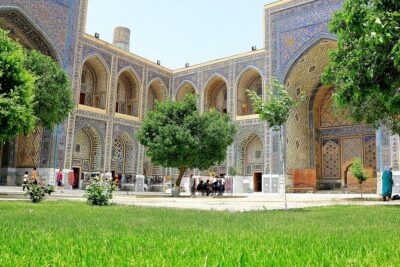
Private Samarkand City Tour With Transportation
Read our review →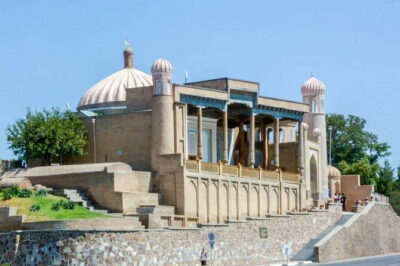
A City Tour Of Samarkand: The Pearl Of The East
Read our review →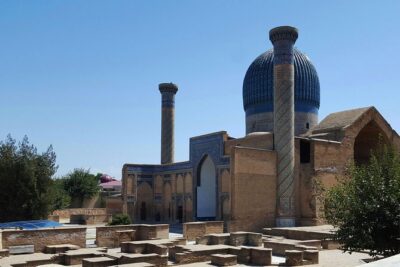
Private Guided Tour Samarkand city history and culture
Read our review →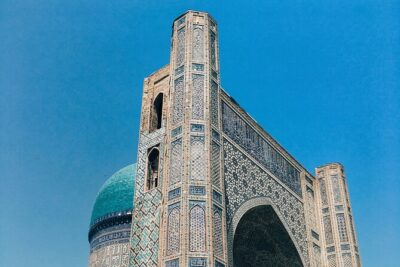
Samarkand City Tour with a Professional Photographer
Read our review →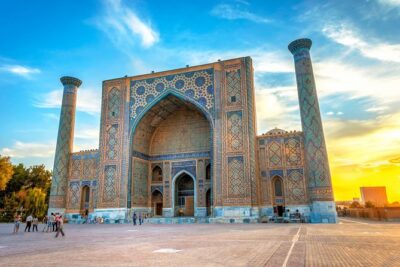
Samarkand Ancient Silk Road City Tour w/ Pickup & Lunch Option
Read our review →Browse the lists this tour appears in