
Reviewed · SAMARKAND TOURS
Panjakent day trip from Samarkand
Panjakent gives you a very different day from Samarkand’s grand tiled monuments. Here, the prize is ancient Sogdian archaeology, a quiet Tajik town, and Sarazm, a settlement whose roots reach back roughly 5,500 years.
I like the private format and the smooth border crossing reported with guide Umar, who speaks English well. I also like that lunch, transport, and admission fees are bundled into the $150 price. The drawback is simple: Panjakent’s sights are modest, and the contrast with Samarkand may leave you underwhelmed if you want large, polished monuments.
Key points at a glance
- Sarazm reaches back to about 3500 BC, making it the oldest site on this route.
- Ancient Panjakent reveals Sogdian urban life from the early medieval period.
- The Mukhammad Bashoro Mausoleum adds a fine 11th or 12th-century building to the day.
- Panjakent Bazaar gives you a brief look at ordinary town life beyond archaeological sites.
- A private vehicle and guide make a cross-border day trip easier to manage.
- The $150 price includes lunch, taxes, transport, and entry fees, but not alcohol.
Why Panjakent is worth the border crossing
Panjakent was once the easternmost town of Sogdiana, a network of trading centers that linked Central Asia with the wider Silk Road world. The Sogdians flourished here in the 5th to 8th centuries AD, and their town left behind traces of homes, public buildings, religious spaces, and decorated rooms.
That story is the main reason to book this trip. You are not coming for a grand city center or a long list of famous monuments. You are coming to see layers of settlement, from the Bronze Age at Sarazm to the medieval Sogdian town and later Islamic architecture.
The border crossing is part of the experience, though the exact process can vary. The day is private, so you are not tied to a large group or a fixed crowd. A smooth crossing was reported on one outing, and that matters because a delayed frontier can change the shape of a short tour.
The scheduled duration is about six to seven hours. That is enough time for the main sights, but it is not a leisurely exploration of every corner of Panjakent. Think of this as a focused introduction to Tajikistan, not a full regional tour.
A few more Samarkand days to weigh up
- Small group: Tajikistan Seven Lakes Day trip from Samarkand
★ 4.8 · 299 reviews - Day Trip to the Seven Lakes of Tajikistan: From Samarkand
★ 4.7 · 133 reviews - Seven Beauties of Shing -Seven Lakes Day Trip From Samarkand
★ 4.5 · 100 reviews
Sarazm, a settlement older than recorded empires
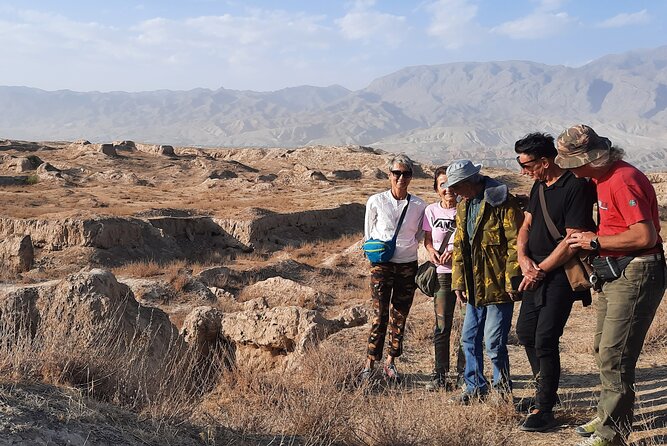
Sarazm is the strongest reason to choose this particular day trip. The site was founded around 3500 BC, and its history reaches back about five and a half thousand years. That places it far earlier than Ancient Panjakent and gives the day a useful sense of time.
You can see the remains of palace and religious buildings, public structures, and homes. Even if you are not an archaeology specialist, the basic idea is easy to grasp: long before the Sogdian town rose nearby, people had already built a substantial settlement here.
Sarazm is valuable because it changes the way you view Central Asian history. Samarkand often pulls attention toward medieval rulers, grand mosques, and royal architecture. Sarazm shifts the clock back thousands of years, to an early urban society with organized buildings and religious spaces.
Allow about 90 minutes here. That is a good length for an explained visit, though the site may feel spare if you expect reconstructed walls or a museum filled with objects. Its importance comes from what the remains tell you, not from theatrical presentation.
I would pay close attention to your guide’s explanation at Sarazm. Without context, low foundations and exposed ruins can be difficult to read. With a clear explanation, the site becomes the foundation for the rest of the day.
Ancient Panjakent and the Sogdian world
The ruins of Ancient Panjakent are the historical center of the excursion. The settlement began much earlier, but it flourished especially in the 5th century AD as part of Sogdian civilization. It was an important town at the eastern edge of Sogdiana from the 5th through 8th centuries.
You will have about an hour at the site. That is enough to get a sense of the town’s scale and layout, but not enough for a slow archaeological study. The ruins are best understood as the remains of a working city, rather than as a single spectacular monument.
Look for the outlines of residential and public areas, along with traces of religious buildings. The site helps you picture a place where merchants, craftspeople, religious figures, and families lived within a connected urban community.
The contrast with Samarkand is important. Samarkand offers finished surfaces and grand design. Ancient Panjakent offers broken walls, open ground, and clues. You need to bring a little patience and imagination.
This stop may be disappointing if you want intact facades or dramatic interiors. It is rewarding if you enjoy seeing how archaeologists reconstruct a vanished city from foundations and fragments. The guide’s role matters greatly here, since the ruins do not always explain themselves.
The Mukhammad Bashoro Mausoleum in Mazari Sharif
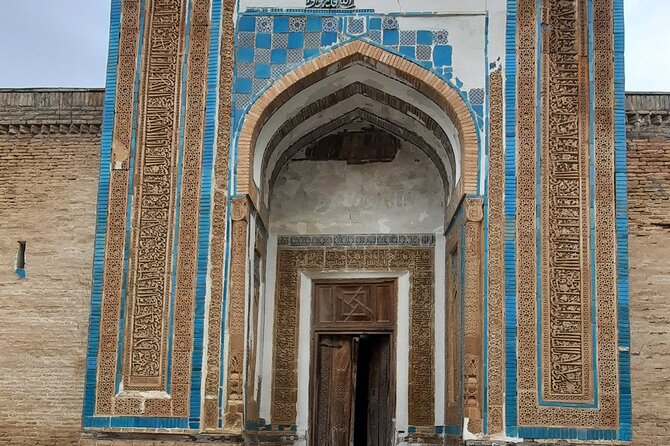
The Mukhammad Bashoro Mausoleum sits east of Panjakent, down a road off the main highway in the small village of Mazari Sharif. The route itself gives the stop a more local feel than a monument placed in a polished tourist district.
The mausoleum was built around the 11th or 12th centuries in honor of Mukhammad Bashoro. Its architectural form includes a large, deep arched shrine, small corner rooms, and corridors added or developed in the 14th century, around 1342 to 1343.
You have about two hours here, making it the longest stop of the day. That tells you something about the tour’s priorities. This is not just a quick photograph from the vehicle. The building deserves time for its shape, setting, and construction details.
Admission is included. I would use the time to look closely at the arched space and the way the smaller rooms fit around it. The monument is not on the same scale as Samarkand’s best-known religious buildings, but its setting and age give it a different appeal.
The drawback is that the stop may feel long to anyone mainly interested in the Sogdians or prehistoric archaeology. For visitors who enjoy religious architecture and quiet village settings, it balances the more exposed ruins at Sarazm and Ancient Panjakent.
Same city, a completely different day out:
- Samarkand: Historical Monuments Guided Walking Tour
★ 4.8 · 446 reviews - Samarkand: Historical City Highlights Guided Walking Tour
★ 4.8 · 153 reviews - Private Samarkand City Tour With Transportation
★ 5.0 · 149 reviews - A City Tour Of Samarkand: The Pearl Of The East
★ 5.0 · 133 reviews
Panjakent Bazaar, a short taste of daily life
The bazaar receives about 30 minutes, with no admission fee. That is not enough time for a full market visit, but it gives you a quick break from ruins and museums.
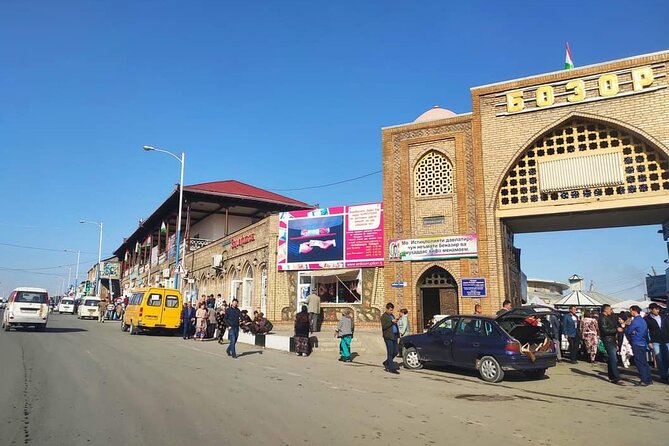
The morning rush is the best reason to include it. You can expect movement through the ornate gate, shoppers in floral clothing and headscarves, and the everyday energy of a working market. This is less about buying a long list of goods and more about seeing Panjakent as a living town.
I like this stop because it prevents the day from becoming a chain of archaeological sites. A bazaar gives you a glimpse of present-day Tajik life, even if the visit is brief.
Keep your expectations in check. Thirty minutes will not allow much wandering or relaxed shopping. If you want an extended market experience, you may find the timing tight. Still, it is a useful pause and a chance to see something that no ruin can provide.
The Rudaki museum and the father of Persian poetry
The Republican Museum of History and Local Lore of Rudaki is housed in an elegant single-story building with white Doric columns and a floral display. You have about an hour here, and admission is included.
One room is devoted to Abu Abdullah Rudaki, who lived from 858 to 941 and is known as the father of Persian poetry. His connection gives the museum a literary focus as well as a local historical one.
The museum is a good place to bring together the different periods covered during the day. Sarazm shows early settlement, Ancient Panjakent explains Sogdian urban life, and the museum provides a setting for local history and cultural memory.
As with many smaller regional museums, the quality of your visit depends on how clearly the displays are explained. This is another point where a guide who speaks good English can make the difference. Umar has been used as a guide for this experience, and his clear English and long conversations were particularly appreciated on one departure.
You should not expect the scale of a major national museum. Instead, treat it as a compact stop that adds names, objects, and cultural context to the outdoor sites.
What the $150 price really covers
At $150 per person, this is not a budget border hop. The value comes from what is included and from the private setup.
Your price covers an air-conditioned vehicle, lunch, all taxes, and admission fees. You are also paying for a guide and for the practical work of arranging a cross-border day from Samarkand. For a private group, that can be reasonable, especially if you would otherwise need to organize transport and entry arrangements separately.
The price makes less sense if you are judging the trip only by the number of grand sights. Panjakent does not offer the visual impact of Samarkand’s major monuments. The experience is about access to another country, archaeological depth, and a guided introduction to places that can be hard to interpret alone.
Group discounts are offered, so the per-person value may improve if you are traveling with several people. Since the vehicle and guide are private to your group, you also gain control over the pace within the planned schedule.
Lunch is included, though the supplied details do not specify the menu. Alcoholic beverages are not included. If you need a particular meal arrangement, ask before booking rather than assuming what will be served.
Timing, transport, and the shape of the day
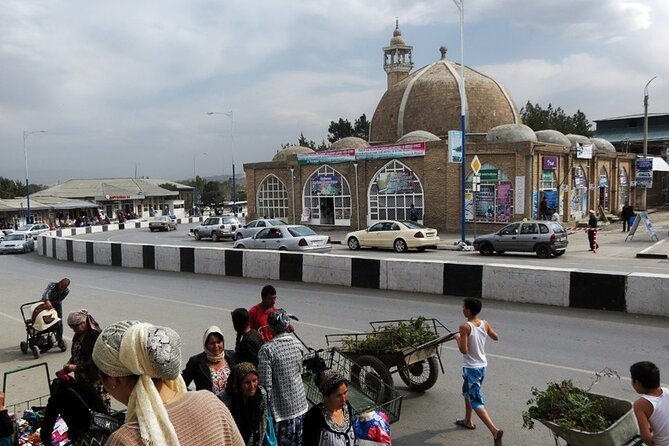
The air-conditioned vehicle is a practical inclusion. You are covering several stops in and around Panjakent, along with a border crossing, so private transport saves you from piecing together local connections.
The six to seven-hour estimate makes this a compact day. The listed stop times add up to five and a half hours, leaving a limited margin for driving, border formalities, meals, and changes in pace. That is why the smoothness of the crossing matters so much.
You should keep your schedule flexible after returning to Samarkand. The tour requires good weather, and poor conditions can lead to a different date or a full refund. You can cancel for a full refund up to 24 hours before the start time, while later cancellations and changes are not accepted.
Confirmation is provided at booking, and most people can participate. This is a private activity, so only your own group joins the tour. That makes it a better fit for couples, families, or friends who want to ask questions without holding up strangers.
The experience is often booked well ahead, with an average of about 45 days. If your dates are fixed, early planning is sensible.
Who will enjoy this day, and who may not
I would recommend this trip to you if you enjoy archaeology, early Central Asian history, religious buildings, and small-town life. It is also a strong choice if you want to add Tajikistan to a Samarkand stay without committing to a longer journey.
You will get the most from it if you enjoy guided explanation. Ancient Panjakent and Sarazm are not polished theme-park attractions. Their value appears when you understand their dates, purpose, and place in the wider story.
The trip may not suit you if you want dramatic scenery, a packed schedule of famous landmarks, or a large old town filled with restored buildings. One disappointed visitor felt the attractions were too modest after seeing Samarkand and suggested the Seven Lakes instead. That is a fair warning: Panjakent is a quiet historical outing, not a spectacle.
I would also think twice if you have only one day in the region and your main goal is Samarkand itself. But if you already have time in Samarkand and want a different setting, the change can be worthwhile.
Should you book the Panjakent day trip?
Book it if you want a practical, private introduction to Tajikistan built around old settlements rather than famous architecture. Sarazm is the strongest stop, Ancient Panjakent gives the day its Sogdian focus, and the mausoleum, bazaar, and museum add useful variety.
Skip it if you need every stop to feel grand or visually dramatic. The $150 cost is easier to justify for a private group that values transport, lunch, entry fees, and a capable English-speaking guide. For a solo visitor seeking only the biggest sights, the day may feel expensive.
The best way to think about Panjakent is as a change of scale. Samarkand shows you Central Asia’s monumental face. Panjakent lets you read the older story in ruins, village architecture, market life, and a prehistoric settlement. That is a quieter reward, but a real one.
FAQ
How long does the Panjakent day trip take?
The experience lasts approximately six to seven hours. The planned visits include the Mukhammad Bashoro Mausoleum, Ancient Panjakent, Panjakent Bazaar, the Rudaki museum, and Sarazm.
What is included in the $150 price?
The price includes an air-conditioned vehicle, lunch, all fees and taxes, and admission to the included ticketed sites. Alcoholic beverages are not included.
Is this a private tour?
Yes. Only your group participates in this private activity. Group discounts are also offered.
Which sights are included?
The route includes the Mukhammad Bashoro Mausoleum, Ancient Panjakent, Panjakent Bazaar, the Republican Museum of History and Local Lore of Rudaki, and the proto-urban site of Sarazm.
Can I cancel for a full refund?
Yes. You can cancel at least 24 hours before the experience begins for a full refund. Changes or cancellations made less than 24 hours in advance are not accepted for a refund.
What happens if bad weather cancels the tour?
The experience requires good weather. If poor weather causes cancellation, you will be offered another date or a full refund.
Just added around Samarkand
- Bird Watching Tours in Samarkand★ 3.6 · 3 reviews
- Seven Lakes Panjakent: One-Day Adventure from Samarkand★ 5.0 · 3 reviews
- Ancient and Modern tour in Samarkand with Transport★ 5.0 · 3 reviews
- From Samarkand: 2-Day Yurt Camp Adventure with Camel Ride★ 4.7 · 3 reviews
- Samarkand: city tour★ 4.7 · 3 reviews
- Samarkand: Cooking class with local family★ 5.0 · 3 reviews
- Explore Samarkand Guided Tour with Transfers★ 5.0 · 3 reviews
- Penjikent Day Trip From Samarkand★ 5.0 · 3 reviews
Samarkand Tours, compared.
Samarkand: Historical Monuments Guided Walking Tour
Read our review →
Small group: Tajikistan Seven Lakes Day trip from Samarkand
Read our review →Samarkand: Historical City Highlights Guided Walking Tour
Read our review →
Private Samarkand City Tour With Transportation
Read our review →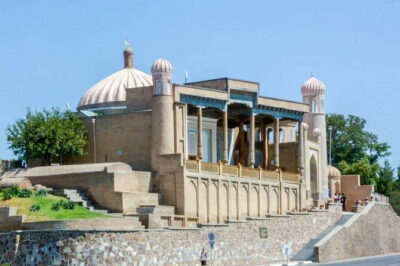
A City Tour Of Samarkand: The Pearl Of The East
Read our review →Seven Beauties of Shing -Seven Lakes Day Trip From Samarkand
Read our review →
Full Day Private Tour in Seven Lakes from Samarkand
Read our review →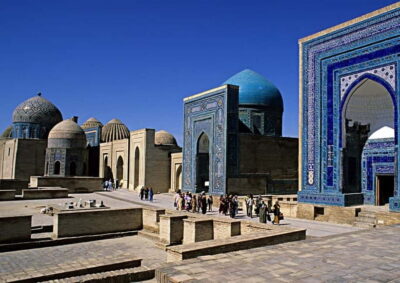
Samarkand One Day Tour: one day walking & group tour
Read our review →Browse the lists this tour appears in