
Reviewed · CITY TOURS IN TASHKENT
Tashkent Walking City Tour
Tashkent’s best introduction comes underground. This five-hour private tour links grand Russian-era squares, Soviet monuments, an ornate metro, an old city bazaar, and the sacred Hazrati Imam complex. That mix quickly explains why Uzbekistan’s capital feels so different from Samarkand or Bukhara.
I like the variety of architecture, from neoclassical theater design to Islamic schools and mosques. I also like the metro ride, since Tashkent’s stations are treated as individual works of public art rather than plain transport stops. Guides such as Muhammad, Nuriddin, Ibrohim, and Samandar have been praised for clear explanations and a friendly manner.
The main consideration is that the tour is described as a walking experience, but the route covers a wide stretch of the city. You may use the metro, and taxi costs are not included. Several stops are primarily exterior visits, so you should not book this expecting lengthy indoor museum tours.
Key points to know before you book
- The metro is part of the sightseeing: Tashkent’s first Central Asian metro is presented as an underground museum, with different decoration at each station.
- Chorsu Bazaar brings the strongest local flavor: You can browse food, sweets, produce, and souvenirs, then stop for a light meal if you wish.
- Hazrati Imam is the tour’s most important religious stop: The complex includes Barakhan Madrasa, Tillesheyh Mosque, a mausoleum, and a seventh-century Quran manuscript.
- The route crosses several eras: Tsarist Russia, Soviet rule, independence, and modern Uzbekistan all appear in one half-day walk.
- It is private for up to two people: At $90 per group, the cost is easier to justify for two people than for a solo visitor.
- Bring practical gear: Wear comfortable shoes and clothing, carry a scarf, and take cash for bazaar purchases, food, and any incidental transport.
Why Tashkent needs a mixed walking tour
Tashkent is not a single-style city. It is a capital rebuilt and reshaped across several periods, so the visual shifts can be sudden. One moment you are beside a broad ceremonial square with monumental Soviet planning. Soon after, you are among market stalls, domed roofs, Islamic schools, and neighborhood streets.
That contrast is the point of this tour. A standard central-city walk might show you polished avenues but miss the old city. A religious sightseeing route might skip the Russian and Soviet layers. Here, you get both.
I would choose this for my first full day in Tashkent, or for a half-day orientation after arriving from Samarkand. It gives you a working map of the capital and helps you decide where to return later. The guide also provides the historical links that can be hard to see when you are moving between sites on your own.
The group size matters. This is a private tour for one group of up to two people, not a large coach outing. You can ask questions, pause for photographs, and request a slightly altered pace. One guide, Nuriddin, was specifically praised for adjusting the route so it ended earlier when needed.
More City Tours in Tashkent
- Tashkent City Tour
★ 5.0 · 121 reviews - Tashkent : Classic City Tour. (Day & Night Shift)
★ 4.8 · 52 reviews - Tashkent: City Tour
★ 4.8 · 52 reviews
Starting at Hotel Uzbekistan and Amir Timur Square
The meeting point is the entrance of Hotel Uzbekistan, beside Amir Timur metro station on the red line. If you arrive by metro, exit at Amir Timur station and walk toward the hotel, the only tall building in that immediate area. The arrangement is simple, though you should confirm the exact start time because summer heat makes an early departure sensible.
Amir Timur Square introduces modern Tashkent. It is the center of the city’s newer public life and a useful place to discuss how political power has changed hands. The area once carried monuments to Stalin and Marx. Today, the monument honors Tamerlane, known locally as Amir Timur.
Your guide can also point out the role the square played in the city’s institutional growth, including the formation of an early university and the Bank of Central Asia. Allow about 30 minutes here for a guided visit and photographs.
The square is broad and formal, so the guide’s explanation is what gives it meaning. Without context, you may see only a monument and open space. With context, the site becomes a quick lesson in how public symbols changed from imperial to communist to independent Uzbekistan.
Sayilgoh Broadway and the city’s Russian-era layer
The route continues along Sayilgoh, often called Broadway Alley. It is easy to read the avenue as a modern pedestrian zone, but its past is less obvious. The area was once swampy ground before Governor-General Konstantin von Kaufman ordered it turned into a square for tsarist soldiers, their families, and local residents.
That story helps explain Tashkent’s Europeanized center. The city’s Russian influence is not limited to one building. It appears in the planning of avenues, open squares, government areas, and grand public institutions.
The itinerary also includes the palace of Grand Duke Nicholas Constantinovich, with around 20 minutes for a photo stop and guided sightseeing. The palace adds another imperial-era note, although you should treat this as an exterior-focused stop unless your guide confirms interior access.
This is where the tour’s broad historical range pays off. You are not looking at old buildings as isolated curiosities. You are seeing how an imperial capital was layered onto an older Central Asian city.
Alisher Navoi Theater, a meeting of art traditions
The Alisher Navoi Theater, also known as the Bolshoi Theatre of Opera and Ballet, is one of the city’s key modern landmarks. It was the first opera and ballet theater in Central Asia and remains one of Tashkent’s best-known cultural buildings.
The design combines neoclassical planning with elements of Uzbek folk art. That blend is more interesting than a simple European copy. It shows how formal Soviet-era cultural institutions could incorporate local artistic traditions.
The stop lasts about 30 minutes. Expect a guided exterior visit and photographs, with the guide explaining the building’s place in Central Asian cultural life. The tour does not promise a performance or a full interior visit, and entrance tickets are not included.
A second itinerary stop is labeled Alisher Navoi and allows about 40 minutes. Because the supplied route uses the name in more than one place, ask your guide how the stop will be handled on your day. That small clarification can prevent confusion and help you understand how much time will be spent walking through nearby public areas.
More walking tours in Tashkent:
- Tashkent Walking Tour with Local Lady / Gentleman
★ 4.5 · 29 reviews - Tashkent Walking & Food Tour: Highlights + Local Flavors
★ 5.0 · 18 reviews - Tashkent Walking Tour
★ 4.5 · 7 reviews - Tashkent City Highlights Guided Walking Tour
★ 5.0 · 6 reviews
Independence Square and changing political symbols
Independence Square, or Mustaqilliq Maidoni, is Uzbekistan’s main ceremonial square. Government offices, including the Cabinet and Senate, are located in this administrative district.
The square now represents independent Uzbekistan, but its earlier roles were tied to the Russian imperial administration and the communist state. That gives the stop a useful political context. Tashkent’s central spaces were repeatedly redesigned to reflect the authority of the moment.
You have about 20 minutes here for sightseeing and photographs. This is not a stop built around shopping or casual wandering. It is best understood as a place of national symbolism and formal government planning.
I would pay attention to the scale. The broad spaces, official buildings, and controlled layout feel very different from Chorsu Bazaar later in the day. That sharp change is one of the tour’s strengths.
Riding Tashkent’s ornate metro
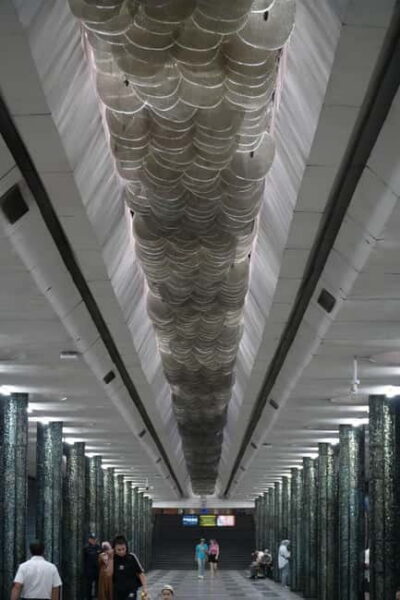
The metro is one of the most memorable parts of the route. Opened as the first metro system in Central Asia, it is often described as an underground museum because the stations do not repeat the same decorative scheme.
Each station has its own shape and design approach. Your guide can help you notice details that might otherwise pass quickly as you move between platforms. The ride also gives your feet a break, which is welcome on a five-hour route.
Do not expect to visit every station. The itinerary identifies important metro stations rather than promising a full network tour. The exact stations used can depend on the route and timing, so ask which ones you will see.
The metro is valuable for two reasons. First, it is a practical way to cross the city. Second, it is part of Tashkent’s public architecture. You are not simply using transport to get from one attraction to another. The stations themselves are part of the sightseeing.
Chorsu Bazaar, where the city feels most local
Chorsu Bazaar is the oldest bazaar in Uzbekistan and the heart of Tashkent’s old city. This is where the tour shifts from formal public spaces to daily commerce.
Plan on about 40 minutes, though this is one place where you may want more time. The market is a good stop for observing local food culture, browsing sweets and produce, and buying souvenirs. You can also eat a light lunch or try local food, but that cost comes from your own pocket.
Bring cash. Food and shopping are not included, and one practical account of the tour specifically recommends carrying money for both. Your guide may help with prices or negotiation, but you should still decide what something is worth to you before buying it.
You may find the market more rewarding than another monument because it gives you a chance to watch ordinary city life. At the same time, this is not a carefully arranged tasting tour. The food choices, purchases, and time spent browsing are flexible.
If you want photographs, ask before taking close pictures of people or stalls. A guide can help with local manners and with conversations that would be difficult to manage alone.
Hazrati Imam, the tour’s spiritual high point
The final major stop is the Hazrati Imam historical and architectural complex. Allow about one hour here, including free time, sightseeing, and possible shopping.
The complex includes the Barakhan Madrasa, Tillesheyh Mosque, a mausoleum, and other religious buildings. It is the main pilgrimage site in Tashkent and gives the tour its strongest connection to the city’s Islamic traditions.
The most important object associated with the complex is a seventh-century manuscript of the Quran. It is described as the only example in Central Asia and one of just four such manuscripts in the world. Because entrance tickets are not included, ask your guide which areas require payment and whether the manuscript display is open during your visit.
Bring a scarf for this part of the route. Comfortable, respectful clothing is also listed as an important preparation. The complex is a place of worship as well as a historic site, so dress and behavior matter.
The hour here can pass quickly. You may want time to look at the architecture, listen to the religious background, and browse nearby items. If you prefer quiet observation to shopping, tell your guide so the free time suits you.
How the guides shape the experience
The guide is the main reason to book this as a private tour rather than attempt the same route alone. The best experience depends on clear historical explanation, sensible pacing, and help with the market and metro.
Several guides connected with the tour have been singled out by name. Muhammad is described as warm, clear, and strong on Uzbek history and society. Nuriddin is noted for patience, flexibility, and precise explanations. Ibrohim is described as kind and dedicated, while Samandar has been praised for fluent English, careful organization, photography help, and an easy sense of humor.
The available guide may vary, and the booking languages are English, Spanish, French, German, and Russian. If language is especially important to you, confirm it before the day of the tour. One booking had a delay after a Russian-language guide was initially arranged instead of an English-language guide, so a quick confirmation is sensible.
Price, walking effort, and what is not included
The price is $90 per private group of up to two people. For two people, that works out to $45 each, which is a fair price for five hours of personal guiding across a wide section of Tashkent. For one person, the same price is harder to justify unless you place a high value on private attention.
The advertised duration is five hours, but allow extra time. One account puts the actual day closer to six or seven hours, while another describes ending earlier by request. The length depends on walking speed, photographs, market time, food, and transport.
The tour includes the professional guide, but not entrance tickets, food, shopping, or personal expenses. Taxi costs are also not included. The route may be manageable for many people, and the activity is listed as wheelchair accessible, but the combination of walking, metro use, market surfaces, and a long route is worth discussing with the provider in advance if you have mobility concerns.
Wear comfortable shoes and clothes. In summer, request an early start. Take water, although it is not specifically listed among the required items, and carry a scarf for Hazrati Imam.
Free cancellation is available up to 24 hours before the start, and you can reserve now and pay later. Those terms are useful if your Uzbekistan schedule is still shifting.
Who should book this Tashkent tour?
I would book it if you want a strong first look at Tashkent and prefer a local guide to explain the city as you move. It suits couples, solo visitors who want private attention, first-time visitors, and anyone interested in the overlap of Russian, Soviet, Uzbek, and Islamic culture.
It is also a good fit if you enjoy markets and public transport as much as formal monuments. The Chorsu Bazaar and metro give the day a more practical feel than a route made only of squares and palaces.
I would hesitate if you want long interior visits, a relaxed pace with little walking, or a food tour built around multiple tastings. The route is broad, the ticket costs add up, and much of the sightseeing is outside.
Should you book it?
Book this tour if your goal is to understand Tashkent quickly rather than collect a short list of monuments. The combination of Amir Timur Square, Sayilgoh, the theater, Independence Square, the metro, Chorsu Bazaar, and Hazrati Imam gives you a clear first-day framework.
Ask for an early start in hot weather, confirm your guide’s language, bring cash, and check which sites you will enter. If you do that, the $90 private rate offers good value for two people and a useful introduction to a city that rewards context.
FAQ
Where does the Tashkent Walking City Tour start?
The tour starts at the entrance of Hotel Uzbekistan. By metro, take the red line to Amir Timur station, then walk toward the hotel.
How long does the tour last?
The stated duration is five hours. The day can run longer depending on walking speed, market time, photographs, food, and transport, and you can request a different end time.
Is this a private tour?
Yes. It is a private group experience for up to two people.
Which languages are available?
The listed guide languages are English, Spanish, French, German, and Russian.
Is the metro ride included?
The route includes Tashkent Metro as a sightseeing stop and uses the metro as part of the city tour. Entrance tickets and personal expenses are not included.
Do I need to pay for anything separately?
Yes. Entrance tickets, food, bazaar purchases, taxi costs, and other personal expenses are not included in the tour price.
What should I bring?
Bring comfortable shoes, comfortable clothing, and a scarf. Cash is useful for Chorsu Bazaar food and shopping.
Can I cancel or pay later?
You can cancel up to 24 hours before the tour for a full refund. Reserve now and pay later is also available.
Just added around Tashkent
- Tashkent Mountain Tour Amirsoy with Transport★ 3.5 · 3 reviews
- Tashkent: 3-Day Horseback Riding Tour in Chimgan Mountains★ 4.4 · 3 reviews
- Private Intercity Transfer Tashkent – Samarkand – Tashkent★ 3.5 · 3 reviews
- Samarkand: Uloq-Kopkari (Buzkashi) Game Day Tour★ 5.0 · 3 reviews
- Private Tashkent City Tour★ 5.0 · 3 reviews
- Transfer Tashkent Airport / Railway Station – Hotel★ 3.5 · 3 reviews
- Half-day excursion around Tashkent★ 5.0 · 3 reviews
- Amirsoy & Chimgan mountain tour from Tashkent★ 5.0 · 3 reviews
City Tours in Tashkent, compared.
Tashkent : Classic City Tour. (Day & Night Shift)
Read our review →Tashkent: Highlights Tour with old city and modern
Read our review →
Tashkent: City Tour with Pro Photography, Lunch & Dinner
Read our review →
Tashkent city Night Tour with Dinner & Free Pro Photography
Read our review →Browse the lists this tour appears in