
Reviewed · TASHKENT TOURS
Tashkent One Day Tour
Tashkent is easiest to understand from several angles at once: a sacred old quarter, a Soviet-rebuilt capital, and a modern Central Asian city with a surprisingly elegant metro. This six-hour private tour links those pieces efficiently, with Hazrati Imam, Chorsu Bazaar, the earthquake memorial, grand squares, and museums all on one route.
I like the practical setup: your guide and air-conditioned vehicle keep the day moving, and the start time can be adjusted to suit your arrival. I also like the range of stops, especially the beautiful metro stations and the Applied Arts Museum, which gives you a useful introduction to Uzbek craft.
The main drawback is pace. Six hours is enough for a strong first look, but not for long museum visits or relaxed market wandering. Entry tickets cost extra, so your final bill will be higher than the advertised group price.
Key points to know before you book
- The route covers old and modern Tashkent: Visit Hazrati Imam and Chorsu Bazaar, then move through grand squares, the metro, and modern city streets.
- The Holy Koran is the major cultural highlight: Hazrati Imam houses a seventh-century manuscript described as one of only four such manuscripts in the world.
- A private car saves time: Hotel, airport, or railway station pickup makes this useful for a short stay or a long layover.
- The Tashkent metro is part of the sightseeing: Each station has its own decorative style, giving you an unusual indoor art tour.
- Guide Nuriddin may be available: He is known for adjusting the route to personal interests and explaining both history and daily life.
- Budget for entrance fees: Tickets to the listed monuments and museums are not included in the $180 group price.
Why this six-hour route works for a first day
Tashkent can feel spread out, and its main sights do not all sit in one compact historic center. That makes a private vehicle useful. Instead of spending your short visit working out city transport between distant stops, you can move directly from a religious complex to a market, then to a square or museum.
The tour costs $180 for a private group of up to two people, not $180 per person. For two people, that works out to $90 each before entry fees. That is a fair arrangement if you value a dedicated guide, pickup, and a car. For one person, the price is harder to justify, though airport or railway station pickup can make it more useful during a brief stop.
I would treat this as an orientation tour rather than a slow cultural excursion. You will see many important places, but the schedule asks you to keep moving. Tell the guide early if you care most about Islamic sites, Soviet architecture, food, handicrafts, or the metro. The route can then work better for your interests.
A few more Tashkent days to weigh up
- Samarkand One Day Tour – Departure From Tashkent
★ 5.0 · 313 reviews - From Tashkent: Sightseeing Day Trip to Khujand, Tajikistan
★ 4.7 · 169 reviews - Bukhara One Day Tour – Departure From Tashkent
★ 4.5 · 37 reviews
Hazrati Imam and the seventh-century manuscript
Begin at the Hazrati Imam historical and architectural complex, the city’s main religious destination. The group includes the Barakhan and Tillesheyh madrassas, mosques, and the mausoleum of one of Tashkent’s early imams.
The most important object here is the seventh-century Holy Koran manuscript. The tour describes it as the only example in Central Asia and one of four manuscripts of its kind. That gives this stop real weight, even if you are not deeply familiar with Islamic history. Ask your guide to explain the manuscript’s place in the region’s religious tradition rather than simply pointing it out.
You should dress with respect at this stop. Bring a scarf or headscarf, and wear clothing suitable for visiting mosques and religious buildings. Comfortable shoes matter too, since the complex includes several buildings and outdoor areas.
This is one place where time can disappear quickly. The architecture, courtyards, and religious setting deserve a calm look, but the tour also has many later stops. If the manuscript and Islamic culture are your main reasons for booking, tell the guide that you want enough time here.
Monument of Courage and the city rebuilt after 1966
The Monument of Courage explains a key fact about modern Tashkent. A major earthquake struck the city in 1966, and much of the capital was rebuilt afterward. The monument marks the earthquake’s epicenter and honors the reconstruction that followed.
I find this stop useful because it prevents you from reading Tashkent only as an old Silk Road city. Much of what you see today belongs to the post-earthquake capital, not to an untouched historic core. Wide streets, planned districts, and large public spaces make more sense once you know that the city was rebuilt on a large scale.
The monument itself may not require a long visit, but its story helps tie together the rest of the day. Your guide can connect it to the newer city you see from the car, giving the streets a clearer meaning.
Independence Square and the changing face of power
Independence Square, or Mustaqilliq Maidoni, is the country’s main official square. Administrative offices for the Cabinet and Senate are located here, and today it represents independent Uzbekistan.
The square also carries the marks of earlier political eras. It once served as an administrative center under the Russian imperial and communist governments. That change in purpose makes it more than a broad ceremonial space. It shows how the same capital can carry several layers of authority, with symbols and names changing as the country changes.
Do not expect a market or a lived-in neighborhood here. This is formal Tashkent, designed for government and national ceremony. I would listen carefully to the guide’s explanation, then use the stop as a contrast with Chorsu Bazaar and the old city.
Same city, a completely different day out:
- Best of Tashkent Mountains: Amirsoy, Chimgan & Charvak Trip
★ 4.8 · 567 reviews - Samarkand One-Day Tour Departure from Tashkent
★ 4.7 · 171 reviews - Tashkent: Amirsoy Resort, Chimgan Mountain and Charvak Lake
★ 4.8 · 170 reviews - Explore Amirsoy, Chimgan & Charvak – A Full-Day Mountain Tour
★ 5.0 · 158 reviews
Tashkent Metro, an underground museum
The metro is one of the tour’s most unusual stops. Opened as the first metro system in Central Asia, it is known for stations that use different designs rather than repeating one standard look.
That variety is the point. One station may feel grand and ceremonial, while another uses a different shape or decorative treatment. You are not simply using public transport to get around. You are seeing a series of underground spaces with their own visual identities.
The metro also gives you a change of pace from monuments and museums. I like that it brings you into an everyday part of the capital while still offering something clearly special. It is a practical city experience, not just a photo stop.
Your guide will need to manage the timing, since the day includes many destinations. If the metro interests you most, ask which stations are planned and how long you will have underground. The supplied details confirm that the metro is included in the route, but they do not specify the exact stations or length of the visit.
Chorsu Bazaar, the best place to slow down
Chorsu Bazaar is the oldest bazaar in Uzbekistan and the heart of Tashkent’s old city. This is where the tour feels most connected to daily life. Under its large market structure, you can expect the sights, smells, and food of an Eastern market, with local cooks preparing fresh dishes.
The bazaar is a good place to use your senses and ask questions. Look at the produce, bread, prepared food, and handmade goods. If you see something unfamiliar, your guide can explain what it is and how it fits into Uzbek life. The experience is more rewarding when you give yourself time to watch rather than rushing from stall to stall.
This is also the stop most likely to tempt you into spending extra money. Food and personal purchases are not included, and the tour does not list meals as part of the price. Carry some local currency if you want to buy something, but do not feel pressure to shop.
Chorsu deserves more than a quick photograph. Yet six hours is a short window, so the amount of time available depends on traffic, entry stops, and your priorities. If you want a serious market visit, ask for that before the tour begins.
Navoi Opera Theater and Central Asian neoclassicism
The Navoi Opera Theater, officially the Bolshoi Theater of Opera and Ballet, was the first opera and ballet theater in Central Asia. Its design combines folk art with neoclassical architecture, making it a useful example of how local traditions were placed inside a formal European-style building.
The theater helps explain Tashkent’s Europeanized side. After seeing Islamic architecture and a traditional bazaar, you encounter a grand cultural institution shaped by a different architectural language. That contrast is one of the strongest features of the route.
The itinerary does not promise an opera or ballet performance, so plan on seeing the building rather than attending a show. The stop works best as an architectural and historical visit.
Amir Timur Square and Sayilgoh Broadway
Amir Timur Square is described as the heart of modern Tashkent. It is linked with the development of the first university and bank in Central Asia, and its monuments have changed with the political era. The statue of Tamerlane now occupies a space that once held monuments to Stalin and Marx.
That history gives the square a useful lesson in public memory. Statues are not permanent explanations of the past. They show who a government wants to honor at a particular moment. Your guide can help you read these changes without reducing the city to a list of rulers and dates.
Nearby, Sayilgoh Broadway provides a more open urban setting. The alley was once a large swampy area, then became a square for Russian imperial soldiers, their families, and local residents after Governor General von Kaufman promoted its development. Today it is presented as Tashkent’s Broadway.
I would expect a walk or short visit here rather than a major monument. It gives you a look at how the capital’s public spaces changed from military and colonial use into places for ordinary city life.
Applied Arts Museum, a strong final stop
The Uzbekistan State Museum of Applied Art is one of the best stops for understanding Uzbek craftsmanship. The museum was once the home of a Russian merchant and now displays national applied art.
That change of use is fitting. The building itself connects the city’s Russian and Central Asian pasts, while the collection introduces you to decorative traditions from across Uzbekistan. If you are trying to choose between a long list of museums, this is a practical first choice because it gives context to the patterns, textiles, woodwork, ceramics, and other crafts you may see elsewhere.
The museum can also make the bazaar more meaningful. After seeing craft traditions in a formal setting, you may notice design details and handmade work differently in the market. I would save room for this stop rather than treating it as an optional extra.
As with the other monuments, the entry ticket is not included. The supplied information does not give ticket prices, so ask your guide or operator about the current total before setting your budget.
Guides, transport, and the private format
The tour is available with a live guide in English, Spanish, German, French, or Russian. If you are assigned Nuriddin, you can ask him to adjust the content around your interests. He is also referred to as Nurdin in some tour details, so confirm the guide’s name when you receive your pickup information.
A private group of up to two gives you more control than a large shared excursion. You can ask for extra explanation at Hazrati Imam, spend longer at Chorsu, or move on quickly from a square that does not interest you. The tradeoff is that the price is fixed for the group, so solo visitors pay the same base amount.
Pickup is available from your hotel, airport, or railway station. You should wait in the hotel lobby five minutes before the agreed time. Since the starting hour can be changed by request, this tour can fit an arrival day better than a fixed morning program.
The vehicle is air-conditioned, a welcome feature during Tashkent’s sunny weather. The tour is also listed as wheelchair accessible, though the exact ease of every monument, market area, metro stop, and museum is not explained. If you use a wheelchair, confirm the route details before booking, especially for the metro and religious complex.
What to bring and what the price does not cover
Wear comfortable shoes. The day combines walking around courtyards, public squares, market areas, and museum spaces with time in the vehicle.
Bring a scarf or headscarf for religious sites. Modest clothing is the sensible choice at Hazrati Imam, even though the supplied information does not provide a detailed dress code.
The $180 price includes:
- A professional guide
- An air-conditioned vehicle
- Hotel, airport, or railway station pickup and drop-off
- A private group for up to two people
It does not include entry tickets, personal spending, or other costs not named in the program. That matters most at the museum and monuments. Ask about the expected ticket total so you can compare the real cost with other private city tours.
Free cancellation is available up to 24 hours before the activity for a full refund. You can also reserve now and pay later, which helps if your Uzbekistan schedule is still changing.
Who should book this Tashkent tour?
I would choose this tour for a first visit, a short stay, or a stopover when you want the city explained without losing time between distant sights. It suits couples and friends especially well because the $180 group price can be shared by two people.
It is also a good match if you want several sides of Tashkent in one day: Muslim architecture, Soviet reconstruction, imperial and neoclassical buildings, public squares, local food, crafts, and public transport. The guide’s ability to adjust the day is valuable here.
I would hesitate if you prefer to spend hours in one museum, eat slowly at the bazaar, or explore on foot without a fixed route. The program is broad, and some visits will be brief. You also need to add entrance fees and personal purchases to the headline price.
Should you book the Tashkent One Day Tour?
Book it if you want an efficient, private introduction to a city that does not fit one simple historic image. Hazrati Imam, Chorsu Bazaar, and the metro give the day its strongest mix of faith, food, architecture, and ordinary city life.
Skip it if your main goal is a slow market day or a specialist art tour. For most first-time visitors with only six hours, though, the private car, flexible start, airport pickup, and wide route make the $180 group price reasonable, especially when shared by two people.
FAQ
How long does the Tashkent One Day Tour last?
The tour lasts six hours.
How much does the tour cost?
The price is $180 for a private group of up to two people.
Is transportation included?
Yes. The tour includes an air-conditioned vehicle and pickup and drop-off from your hotel, airport, or railway station.
Are entrance tickets included?
No. Entry tickets to the listed monuments and museums are not included. Personal expenses and other costs not named in the program are also excluded.
What languages are available for the guide?
Live guiding is available in English, Spanish, German, French, and Russian.
Can I cancel or pay later?
You can cancel up to 24 hours in advance for a full refund. The tour also offers reserve now and pay later booking.
Just added around Tashkent
- Tashkent Mountain Tour Amirsoy with Transport★ 3.5 · 3 reviews
- Tashkent: 3-Day Horseback Riding Tour in Chimgan Mountains★ 4.4 · 3 reviews
- Private Intercity Transfer Tashkent – Samarkand – Tashkent★ 3.5 · 3 reviews
- Samarkand: Uloq-Kopkari (Buzkashi) Game Day Tour★ 5.0 · 3 reviews
- Private Tashkent City Tour★ 5.0 · 3 reviews
- Transfer Tashkent Airport / Railway Station – Hotel★ 3.5 · 3 reviews
- Half-day excursion around Tashkent★ 5.0 · 3 reviews
- Amirsoy & Chimgan mountain tour from Tashkent★ 5.0 · 3 reviews
Tashkent Tours, compared.
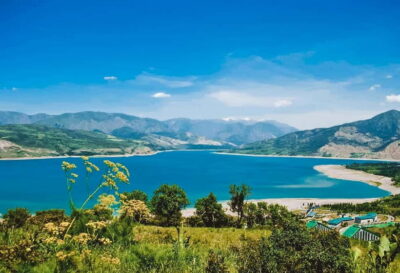
Best of Tashkent Mountains: Amirsoy, Chimgan & Charvak Trip
Read our review →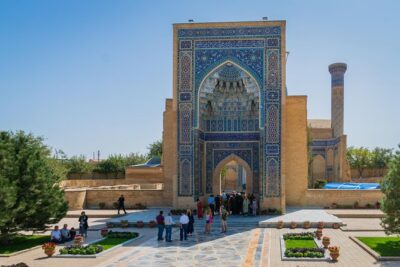
Samarkand One Day Tour – Departure From Tashkent
Read our review →Tashkent: Amirsoy Resort, Chimgan Mountain and Charvak Lake
Read our review →From Tashkent: Sightseeing Day Trip to Khujand, Tajikistan
Read our review →Explore Amirsoy, Chimgan & Charvak – A Full-Day Mountain Tour
Read our review →Tajikistan : Exclusive Seven Lakes Day Tour From Samarkand
Read our review →Explore Amirsoy, Chimgan, Charvak Adventure Tour
Read our review →
Browse the lists this tour appears in